DD
MM
YYYY

PAGES

DD
MM
YYYY

spot_img

PAGES

Home Blog Page 7065

Why Cyber Security matters for IoT?

0

With Internet of Things (IoT), it is anticipated that there would be ubiquitous connectivity between machines/devices and this would give us the opportunity to transfer certain tasks to these machines e.g. send your car to pick up groceries instead of parking it in a garage. Early adoption of IoT based applications include smart homes, smart meter, autonomous cars, medical devices, smart cities etc. Even though, I am not a security expert, in this piece, I identify some of the risks associated with IoT based applications and conclude with some recommendations.

IoT represents a market opportunity for equipment manufacturers to add services to their products. Whilst manufacturers are excited about the extra revenue to be generated from these added services, security is often viewed as an after-thought. This poses risks to consumers because the evolution of technologies always translate to an increase in threat level and any device connected to the internet can be hacked and used as a surveillance device.

For example, imagine a family travelling in an autonomous car, and a hacker gains control of the wheels and manipulates the car resulting in a fatal accident. The police rush to the scene of the accident and try to investigate the accident, how would the police ascertain that the accident is a cyber-crime? The hacking also leads the family vulnerable to serious injuries or even death.

For medical devices, the security and the integrity of the data are very crucial. The security of medical devices is challenging as security may need to be unique for different devices. But any breach in security/data could have life threatening consequences and put patients at risks. Imagine, a child suffering from diabetes, with an online glucose monitoring device as a wristband; the glucose monitor predicts the daily level of insulin dose for the child. If there is a security breach and the data is altered, this would mean that the wrong dose of insulin would be administered to the child and could result in death. Recently, Billy Rios and Jonathan Butts demonstrated vulnerabilities that compromised a Medtronic pacemaker.

On the other hand, corporate IoT could be used for eaves dropping and leave companies vulnerable to their competitors. In similar vein, intruders could eavesdrop on individuals with smart homes. And Governments adopting smart cities should be prepared for cyber war attack.

In order to manage these security risks and vulnerabilities, its’ important for device manufacturers considering IoT based applications to consider security at the development phase. Security Experts should also be consulted to identify security risks and proffer solutions. Consumers should also be made aware of the security of the devices they use; as in the case of the Billy hack above, manufacturers should be able to communicate security vulnerabilities to consumers and offer re-assurances that vulnerabilities would be fixed. Regulations also need to keep pace with the growth of these technologies to protect consumers and best practices within the industry should be shared.
Microfinance Bank’s Terrible Business Model in Nigeria

0
CBN Governor

There is an inherent systemic flaw in the microfinance banking business model in Nigeria. I know someone won a Nobel Prize for pioneering the broad nexus of microfinance sector, but in Nigeria, it is simply not a good business model. You are expected to serve largely non-premium customers even though you cannot receive easy deposits as a “bank”. Yes, you have to look for expensive capital to serve people you would struggle to make money from. No issues – you would just be doing it until you run out of cash.

So, it is unexpected when CBN noted that it would be revoking the operating licenses of 182 other financial institutions in the country. Most of these entities ran out of cash and that was it. You cannot be serving those at the bottom of the pyramid who are typically very expensive to serve with the most expensive capital in the land. Commercial banks enjoy cheap capital through deposits, and yet they typically avoid bottom of the pyramid because they cannot make money from them. (Sure, that is changing through human-platform banking.)

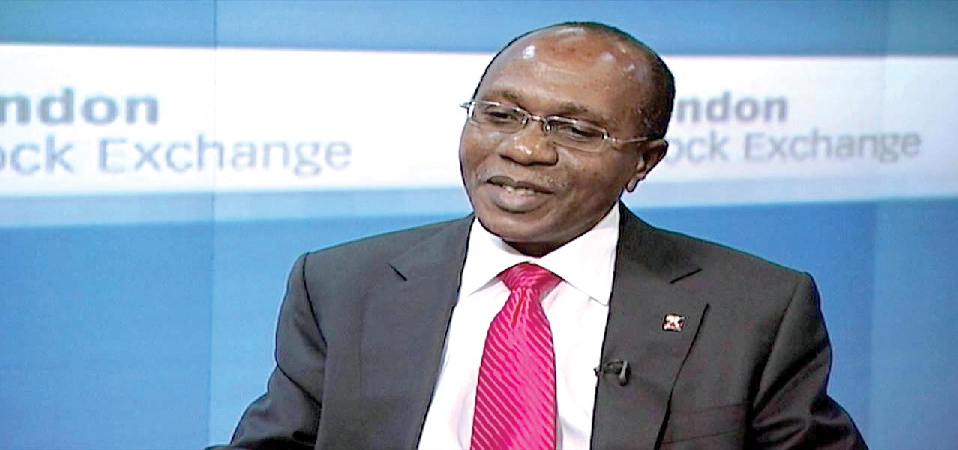
The Central Bank of Nigeria on Wednesday gave a notification to revoke the operating licences of 182 other financial institutions in the country.

According to the list released by the regulator on Wednesday, 154 of the affected institutions are microfinance banks; six are primary mortgage banks; while the remaining 22 are finance companies.

The CBN said 62 of the microfinance banks had already closed shop; 74 became insolvent; 12 were terminally distressed; while six voluntarily liquidated.

Get me right – I am not saying that microfinance will not work. But the way we are running it across Nigeria has no core competitive advantage anymore. The Central Bank of Nigeria stripped all the things which made it appealing in most countries where it worked. But you cannot blame the CBN: Nigerian banking does not have super-great records on keeping people’s monies. There is no generation which has not been battered by failed banks either as depositors or sovereign losses through bailouts.

Fintechs in Nigeria

As the capital structure of microfinance banks haunt them, the fintech revolution is also catching up with many of them. Simply, fintech companies like Interswitch, Paga and Paystack are now automating out many microfinance banking institutions out of business. The services from the largely analog microfinance banks are expensive to use while the fintechs’ are cheaper. Because the fintechs are digital institutions, they are scaling their services thereby making them more appealing as they are everywhere at the same time. Just like that microfinance banking has become an endangered business in Nigeria.

The Remaining Niche

As fintech companies expand, the best remaining sector for most microfinance will be trade services: give traders money to trade locally. Most microfinance banks are unable to participate in the lucrative foreign financing part because of asset base and regulation. For the local trade services, I can give some microfinance banking institutions operating in our typical open markets (e.g. Aba, Iduomota, Onitsha) few years to live before they are annihilated by fintechs. The future is not that promising for microfinance banks in Nigeria unless they can use their licenses and become fintechs by digitizing how they work. Digitization will reduce marginal cost which is extremely important in delivering affordable products and services to the bottom of the pyramid constituency.

  • Trade financing: You contribute to finance trade in some Igbo men going to China. But you need to have the right people. They mop money and use that money to bring containers. This is a thriving business in Aba and Onitsha as most have shunned banks due to cost of fees. And with the good returns, some people are taking risks. They offer good contracts and in some cases provide collateral as they own shops. Personally, I have used this model to assist some people. Yes, people I know. Their returns are the highest in Nigeria. The deal happens over four months as that is the typical time to go to China, import items and sell them at wholesale. Please do not ask me for contacts. If you are interested, this is very common in Aba, Onitsha and Lagos where there are concentration of Igbo traders.

All Together

If you are in a banking business where you only have access to expensive capital (compared to commercial banks with free deposits), and at the same time you have to serve the most expensive customers, you are in trouble. Microfinance banks in Nigeria are in that state: it is a total paralysis, and I do not see any positive outcome for many. Now, fintechs are automating most of their functions and the few “premium” customers they used to serve are moving to Paystack, Paga, and Interswitch.

The implication is a hopeless state which will not end well. So, when you read that CBN is revoking licenses of 154 of them, just understand that CBN is not even hard. It is not a business of the future unless you can do what is necessary: use the microfinance license and evolve as a fintech with scalable services where marginal cost is low, making them affordable for the extremely price-sensitive non-premium customers. Without that redesign, they would all die!

Nigeria Blockchain & AI Roundtable Announces Ndubuisi Ekekwe as Keynote Speaker

0

The Nigerian blockchain & AI Roundtable has announced Ndubuisi Ekekwe as the keynote speaker, Business a.m. reports. Prof Kingsley Moghalu and Chike Ukaegbu, both presidential aspirants will also speak. Besides, Heads of Security and Exchange Commission, and Nigeria Interbank Settlement System, respectively Mary Uduk and Dr Aliyu Abdulhameed, will participate.

The first Nigerian blockchain & AI Roundtable, which will hold in Abuja on the 19- 20 October 2018, would have Ndubuisi Ekekwe, the Zenvus AI for agriculture inventor and chairman of Fasmicro Group as keynote speaker.

The roundtable would have in attendance top government decision makers, industry regulators, entrepreneurs, enthusiasts, developers, chief technical officers, students, and investors to discuss how the convergence of blockchain and Artificial Intelligence would contribute to the prosperity of the Nigerian economy.

“I have accepted to keynote Abuja Blockchain & AI Roundtable in Abuja, Nigeria,” Ekekwe told business a.m.

He said the goal for the Abuja blockchain & AI roundtable will go beyond the current hypes about crypto and provide a common framework for thinking about what the convergence of blockchain and AI means to Nigeria’s economic prosperity agenda.

Pulse reports on the nature of the event

Business leaders, government and regulatory agencies, data practitioners will gather at the second edition of Abuja Blockchain & AI Round-Table Conference scheduled to hold between October 19 and 20, 2018 at the Sheraton hotels, the nation’s capital.

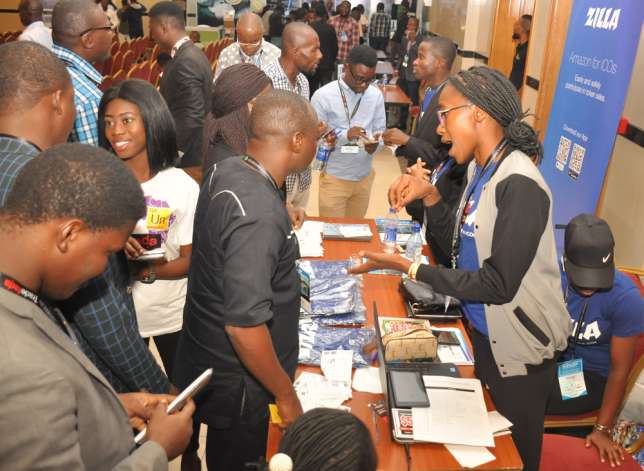
The hybrid conference will feature a melding of the AI and Blockchain communities in Nigeria and across the world, exploring the possibilities at the intersection of these two technologies, with talks and panels encompassing some of the world’s top experts in the field

Nigeria Risks another Recession as NLC Strikes

0

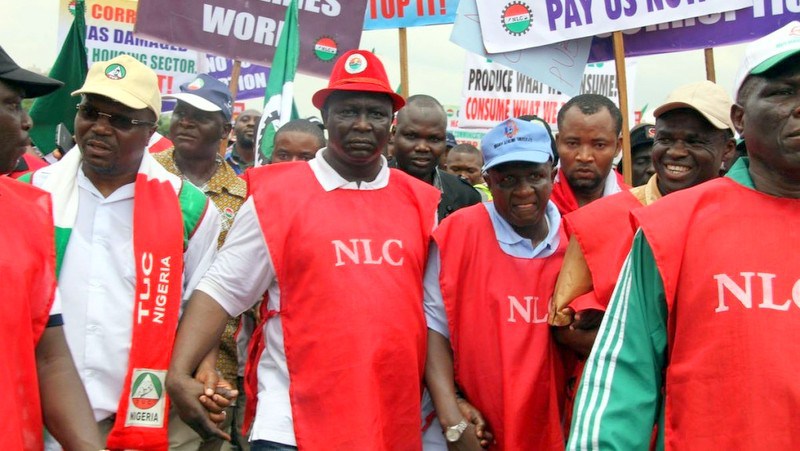
It is looking very challenging across major Nigerian cities as the Nigeria Labour Congress (NLC) declares indefinite warning strike pushing government to adopt a new minimum wage for workers. This is a huge decision which could cause massive dislocation in the recovering economy. If you are paying attention, you will notice that the average time to receipt of payments from vendors is going up. I do think companies are having liquidity challenges because paralyses are brooding. This strike will be damaging to the economy.

The Nigeria Labour Congress (NLC) has declared the starting of an indefinite warning strike to press the Buhari administration to adopt a new minimum wage for workers.

The strike will start Wednesday morning.

Its sister labour group, the Trade Union Congress, had earlier on Tuesday announced it would begin strike from the early hours of Thursday, following the federal government’s failure to honour its ultimatum on the new minimum wage.

Both unions had earlier said the organised labour’s demand to reconvene a tripartite committee on the national minimum wage for workers was not met, and that the leaders have cautioned the federal government against foot-dragging on the new minimum wage.

Last Thursday, the NLC resolved to commence an indefinite nationwide strike after the expiration of the 14-day ultimatum given to the federal government which will elapse Wednesday.

Already, banks are scaling down their investments in businesses, reducing credits at significant level compared to the same time last year. When you combine lack of credits and apathy from foreign investors, you cannot expect any growth in the economy under a high-voltage political tension.

The numbers are not looking good for companies looking for bank credits: In H1 2018, total credit by banks to companies dropped by N855 billion or 5.7% from N14.9 trillion compared to H1 2017. Within the same period, bank’s investments in government securities – bonds and treasury bills- rose by 2.6% to N6.87 trillion.

I call on the leadership of NLC and the Government to get into serious talks: Nigeria can fall into severe recession if this strike goes on for even few days. We do not have the economic buffer to absorb it.

Yet, it is time government understands that no human can survive in Nigeria at N18,000 (about $50) per month (before taxes). It is an insult that a nation where politicians are paid in thousands of dollars in the parliament cannot even pay the people training its future (yes, teachers) at least $100 per month. What NLC is asking for is not crazy: they want committed members, and to achieve that, they deserve living wages.

This is the moment for Mr. President to lead because there is no other option – workers deserve good pay. Yet, I also hope NLC manages this well to avoid messing up a fragile economy.

The Promise: Reduce Post-Harvest Waste to Zero

0

As I work in agriculture, I have learnt one thing: Nigeria’s agricultural paralysis is not solely due to low productivity but making sure our little production capacity is optimized from farm to table. We waste a lot of food in this nation. Yes, a nation where excess of 87 million are classified as being extremely poor is still wasting farm produce. You can argue that the waste is really the reason why we have that level of poverty in the land.

At the end of May 2018, our trajectories suggest that Nigeria had about 87 million people in extreme poverty, compared with India’s 73 million

Today, a commissioner narrated how few years ago, Bauchi farmers were forced to sell baskets of tomatoes for N300 (~$0.89) per basket because no one could buy them. And when the government brought in consultants to help, they told them that the most strategic roadmap was to allow the tomatoes to waste as the cost of harvesting and transporting them will exceed any value derivable.

Yet, the next year, do you know what happened? Government doubled down on more incentives on growing tomatoes. Interestingly, no one got the memo that even the little produced last year was largely wasted. We think that has to change.

Next year, under the pioneering engineering of Kobo360, a category-king logistics company in Nigeria, together with Zenvus (my agtech company via the zCapital services), a pilot will be launched in a northern Nigeria state. We are exploring how to ensure that no single produce would be wasted, post-harvest.

Kobo operates under the principle of Aggregation Construct which depends on network orchestration where it works as an arbiter for many partners and customers. With this model, the customer experience becomes a key part of its business. It does not have ships, planes and trucks delivering services from U.S. to Nigeria and beyond. But it has a technology to simplify trade and commerce. It has got happy customers who do think its services are even better than firms like DHL.

If you have access to a governor or commissioner in your state, please reach out. We can put you in this pilot. Our vision is to micro-aggregate all produce from farms to cities and factories, and deliver generation-shaping productivity boost anchored mainly by reducing wastes. It goes beyond building expensive warehouses and cold rooms to deploying the best logistics operating system in Africa to move things out as quickly as possible. Kobo engineering is supremely solid in fixing logistics friction and is on call to help farmers.