DD
MM
YYYY

PAGES

DD
MM
YYYY

spot_img

PAGES

Home Blog Page 7105

The Ultimate Competitor to Naspers’ MultiChoice (DStv, GOtv) Is Coming To Africa

0
MutiChoice

The world of video streaming seems to be gyrating: Walmart is joining the party. Typically, when Walmart joins a club, prices of things drop. It does not live on the notion of premium brand and exclusivity. Walmart makes things affordable for the people. If it takes that model into video streaming, Middle America will believe, and Africa will possibly connect.

Walmart is battling Amazon in online retail, groceries, and urban home delivery. It may now be opening up another front in its war: video streaming.

Walmart, the world’s biggest company by revenue, is considering building its own Netflix-like service to compete directly with Amazon Prime, as well as Netflix, Hulu, AT&T’s Audience, and impending products from Disney and Apple, The Information reported (paywall).

Walmart already owns Vudu, a video-on-demand platform for Hollywood movies and TV, but it’s reportedly contemplating developing its own programming and offering it for less than $8, undercutting Netflix and Amazon.

MultiChoice has been focusing on Netflix as it devises ways to compete and hold its territories. Now, the real competition is coming. While Netflix attacks MultiChoice premium subscribers in Africa, Walmart will go after the customers which have sustained MultiChoice for years. Those are the customers who are signing up in millions across continental Africa on MultiChoice properties. To a large extent, Netflix does not care about them: they are the GOtv users.
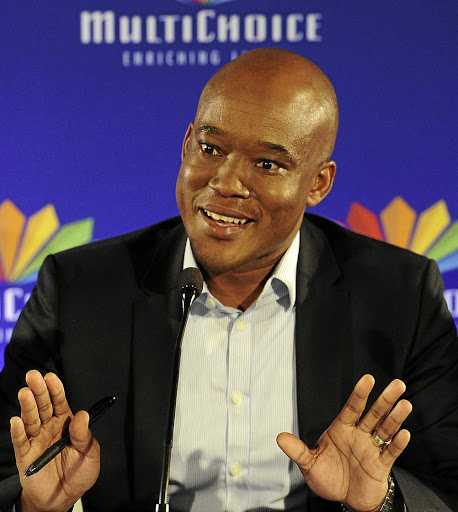
Calvo Mawela
Multichoice CEO Calvo Mawela

For MultiChoice and other video streaming companies in Africa, if Netflix and Walmart converge in Africa, it would be a double whammy. Largely, American companies are just good in creating contents that transcend cultures and boundaries more than their local competitors. The implication is that they have better unit economics to win any sustained competition because of larger scale of distribution.

The problem MultiChoice is facing today with the loss of subscribers is not really about Netflix. Simply, MultiChoice knew that the trajectory of entertainment was moving online and will continue to do so. Online is going to become the equilibrium state of “view entertainment”. Yet, MultiChoice did nothing. It is typical; I called it the monopoly hangover when I wrote about Interswitch. These entities are making so much money in the present model to creatively destroy it. Typically, someone else has to do it for them as that is the only way they can wake up.

But MultiChoice may be happy for one thing: Walmart has presence in South Africa, and can indeed be regulated, if necessary, unlike Netflix which pipes videos from U.S. with no way for the South African regulators to extract anything from it. I remain skeptical if any regulator can change the trajectory. The internet is very notorious in taking down anything on its path despite any efforts to regulate it. Yes, if South Africans want to watch Netflix, they would always find ways despite what any regulator can put there. The nation has a strong free speech (and choice); no one will destroy that tradition because it wants to help a monopoly.

Massmart is a South African-based globally competitive regional management group, invested in a portfolio of differentiated, complementary, focused wholesale and retail formats. Walmart acquired a majority stake in Massmart Holdings Ltd. in 2011. Massmart operates more than 400 stores in South Africa and 12 other sub-Saharan countries.

All Together

How can the VOD (video on demand) companies in Africa go further? The competition is now global. Customers are going to win because more choices will be available. But as that happens, many players will certainly be knocked out, in a world of winner-takes-all, as I noted in a recent piece in the Harvard Business Review. I just wish our companies will have the vision to come together, and merge, as that seems to be the best way to remain competitive: size matters.
How The Future Of Digital Commerce Would Be Won [Video]

0

In this video, I discuss the elemental component of great modern digital empires. These firms do not focus on the needs of customers, they go further. Yes, they work to invent new “needs” and then build moats around their customers, making them impenetrable by competitors. Many years ago, I had used Apple to illustrate this shift in a Harvard Business Review article. Become a monopoly through pure open market forces by creating new markets within markets. Yes, taste the gross margin joy of being a category-king. That is the only way to survive in the digital space.

The Leading (Tech) Business Model Emerging In Nigeria, Africa

0

Data is the new oil, they say.  But the acquisition of data, well before the refining phase, is not easy. Data at scale is enabling new business models across industrial sectors. Around the world, one business model has been tested, and it is evident that the hypothesis has been validated. Aggregation and integration at scale – the Aggregation-Integration Construct (AIC)- is the business model of the 21st century. Most emerging Nigerian and African technology companies are riding on that. At the global arena, the AIC powers more than 90% of the top 10 leading technology companies. If you want to start a technology business today, in Africa, and it does not have the inherent elements of aggregation and integration, think again. In this video, I present this Construct using examples from many sectors.


The Aggregation Construct

Medcera Support Services to Healthcare NGOs Across Africa

0

If you are an NGO working in the broad medical/healthcare sector in Africa, we want to pass the message that our Medcera technology is available to support your mission. Medcera is our full intellectual property, and we can customize, adding any feature you need. If you are working say on polio and need specific ways to collect records in the field, let us know; we would work to help in Medcera. We already have Encounter in the Medcera physician portal.

We only require one thing: everything must be done under the supervision of a licensed physician who must implement necessary patient privacy as stipulated by the local law. Medcera has ways to make such happen but the lead physician must design the controls in the practice/facility admin account.

Medcera is a cloud-based electronic medical record / health record system with both patient and partner management engines. It delivers services and is engineered to become a healthcare operating system for Africa.

Besides, Medcera can put your brand in a sub-domain. For example, you can have HealNGO.Medcera.com, and from there, your team and others can relate on your mission, powered by Medcera technology. From login to customizing your presence, we ensure you have the technology you need to execute your mission.

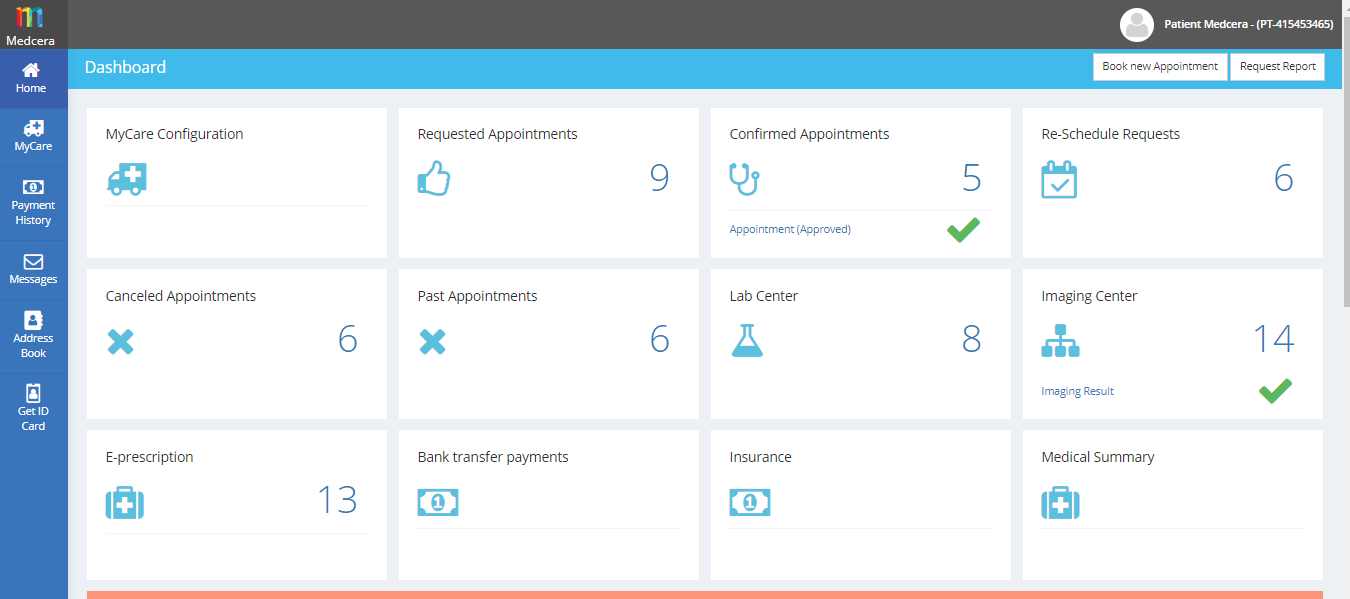
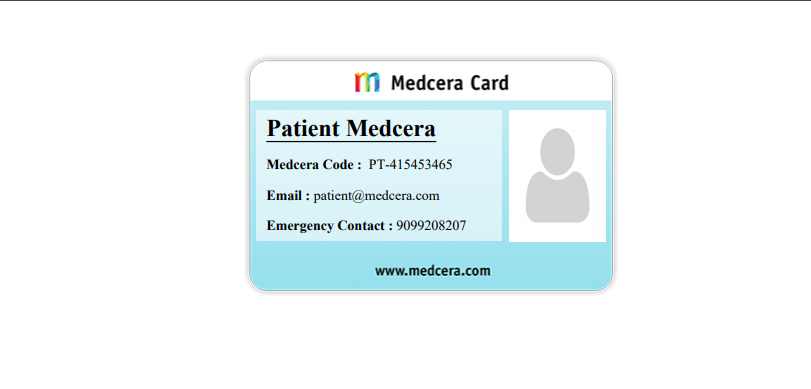
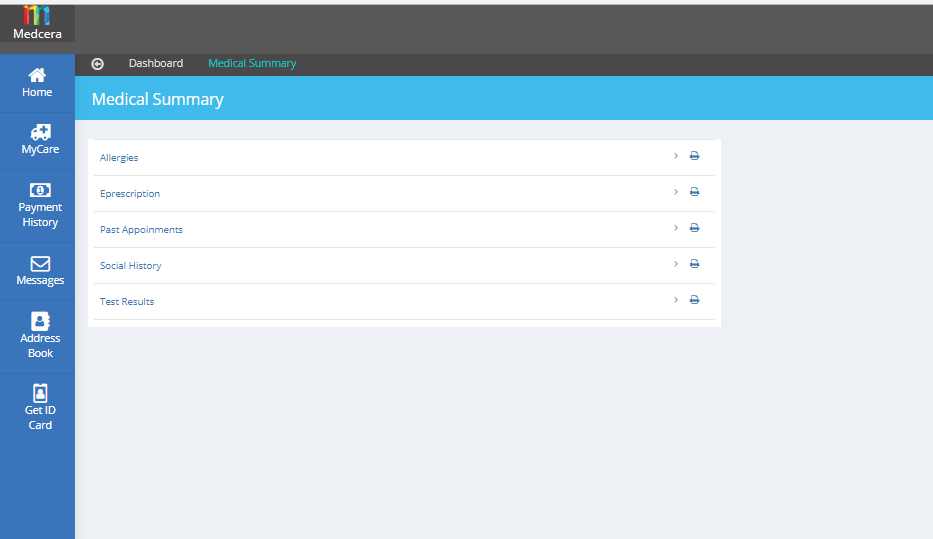
It launches Aug1, 2018. Some images from the patient module.

Contact Team: medcera@fasmicro.com

Mr. President, Nigeria Needs National Chief Information Officer

0

Over the last few years, I have made a case that Nigeria should create an office of the National Chief Information Officer (NCIO). From software licensing to harmonization of technology policies, I believe that it would save Nigeria money. Imagine if all software purchases by the Federal Government for Nigeria are acquired by one office and then shared by the MDAs (ministries, departments and agencies).

We would save money, fixing the problem which exists today where every unit of government acquires its own software. It is very painful reading Nigerian tenders. You see waste because no one is harmonizing simple acquisition of technology assets.

Here, I am using software licensing as an example; the benefits extend beyond that. I had suggested for anyone who holds the title of the DG of NIMC (National Identity Management Commission) to be upgraded to NCIO since NIMC has been focused on consolidating the disparate datasets across the nation.

What is happening in telcos is happening in Immigration, Drivers License Office and clusters of entities across Nigeria where they continue to capture biometrics. I do think that Nigeria may need to redesign the Acts that govern NITDA (National Information Technology Development Agency) and NIMC (National Identity Management Commission) to deal with many pressing issues on technology and data management. If we collapse them as one, we can have an Office of Chief Information Officer, for Federal Republic of Nigeria; call it National Chief Information Officer (NCIO). The present Director-General of NIMC can assume that office as NIMC has more roles in the consolidation of the disparate databases in Nigeria, and certainly more strategic than NITDA.

Adapting from a similar role in U.S., the CIO will be the administrator of the electronic government evolution in Nigeria. The position will be appointed by the President and will oversee national technology spending, federal IT policy, and strategic planning of all national IT investments. The NCIO will be charged with establishing a government-wide enterprise architecture that ensures system interoperability, information sharing, as well as maintain effective information security and privacy controls across the Federal Government.

But it seems this campaign is not just about me. Dr. Yele Okeremi, the president of Institute of Software Practitioner of Nigeria (ISPON), is making the same case. I think we need to do it by not necessarily creating another bureaucracy but my elevating and restructuring an already existing bureaucracy.

You have once canvassed for the establishment of the office of Federal Public Chief Information Officer (CIO) at the Presidency. What would be the role of such an officer at that level since we have the Minister of Communications?

My position on the office of a CIO General of the Federation remains unshaken.

The office actually is different from the office of the Minister of Communications Technology.

Firstly, we need to understand that the job of a minister is to ensure that the programme that has been set out by the government of the day is achieved by working with the bureaucrats; while the CIO General should be responsible for the technology strategy of the country.

The CIO General should be responsible for harmonization of all government technology initiatives to ensure cohesion and reduce duplication and conflicts.

The CIO-General will be the custodian of all technology deployed by the federal government and part of his responsibilities will include issues like cyber security, and, indeed cyber sovereignty of the country. This should be a career and not a political position.

Yes, the NCIO will help to harmonize projects, removing duplication as I have noted in the software licensing. He/she will be the person that will see the execution of all government technology projects to closure. The NCIO will be the custodian making sure that all government projects are aligned and well integrated to the national vision.

Mr. President, make it happen – we need a National Chief Information Officer in Nigeria.