DD
MM
YYYY

PAGES

DD
MM
YYYY

spot_img

PAGES

Home Blog Page 7188

The Call to Mission

0
Mission

I was in Kos Island, Greece. It is about an hour flight from Athens. On the road, it is about 16 hours. Driving out of Athens, there is a signpost pointing to Thessaloniki. The first time I saw that was magical. That was a city Apostle Paul had written in the Bible.

In Kos, the hotel I stayed in was practically built on the Mediterranean Sea. I touched the waters and constructed in my mind the path of the Missionary Journey (I and II) by Paul. The more I look at reality, the more I think about a Call to Mission.

Jesus hired 12 men for a mission. He trained them. He equipped them. Then, he left. Later, on the Day of Pentecost, He equipped them further. Largely, none of the disciples had a clear template for the call. It was in AD 69 when Roman General Titus was putting Jerusalem in ruins that the action began. Titus and Emperor Vespasian have the rebuilt Temple destroyed (the Temple was originally built by King Solomon but was successively destroyed).

With Jerusalem desolate, the work of the men began. They had to leave Jerusalem to live. Jeremiah (Jeremiah 16:16) had prophesied this destruction many centuries ago.

“Behold, I am sending for many fishers, says the Lord, and they shall catch them; and afterwards I will send for many hunters, and they shall hunt them from every mountain and every hill, and out of the clefts of the rocks. (Jeremiah 16:16)

God later raised Theodor Herzl (the Father of Zionism) as the fisherman (he used the “bait” of giving Jews money to motivate them to return to Jerusalem). But he did not get the full mission accomplished. God sent Hitler who hunted Jews with guns. The state of Israel was born in 1948 as many returned home just as Jeremiah had prophesied.

Executing the Mission

As the disciples escaped Titus and Vespasian, some made it to Africa. Mathew was killed in Ethiopia with a sword. Mark was tied to horses, dragged until he died in Alexandria, Egypt.

Luke was hanged in Greece. John was boiled in boiling oil which he survived. He was later sent to prison in the Island of Patmos. It was there, he wrote the book of Revelation. They later freed him. He served as the Bishop of Edessa (in modern Turkey). He died of natural causes – the only of all the disciples.

Peter was crucified upside down, in an x-shaped cross.  The St. Peter’s Basilica is largely memorizing the tomb of Peter. For James, they threw him from the Pinnacle of the Temple (the same place where Satan had tempted Jesus). James survived the fall but they later beat him to death. James, the son of Zebedee, was beheaded in Jerusalem by Rome.

Bartholomew (Nathaniel) was flayed to death by a whip. He had preached in Asia but died in Armenia. Andrew died in Patras, Greece, crucified in an x-shaped cross. In India, Thomas was stabbed with a spear. Jude died on arrows. Mathias who replaced Judas was stoned and beheaded.

Let me add Paul who though not a disciple was cardinal in the early decades of Christianity. He was beheaded by Emperor Nero in AD 67.

All Together

The disciples and indeed the Apostles practically executed the mission they were called. But I can assume that at the beginning none might have expected it the way it happened. From companies to nations, those that answer great missions typically shape everything. But sometimes they do pay severe personal penalties. At different levels, a Call to Mission requires extremely committed people. Even in your business, you must have that capacity to find and recruit people that can help you execute a great mission. You must prepare them. Equip them. And push them to come and get glory. Our Jesus has a great template on how to accomplish missions: build and prepare an extremely committed team.


Comment from LinedIn Feed

The mistake most times is that a lot of people see the Bible as just a religious book or holy book; actually, no single book comes close to covering all facets of human endeavours as it did. From commerce to economics, government, governance, social justice, business ethics, customer service, national defence, art, finance, international diplomacy, education, health, engineering; just name them, you can get valuable insights in all these areas from the Bible.

It’s a life manual, not just for heavenly candidates, but for everyone who also wishes to be a great citizen of the world. To do well in business, it begins by assembling a great team, who is passionate and committed, and willing to take all the risks, to ensure that the company’s vision is brought to fruition. Obviously it’s not for small minded individuals, but men and women who have their eyes firmly fixed on the glory, and never on the immediate sufferings.

Ndubuisi, you just put your Sunday School knowledge to full display, it shows that you didn’t doze off when important classes were going on; fantastic! Nice insights, a great Sunday Tonic.

Zenvus Imaging System [Photos]

4
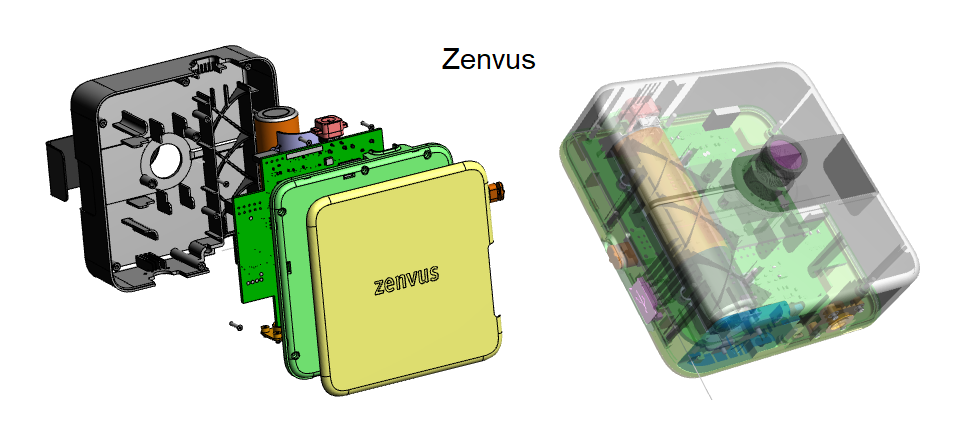
Zenvus Imaging System

We just finished an imaging system design [call it an industrial camera] – Zenvus Imaging System. Product moves to production for a client next week. Every aspect of this product is modeled, from the pin to the screw, and there are no surprises. The modeling makes it easier to integrate our work into other systems. In the RHD image is the see-through on what we have inside. We have electronics, MEMS, lens, etc. It is beautiful engineering with the fusion of computational vision, mechanical engineering, on-chip image processing [AI], electronics and ergonomics. We engineered this system from scratch [sure, we did not make the resistors, capacitors etc ourselves] and it is intelligently smart having tested the prototypes.

Most Nigerian Banks Now Premium Local Fintechs

0

GTBank hits 38.1% cost-to-income ratio, CIR [in its simplest form, it means using N38.1 to make every N100], declaring full year 2017 profit before tax of N200 billion. Zenith Bank had a CIR of 52.7%. There are three key ways you can improve CIR: reduce cost or increase income or do both simultaneously.  As all the banks report, I expect the average to come down to 59%. Generally, Nigerian banks are improving CIR as they deploy technologies, enjoying the productivity gains. This trend is expected to continue.

“GTBank has continued to report the best financial ratios in the industry as revealed by its return on equity (ROE) of 35.4 per cent and cost to income ratio of 38.1per cent evidencing the efficient management of assets and operational efficiency.

“Overall, the bank has enshrined its position as a clear leader in the industry.

Walk from CBN HQ to the Cadastral Zone in Abuja, you would notice that most banks had closed their branches and deployed ATMs. They have since stopped printing bank statements, charging for the SMS alerts. Generally, customers get better deals. The N4 you pay for SMS alert is a better deal than going to a bank to check payment receipt.

As they publish their reports, I am seeing great numbers – efficiency is improving. This is a big lesson: when TSA was being implemented, many said the banking sector would shrink. What I am noticing is that when government took its cash, they restructured and today most banks are leaner, and more efficient. The TSA was a blessing as in the quest to reduce cost, the banks adopted technology which improved productivity. The losers are Nigerian workers who lost jobs.

With the changes made, do not expect many fintechs to do well in the Nigerian banking sector. The banks are indeed premium startups now striking partnerships with Facebook, Mastercard and other global entities one would have expected fintechs to lead. They can thank TSA for the acceleration of that redesign.

This is the expected natural trajectory as the ICT utilities take over the lands. Once Facebook perfects the integration with MasterCard on Messenger, it would do same on Instagram and WhatsApp. Then, it would be opened to any financial institution that wants. MasterCard is a natural payment aggregator, agnostic of banking institutions. Facebook would be the platform while MasterCard would act as the “interface institution”[payment processing] and banks the hosts [the accounts]. The implication is that over time few would bother to notice the hosts, focusing more on the platforms [once you have set up an account and put your bank details, there is no need to even remember the bank again as the transactions would happen on Facebook while MasterCard handles the underneath processing with the banks].

The banks are doing what they have to do: with Facebook Corp, there is no other alternative – you either fall in line or you go extinct. This is going to be the future of banking in Nigeria. No one goes to a bank in China; most go to WeChat to do banking. Facebook has a plan for that in Nigeria. The plan is now under execution.

Survival drives innovation. Our banks are innovating, from UBA to Wema, from Diamond Bank to FCMB; we are seeing real market-driven competition. And today, most can operate without any government money. That is how a great economy emerges.

Katerva Awards Writes Zenvus

0
Zenvus Africa Nigeria

This week, Katerva wrote to us that Zenvus, my AgTech business, is one of the global companies it is considering for its global award. “The Katerva Awards are the pinnacle of global sustainability recognition. Through them, the best ideas on the planet are discovered, evaluated and accelerated toward impact at a global level”. In its letter, it wrote thus “This is a celebration of radical innovation unlike any other.”

The mission of Katerva is to find, evaluate and accelerate disruptive sustainable innovations from around the world. We’re looking for ideas that leap efficiency, lifestyle, and create action that is a generation ahead of current thinking.

Yet, the big deal? Zenvus is winning awards in the lives of farmers. Here, we would remain focused because our generation must cure extreme poverty in Africa.

The Season of Capabilities

0

We graduate and we want opportunities.  We need jobs to support families. They had invested in our education. But as you do that, remember two phases of any career: a season for the accumulation of capabilities and the one for the monetization of capabilities. A good job pays good wage, from employer. But a GREAT job assures good wage from you. That distinction is very important and understanding that will give you job security, in Nigeria.

If 500 Nigerian graduates enter banking in a year, by 5th year, only about 300 would remain. By 15th year, less than 70 from that set would still be in banking. And without oil & gas, and telecoms sectors expanding, most of those banking professionals cannot find second decent jobs in Nigeria. Our economy is really small to absorb them.

There is an implication: most go through career paralysis in mid-age, struggling to make enough money that they made at the onset of their careers. You can avoid that trap by investing early in your career. A job that does not allow you to develop YOU may not be a good one. You would make money but if they cut you, you could be miserable mid-age. And because less than 7% survive to the top, the best is to leave the vacations, second cars, etc and invest early in your career. A Master’s degree could secure your career. An ICAN makes you durable. Find the enabler in your profession.

I had known that PhD is the best job security because the unemployment rate is 0.6% globally. Add engineering, it is less than 0.1% [there is no PhD engineer from an accredited school that wants a job that cannot get one]. My message is build capabilities and by grace lock that future.