DD
MM
YYYY

PAGES

DD
MM
YYYY

spot_img

PAGES

Home Blog Page 7223

One Oasis Strategy – A Management Guide [PDF]

0

We have launched a store on Tekedia where I would be sharing frameworks, strategies, constructs, theories, cases, applications, books and other vital business and technology tools with focus on Africa in a globalizing world. We begin building that store with this management guide – One Oasis Strategy. All the documents would be concise and deep.

I am making this first guide free. Subsequent ones would only be available to Tekedia subscribers (past, present and future). We now have a single subscription interface ($20 or N7k in Nigeria per year).

Present subscribers you do not need to do anything; your active subscription covers this and future works.

To download the PDF, visit our store and click One Oasis Strategy [Free]. Download the PDF; please do not post online. The PDF is coming due to requests from subscribers who use some of our works in their companies and have asked for some contents in PDF format.

Consolidated Subscription. Posting First Short Management Guide Tonight

0

Working late tonight. I need to finish the first Framework for our new store on Tekedia. Later this night, I would post the One Oasis Strategy, fully developed, and expanded in PDF. This particular document would be made free. But subsequent cases, constructs, theories, etc would be under paywall.

$20 – 1 Year Subscription

[In Nigeria, it is N7,000 via bank transfer/deposit/Interswitch. Add to cart and continue].

This is our single point subscription for all contents on Tekedia. Once you make payment here, and subscribe, you would have an active subscription for one year. The active subscription covers all contents (past, present and future) including the booksexclusive articlescases, frameworks and more.

Our payment system supports PayPal (plus Visa, Amex, MasterCard, and Discover debit/credit cards) and Nigeria bank transfer/Interswitch

Nigerian Police for Rent; 38% of Police Protect 40k Citizens (0.022% of Population)

5

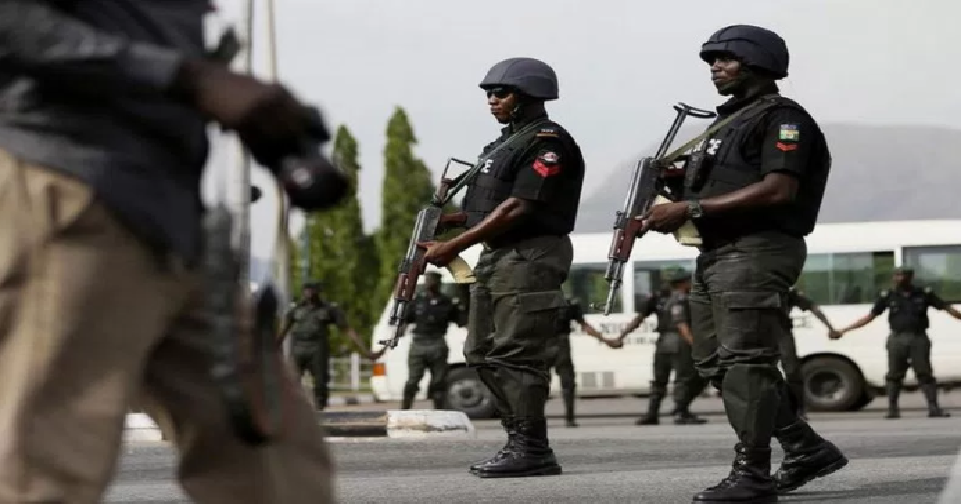
I see it at airports, homes, roads and everywhere: one citizen retaining a truck load of policemen to guard him or protect a trip of less than 10 minutes. It is always painful watching the elite of Nigerian Police guarding private and unauthorized citizens. It is simple: have few tens of thousands and the DPO can close the barracks and deploy all the officers to you.  The demand is huge, and for this to be happening, it means the police officers do great jobs.

Yes, our police guys are professionals when they are compensated and motivated. And even the Ogas know that. So, in a country of 180 million (take your number) people, with 400,000 police officers, about 40,000 of the citizens control 38% of the whole force. (The officers are sent in pairs, in some cases in truckloads. Some could go with two Hilux vans for one man. I expect the unique citizens to be 40,000). The implication is that the remaining 250k officers are now to police “180 million-40k people”. In other words, 38% of the police force guard 0.022% of the population

The Police Service Commission, PSC, said that more than 150,000 police officers were attached to VIP’s and unauthorised persons in the country. Nigeria currently has about 400,000 police officers.

[…]

“We cannot afford to have more than half of the population of the Police in private hands,” Chairman of the commission, Mike Okiro.

Nigeria is a puzzle indeed. That this happens is a shame: private citizens colonizing services we all pay for, converting the Police into their private properties. But why you may want to be hard on the private citizens, the fact remains that if they pay taxes, government should provide security. But where government is not there, you may not necessarily blame them for going for the best possible security they could afford.

So, at the end, you take this blame to successive governments which have refused to boost police capabilities on fighting crime [to reduce the need of this personalized police business] or simply outlaw it [let the rich buy their security from the private sector]. But I tell you – this commercial police force is not going anywhere. Yet, it needs to stop, if we believe in the equality of the Nigerian people.

Will Speak in NNPC on Tuesday on Fixing Fuel Scarcity

0

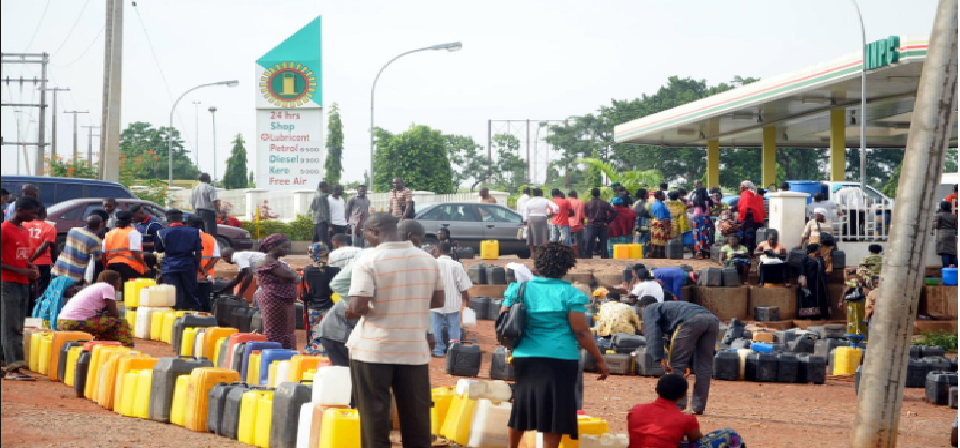
Some cities in Nigeria are experiencing acute fuel scarcity. It does happen in our great nation. It is a reminder that our systems are still at infancy. If not, there is no reason to run into troubles distributing fuel when the citizens are ready to pay. And the problem is not necessarily pricing: some are ready to pay at any price. The problem is Distribution & Logistics. Yes, the same issue that causes problems for ecommerce companies in Nigeria.

For ecommerce, you look at the marginal cost driven by geography. That marginal cost is composed of transaction and distribution costs. But transaction cost is typically negligible since it cannot be eliminated, and is not tied to distributive geography. But distribution cost is where the game is won, and it requires having a great process with solid pillars.

Though operationally it is at the lower phase of the chain, distribution in Nigeria is the upstream because that is where the knowledge base is uppermost, and the highest value could be created in ecommerce. The ecommerce portal is downstream; anyone can make a fancy site with nice SEO. The man that builds the best logistics system for the ecommerce companies would have more leverage than the sites.

The lesson: you have the goods in the warehouse but you cannot deliver to the customers because the distribution is broken. You cannot leapfrog that challenge. You have to solve it to have a great ecommerce operation.

That is the same issue with fuel scarcity. Fixing this must be uniquely Nigerian, and it would require a new architecture. I would be speaking in NNPC this week as we work on how to fix this national challenge. My focus would be looking at technologies that would enable our leaders to solve this problem. Please be guided on what you share; I am good in picking ideas from comments.

The Service Gap in Nigerian Banking

0

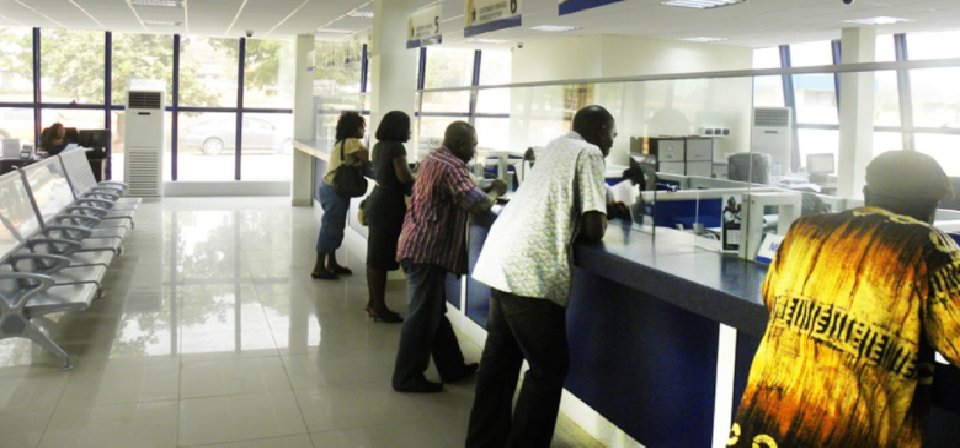
There is something I like about most U.S. banks: they combine retail and advisory services in branches no matter how small the branch is. When you walk in, you get a picture of a bank that is ready to collect your deposit and also discuss mortgage, lending, education funding, savings, etc right before you. The tellers are there while the advisors are in their cubicles talking to clients.

Sure, we do that in Nigeria in many ways, but the advisory part does not seem to be what any client can have access to. In other words, we make it look like you just come here to make deposit, and unless you have truckloads of cash, the advisory aspect would be away from you.

In my opinion, that is wrong. If branch staff members are not looking at how to help clients deepen their businesses and lives through advisory services, they would not strengthen the relationships necessary for future growths.

I recall a call I got from my U.S. bank many years ago. We had done a project for a Swiss businessman in Africa. They paid to my U.S. firm. The next day, the bank sent their staff to meet me, to understand how they could help the business, and if we plan to keep the cash, how the bank could make it work for us. As we discussed, they presented scenarios based on cashflow in our business. I was impressed that they did not see us as a number, but a firm, they could develop deeper relationships.

Till today, none of my Nigerian bankers have come to us with any conversation of such services. The message has been “the account is doing well” which means that inflows are coming. There is a service gap in our bank and we need to fix that.
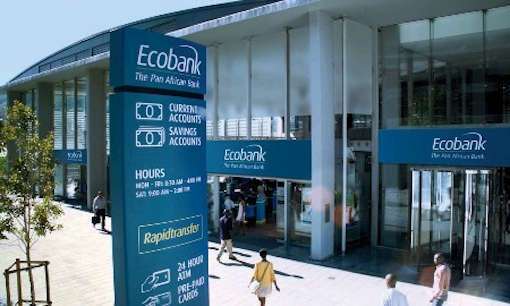
Imagine if we can have in each mega bank branch a Future Bar (think of 9Mobile Geek Bar or Apple Genius Bar for dealing with your phone issues), but here the focus would be to discuss investments and advisory services available to young professionals, as they begin their careers. Yes, we are not in the phase to use AI to drive such processes online. But we can build structures to get the young people excited to have financial plans.

Many people in Nigeria especially in the informal sector usually begin great but some run into troubles due to lack of financial planning. Visit your village and you would see people that started great businesses, post-apprenticeships from their masters, but today are struggling in villages. Their banks could have helped them when their failed businesses were booming.  Yes, besides the retail-first strategy, we must add advisory services to create more values for clients.