


I used to write for the world. But no one cared. Then I focused on Nigeria and Africa, my network started noticing. It turns out that digital marketing has a secret sauce when you want to expand business through organic content origination. There is nothing like generic audience. In the drive to win all, you […]
Nigerian Consulate Shanghai Republishes My Opinion on China and Nigeria

I like it when my piece makes it to the high chambers of power. Few days ago, I got a request for permission to reproduce one of my articles (Nigeria Needs To Invest To Understand China) in the Nigerian Consulate Shanghai website. Of course, it was CARRY GO. Now, they have it online. I know that government is reading us. This site is not built for click-bait but deep conversations on Nigeria, Africa and their economies.
Note: The following article is entirely the opinion of Ndubuisi Ekekwe and does not reflect the views of the Nigeria Consulate (Shanghai).
I admire China. That country is very brilliant in its technology policy. In its economic and commercial policies, it is not far behind. I do not know of any nation in history that has accomplished what it did. It condensed what took the West one hundred years into 25 years. China has a population that is bigger than Africa’s, but its people are not dying in the Mediterranean, for attempting to smuggle themselves into Europe for menial jobs.
I must also commend those in the Ministry of Foreign Affairs, Nigeria: someone could have read that piece as attacking them. Yes, anytime a piece is not praising a government/company, but offering a new perspective, some will think it is an attack. But interestingly, the Nigerian foreign experts in Shanghai liked it to the point of sharing it on their website. That is a good development for democracy.
SAP Africa, Google Africa Laughable Training Numbers

Africa is largely operating on perpetual statistics-free construct. Anyone can throw any number it wants. It happens all the time, but when you see leading global brands do so, you will sob.
In 2010, I was in California where I asked former U.S. Vice President, Al Gore, that his message on climate change was tainted because American companies would do in my country (Nigeria) what they would never do in America. I explained to Mr. Gore that Chevron would not flare gas in Texas but in Nigeria, it was a business policy. Same company, but different attitudes, in different lands!
Mr. Gore took time and explained why only local leaders could change the world. You may make all the laws in the world but it is left to local leaders to enforce them or where necessary improve them to meet local needs. Simply, he threw it to Nigerians to police Chevron in the way they would expect the energy giant to behave.

The SAP and Google Training Numbers
The same double standards we are dealing with energy companies are creeping into technology companies. From SAP press release:
With an ambitious target of training half a million African youth between 18 and 25 October, Africa Code Week again this year exceeded all expectations by empowering 1.3 million youth across 35 countries with basic coding skills. This is also a 203% increase over the 2016 iteration, which had seen nearly 427 000 youth trained across 30 African countries.
[…]
According to Claas Kuehnemann, Acting Managing Director of SAP Africa, much of Africa Code Week’s success lies in the strength and support of its partners and collaborators. “Over the past three years Africa Code Week has grown into one of the best-supported and most far-reaching digital skills development initiatives on the African continent, with a broad range of governments, NGOs, private sector companies, educators, students and scholars all contributing to empowering one of the largest and most youthful workforces on the planet. We extend our gratitude to everyone who made this year such a resounding success, and look forward to building on its best practices over the years to come.”
Yes, SAP through its works has trained 1.3 million young Africans on coding. Clap your hands as we have extra 1.3 million coders for 2017 alone. I call this unfortunate because no one challenges these companies when they throw out these nice pleasing press releases.
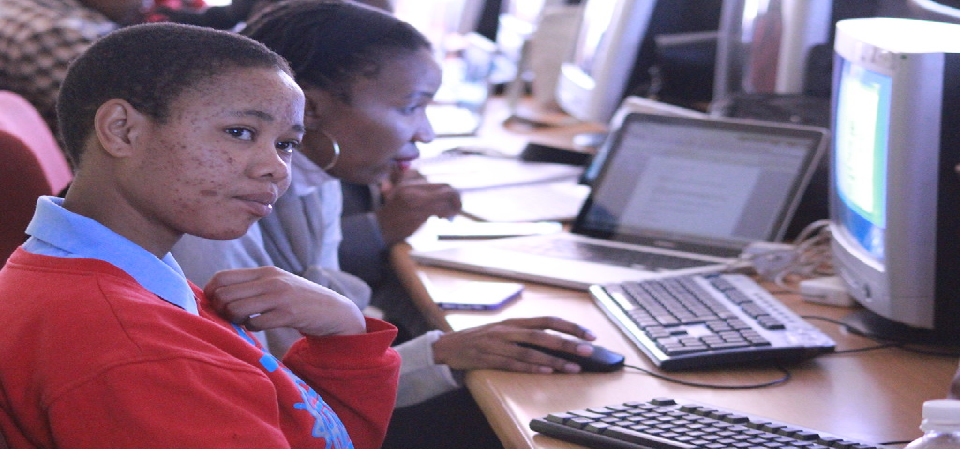
Google is doing the same thing through its efforts to train 10 million Africans on the workforce of the future. When I visited Nigeria last time, I attended an event where one of those training programs happened. What I saw was a four-hour PowerPoint presentation. The trainer explained all the digital strategies. At the end, everyone in the audience has been trained on digital marketing. Perhaps, she got there 250 and the march to 10 million continues.
Alphabet Inc’s Google aims to train 10 million people in Africa in online skills over the next five years in an effort to make them more employable, its chief executive said on Thursday
Google’s pledge marked an expansion of an initiative it launched in April 2016 to train young Africans in digital skills. It announced in March it had reached its initial target of training one million people.
The company is “committing to prepare another 10 million people for jobs of the future in the next five years,” Google Chief Executive Sundar Pichai told a company conference in Nigeria’s commercial capital of Lagos.
There is no problem with what SAP, Google and others are doing. They are offering services and people truly benefit. We must commend them and support them. However, I hate it when they design different standards on initiatives because they are in Africa, leaving what has worked in America. Google will not use the word “train” if it goes into Baltimore (USA), show a PowerPoint and come out to tell the governor that it has trained the citizens. That will not happen.
For Google to claim it has trained, it must have actually impacted real skills to young people. Apple is investing money in community colleges to train students on how to code. This investment involves hiring new teachers, buying equipment, upgrading curricula and then executing a program over months for the kids. When they graduate, they would have been trained indeed. Toyota North America does a similar thing on welding, casting etc. I mean these companies impact real skills to young people.
Water Everywhere, But No Water to Drink
If Google has produced REAL one million digital marketers and SAP produced 1.3 million basic coders just for 2017, you will feel the impact in Africa. Where are they? The reality is that there is marginal value, as those claimed to have been trained are not even aware that they have been trained. Google, SAP and others have the right incentives but they want big numbers to look great. Unfortunately, that is not necessary.
Google and SAP are smart companies: they know that picking 100k young Africans and develop them as elite coders and professionals will have more impacts than what they are doing today, pursuing mass numbers in millions.
But they will continue to do so, as no one cares to question them to improve, and deliver value, even as they take credits on things which do not necessarily exist. I do not believe that the 1.3 million coders that SAP is claiming it has trained this year have met the basic standards of coding. They may use the word “exposed” but using “train” is a disservice to companies that offer real training to young people. This is not a game of quantity: quality rules, and SAP and Google are the best companies to know that. Africa’s problem is not that we do not have 3 million coders. In my opinion, the issue is that we do not have good 100,000 coders.
Yes, if Google takes 100,000 young people and turn them into elite digital professionals and SAP picks 100k and do the same thing, the continent will experience more catalytic impacts than the poorly prepared millions. I commend the generosity: they just have to make the initiatives more impactful by focusing on quality over quantity.
Visiting Lagos, Abuja: Schedule To Meet In Q1 2018

I will be working in Nigeria in QI 2018 (some parts of Jan – March) as we launch a new healthcare startup in the market. We have engineered an amazing solution to do what we are doing in agriculture, through Zenvus, in the healthcare sector.
While we unveil the new business, I will also like to welcome new clients into our Advisory Services. At Fasmicro Group, we do not recite numbers and tell you what you already know: we deliver unparalleled insights through uncommon perspectives shaped by our experiences as entrepreneurs in the markets. Our moments are unique because things we share with clients are shaped by our direct exposures to the markets.
Our Advisory Services solutions are structured as follows:
- The State of the Industry: This is a two-hour presentation where I will present what is happening in your market, customized for your company, and then offer insights on how you can plot your strategies to win. This goes beyond industry statistics and typical SWOT analysis. We work to help clients see their markets in new ways, providing roadmaps on how they can unlock opportunities. It is an intense talk, combining technology, finance, political economy and strategy. As technology redesigns markets, I break the implications in short, medium and long-terms.
- Case: How can a (mall) real estate developer understand that ecommerce is a tangential threat since malls can be disrupted by digital commerce in future? My client now considers triple-play designs where malls can be converted into offices or homes, in case the moment comes.
- Discovery Innovation Workshop: This could take up to a day, but minimum of four hours is required. Besides the two-hour State of the Industry presentation, we work with clients to discover unique ways they can look at their businesses.
- Case: We have a framework, engineered internally, that helps our clients go through the process of innovation discovery. Our synthesis is to see how technology can run and transform firms, even as we recommend business models that will survive disruptions.
- Advisory Services: Most times, after our presentations and workshops, clients usually engage us for Advisory Services. This is totally decoupled from the first two. In other words, you can engage us for either the presentation or workshop without the advisory services. Yet, we always welcome the moments when clients ask us to come and lead the talk. Because we are already practitioners, making things happen is always the most exciting part of our works.
Our services cover all industries, and we operate at the highest ethical level. We have no memory of your business, as we exit, and your confidentiality is assured. Typically, we meet clients in Abuja and Lagos. We work at senior and executive management levels.
If interested, email any of audrey.kumar@fasmicrogroup.com or tekedia@fasmicro.com. Our cost is industry-competitive.
I will like to visit your business.
Nd
Samsung Finds Its Platform

In a piece, titled “Samsung’s Circular Profit on Apple”, I explained that Samsung is largely indifferent, strategically, to the performance of iPhone X because no matter the outcome, Samsung will have a win.
Technically, Apple is equipping its main competitor. For Samsung, that iPhone X is selling very well is not really a bad thing, since that means Apple will need more display and memory chips from it. And should Apple struggle, Samsung can easily fill-up the gap since it has its own big smartphone business.
Samsung has businesses that cover semiconductors, displays and practically any major area you will imagine in modern electronics (used broadly) business. With that exposure, it has become extremely diversified that Samsung Group can weather any storm in its subsidiaries including the mobile business, which makes Galaxy devices.
The legendary Chairman of Samsung, Lee Kun-hee, few years ago put money on the table to build new businesses that will generate billions of dollars in new revenue. One of those areas is making generic drugs. Another is in automotive sector. Samsung bought Harman International for $8 billion earlier in the year. Harman makes audio systems and other elements for connected cars.
HARMAN (harman.com) designs and engineers connected products and solutions for automakers, consumers, and enterprises worldwide, including connected car systems, audio and visual products, enterprise automation solutions; and connected services. With leading brands including AKG®, Harman Kardon®, Infinity®, JBL®, Lexicon®, Mark Levinson® and Revel®, HARMAN is admired by audiophiles, musicians and the entertainment venues where they perform around the world. More than 25 million automobiles on the road today are equipped with HARMAN audio and connected car systems. The Company’s software services power billions of mobile devices and systems that are connected, integrated and secure across all platforms, from work and home to car and mobile. HARMAN has a workforce of approximately 30,000 people across the Americas, Europe, and Asia.
Certainly, we all know that the automotive sector is going through a redesign. Samsung wants to be at the heart of it. With its new position, Samsung has created a new market for Galaxy devices inside cars. While Apple will be looking for strategic partnerships, Samsung has one, organically. All Harman products now will work in sync with Galaxy devices and that will improve the experiences of users as they transition from homes into their cars.
I do not know much about South Korea, but it seems that its stock market is unique. Unlike Wall Street, it looks like companies are given the freedom to build businesses for ages through clusters of diversification which may not be possible in U.S.
The Platform Company
In the platform business model, there is a new formation here: if Samsung, on the strength of Harman acquisition, takes a lead on connected cars (that is possible with its experience in mobile), it could impose a tax on players that connect to its ecosystems. Google has its tax through Android and Google Play. Apple has got its own through iOS and App Store. Amazon is working on one via Echo/Alexa. Samsung may be looking at building one for automotive. The promise of Bixby, its voice assistant, may be to dominate the connected cars sector, and what happens inside cars.

Each of the big technology firms wants a platform because in the near future, we will simply have only IT utilities. Many platforms already exist through the likes of Facebook, Google and Amazon. Just few are available and Samsung wants to take the car one. Samsung is buying into this opportunity as more M&A may be on the way, as Young Sohn, chief strategy officer, noted: “We are committed to using M&A as our tool.”
The Complete Loop
The photo below shows what Samsung has in mind: it wants to close the loop; connecting homes, cars, people, and everywhere else with its technology. That is the grand vision. It will be a tough battle because companies like Conti and Bosch will not give up on cars easily. Even Bose, which is a great audio making company, has a stake. But one thing is clear: despite Apple which is after our persons, Amazon for our homes, Samsung is the only company that is mapping to connect all the nexus of our lives (person, home, car, anywhere), at scale. If it succeeds, it would have built the ultimate platform. It can then impose taxes to provide access to other entities.

With Harman acquisition and possibly new ones to come, Samsung is well positioned to offer a top-grade ecosystem for OEMs to build on its platform for cars, homes and of course persons. And as it does that, it will continue to make chips, making sure that even if it cannot sell its final products, any major player that wins will need its microprocessors. There is no better way to tax an economy than to power it. The world will pay you tax, as you have circled your competitors. Samsung is a fine company.