


DD
MM
YYYY

PAGES

DD
MM
YYYY

spot_img

PAGES

Home Blog Page 7252

SAP Africa, Google Africa Laughable Training Numbers

0

Africa is largely operating on perpetual statistics-free construct. Anyone can throw any number it wants. It happens all the time, but when you see leading global brands do so, you will sob.

In 2010, I was in California where I asked former U.S. Vice President, Al Gore, that his message on climate change was tainted because American companies would do in my country (Nigeria) what they would never do in America. I explained to Mr. Gore that Chevron would not flare gas in Texas but in Nigeria, it was a business policy. Same company, but different attitudes, in different lands!

Mr. Gore took time and explained why only local leaders could change the world. You may make all the laws in the world but it is left to local leaders to enforce them or where necessary improve them to meet local needs. Simply, he threw it to Nigerians to police Chevron in the way they would expect the energy giant to behave.
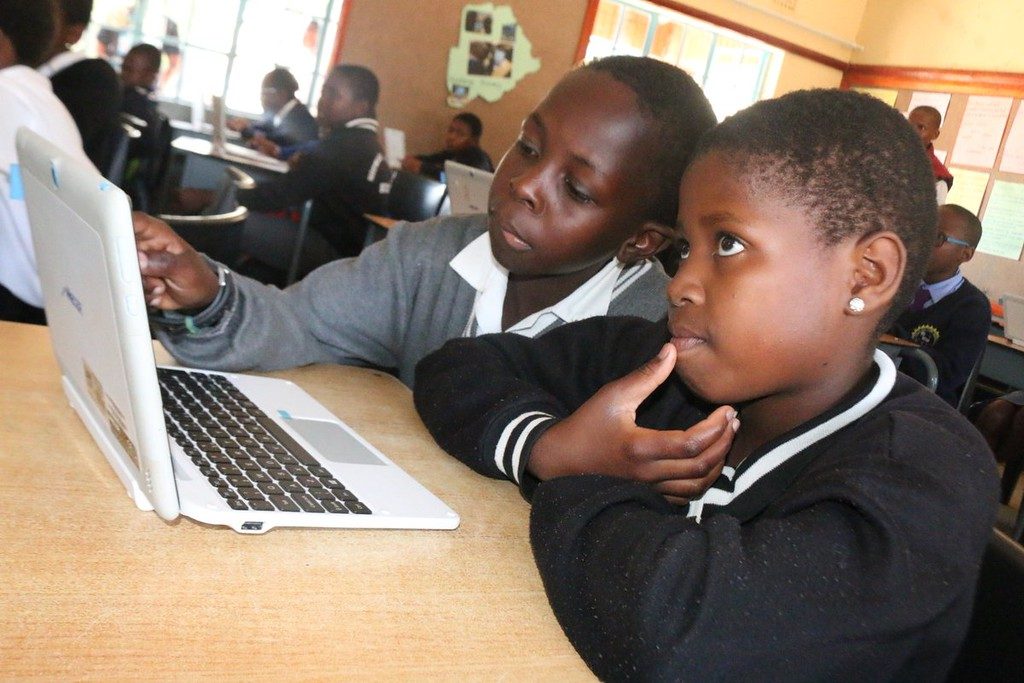
African kids learning (credit: SAP)

The SAP and Google Training Numbers

The same double standards we are dealing with energy companies are creeping into technology companies. From SAP press release:

With an ambitious target of training half a million African youth between 18 and 25 October, Africa Code Week again this year exceeded all expectations by empowering 1.3 million youth across 35 countries with basic coding skills. This is also a 203% increase over the 2016 iteration, which had seen nearly 427 000 youth trained across 30 African countries.

[…]

According to Claas Kuehnemann, Acting Managing Director of SAP Africa, much of Africa Code Week’s success lies in the strength and support of its partners and collaborators. “Over the past three years Africa Code Week has grown into one of the best-supported and most far-reaching digital skills development initiatives on the African continent, with a broad range of governments, NGOs, private sector companies, educators, students and scholars all contributing to empowering one of the largest and most youthful workforces on the planet. We extend our gratitude to everyone who made this year such a resounding success, and look forward to building on its best practices over the years to come.”

Yes, SAP through its works has trained 1.3 million young Africans on coding. Clap your hands as we have extra 1.3 million coders for 2017 alone. I call this unfortunate because no one challenges these companies when they throw out these nice pleasing press releases.
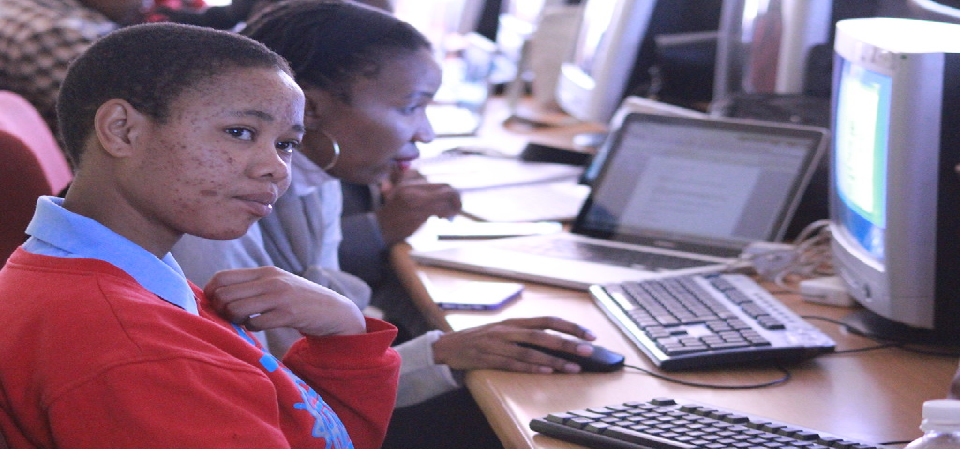
African Sstudents learning (credit: SAP)

Google is doing the same thing through its efforts to train 10 million Africans on the workforce of the future. When I visited Nigeria last time, I attended an event where one of those training programs happened. What I saw was a four-hour PowerPoint presentation. The trainer explained all the digital strategies. At the end, everyone in the audience has been trained on digital marketing. Perhaps, she got there 250 and the march to 10 million continues.

Alphabet Inc’s Google aims to train 10 million people in Africa in online skills over the next five years in an effort to make them more employable, its chief executive said on Thursday

Google’s pledge marked an expansion of an initiative it launched in April 2016 to train young Africans in digital skills. It announced in March it had reached its initial target of training one million people.

The company is “committing to prepare another 10 million people for jobs of the future in the next five years,” Google Chief Executive Sundar Pichai told a company conference in Nigeria’s commercial capital of Lagos.

There is no problem with what SAP, Google and others are doing. They are offering services and people truly benefit. We must commend them and support them. However, I hate it when they design different standards on initiatives because they are in Africa, leaving what has worked in America. Google will not use the word “train” if it goes into Baltimore (USA), show a PowerPoint and come out to tell the governor that it has trained the citizens. That will not happen.

For Google to claim it has trained, it must have actually impacted real skills to young people. Apple is investing money in community colleges to train students on how to code. This investment involves hiring new teachers, buying equipment, upgrading curricula and then executing a program over months for the kids. When they graduate, they would have been trained indeed. Toyota North America does a similar thing on welding, casting etc. I mean these companies impact real skills to young people.

Water Everywhere, But No Water to Drink

If Google has produced REAL one million digital marketers and SAP produced 1.3 million basic coders just for 2017, you will feel the impact in Africa. Where are they? The reality is that there is marginal value, as those claimed to have been trained are not even aware that they have been trained. Google, SAP and others have the right incentives but they want big numbers to look great. Unfortunately, that is not necessary.

Google and SAP are smart companies: they know that picking 100k young Africans and develop them as elite coders and professionals will have more impacts than what they are doing today, pursuing mass numbers in millions.

But they will continue to do so, as no one cares to question them to improve, and deliver value, even as they take credits on things which do not necessarily exist. I do not believe that the 1.3 million coders that SAP is claiming it has trained this year have met the basic standards of coding. They may use the word “exposed” but using “train” is a disservice to companies that offer real training to young people. This is not a game of quantity: quality rules, and SAP and Google are the best companies to know that. Africa’s problem is not that we do not have 3 million coders. In my opinion, the issue is that we do not have good 100,000 coders.

Yes, if Google takes 100,000 young people and turn them into elite digital professionals and SAP picks 100k and do the same thing, the continent will experience more catalytic impacts than the poorly prepared millions. I commend the generosity: they just have to make the initiatives more impactful by focusing on quality over quantity.

Visiting Lagos, Abuja: Schedule To Meet In Q1 2018

2

I will be working in Nigeria in QI 2018 (some parts of Jan – March) as we launch a new healthcare startup in the market. We have engineered an amazing solution to do what we are doing in agriculture, through Zenvus, in the healthcare sector.

While we unveil the new business, I will also like to welcome new clients into our Advisory Services. At Fasmicro Group, we do not recite numbers and tell you what you already know: we deliver unparalleled insights through uncommon perspectives shaped by our experiences as entrepreneurs in the markets. Our moments are unique because things we share with clients are shaped by our direct exposures to the markets.

Our Advisory Services solutions are structured as follows:

  • The State of the Industry: This is a two-hour presentation where I will present what is happening in your market, customized for your company, and then offer insights on how you can plot your strategies to win. This goes beyond industry statistics and typical SWOT analysis. We work to help clients see their markets in new ways, providing roadmaps on how they can unlock opportunities. It is an intense talk, combining technology, finance, political economy and strategy. As technology redesigns markets, I break the implications in short, medium and long-terms.
    • Case: How can a (mall) real estate developer understand that ecommerce is a tangential threat since malls can be disrupted by digital commerce in future? My client now considers triple-play designs where malls can be converted into offices or homes, in case the moment comes.
  • Discovery Innovation Workshop: This could take up to a day, but minimum of four hours is required. Besides the two-hour State of the Industry presentation, we work with clients to discover unique ways they can look at their businesses.
    • Case: We have a framework, engineered internally, that helps our clients go through the process of innovation discovery. Our synthesis is to see how technology can run and transform firms, even as we recommend business models that will survive disruptions.
  • Advisory Services: Most times, after our presentations and workshops, clients usually engage us for Advisory Services. This is totally decoupled from the first two. In other words, you can engage us for either the presentation or workshop without the advisory services. Yet, we always welcome the moments when clients ask us to come and lead the talk. Because we are already practitioners, making things happen is always the most exciting part of our works.

Our services cover all industries, and we operate at the highest ethical level. We have no memory of your business, as we exit, and your confidentiality is assured. Typically, we meet clients in Abuja and Lagos. We work at senior and executive management levels.

If interested, email any of audrey.kumar@fasmicrogroup.com or tekedia@fasmicro.com. Our cost is industry-competitive.

I will like to visit your business.

Nd


Samsung Finds Its Platform

2

In a piece, titled “Samsung’s Circular Profit on Apple”, I explained that Samsung is largely indifferent, strategically, to the performance of iPhone X because no matter the outcome, Samsung will have a win.

Technically, Apple is equipping its main competitor. For Samsung, that iPhone X is selling very well is not really a bad thing, since that means Apple will need more display and memory chips from it. And should Apple struggle, Samsung can easily fill-up the gap since it has its own big smartphone business.

Samsung has businesses that cover semiconductors, displays and practically any major area you will imagine in modern electronics (used broadly) business.  With that exposure, it has become extremely diversified that Samsung Group can weather any storm in its subsidiaries including the mobile business, which makes Galaxy devices.

The legendary Chairman of Samsung, Lee Kun-hee, few years ago put money on the table to build new businesses that will generate billions of dollars in new revenue. One of those areas is making generic drugs. Another is in automotive sector. Samsung bought Harman International for $8 billion earlier in the year. Harman makes audio systems and other elements for connected cars.

HARMAN (harman.com) designs and engineers connected products and solutions for automakers, consumers, and enterprises worldwide, including connected car systems, audio and visual products, enterprise automation solutions; and connected services.  With leading brands including AKG®, Harman Kardon®, Infinity®, JBL®, Lexicon®, Mark Levinson® and Revel®, HARMAN is admired by audiophiles, musicians and the entertainment venues where they perform around the world. More than 25 million automobiles on the road today are equipped with HARMAN audio and connected car systems. The Company’s software services power billions of mobile devices and systems that are connected, integrated and secure across all platforms, from work and home to car and mobile. HARMAN has a workforce of approximately 30,000 people across the Americas, Europe, and Asia.

Certainly, we all know that the automotive sector is going through a redesign. Samsung wants to be at the heart of it. With its new position, Samsung has created a new market for Galaxy devices inside cars. While Apple will be looking for strategic partnerships, Samsung has one, organically. All Harman products now will work in sync with Galaxy devices and that will improve the experiences of users as they transition from homes into their cars.
I do not know much about South Korea, but it seems that its stock market is unique. Unlike Wall Street, it looks like companies are given the freedom to build businesses for ages through clusters of diversification which may not be possible in U.S.

The Platform Company

In the platform business model, there is a new formation here: if Samsung, on the strength of Harman acquisition, takes a lead on connected cars (that is possible with its experience in mobile), it could impose a tax on players that connect to its ecosystems. Google has its tax through Android and Google Play. Apple has got its own through iOS and App Store. Amazon is working on one via Echo/Alexa. Samsung may be looking at building one for automotive. The promise of Bixby, its voice assistant, may be to dominate the connected cars sector, and what happens inside cars.

(source: Samsung)

Each of the big technology firms wants a platform because in the near future, we will simply have only IT utilities.  Many platforms already exist through the likes of Facebook, Google and Amazon. Just few are available and Samsung wants to take the car one. Samsung is buying into this opportunity as more M&A may be on the way, as Young Sohn, chief strategy officer, noted: “We are committed to using M&A as our tool.”

The Complete Loop

The photo below shows what Samsung has in mind: it wants to close the loop; connecting homes, cars, people, and everywhere else with its technology. That is the grand vision. It will be a tough battle because companies like Conti and Bosch will not give up on cars easily. Even Bose, which is a great audio making company, has a stake. But one thing is clear: despite Apple which is after our persons, Amazon for our homes, Samsung is the only company that is mapping to connect all the nexus of our lives (person, home, car, anywhere), at scale. If it succeeds, it would have built the ultimate platform. It can then impose taxes to provide access to other entities.

(source: Samsung)

With Harman acquisition and possibly new ones to come, Samsung is well positioned to offer a top-grade ecosystem for OEMs to build on its platform for cars, homes and of course persons. And as it does that, it will continue to make chips, making sure that even if it cannot sell its final products, any major player that wins will need its microprocessors. There is no better way to tax an economy than to power it. The world will pay you tax, as you have circled your competitors. Samsung is a fine company.

The Atiku Return; New University Strike

2

Politics drives business, and I am tempted to comment on the recent return of the former Vice President of Nigeria, Mr. Atiku Abubakar, to PDP (Peoples Democratic Party), from the ruling All Progressives Congress (APC).

The Deputy Senate President, Ike Ekweremadu, has expressed happiness over the return of a former vice president, Atiku Abubakar, to the People’s Democratic Party, PDP. He described his action as a welcome development not only for the party, but also for the nation’s democracy.

Mr. Ekweremadu said this in a statement signed by his Special Adviser on Media, Uche Anichukwu.

The lawmaker said the move represented a massive vote of no confidence in the leadership capacity of the ruling All Progressives Congress, APC, first, by the masses, and now by the “cream of its hierarchy and founding members.”

“Nigeria is in dire need of a rescue mission to rekindle hope in our democracy, restore her on the path of prosperity, and halt the worsening divisiveness that threatens our corporate existence,” he said.

It is very evident that the Presidency will remain in the north come 2019, and then move South from 2023. Atiku’s last chance to taste the presidency will be 2019. He has something to prove to his former boss, former President Olusegun Obasanjo. With President Buhari there, there is no vacancy in the APC presidential platform. So, the only option for Atiku was the move to PDP.

I expect Atiku to be the flag bearer for PDP presidential ticket unless PDP orchestrates a big party meager with new heavyweights.

No credible PDP (presidential) contestant will come from the Southwest (had its turn), South South (too soon) and South East (waiting for 2023), so PDP is likely going to field someone from the Northern part of the country.

Politics of Ideas

I like the fact that Atiku will be running. My liking that Atiku is running is to push APC to do more for Nigerians. Without a strong contender in the North, Buhari will walk into the second term without any serious effort. Atiku is already hitting APC on economy, employment and development, and APC has been challenged to respond. Let me say this: APC, going forward, will be putting more efforts especially in North East where the citizens need help.

There are few politicians that can say what Atiku is saying in Nigeria, without the fear of one government agency opening a corruption dossier against him or her. That Atiku has joined the fray will bring more contacts sports, and that will be good for our democracy.

With only marginal reforms, APC has not done much in Nigeria. I know it is still early to judge them, but they put themselves in the position when they claimed that they could magically solve key Nigerian challenges. The more conversations and debates on the Nigerian democracy, the better. As Atiku returns, Nigeria will have many debates on national issues.

Educational Sector

The non-teaching staff of our public universities will begin strike today. This has been a cyclical event: once the teaching staff finish and get their goodies, the non-teaching staff resume. For decades, this movie has been playing. It is very unfortunate.

The non-teaching staff of Nigerian universities will commence an indefinite strike today in public universities. The staff have also provided reasons for resuming their suspended strike.

The staff, members of three unions, NASU, SSANU, and NAAT, announced the commencement of the strike last Thursday in a press statement signed by the national presidents of the three unions.

Largely, you cannot blame the non-teaching staff for asking for their promised benefits. The problem remains with the government which keeps opening new universities even when it does not have funds to support them. Of course, the same professors and administrators who go on strikes support opening more schools as such provides new opportunities to become vice chancellors, registrars, etc. But what happens is that as soon as the tapes are cut, crises begin because funds are not available to run the schools. We need reform in our university system.

All Together

I am hoping that Atiku’s return to PDP will open up intellectual policy debate in the Nigerian parliament. We have not seen anything like that. Possibly, Atiku could push his new party to bring energies to see how we can deal with many policy issues in the nation. One area I expect them to focus is the educational sector. If our universities continue to strike as they do, we will not be positioned to deal with the realignment of labour which is happening as artificial intelligence and emerging technology redesign the global commerce and industry.

Automation could destroy as many as 73 million U.S. jobs by 2030, but economic growth, rising productivity and other forces could more than offset the losses, according to a new report by McKinsey Global Institute.

“The dire predictions that robots are going to take our jobs are overstated,” says Susan Lund, the group’s director of research and co-author of the study. “There will be enough jobs for everyone in most sectors.”

Yet maintaining full employment will require a huge overhaul of the economy and labor market that rivals or exceeds the nation’s massive shifts from agriculture- and manufacturing-dominated societies over the past 165 years, the report says.

Nigerian schools must be supported to help drive Nigeria to avoid this massive labour dislocation. Mr Atiku, as he returns to PDP, could help push for reforms in the educational sector through his PDP compatriots. This reform is not just about more funding, but a fundamental structural change that will make education more relevant to the needs of the markets, even as Nigerian schools are pushed to look for alternative means of funding. I have put forward how new changes in our tax system could open private funding into our public schools. PDP has not provided bold new ideas in the last two years. Possibly, Atiku with his ambition could get his new party to begin to offer ideas. APC will then be forced to respond. That is what will make Nigerian democracy better, and eliminate the cyclical strikes we see in our university system.

Winning Through Dislocalization of Network Effects

0

Network effect is “a phenomenon whereby a product or service gains additional value as more people use it”. That is the elemental construct that drives great platforms like Facebook, LinkedIn, and Twitter: if your friends and families are in Facebook, the more valuable it will be to you. Indeed, the population of the users is the most important feature in the platforms, far ahead of any tool. That explains why cloning a product that mirrors Facebook, but without the users, does not offer any value.

The network effect is a phenomenon where increased numbers of people or participants improves the value of a good or service. The internet is a good example. Initially, there were few users of the internet, and it was of relatively little value to anyone outside of the military and a few research scientists. As more users gained access to the internet, adding more content, information, and services, however, there were more and more websites to visit and more people to communicate with. The internet became extremely valuable to its users.

Types of Platforms

I identify two types of platforms based on the relationships among consumers, advertisers, and publishers/producers. They include the following:

  • Platform, Unbounded by Geography: In this type of platform, the relationship between the consumers and the producer is not bounded by any geography. This means that as the product scales, there is no inherent limitation on the physical availability of users and producers. Facebook belongs to this group. Its scalability is not affected by the physical location of its users (the consumers) and the producers (the users, also). Also, the advertisers can be from any location. Nothing is bounded by physical geography. This type of platform is very difficult to challenge in local markets as they have moats which no local company can exploit. (Let me call this Category 1).
  • Platform, Bounded by Geography: In this type of platform, there is network effect, but the relationship between the producer and the consumer is bounded by geography. There is a limitation on how the platform can scale as it has to deal with the physical-induced marginal cost, and other issues. Uber, the ride-hailing app, is a good example. Also, AirBnB is another example. Uber depends on the availability of riders and drivers to have a business in any city. That is why Uber goes to big cities when it comes to any country (contrast that with Facebook which does not care about your location, to a great extent). Uber wants to have supply of riders and also drivers. You find the mix easily in big cities. The same applies to AirBnB which also needs to have available apartments for its renters. So, that city must have landlords even as it provides a good source of potential renters. That is why AirBnB looks at big cities as it moves into Africa. (Let me call this Category 2).

Local Competition Impacts

The Category 1 platforms are very difficult to challenge locally because they have moats which are not limited by geography. There is nothing a local company can do locally to have an advantage over them. So, most times, you do not have any local competitor to them as everyone has moved to the main (global) platforms.

But Category 2 platforms are very vulnerable. They can be easily dislocalized by geography. In other words, you can have many ride-hailing companies in Africa even when you have no one competing against LinkedIn and Facebook. So, in Kenya, we have Little Cab and in Nigeria, Taxify is challenging Uber. Across the Asian world, Uber has many competitors. It gave up in China when it sold its assets to Didi Chuxing.

Simply, Uber is vulnerable to competition because its business has bounded participants defined by geography. That reduces its scalable advantage to a little below one, even though it is asset-light. On the other hand, Facebook has little to worry when it comes to geography, pushing its scalable advantage to 1 as I noted in the video below.

Any startup needs to model its scalable advantage (SA) to ascertain its capacity to scale and win in the market place. There are many factors which determine a company’s scalable advantage. Some are external like regulation, industry of operation and size of the market. Others are internal and they include marginal cost, supply pipeline, among others. In this video, I explain how to model that advantage by looking at the core transaction frictions between selling and buying. The more the business eliminates the friction, the more scalable it becomes.

Two-Sided Dislocalization

As noted for Category 2, the business has impacts associated with geography.  They have two sides: Uber with the riders and the drivers; AirBnB with the landlords and the renters. There are many other examples in this category: China’s Mobike, a motorcycle sharing startup is a good example. Even Etsy, the handcrafting retailer qualifies. There are many elements associated with geography, in these firms, either access to the network or the logistics for distribution. I will use Uber and AirBnB as they are more popular in Africa.

To compete against Uber and AirBnB, a local entrepreneur can build a better product because the global network effect of Uber and AirBnB while partially relevant is not absolutely dominating, locally.  Uber can have millions of riders in Europe and US but it has none in my village. So, if I go to Ovim (Abia State) and start one, I will be the leader in that locality. Sure, Uber has the brand equity which is huge, but the very fact that it has no driver, I am on top in my village. (That depends if there is a business for that in the village, I hope you get the point.) For AirBnB, where it has no listing, it does not exist and any entrepreneur can build a business therein.

All Together

In summary, dislocalization of network effect, i.e. making the localized network effect of global platforms irrelevant, is the way local companies can win. But you need to understand the type of platforms you can technically have any advantage to use local knowledge and expertise to win. There will always be many Ubers around the world, but we will not have many Facebooks.

Uber can lose drivers and riders easily to local competitors because its demand and supply pool are all localized. Unlike AirBnB which has a local supply but globalized demand, challenging AirBnB may be more difficult. Why? You can book your AirBnB short stay, in any city, from any location on earth, while you can only order Uber rider when you are local (i.e. where you need to be picked-up).

That means that Uber demand (i.e. riders) is bounded locally by geography making it easier to compete against Uber, unlike AirBnB which has a global platform that makes it easier for renters, who may not be local, to book. (Africa has many Uber competitors like Taxify, Little Cab etc while AirBnB has few. Sure, AirBnB itself is not even doing well.) That asymmetry in demand access makes a challenge against AirBnB to be tougher while Uber is a fair game. Indeed, the dislocalization of Uber is possible unlike AirBnB.