Two sectors, two approaches:
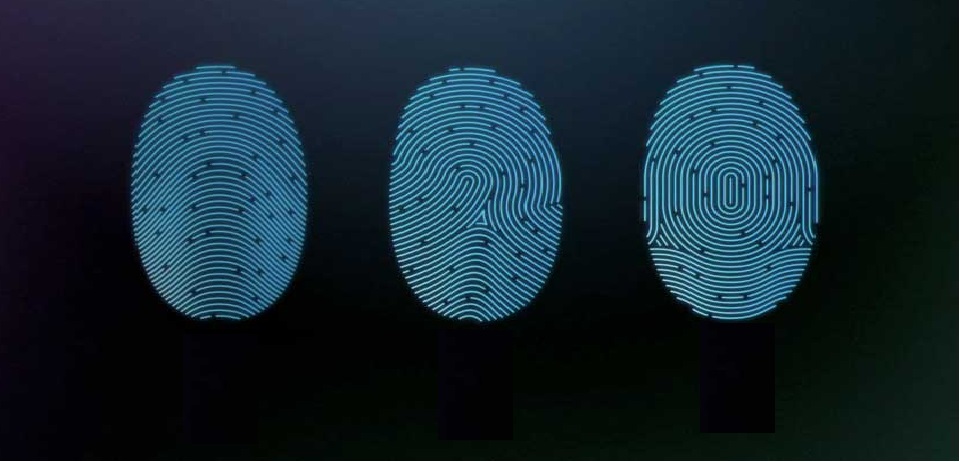
When the Bankers Committee wanted to associate the bank accounts in Nigeria with the biometrics of their owners, they came together. Through the Bank Verification Number (BVN), a customer once registered in one bank could link that same BVN in accounts maintained in other banks. There was no need of duplicating or replicating biometrics data in each of the banks. The impact is massive saving for the banks under a top-grade data consolidation regime. I always like how the Bankers Committee makes decisions: they analyze, commit and execute. The BVN has become a virtuoso project that continues to strengthen the institutional governance in Nigeria.
Contrast that with how the telecommunication sector approached the same problem. MTN, Glo, Airtel and 9Mobile (yes, Etisalat NG) decided they could not band together. Everyone went on its own way, wasting money and multiplying databases of Nigeria’s biometrics, a clear evidence of lack of National Data Policy. Interestingly, the telcos are techies who could have done this better. But as we already know: technology does not necessarily make you smarter, strategy does. So, MTN has its own database, Glo has its own, and so on. These companies consumed thousands of man hours of Nigerians, just for the privilege to have phone lines.
Largely, the telcos could have done what the banks did: if you have a sim card with MTN associated with a number (let’s call it Mobile Verification Number, MVN) tied to your biometrics, you can use that MVN to get sim card from another operator, without supplying new biometrics. For example, to get a Glo sim card, you do not need to do another biometrics, you simply give them the MVN, and they will sell you a sim card linking the phone number to the biometrics MTN had maintained.
Magically, that will save money for all the players. Of course, that is on the assumption that the telcos do greet one another. The way we do competition in Nigeria takes away any element of cooperation. That is unfortunate. We simply destroy our margins through unnecessary waste of resources. Only the banks have figured out how to build industries and ecosystems.
What is happening in telcos is happening in Immigration, Drivers License Office and clusters of entities across Nigeria where they continue to capture biometrics. I do think that Nigeria may need to redesign the Acts that govern NITDA (National Information Technology Development Agency) and NIMC (National Identity Management Commission) to deal with many pressing issues on technology and data management. If we collapse them as one, we can have an Office of Chief Information Officer, for Federal Republic of Nigeria; call it National Chief Information Officer (NCIO). The present Director-General of NIMC can assume that office as NIMC has more roles in the consolidation of the disparate databases in Nigeria, and certainly more strategic than NITDA.
Adapting from a similar role in U.S., the CIO will be the administrator of the electronic government evolution in Nigeria. The position will be appointed by the President and will oversee national technology spending, federal IT policy, and strategic planning of all national IT investments. The NCIO will be charged with establishing a government-wide enterprise architecture that ensures system interoperability, information sharing, as well as maintain effective information security and privacy controls across the Federal Government.
Besides, the incumbent will make sure that the Nigerian government buys software license as one entity instead of disparate ways government agencies acquire them today. So, instead of each ministry and agency wasting money on direct purchases of software licenses, Federal Republic of Nigeria can acquire the licenses, and then share (adding more user base where necessary) with MDAs (ministries, departments and agencies). That is one way of saving cost which the Ministry of Finance has not considered. There are many other ways, if only the nation sees the big picture.
If Data is the new oil, Nigeria needs to be prepared for that data future. Yes, we cannot use the structure for the “old oil” for the “new oil”.