A professor from Nigerian Electricity Regulatory Commission (NERC) gave a speech in Owerri last week. In that talk, he broke down all the problems with the Nigerian electricity sector. He explained the near-impossible seamless interface between the distribution companies (Discos) and the generating companies (Gencos) despite the presence of the NBET (Nigerian Bulk Electricity Trading Plc) and the Transmission Company of Nigeria (TCN).
The Discos are not motivated to carry all the available electricity sent to them because the tariff to sell them to the consumers is below market price. According to the professor, the Discos devised a way to manage that problem by stalling the implementation of the smart meter, giving them the opening to do estimated billing. Through that, Discos could rip-off customers, making money, even when not delivering any electricity. The Discos are not fully privatized: government retains about 49% in each of the Discos.
The Gencos are not happy because since electricity through the Nigerian grid cannot be stored, and Discos cannot accept all that Gencos are capable of generating, Gencos are not energized to operate at their maximum capacities. So, Gencos cut capacity, idling plants and losing on economies of scale. Most of the assets by Gencos are fully privatized.
The TCN, wholly owned by the Nigerian government but on contracted management, has its own problem. Its transmission system cannot carry more than 8,000 MW of electricity which means that even if Gencos generate above that amount, Discos will never get them.
NBET was designed to help to smooth these relationships, removing the friction which may exist between Gencos and Discos so that even if Discos cannot accept the electricity, Gencos will not lose money badly. Most times, it is irrelevant if the end customers have electricity. NBET is in intermediary role to make sure that an equilibrium point is maintained and the markets function well.
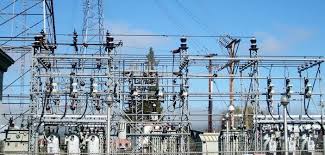
As the don spoke, I saw a clear ceiling in the whole problem: Nigerian problem is centralization of our energy policy. This is what I think we can do:
- Dismantle the whole nexus of national grid. Nigeria will never have enough money to beef up TCN to provide the transmission capacity we need to have 50,000 MW we need in this country. With that knowledge and TCN capacity stunted below 8,000 MW, a simple decision can be made. Do away with national grid and allow private sector to come in and run this business.
- More capacity from Gencos is not the answer: Our problem is not more capacity. Even if Gencos produce 50,000MW, only 8,000 MW can reach the Discos through TCN pipelines. My suggestion will be for the Gencos to have the capacity to sell their power directly to customers, without going through Discos. They can find a way to do that through their partners and investors
- Discos should lose exclusivity on meters: Government should make it possible for any company that can generate at least 50MW to have the capacity to sell meters and install same for customers under defined supervision for quality and fairness. Our fuel stations use meters and government regulates them, making sure they are fair as they dispense the petrol; we can do same on smart meters for electricity.
- Absolute and total decentralization: From generation to distribution through transmission, allow competition. Simply, decentralize the whole aspects but with requirement that no LGA can have more than two Gencos (above 50MW capacity) and two Discos and where those institutions operate they must share meters and transmission lines. If we do that, we will solve the problem of the national grid. That will also take out the problems the Gencos are experiencing of not operating on full capacity. This will also push Discos to innovate and function better through competition.
- Government should allow reflective tariff: As naira loses value, it makes sense to allow electricity to be optimally priced. Nigerian government should allow that to happen.
I understand that the Gencos who are used to producing massive power to transmit regionally and nationally will not be happy with decentralization. The fact remains that they can fund such infrastructures to reach new markets, if they decide.
Generally, if we decentralize and deal with the issues of national grid and meter, we will get closer to having constant power. The structure we have today will not work, because even in ten years, I don’t see where Nigerian government will find money to improve the capacity of the transmission lines. In a system, a weak link renders everything useless: the transmission system is the permanent weakest link here. Because TCN is still Nigeria’s issue, Gencos and Discos cannot reach real equilibrium based on market forces. We need a real market dynamics to have electricity in Nigeria: decentralization will get us closer to that.