DD
MM
YYYY

PAGES

DD
MM
YYYY

spot_img

PAGES

Home Blog Page 7271

Non-Disruptive Growth: The Free-Range Chicken Analogy

1
free range chicken

In business we like to talk of disruption. Disruption is a word that is used in any strategy document. To grow, you have to disrupt the incumbents by setting a new basis of competition which will help you to take market share from them. The digital camera innovators disrupted companies like Kodak who built their businesses on thin film photography. The digital camera firms introduced new technologies which the old guys could not overcome, and they became mortally wounded. In Nigeria, we have seen the old powerful banks like First Bank and Union Bank live under the shadows of Zenith Bank and GTBank which used information technology to redesign Nigeria’s banking sector. The market capitalizations of these banks make that disruption very evident.

Yet, it is not always necessary for a company to disrupt for it to grow. To explain that disruption is not always required for growth, I will use free-range chickens, found in most African villages, to create an analogy. A free-range chicken “is a bird that is allowed constant access to the outdoors, with plenty of fresh vegetation, sunshine and room to exercise”. As a teenager, I grew some and it was a very good business.

This bird does not compete for your time. Unlike dogs and cats, you practically do not invest so much time on free-range chickens. In the morning, they leave the house and in the evening, they return. They feed for themselves. The only time you really care is when it is time for them to lay eggs which many will not like to lay where they sleep because you would take the eggs.  So, they try to hide, apparently to preserve the lineage. Unlike chickens, dogs and cats will need your help, constantly. You have to find food to feed them. Also, you have to clean up their mess. But free-range chicken does not create such problems. As a teenager, I found it easy to manage and I built a small place where they slept.

In business, we can be like chickens. That means we can find new markets and opportunities that may not have to compete with the present ones. In other words, we can find virgin areas where we can operate as monopolies because we have pioneered them. When such happens, you are not disrupting anyone even though you are growing revenue. It means that you do not need any disruption to grow your business. All you need is to find a market with needs but yet latent. Just like chickens, you do not have to compete with dogs and cats for the attentions of the owners. You leave the competition and create your own growth model, away from others.

When Interswitch decided in Nigeria to pioneer digital payment, it acted like a chicken. It was a monopoly. It simply left those Lagos companies that were working hard to make the best bank cheque designs. It became a monopoly in its new category, and controlled its world. It did not bother to compete with the cheque printers but it was able to grow by enabling digital transactions, more efficiently.

iROKOtv did the same thing when it pioneered and invented Nigeria’s digital video-on-demand sector. Instead of competing with Upper Iweka Road (Onitsha) and School Road (Aba) merchants, it went online. It did not want to be in the competition like the chicken. Simply, it went online and created a new business category.

Yet, while Interswitch and iROKOtv created new markets, they did indeed impact the cheque printing and video businesses respectively. That does not make them a real free-range chicken because the chicken does not always affect those (the dogs and cats) competing for the attention of the owner.

The most elegant example is when a market is discovered and there was nothing to actually disrupt. Viagra, the ED drug is a good example. For centuries, the ED problem has existed but no one engineered the drug to manage it. Pfizer created the drug, by accident, and built a multi-billionaire business without disrupting anyone. It simply created a new industry without disrupting anyone. In that business, there was creation but no disruption. That is the chicken: the competition within the dog and cat owners was not disturbed while the chicken was free to roam around and found success.

Growth via Pricing Model

Besides the need to have creation to have growth, disruptively or not, one has to discover novel ways to grow. In Tesla, most cars come with enough battery capacity that can power the cars to extended miles on full charge. But Tesla imposes a limitation on that capacity, limiting the range, unless the customer pays. Yes, the battery on full charge can go say five hours (just for illustration), but Tesla will limit it to say three hours. But when a customer upgrades by paying more money to unlock more range, they will release the full capacity. So what is happening there is that Tesla has found opportunities to generate extra revenue for two similar cars that have practically the same batteries. By doing it via software remotely, it simplifies the process.

Most car companies reduce the engine capacity of lower model cars even when they are using those used in higher-grade vehicles. But for those companies, they use microprocessors which are tuned in auto shops unlike Tesla which is doing the battery tuning remotely via software. But the impact is the same: if you want more engine capacity, buy a higher car model even though the same engine (but limited) is already in the one you are driving.

As you pursue your creative non-disruptive growth, understand that pricing model can be a great source of success. That is what Qualcomm is battling with Apple: the capacity to make chips to become more valuable instead of components with marginal value in products like iPhone. By seeking to be paid a percentage of the product cost, Qualcomm wants more revenue so that as the price of the product goes high, it makes more money, unlike buying its chip for $18 and using it to power $1,000 product. If it pursues that growth model, which seems largely lost as Apple plans to pivot to use Intel and MediaTek products, it will find growth just through pricing model.

A chicken does not need a new territory to graze, unlike goats. Chickens move around and continue to find value even in places it has passed through. Goats graze and move forward because it has eaten the grass behind it. By coming back to products which have been created and looking for new opportunities, companies can be like chickens: yes, find more ways to extract value in already conquered territories.

All Together

I want us to consider the need of creating new markets in Africa even when we are not disrupting any firm or sector. It is not always that one has to disrupt, but it is mandatory that one has to create, in order to find growth. My free-range chicken blossomed by finding its own paths and at the same time did not participate in any competition for my time. It used its creativity to survive and grow without disrupting (yes, disturbing) any person. Your company can be like it.


Hacking Growth, Building Customer Trust

0

Trust is important. I used to watch NEPA (an electricity utilities institution) workers in Nigeria mount high voltage poles to fix or install things. One of the engineers would climb the pole while another would hold the ladder. In that process, they will make sure that power was cut-off to avoid electrocuting the man on the pole. Watching the men, you will see a system that was built and designed on Trust.  Without that trust, the risks the men take would not have been possible.

Trust is not just for electricity workers: in our relationships, we cherish trust. Indeed, in everything we do as humans, trust is the key. The more trust you can build, the better people can believe you. As a young banker in Lagos, they introduced us to Trust Bank. They noted that you would have to keep depositing trust in that bank in order to make progress in your career. Any day you fail in that capacity, it was as good as running away from the banking career. They trained us on decency, honor and values. They pushed us to make sure that our words mean our words, not just to your colleagues but also to the customers.

Even professors have to trust their students. You want to be assured that the papers they have drafted are not plagiarized. If they do and you do not find out, your own career could be in limbo. So, life is really about acquiring, dispensing and managing trust. In commerce, it cuts across all sizes: from big corporations to startups.

The Amazon Trust

You might have read that Amazon, the e-commerce giant, has a smart doorbell. This bell will allow you to open your door remotely for delivery people to drop items you have bought from Amazon. It seems crazy that somebody can do that. What if they hack the solution and someone enters your house? It is electronics and it is IP-controlled which means that it works through the Internet. It is a risk indeed. Yet, people will likely get the device. The technology is not really the bottleneck, the issue is this: can you trust Amazon to have the capacity to make this happen without any level of mayhem. Yes, anyone that deploys this solution in his or her home is simply trusting Amazon. From Fortune newsletter:

Amazon is pursuing something called Amazon Key, which lets its couriers unlock Prime customers’ doors and deliver packages. It’s pairing the service, which it plans to make available in 37 cities next month, with a camera so users will have intelligence inside and outside their homes, presumably boosting trust and lowering creepiness.

If one trusts Amazon, a big if, it’s a pretty cool idea. The company already might be listening to everything my family says via our Echo speaker and its Alexa voice assistant. So it knows what I want, and soon it can deliver it without my having to be home. It reminds me a bit of the Chinese startups that’ll wash your car while you work.

When a company is loved, it can use that grace to open new opportunities. Alibaba, the Chinese ecommerce pioneer, is becoming a global darling. It plans to spend $15 billion over the next three years on R&D in places like Russia, Israel, China, Singapore and U.S. When you hear that an ecommerce firm is spending $15 billion on research and development, you will ask yourself what they are researching on. How people can click faster and spend? The fact is this: Alibaba wants to penetrate markets outside China and wants to build trust by demonstrating that it can deliver the best possible experiences and products. When you spend $15 billion, new partners will come, governments will give you respect, because everyone now understands that you are for excellence. This research will cover ecommerce, logistics and cloud computing, with artificial intelligence (AI), financial technology (fintech) and quantum computing at the heart of the plan.  For cloud computing which Alibaba is pushing aggressively, the imagination that it will spend this much will give many partners more comfort to work with it. It is building trust that a Chinese firm wants to invest in the future.

Besides Alibaba, Microsoft is doing well on cloud which has been a growth area for the firm, helping to boost its earning. Amazon makes most of its profits through the cloud solution named Amazon Web Services. Even companies like Intel that supply the technologies that make building those cloud systems possible have great quarters. So, this is a growth sector. Alibaba wants to come big and now everyone is thinking: what will be the next phase after this $15 billion had been spent. You trust firms better when they invest in R&D. Till today, IBM touts its R&D and patents, reminding you that it puts efforts to get the best technology. It is simply telling you that it wants your trust because it makes the best technology. And once you succeed, the trust level is elevated in the minds of customers.

Your Startup Trust

It is not only Amazon that is testing this weird solution: Walmart is working with NEST, acquired by Google, to test a similar tool. If these companies succeed, it is because customers have built trust around their products. There is no other explanation: you have to trust the brand and the company to put the trust of your safety in their hands. That level of trust is also expected from startups.

First, a startup is just coming up and does not have a history any customer can look back to. So, buying your product will be correlated in the customers’ capacities to believe that you will execute and deliver as you have promised. If you do not put that level of trust, you will struggle on customer acquisition.

Sometimes, founders simply discount their products, making them cheaper to incumbents’ so that even if customers do not trust the products, they can try them without much risk. And of course, when they do try and find that the products are good, the startup can easily upgrade pricing over time. That discount on pricing is actually a way of reducing the burden for the customer to decide to buy: you are lowering the trust barrier where even if the customer does not believe that this product will work, the cost is not that much to not take a risk. So, they take a little risk with you and their experiences will determine how far you will go.

That first experience becomes critical: they are taking many burdens, despite the reduced cost, to give you a chance in the market. If you blow it (the product is crappy), you might have lost them for a very long time. That is why you must be sure that you are ready to hit the market at your best, in terms of product quality and service support.

The biggest challenge you have as a startup at the early phase of your market introduction is trust. You have to lower that benchmark that flips the decision from not-to-buy to buy. Once you do that and then maintain that, you have a customer, not just a consumer, with a relationship that no matter what you throw at the market, most will buy. Amazon is reaping its excellence and tradition of giving customers great deals. It demonstrated that it has the ecosystem where people could buy the most affordable books and other things on America. It continues to mine that trust, utilizing it in many areas. It now plans to make its own sportswear, putting Nike and Adidas on notice. Customers will trust Amazon because it will provide the best price.

The fact is this: when a company has established that high level of trust in the minds of its customers, many good happen: Our social media destination site, Facebook, plans to get into food delivery business. The network has a feature that will make it possible for users to order meals in selected restaurants or through third-party delivery services. Facebook wants you to do more on its platform and it does not even want you to leave to order your lunch. It thinks it has earned your trust in that space. It wants to follow the path of WeChat, a WhatsApp equivalent in China, by building an ecosystem in the lives of people. From Bloomberg: “deals in China are done over WeChat. Bankers in using personal accounts on WeChat and QQ — apps owned by Chinese tech giant Tencent — for everything from distributing research to soliciting orders. The practice is flourishing in the world’s second-largest economy.”

These companies have one thing in common: they have built trust in the lives of the customers and they are simply monetizing it.

All Together

Business is not a vacation enclave. It is a contact game – you hit someone, someone hits you. It is a world of competition. For products you have on the market, success could be correlated to your brand which pushes out an image, defining if people should care on what you do. Building trust and nurturing it is something every startup must work on. When you do that, you build customer loyalty and that always opens moments of glory. For fintech (financial technology) and medtech (medical technology) products, the trust bar is even higher. But the good news is that once the customers have tested you and you are real, they will become fans. Apple in the eyes of its fans will do no harm. Amazon believes that its customers are now pals, giving it access to their homes even when they are not around. You need to have that level of relationship with your customers to succeed at a higher level.

Nigeria’s 5G Challenge And Why It’ll Take Very Long To Happen

0

The Nigerian Communications Commission (NCC) has since provided clarity that it has no interest in regulating Over The Top Technology (OTT) solutions like WhatsApp, WeChat and Skype. Prof Umar Garuba Danbatta, NCC’s Executive Vice Chairman (EVC) noted that few days ago, saying that it will “be difficult to regulate OTT”.  An over-the-top (OTT) application “is any app or service that provides a product over the Internet and bypasses traditional distribution” channels like the ones offered by telecom companies.

Prof Umar Garuba Danbatta, NCC’s Executive Vice Chairman (EVC) disclosed this information on 19 of October 2017 when a delegation from the United States (US) embassy paid a working visit to the commission’s headquarters in Abuja.

According to him, though NCC understands the operators’ “plight” the truth is that there is nothing we can do for now.

The NCC EVC, said he had interacted with heads of telecom industry’s regulatory agencies in the US and some other advanced economies and he was indirectly told that OTT couldn’t be regulated for now.

[…]

“We want investors to come and invest in telecoms infrastructure across the country. I believe they will make their money in no time. Our investment environment is becoming friendlier, our security has improved greatly and the Federal Government had promised some number of incentives for would-be investors.”


Largely, this statement is just a confirmation of what many people had expected: NCC lacks the technical capacity and also the legal frameworks to do such. Nigerian people can sue it if it blesses the practice in the industry. While the people are using the WhatsApp, the users have already paid a fee to connect to the Internet in order to have the capacity to use WhatsApp. What the telcos need, in my opinion, is to explore new business models that will move into monthly plan. They have the customer identities and can practically work together to ensure that a monthly plan business works. Once the customers are moved from pay-as-you-go to monthly plans, relying on the data of customers they have, the issue of OTT will be lightly managed. If they offer usage data tiers, people can subscribe to what works for them, monthly.

The Transition to 5G Era

In the next few years, most global telecom operators will begin the transition from 4G to 5G. It is going to be a challenging period for telcos in Africa if they do not find new revenue sources. Yes, we will expect the migration to 5G but without the funds, nothing will happen in Africa. In a way, you have to pity these companies for providing dump pipelines upon which aggregators like Facebook, WhatsApp and WeChat feed upon, without any compensation. Unfortunately, that is the structure of the web. From Fortune Newsletter:

…. Most of them are in the telecoms equipment business. Nokia’s shares fell 15% Thursday after it warned of a wider-than-expected loss this year and said 2018 could be just as miserable. Last week, Ericsson had reported its fourth straight quarterly loss. Mobile carriers have simply stopped spending until it’s time to upgrade to the 5G standard.

I do not see how Nigerian telcos can participate in financing the 5G without capital. MTN will be dealing with fines imposed on it for the SIM card registration over the next few years. Airtel is really challenged in Nigeria as market shows in India. Glo is not making money that much either while 9Mobile is loaded with debts. So, the 5G era may be long before it comes to Nigeria.

What Telcos Can do

The available options to raise capital for 5G are not easy. I will list some of them here:

  • Diversification of Revenue: MTN has been leading in startup investment with its partnership with Germany-based Rocket Internet, the owner of Jumia. MTN invested massively in this business. The problem is that Jumia is not going to make so much profit that will reward MTN with dividend to fund 5G. Kenya’s Safaricom is turning itself into many things: from ecommerce company to taxi app. But Safaricom is unique: it is part of the Kenyan government with the control of MPESA. So, it can do many things which other players in most markets cannot do. I am not sure anyone could have gotten the go-ahead on MPESA if not for the government’s interest in the telecom giant. Nevertheless, even if you build these operations, you need to burn capital to win. The profit will not come fast enough to help in financing 5G network.
  • Ask OTT Players to Pay: There is also an option to ask Facebook which owns WhatsApp to pay the telcos. But this does not make sense. Facebook, if NCC supports such an idea, will simply make WhatsApp not available in Nigeria. Nigeria is not such a critical country to bully Facebook in this way. They will just go instead of having to pay. Google did a similar thing with newspaper companies in a European country and exited its Google News when the regulation became very difficult. Of course, when Google left, the newspapers saw massive drop in traffic and went and begged Google to return.
  • List in Nigerian Stock Exchange: That is a reasonable path. My suggestion will be for them to dual list in Johannesburg Stock Exchange even as they list in Lagos. That will help the telcos raise capital.
  • Private investment: Very tough because if the revenue stream is dropping, due to technology disruption, raising private capital will be more challenging. So, for this to work, the business will be restructured with a business model that shows paths to profitability.

All Together

It will be challenging to have the capacity to raise new funds when your main product is under threat from many angles. The telcos have one clear path to fixing this problem: concatenate all the biometric data they have and quickly use that data to unveil monthly-plan only products in Nigeria. Then make sure there are many options in the monthly plans, structured by data size, for Nigerians to subscribe based on their needs. Once you do that, it is irrelevant whether they are using WhatsApp or Skype in the platforms. At least, they will pay monthly fees to have access to the web to do the WhatsApp or Skye.

The technology industry is very challenging and it is unforgiving: Apple was rumored to have fired an engineer whose daughter posted a video of his iPhone X in YouTube. That shows you that no one wants to lag behind. Apple likes the aura of expectation that comes with its products, even as people paying now for iPhone X can only wait for extra 6 weeks to have the product. So, in this business, there is nothing like forgiveness as everyone wants to win. The telcos need to have that mindset because Silicon Valley will not send them any help: they will continue their global domination. Only novel business models can provide paths for local firms to win. The telcos can do that if they innovate.


Global Disruptions as 9Mobile Enters the Next Phase

0

The technology sector is full of changes. That is because innovation and disruptions are the elements which drive the business. If you fail to innovate, you become also-ran. But when you innovate and change the basis of competition, you will experience glory with the honor of wearing your category’s kingship banner. Making that disruption happen is hard because it is a fluidic system with amalgam of forces coming after you, from many angles.

Teforia, a company that uses internet-of-things to brew tea, has cut its product price from $1,000 to $199. Unless you share the same spirit with the bankrupt Juicero, there is no reason on earth why a pricing team can put a price tag on a largely commoditized product with $1,000 and then within weeks cut it to $199. Indeed, no one was paying attention to the real market. (This firm has gone out of business. nevertheless.)

As the turbulence of Teforia happens, we have learnt that Nikon, the camera making Japanese giant, will be closing its digital camera factory. Who needs a camera in this age of smartphone? The business of camera will be the super-premium ones required in the media industry. But the entry-level market is just about gone; market has fallen to less than a tenth of its peak. Most smartphones have decent cameras for anyone to worry about having a phone and also carrying a camera.

That smartphone disruption may even destroy one giant company. Apple plans to adopt MediaTek and Intel processors over Qualcomm which it thinks is using its market dominance to make too much money for itself through its novel pricing of whole-product percentage. Both Qualcomm and Apple are in courts. With this Apple move, Qualcomm could be in trouble. But this may not help Apple that much if everyone sees it as a bully. It technically killed the UK-based mobile processor supplier when it decided to take the business in-house. Samsung will be watching because its soaring memory chip business is rocking because of Apple. With a consortium which includes Apple buying Toshiba memory business, Samsung will in future gets its own moment from Apple. Samsung’s $12.9 billion quarterly profit is driven by Apple, its main competitor. Apple will not like that very much in the future.

But innovation is not just in devices and digital technologies. Chinese scientists plan to build a 621 mile tunnel that will turn a Xinjiang arid region into a center of modern agriculture by channeling water from the Tibetan River. That is the kind of innovation we need in Northern Nigeria.

So, disruption is happening at really fast pace. One local company has seen its own share of that. 9Mobile, nee Etisalat Nigeria, has hired Barclays, a bank, to help it find new investors. The company is debt-laden and will need new capital to mount a serious challenge in the telecom market. It is #4 (with 14% market share) in Nigeria after MTN (47%), Glo (20%) and Airtel (19th).

Nigerian lenders have picked Barclays to try to find new investors for debt-laden 9mobile, two banking sources said on Thursday.

[…]

Etisalat Nigeria took out a $1.2 billion syndicated loan from a group of 13 local banks but struggled to make repayments this year due to a currency crisis and recession in Nigeria.

The Nigerian central bank intervened to save the company from collapse and prevent creditors from putting it into receivership, leading to a change in its board and management, as well as the new name 9mobile.

The crisis forced the telecoms company’s one-time parent Etisalat to terminate its management agreement with its Nigerian business and surrender its 45 percent stake to a trustee following the central bank intervention.

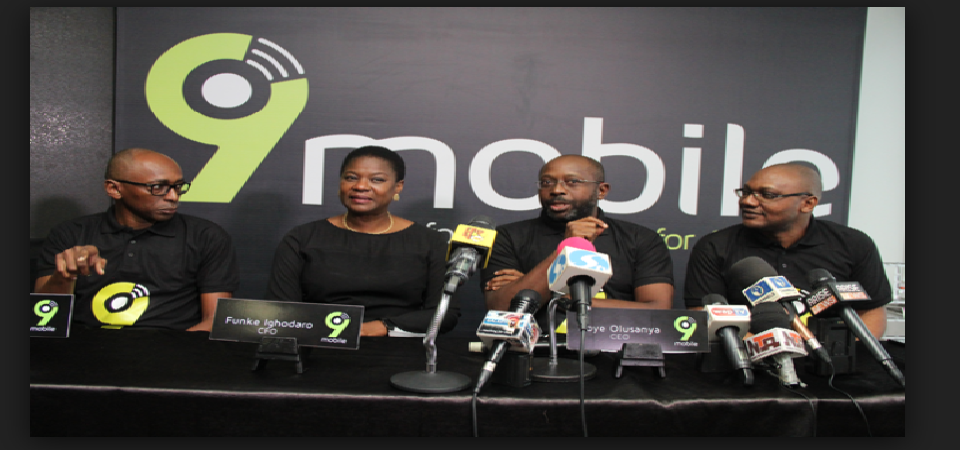
9mobile CEO Boye Olusanya has said he is focused on getting the telecoms company back on track to make a profit, while working on the paperwork to eventually raise new capital, adding the company was open to new investors.

The decision to hire Barclays makes sense. The Nigerian Stock Exchange does not have the liquidity to accommodate 9Mobile especially with 9Mobile shaky balance sheet at the moment. So, extremely skeptical investors even on profit-making technology companies will not be wowed to invest. Also, a big question remains on how a #4 operator can survive in Nigeria. It is nearly impossible to make profit as #4 in most telecom markets. Usually, you have two dominant players with most times a weak #3. Having #4 is a crowd that most forget.

I remain on my prediction that Glo will acquire 9Mobile provided that banks will massively write-off a huge part of the deal. It is only Glo that can make that deal happen because the regulator, NCC (Nigerian Communication Commission), will support it as a Nigerian company. It certainly will like to see Glo succeed. MTN is off the line because it has massive obligations to settle the Nigerian government over on fines for not registering SIM cards. So, over the next few years, MTN may not even be making profit as it will be paying the government for the fines. For Airtel, market data published in its home country (India) indicates that Nigeria is a very tough market for the operator. It may not have the appetite to put more capital in the nation. So, I return back to my prediction: 9Mobile will be acquired with massive discounts on its assets by likely Glo: it is always very hard to raise money with huge debts as #4 in any sector. To succeed, you have to offer major discounts which could be worse than selling.

In this videocast, I make a case why Globacom, the operator of the Glo brand in Nigeria, will acquire Etisalat Nigeria, in 2017. Etisalat Nigeria is in a very challenging position to pay back about $1.2 billion loan to a consortium of banks. In the current market dynamics, with deteriorating ARPU (average revenue per user), it will be extremely difficult for the telecom company to meet that obligation. Glo has liquidity, relatively, and is owned by a respected businessman (Mike Adenuga) who can raise any capital required to close a deal. Glo needs to close its subscriber gap with MTN which enjoys more than 20 million extra subscribers. You may ask – why not MTN, Airtel or AMCON? Answers here.

Prof. Umar Garba Danbatta of NCC, We Want UNIQUE Mobile Subscribers in Nigeria

2

According to the Nigerian Communications Commission (NCC), there are about 93 million mobile internet subscribers in Nigeria. Facebook records about 20 million users in Nigeria, and those users are largely unique by the nature of Facebook business.  Uber, despite spending huge amount of money and advertising across Nigeria, has 267,000 active riders in Nigeria. Last year, a report from the biggest investor in Konga showed that the ecommerce operator has less than 200,000 active customers.

So, the number NCC is putting out is totally uncorrelated with what companies are seeing. That is not NCC problem. Yes, NCC number is correct but what it is reporting has limited value. I have struggled to make sense of its numbers because it does not provide deeper insights when you work for clients. I want to know the unique numbers when all the subscribers from the networks are concatenated or combined, with duplication/triplication removed.

One way I have gone around its reporting is to use MTN as my basis (it has the largest subscriber base, around 58 million) and then add 10 million extra users. (Note that some users have multiple MTN numbers, so my estimate could be off.) With that, I have about 68 million unique mobile subscribers in Nigeria [See update below]. But that is my estimate. I want the real number so that we can have a good idea on what is happening in the ecosystem.

This is what I expect from NCC: begin to report the total number of UNIQUE users across the networks, for voice and mobile internet. In other words, besides what it does now which has been the tradition, it needs to use the biometrics to come up with the number of unique users. I have SIM cards from two of the networks. At the end of this exercise, NCC should see me as one unique user. This is an important market data that even the National Bureau of Statistics should strive to provide.

The Bank Verification Number (BVN) custodian publishes the number of unique bank accounts just as it also provides the total number of bank accounts in Nigeria. The unique number gives us a clear picture of the number of people with bank accounts despite all the duplications/triplications. The unique bank account per person has been the core of the CBN policy on financial inclusion. Looking at the number of total bank accounts and not the unique account per person, you may miss the mark. The total number of unique Nigerian bank customers is less than 30 million. But we have more than 70 million bank accounts. That shows why the unique number is important.

Yes, I do agree that populating all the data from the networks and sorting them to come up with unique subscriber number will be hard. Sure, it will be hard, and that is why it needs to be done. What we have now is the easy one, but it fails the test of value. We need unique numbers and Prof Umar Garba Danbatta can help here.

Comment from LinkedIn Users

My use of 58 million for MTN may not even be ideal since that 58 million covers the whole subscriber base (data and voice). Some pros in the game actually would prefer we use 32.5 million which is MTN’s total internet (data) subscriber number. That data number is more relevant to this piece for MTN. I do agree with them.

Yea, distinction is the ~50M range is MTN overall total, 32.5M is internet (data) service only. Your reference article is pointing to the internet (data) numbers, which is the service type we care about in the context of this article. NCC publishes both total subs and internet data subs in different headings under their Industry Statistics.

Now if MTN has 32.5 million, it means the unique subscriber base for mobile will not be as much as I had estimated. You may be looking at 45 million: ” This is a good question. If we use GSMA surveys of SIM per sub ratio, it suggests about 50% of NCC number would be unique subs”. That quote is from the same pro who provided further insights on this via LinkedIn.