
DD
MM
YYYY

PAGES

DD
MM
YYYY

spot_img

PAGES

Home Blog Page 729

What Google Says About Nigeria’s Airport Incidents

0

In a country where news moves quickly and public opinion can shift overnight, Google Trends provides a powerful lens into how Nigerians pay attention to major events. The recent Wasiu Ayinde Abuja airport incident and Comfort Emmanson Lagos airport incident reveal how search behavior can not only reflect public interest but also shape the national conversation.

Our analyst notes that by examining daily search data for the two individuals and for related airlines, Valuejet and Ibom Air, a clear picture emerges of how attention builds, peaks, and fades.

The Quiet Before the Headlines

From July 5 to August 6, 2025, searches for Wasiu Ayinde remained low but steady, between one and four points on Google’s 0 to 100 scale. Ibom Air had a slightly stronger baseline of between five and nine points, suggesting a consistent background of brand curiosity. Comfort Emmanson did not appear in the data at all during this time. This period represents the normal noise level of public attention. It is within this quiet space that Google’s algorithms decide which stories are likely to trend once a triggering event occurs.

Exhibit 1: Public interest across regions
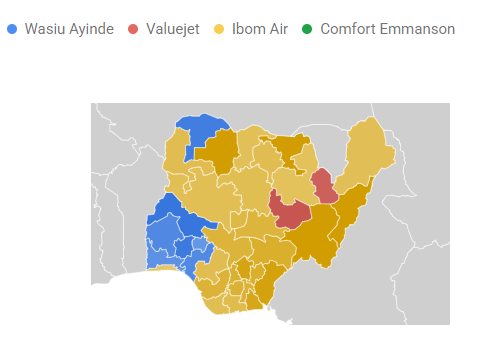
Source: Google Trends, 2025; Infoprations Analysis, 2025

A Celebrity’s Fast-Track to the Spotlight

On August 7, search interest for Wasiu Ayinde leapt from two to eighteen points as news of his Abuja airport altercation broke. By the next day, he reached 26 points, dominating celebrity headlines across the country. The surge lasted only a few days. By August 10, his score had dropped by half. Google’s trending system rewards rapid increases in searches, which means that once growth slows, a topic can quickly disappear from the top results, even if debates continue in the media.

A Slower Rise for a Lesser-Known Name

Comfort Emmanson entered the search rankings on August 11 with a score of 12, following reports of her incident at Lagos airport. By August 12, she reached 23 points. Her steady growth, rather than a sudden spike, suggests the public was learning about her case gradually, perhaps through ongoing coverage and social discussion rather than a single viral headline.

When the Brand Becomes the Story

On August 12, Ibom Air’s search score jumped to 100, the highest possible value on Google Trends. This indicates that the Lagos incident shifted the public’s focus away from the individual to the airline involved. Once users began adding “Ibom Air” to their incident-related searches, Google’s systems treated the airline as the central topic. This created a feedback loop where increased search visibility encouraged more coverage, which in turn drove further searches.

Three Insights from Google’s Data

First, celebrity status accelerates how quickly a story enters national consciousness. Second, sustained public interest depends on a constant flow of new information. Third, corporate entities can quickly overtake individuals as the main focus of public discourse when they are linked to an incident.

Exhibit 2: Interest over time
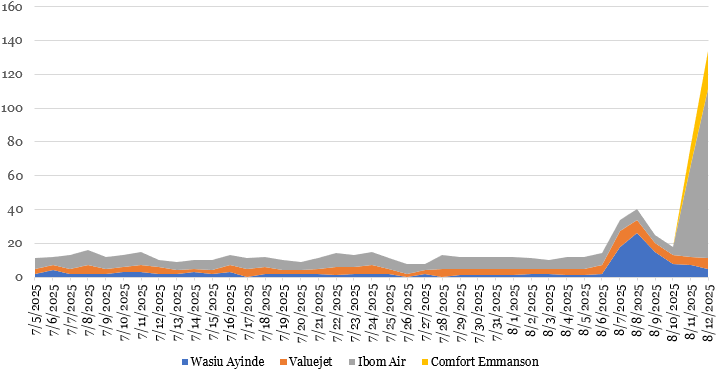
Source: Google Trends, 2025; Infoprations Analysis, 2025

Why This Matters

Airport incidents in Nigeria raise important questions about passenger rights, airline accountability, and the role of regulatory agencies. Google Trends shows that the platform does more than track these debates, it actively influences which ones dominate public attention.

For media, policymakers, and the aviation industry, this means that shaping the narrative is not only about statements and press releases. It is also about understanding how people search, what terms they use, and how Google elevates certain topics over others. The story of Wasiu Ayinde, Comfort Emmanson, and Ibom Air is a reminder that in today’s Nigeria, Google is not just a record keeper of public interest. It is a powerful participant in it.

The Partial Arm Embargo Marks a Nuanced Shift in Germany’s Israel Policy

0

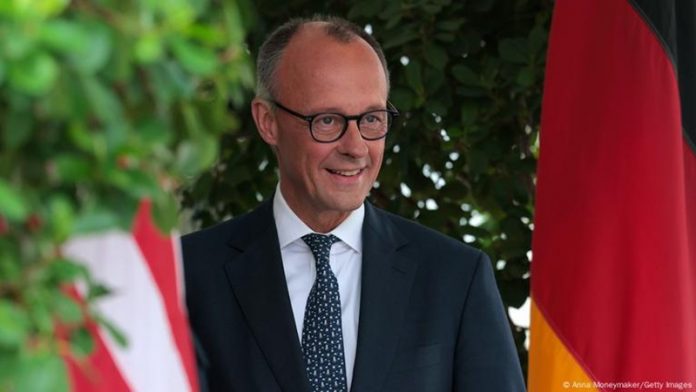
German Chancellor Friedrich Merz announced a partial arms embargo on Israel, halting exports of military equipment that could be used in the Gaza Strip, in response to Israel’s plans to expand its military operations in Gaza City.

This decision, made on August 8, 2025, marks a significant shift from Germany’s historically strong support for Israel, which former Chancellor Angela Merkel described as a “reason of state” due to Germany’s historical responsibility for the Holocaust.

The embargo specifically targets weapons that could be used in Gaza, while exempting armaments for air and sea defense, which Merz emphasized are central to Israel’s self-defense. The move has sparked significant division within Merz’s conservative Christian Democratic Union (CDU) and its Bavarian sister party, the Christian Social Union (CSU).

Critics within the CDU, including its youth wing, have called the decision a betrayal of core party principles and Germany’s commitment to Israel’s security. CSU parliamentary group leader Alexander Hoffmann criticized the lack of consultation, while CDU lawmaker Carsten Müller condemned the embargo for disregarding security cooperation with Israel.

Conversely, some conservatives, like foreign policy expert Norbert Röttgen, supported the decision, citing concerns over Israel’s actions in Gaza. The center-left Social Democratic Party (SPD), Merz’s coalition partner, largely applauded the move, with Vice Chancellor Lars Klingbeil calling it “the right decision” amid the worsening humanitarian crisis in Gaza.

Merz defended the policy, stating that Germany’s solidarity with Israel remains unchanged but does not extend to supporting every Israeli government decision, particularly those risking high civilian casualties. He cited concerns over the humanitarian situation in Gaza, where UN agencies have warned of famine and mounting deaths from starvation.

Israeli Prime Minister Benjamin Netanyahu criticized the embargo, accusing Germany of “rewarding Hamas terrorism” and expressing hope that Merz would reconsider. The decision has also drawn international attention, with some European countries like France, the UK, and Canada recognizing Palestinian statehood, further isolating Israel diplomatically.

Public sentiment in Germany appears mixed, with a recent survey indicating 51% of Germans oppose arms exports to Israel, reflecting growing criticism of Israel’s actions in Gaza. However, the embargo’s practical impact may be limited, as Germany had already scaled back certain arms shipments to Israel in recent months.

Germany’s longstanding policy of unconditional support for Israel, rooted in historical responsibility for the Holocaust, is strained. While Merz emphasized that the embargo is limited to weapons for Gaza and spares air and sea defense systems, Israel’s Prime Minister Benjamin Netanyahu’s sharp criticism signals a diplomatic rift.

The embargo aligns Germany with a growing number of European countries, including France, the UK, and Canada, that have taken steps to distance themselves from Israel’s actions in Gaza, such as recognizing Palestinian statehood. This could embolden further European coordination on Middle East policy, potentially isolating Israel diplomatically.

However, it may also strain Germany’s relations with the U.S., which continues robust military support for Israel, creating tension within NATO and Western alliances. The embargo responds to the worsening humanitarian crisis in Gaza, where UN reports highlight famine risks and high civilian casualties.

By limiting arms that could be used in Gaza, Germany aims to reduce its complicity in potential violations of international humanitarian law. However, the practical impact may be limited, as Germany had already reduced certain arms exports, and Israel’s military capabilities are heavily supported by other allies.

The embargo may signal to Israel’s adversaries, such as Hamas or Iran-backed groups, a perceived weakening of Western support, potentially emboldening their actions. Conversely, it could pressure Israel to adjust its military strategy in Gaza to avoid further international backlash. The exemption of air and sea defense systems ensures Israel’s ability to counter threats like missile attacks, maintaining a balance in Germany’s approach.

German arms manufacturers, such as Rheinmetall, may face short-term losses from halted exports, though the embargo’s narrow scope limits broader economic impact. Israel may diversify its suppliers, potentially affecting Germany’s defense industry influence in the Middle East.

The embargo marks a nuanced shift in Germany’s Israel policy, balancing humanitarian concerns with strategic commitments. It risks internal party strife and strained ties with Israel but aligns with European trends and domestic sentiment. The long-term impact hinges on Israel’s response, coalition stability, and the trajectory of the Gaza conflict.

Pesa Secures CBN IMTO Licence, Expands Global Reach with Customer-Centric Remittance Model

0

Pesa, one of Nigeria’s leading cross-border payment services, has secured an International Money Transfer Operator (IMTO) licence from the Central Bank of Nigeria (CBN), enabling it to process inbound transfers from abroad to individuals and businesses in Nigeria.

The licence marks a significant milestone for the company, underscoring its unwavering commitment to delivering secure, efficient, and compliant financial services for customers sending money across borders.

Notably, it enables Pesa to enhance its presence in one of Africa’s largest remittance markets, strengthening its ability to connect people, families, and businesses across borders.

Speaking on this achievement, Tolu Osho, CEO/Co-founder at Pesa, said,

“This achievement marks a significant step forward in our mission to make money transfers seamless, transparent, and accessible. We are excited about the opportunities this opens for our customers and partners, and we look forward to continuing to expand our reach and impact in the global remittance space.”

With this newly acquired licence, Pesa is now able to:

  • Establish direct partnerships with Nigerian banks, payment processors, and global networks.
  • Remove unnecessary intermediaries, enabling faster and efficient transactions.
  • Offer our trusted services directly to the Nigerian market, improving rates, transfer speed, and overall customer satisfaction.

Founded in 2021 by Tolu Osho, Yusuf Yakubu, and Adewale Afolabi, Pesa (formerly Pesapeer) emerged to bridge the gap between unfavourable exchange rates and unsafe informal transfers.

From its launch, Pesa’s mission has been clear: to build a secure, affordable platform for international money transfers. Today, it enables users to send and receive funds across more than 40 countries, including Nigeria, Ghana, India, the UAE, the Philippines, and the United States, processing transactions within minutes.

Its services include multi-currency wallets, international transfers, and instant transaction processing, solidifying its position as a fintech disruptor in Africa. The timing of Pesa’s growth aligns with a significant increase in remittances to low-and middle-income countries (LMICs), which rose by 38% over the past six years, reaching $656 billion by the end of 2023. The World Bank predicts further growth in 2024 and 2025, driven by the demand for fast, affordable, and reliable remittance services. 

Pesa is licensed by the Financial Transactions and Reports Analysis Centre of Canada (FINTRAC), reinforcing its adherence to global compliance standards.

With a vision to make cross-border payments free, fast, and secure, Pesa has expanded into 27 European countries, the US, UAE, and India, with plans to introduce virtual cards for seamless, currency-free payments. The company is also rolling out enhanced business solutions for SMEs engaged in cross-border trade.

In June, Pesa further strengthened its international footprint by acquiring UK-based Authoripay Emoney, expanding its reach in Europe. This license will provide full banking functionality, allowing the fintech to offer more affordable services, issue and hold e-money on behalf of customers, and develop new products. Today, it serves a community of over 25,000 users across Canada, Nigeria, and the UK, enabling free, instant transfers to more than 50 countries.

Competing with industry players like Leatherback, LemFi, Eversend, and Nala, Pesa is positioning itself as a major force in the global borderless payments space, transforming the way individuals and businesses move money worldwide.

Image to Video AI Free Online – A Game-Changer for Visual Storytelling

0

In today’s fast-paced digital world, audiences expect content that moves—literally. Static images may still hold value, but videos dominate engagement on social media, marketing campaigns, and personal projects. That’s where core steps in with its Image to Video AI Free Online tool—a seamless, AI-powered platform that transforms still photos into dynamic, share-worthy videos within minutes.

This review explores the features, benefits, and real-world applications of  solution, offering an in-depth look at why it’s making waves among creators, businesses, and hobbyists alike.

Simplicity Meets Innovation

The first thing you notice when visiting the Image to Video AI Free Online page is its clean, intuitive layout. There’s no clutter, no steep learning curve—just a clear upload button, style options, and a “Generate” command. The design philosophy here is simple: remove every barrier between an idea and its execution.

Unlike traditional video editing suites that require installation, licenses, and hours of tinkering, runs entirely in your browser. No downloads. No advanced technical knowledge. Just instant creativity.

How It Works

  1. Upload Your Image – Drag and drop your chosen picture or select one from your device.
  2. Pick a Style – Choose from a diverse range of artistic and cinematic styles—everything from photorealism and anime to surreal motion effects.
  3. Generate and Download – With a single click, the AI processes your image and outputs a ready-to-share video.

The entire process takes less than a minute, yet the results look polished and professional.

Features That Make Stand Out

1. AI-Powered Motion Effects

The platform’s AI doesn’t just pan or zoom into your picture—it predicts motion and depth, animating elements in a way that feels natural and immersive. For example, a landscape image might gain sweeping clouds and shifting sunlight, while a portrait can subtly “breathe” with lifelike realism.

2. Multiple Artistic Styles

Tool offers more than 30 visual styles. Whether you want a high-energy social media reel, a cinematic promo, or a dreamlike art piece, there’s a setting to match your vision.

3. Free Online Access

Perhaps the biggest draw: it’s genuinely free to use. You can create high-quality videos without paying a dime—perfect for students, small business owners, or anyone testing creative ideas without committing to costly software.

4. Commercial-Use Friendly

Unlike some tools that limit free creations to personal use, tool allows you to use your generated videos commercially. This makes it a smart choice for marketers and freelance creators.

5. Browser-Based Efficiency

Because everything runs online, you don’t have to worry about device compatibility or storage space. Whether you’re on a laptop at home or a tablet in a café, tool works.

Who Will Love This Tool?

  • Content Creators & Influencers – Quickly generate eye-catching posts for TikTok, Instagram Reels, or YouTube Shorts.
  • Educators – Bring lesson materials to life with motion-enhanced visuals.
  • Small Businesses – Create low-cost promotional clips from product photos.
  • Artists & Designers – Experiment with visual concepts without needing animation skills.
  • Families & Hobbyists – Turn cherished memories into moving, emotional keepsakes.

Comparing to Traditional Video Editing

Traditional editing software like Adobe Premiere Pro or Final Cut Pro offers immense control, but it also demands technical expertise, long editing hours, and a subscription fee. The tool eliminates those hurdles. You lose some manual customization in exchange for speed and accessibility, but for most quick-turnaround projects, that trade-off is worth it.

Real-World Applications

  1. Social Media Campaigns
     A fashion brand can turn product stills into short runway-style videos in minutes—perfect for seasonal promotions.
  2. Event Invitations
     Transform a static wedding photo into a moving save-the-date clip with animated sparkles and soft-focus motion.
  3. Educational Explainers
     Teachers can animate diagrams to make classroom materials more engaging.
  4. Portfolio Showcases
     Photographers and illustrators can add subtle motion to portfolio images, making their work stand out in online galleries.

The Creative Potential

The magic lies not only in its technology but also in how it sparks new ideas. You might start with the intention of animating a single holiday snapshot, only to end up experimenting with multiple styles, creating a full slideshow video. Its an instant feedback loop that encourages creative exploration without the frustration of complex settings.

AI Beyond Image to Video

While this review focuses on the Image to Video AI Free Online feature, AI also offers tools for talking photos, AI avatars, and other creative experiments. This means once you’re comfortable animating images, you can explore more advanced storytelling methods without leaving the platform.

Final Verdict

Image to Video AI Free Online is a breath of fresh air in the crowded landscape of creative tools. It strips away the intimidation of traditional video editing while delivering visually stunning results in seconds. Whether you’re a social media enthusiast, a small business owner, or simply someone who wants to see their photos come alive, the tool offers an inviting, zero-cost gateway into the world of AI-powered video creation.

If your goal is to tell a story visually—and to do it quickly, affordably, and without sacrificing quality—tool deserves a spot in your creative toolkit.

Trump Administration Releases $5bn EV Charging Funds After Months-Long Freeze – Following Court Ruling

0

The Trump administration has formally lifted its freeze on $5 billion in electric vehicle (EV) charging infrastructure funding, ending a months-long political standoff that threatened to stall the U.S. EV rollout.

The money, part of the National Electric Vehicle Infrastructure (NEVI) program, had been held up since the early days of Donald Trump’s second term as part of a broader effort to halt or redirect federal climate and clean-energy spending.

The funds were originally approved under the Bipartisan Infrastructure Law in 2021 and designed to accelerate the construction of a nationwide EV charging network, a critical step toward supporting the country’s fast-growing fleet of electric cars. But early this year, the administration moved to suspend disbursement, citing the need to review whether the program aligned with its priorities.

How the Freeze Unfolded

The freeze quickly became a flashpoint in U.S. energy policy. A coalition of states, many with aggressive clean transportation goals, sued the administration, arguing that it was unlawfully withholding funds appropriated by Congress. These states said the freeze risked stalling not only infrastructure projects but also EV adoption rates, warning that private-sector investment would slow if the federal government failed to provide the promised backbone network.

In June 2025, a federal judge sided with the states, issuing an injunction against the funding halt. The court ruled that the states were likely to succeed in their legal challenge, forcing the Department of Transportation (DOT) to resume disbursement.

DOT’s New Guidance — A Sharp Policy Turn

Transportation Secretary Sean Duffy, a former MTV personality and Republican congressman from Wisconsin, accused states of being too slow to spend the money. As of May, roughly 84% of the $5 billion remained unobligated, and only a few dozen chargers had been built nationwide.

The DOT’s newly issued guidance drastically rewrites the rules for accessing the money:

  • Equity Requirements Removed — States no longer need to ensure a share of chargers are located in rural, disadvantaged, or underserved communities.
  • Safety and Labor Standards Cut — The program no longer mandates strong labor protections, safety training, or high installation standards.
  • Minority and Women-Owned Business Participation Dropped — States are no longer required to offer contract opportunities to these groups.
  • Environmental and Consumer Protections Scrapped — Previous rules on environmental siting, consumer protections, and emergency evacuation planning have been eliminated.

The DOT framed these changes as a way to “streamline” deployment, but critics see them as a rollback of protections meant to ensure the transition to EVs is equitable, safe, and benefits a broader range of workers and communities.

Tesla and the Wider EV Market at Stake

The freeze — and the uncertainty it created — rattled the U.S. EV sector, which is still heavily led by Tesla. Tesla’s Supercharger network remains the gold standard in charging reliability, but the NEVI program was expected to help rival automakers catch up, building a more balanced and interoperable charging landscape.

Without the NEVI funds, Tesla’s competitive advantage could have grown even larger, as many smaller automakers and charging startups lack the capital to build expansive networks on their own.

Even with the funds now released, the administration’s changes may tilt the rollout toward more profitable, high-traffic corridors, often the focus of Tesla’s network, while leaving rural and underserved regions behind. That risks reinforcing the “charging gap” between urban and rural America, and between wealthy EV owners and those in lower-income areas.

With the legal fight settled for now, states are expected to move forward with project bids and construction under the revised rules. The big question is whether this accelerated approach will help the U.S. close its charging gap quickly enough to meet projected EV demand, or whether the loss of equity, labor, and safety provisions will undermine the long-term resilience and inclusivity of the network.