DD
MM
YYYY

PAGES

DD
MM
YYYY

spot_img

PAGES

Home Blog Page 7350

Three Tech Graduates That Saved Nigerian Banking – Story Of Highly Profitable AppZone

6

Few years ago, Nigerians used to have issues after making bank deposits. Some will return to their banks, only to be told there were no records of them making any deposit. What of the teller deposit receipt they went home with? That was fake, some banks would maintain. You may pity the banks; they are also victims whenever such happens. The teller had destroyed the bank’s evidence and went home with the depositor’s money.

In some other scenarios, the teller would modify the amount, creating a new class of problem. A man that had deposited N1.2 million would suddenly see N1 million credited in his statement. Though he had a teller receipt of N1.2 million, he would have to haggle to get the rest credited. Banks responded by asking customers to keep deposit slip duplicates in boxes, as evidence, in case issues emanated and reconciliations were needed. In some banks, customers were required to put the slips in two separate boxes and then register the deposit in a book which a bank staff has to sign off.

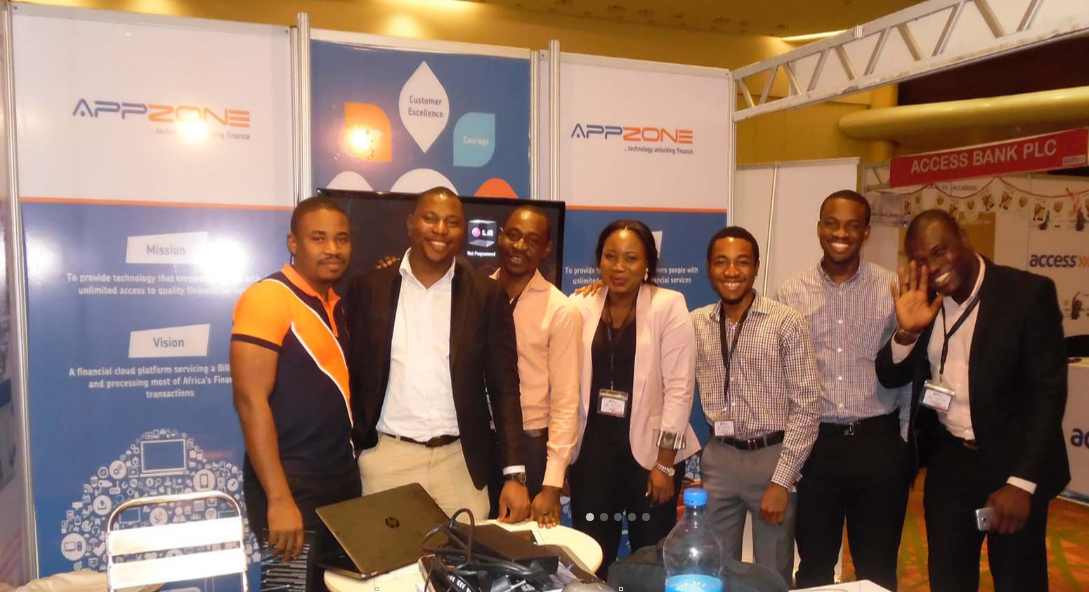
That was the case in Nigeria, until three Nigerian graduates took action. Obil Emetarom,  Emeka Emetarom and Wale Onawunmi saved Nigerian banking from the problem explained above. Today, when you make a deposit, you get a printed receipt indicating the amount, time, branch location and other details. Three of them co-founded AppZone, which provides financial and banking solutions in Nigeria, and beyond. They pioneered common sense solutions in Nigeria’s modern banking. Indeed, solutions so common that most foreign players did not bother to sell such solutions to Nigerian banks

Obi is the CEO, a graduate of Federal University of Technology Owerri (FUTO); Emeka is also a graduate of FUTO. Across River Niger, from iconic Obafemi Awolowo University, is Wale who studied Computer Science with Economics. Both Obi and Emeka studied engineering in FUTO.

Obi Emetarom co-founded Parkway Projects in 2004 serving as pioneer Executive Director and playing a significant role in driving Parkway Projects to market leadership in the area of electronic payment solutions. In 2008 Obi co-founded AppZone with a focus on the broader view of providing technology to empower people with unlimited access to quality financial services. From inception Obi has led AppZone’s stellar growth and consequent emergence as Africa’s leading provider of home-grown Banking and Payment software.
—-

Emeka Emetarom is a Chemical Engineer with a bachelor of engineering degree from the Federal University of Technology, Owerri. He has immense exposure in business management as well as the IT industry, at various levels. His entrepreneurial drive led to the setup of Ceerom Ventures, a table water production and manufacturing business enterprise which he co-founded in 2005. At the same time his passion for IT resulted in his foray into the electronic prepaid airtime distribution. In 2006, he championed the development of Nigeria’s premier mobile airtime distribution service. This gave birth to the RechargePlus® brand, a web and mobile based service for prepaid airtime purchase.

—-

Wale Onawunmi is a graduate of Computer Science with Economics from Obafemi Awolowo University, Ile-Ife where he finished amongst the tops in his class, Wale is known as a Software Prodigy by many as he is versatile in many languages and software application packages. Wale has amassed more than ten years of experience in the modeling, design, and implementation of enterprise software. He has also been involved in intensive research in areas of electronic commerce and payment, portal 

AppZone owns the BankOne brand which supports financial institutions including microfinance in Nigeria. They have increasingly moved into providing solutions in the areas of digital banking and insurance. AppZone is a very critical local player that helps institutions save and has a demonstrated record of delivering highly efficient solution even in cost-efficient model. Its technology makes it easy to enable debit card activation via USSD. That is why this company is great today.

AppZone is one of the leading fintech companies in Nigeria whose aim is to digitise the financial services industry.  By going against the status quo of the brick and mortar system, AppZone continues to create technologies that will revolutionise the financial services industry. AppZone has two main products designed to help improve financial inclusion in the country. These products are BankOne and CreditClub.BankOne, an integrated Core Banking and E-channel software platform, was built by AppZone for the African environment.

The app is deployed centrally as a shared service on secure cloud infrastructure to manage operations and enable alternative service delivery channels for small retail Banks and Microfinance institutions.BankOne helps to reach out to the underbanked and unbanked in the community by digitising the financial services operations and also exposing them to multiple alternative channels such as ATMs, POS terminals, the Internet, Mobile phones and also independent agents


Today, AppZone is one of  Africa’s leading provider of integrated banking and payment software platforms and incidentally creator of BankOne; a leading cloud infrastructure for banking and payment processing targeted at small and medium financial Institutions. It is hiring and has many open jobs in the engineering areas.

The Industry

The startup ecosystem in Nigeria is very noisy. Some have become lords purely because of the amount of money they raised.  They have neither sold nor exited any company. They just raised capital and they party, publicly. From Forbes to circuits of conferences, we are inundated with stories of raising money from international and local investors in some of these companies. We surely like them and we treasure them, at least they pitched right and some people trusted them to risk their funds on them. It works like that in every part of the world.

That said, most of these companies making noise are years away from profitability. They may do well provided other entrants with fresh capital and new energy levels do not come and supplant them. But at the moment, we are not seeing that value creation, if value is profitability.

Understand that because of the difficulty of raising capital in Africa, when someone does, it becomes a very critical aspect of one’s resume. Few years ago, I watched a video of a South African conference where an entrepreneur was introduced by the amount of money he had raised from investors. Vinny Lingham of Yola and now Gyft and now Civic is noted as someone who raised more than $30M from investors. That tells you that success, for some, is really the amount raised!.

It is the same phenomenon in Lagos. The resumes of the Yaba entrepreneurs are now transmuting into how much money they have raised from the few angels and VCs and not necessarily how much value they have created. You see founders giving their companies away just in the name of claiming they have raised capital, even when that new capital is totally unnecessary. They court the rich people, with largely free equity, thinking that having a popular man in their board will magically solve all their business problems.

In Yankee,  the focus is how much valuation does the startup have and most importantly how successful was the exit or IPO. But here, it is the amount the person raised.  You can give away your company and get all the money in this world and technically own nothing. Only stupid investors will continue to buy that proposition.

That brings us to the real deal. Who are those building valuable companies and making money in Nigeria? You do not see them in talk circuits. They have no time for conferences. They do not even own blogs to waste time as I am doing here. They simply focus on building their companies. And they are doing well. They are displacing the Indian companies in Lagos with core innovation in providing technology in our key sectors. They are young and they are dynamic.

So, despite all the noise you may be reading about the local startup environment, the ones making money are very opaque. You need to work hard to see them. When all things are computed, one of the key ones with profitable business is AppZone. The founders may not have the noise-making skills of other entrepreneurs but they have the skills on how to create value. They are unlike me, trying to be a good entrepreneur – building companies, over writing articles!.

AppZone Innovation

AppZone works at an interface in finance where you cannot displace them easily. What they offer is so vital to their bank-clients and the banks’ customers. They are not looking for clients because they already have clients. They are executing massively well with teams of youthful people. Our recent conversations show they are big in insurance, oil & gas, power sector to provide a system that connect these firms and their customers for seamless payment experience. They go beyond payment to business process advancement by providing software that make  operations work better. Paypal is not a threat to them. They will exist and can easily scale to become a viable IPO quality company in the local stock market. There are a couple of other firms in the nation, we will cover them in coming days.

Their BankOne product supports more than 300 microfinance banks in Nigeria. Many commercial banks are their customers. They have become the operating system that connects the banking sector with their customers, providing technologies that make ATMs work for us across Nigeria. They have key products, all created by them and none is a reseller for a foreign brand. That is the difference here – they are not working for one foreign company that collects bulk of the money at the end.  They create their technology here in Lagos.

Small and Medium Scale Enterprises are the lifeblood of Nigeria’s economy and by extension, so are the Microfinance Banks that support them. However, for Micro-Finance Banks to remain competitive, achieve rapid growth, operate profitably, and make significant economic impact, they also need systems in place to support them as well. Appzone’s BankOne was created to do just that. Having recently signed its 300th Microfinance Bank onto the BankOne platform, the company says it is even more confident of making an indelible mark on the country’s economy.

South Africa’s Business Connexion invested $6 million in 2014 in AppZone. The company was noted to have taken 30% of AppZone at that time, implying at at far back as 2014, AppZone was in the neighborhood of $20 million valuation.

Months after acquiring document management firm, Panabiz Nigeria, JSE-listed Business Connexion Group (BCX) has strengthened its hold in Nigeria by acquiring 30 percent of financial IT service provider, AppZone Limited to enable it provide cloud-based solutions to the monetary sector.

Rounding Up

We do think AppZone is one of the most profitable technology startups in Lagos with its own technology and solutions. This is different from the re-sellers and integrators. These three founders have done us a great favour with their solutions which have become the industry leading brands. You expect a deposit receipt when you make a deposit in a bank in Nigeria today. You have to thank Obi, Emeka and Wale for that.

Our Prediction On Mobile In Nigeria, And Etisalat Nigeria Problem With Pricing

0

In 2011, we ran a very important article. Simply, we told Nigerian developers that Android will win over Blackberry, iOs, Symbian and Windows. It was a bold call because everything happening then was Blackberry. However, we saw real problems with every mobile OS in Nigeria but Android.

For the 2011 piece (available in web archive,reproduced below) which was titled “Nigerian Developers – Fasmicro says Focus on Android Platform”, we have the following predictions right:

  • We wrote thus: “We understand that Blackberry is popular today in Nigeria, but Android will eclipse it within the next few months”.
    • That turned out to be completely correct. We used that conviction, based on our model, to ask Nigerian developers to move into Android from Blackberry and Windows: “Now, you are a young graduate or a freelance who wants to get into the App business. You want to know what platform to build”
  • In our analysis, we focused on affordability of the product: “Another reason has to do with market. Apple and Blackberry are premium…Android gadgets are more affordable simply because you do not have to pay for any software – it is free by default”. We correctly predicted that cost will help Android adoption in Nigeria and that was what happened.
  • Then we made a very bold statement:

In the next 6 months, the number of Android devices in Nigeria will eclipse all the Apple and Blackberry combined. Our studies show that customers MTN will make this possible with its advertising power and brand. Etisalat did not make much impact with Galaxy Tab because of the cost. Even myPad from Starcomms is built on Android. Of course, Fasmicro and Microscale new Ovim Plus and Ovim MiE are all Android devices. Encipher Inye and Inye 2 are also Android. They will compete against the high premium Blackberry and will surely win. The notion that iPad can do well in Nigeria is not supported by any data. It is expensive and that brand is not structured for the Nigerian market.

It happened because iOS did not pick up while Blackberry collapsed. Today, Nigeria is an Android nation.

  • If you check carefully, we had noted the present Etisalat Nigeria problem as far back as 2011: products were expensive. “Etisalat did not make much impact with Galaxy Tab because of the cost. “. That is the same issue today where it is losing more customers despite having the best QoS. The reality is that you have to understand the purchasing power of your customers and price things more practically.
  • Another great prediction that turned out correct

In Nigeria, Android has a potential to get to 70% of the market with Glo selling Galaxy when MTN, Etisalat and Starcomms have aligned in that direction. If you want to make money developing, focus on Android – you will have more users and market globally and locally.

  • The risk of Blackberry was clear:

Blackberry could lose appeal if its hardware fails to wow consumers. Same applies to Apple. But for Android, there are legions working on it. One fails, others will succeed and you are sure of users for your Apps.

  • Our conviction was on the open nature of Android:

Android Open Source: This platform is free from all those difficult clauses that stymie innovations and speed for OEM. … This kind of neutrality makes the future of Android promising. No player will like to kick others out and let the phone companies focus on ergonomics and design while the software is handled by the global legion. That is a place to be over being restricted to an OS that is developed maybe by few guys in one giant building in California or Canada. Innovation lives here and it can easily improve faster than other OS.

  • Our final recommendation from that piece

If you are a young developer that wants to start developing Apps, now is the time to make a decision. Use Android as your platform. It is better and will surely succeed in Nigeria.

It is always good to check how past predictions have turned out, to help guide future ones. This type of insight on technology drives what we do for clients in our Fasmicro Group where a unit offers technology advisory services.


The article is reproduced below

Nigerian Developers – Fasmicro says Focus on Android Platform
By Tekedia Editors April 5, 2011 6 Comments

In the last few weeks, Fasmicro (tekedia is a division of Fasmicro) has received emails from potential customers asking us if we could do developments on iOS and Blackberry platforms which are respectively Apple and Blackberry mobile operating systems. (We are yet to get calls on Windows Mobile. Of course Symbian is now history). We politely told them that we have built capacity in Android and we do not want to expand into these platforms. As the foremost Android trainer in Owerri and perhaps the whole of Eastern Nigeria, we have a regular base of customers to serve from universities, freelance and corporate institutions; we have started first and could define the roadmap. We understand that Blackberry is popular today in Nigeria, but Android will eclipse it within the next few months.

Now, you are a young graduate or a freelance who wants to get into the App business. You want to know what platform to build. We have a direction and suggestion. And these are some reasons why you should focus on Android development in Nigeria

Universities

It is already penetrating into the schools. For universities we have provided trainings and training right now like Ahmadu Bello University, Zaria and Federal University of Technology Owerri, we have made a mark that their preferred choice of mobility computing is Android.  We made the decision and they are adapting their curricula into the platform. We are so confident that these students upon graduation will possibly decide to concentrate on Android platforms. So the people you will hire are already trained on Android. Why bother with another platform?

Affordability

Another reason has to do with market. Apple and Blackberry are premium. Nigeria may not need them at the lower class of the market. Sure, the bank CEOs and corporate titans can afford them, but the regular Aba trader and Ibadan driver may prefer something cheaper. Android provides that platform for affordable mobile systems. Our studies before we made Ovim tablet (with our partner, Microscale) show that the future of smartphone and tablet in Nigeria lies in the mass market and not serving the 2% richest Nigerians as NITEL did for decades.  Android gadgets are more affordable simply because you do not have to pay for any software – it is free by default. So the equipment manufactures and chipset makers are free from those contracts that, for example Windows Mobile, will tie your hands.

Android Market Share

In the next 6 months, the number of Android devices in Nigeria will eclipse all the Apple and Blackberry combined. Our studies show that customers MTN will make this possible with its advertising power and brand. Etisalat did not make much impact with Galaxy Tab because of the cost. Even myPad from Starcomms is built on Android. Of course, Fasmicro and Microscale new Ovim Plus and Ovim MiE are all Android devices. Encipher Inye and Inye 2 are also Android. They will compete against the high premium Blackberry and will surely win. The notion that iPad can do well in Nigeria is not supported by any data. It is expensive and that brand is not structured for the Nigerian market.

Globally, Apple has more users but Android ships more phones every day than any other OS, currently. We project that Android will take a very commanding lead in the mobile ecosystem after Dec 2011. In Nigeria, Android has a potential to get to 70% of the market with Glo selling Galaxy when MTN, Etisalat and Starcomms have aligned in that direction. If you want to make money developing, focus on Android – you will have more users and market globally and locally.

OEM-Independent

Android is not tied to any hardware maker or original equipment manufacturer (OEM). This makes it very great. Blackberry could lose appeal if its hardware fails to wow consumers. Same applies to Apple. But for Android, there are legions working on it. One fails, others will succeed and you are sure of users for your Apps.

Android Open Source

This platform is free from all those difficult clauses that stymie innovations and speed for OEM. All you need is buy a chipset, download the OS and you can get a tablet or phone out in two weeks. Mediatek has made things very easy (Fasmicro and Microscale use Mediatek for our tablets) – you just focus on manufacturing after configuring the chipset. The good aspect is that with good electricity in Nigeria, one can buy the chipsets and make phones and tablets in Nigeria easily. Fasmicro and Microscale are moving to ARM based chipsets to ensure we can support and upgrade easily later.

This kind of neutrality makes the future of Android promising. No player will like to kick others out and let the phone companies focus on ergonomics and design while the software is handled by the global legion. That is a place to be over being restricted to an OS that is developed maybe by few guys in one giant building in California or Canada. Innovation lives here and it can easily improve faster than other OS.

Android Apps Distribution

Got a good app, you can have it in the Android market within days for just a small fee. Apple will ask for 4x of that and you will still wait for weeks.

Evolution

Why the world has to wait for few special days in the year for Apple to release new devices, Android does that every day in China and across the globe. This makes the evolution of Android fluidic and deeper than others.

Java/Linux

Android is Java and Linux – two great platforms for developments. You might have known Java and going into Android is a piece of cake. Java is matured and the guy that built it is just going to Google now. There is no information you cannot find online for Java – the books are there, the tutorials, the demos, etc.  And when it is time to say bye to Android, you take your Java skill to other areas. But for Apple, you are stuck with Objective C which Apple invented and you may not get much help.

Our recommendations

If you are a young developer that wants to start developing Apps, now is the time to make a decision. Use Android as your platform. It is better and will surely succeed in Nigeria. Fasmicro is running a free training now on Android App development. Due to demand, we will do the same next week and we welcome you to attend. We were rated Excellent by all our trainees and we are confident you will find our training to be world class. We have a founder who is a first rate engineer and professor and has built a team and teaching structure that delight our customers.

Comprehensive Valuations of Nigerian Tech Startups

3

For all the enthusiasm about the Nigerian technology scene, one thing has not happened – Nigeria is yet to have a unicorn, a private company, largely technology firm, with a valuation of at least a billion U.S. dollars. Sure, the prospect of having a unicorn could be correlated with the size of the economy and the absence of it does not necessarily mean Nigeria is not trying hard enough. It is easier for U.S. to have many unicorns because the “economic forest” is so big to accommodate such special animal breeds. U.S. economy is in excess of $18.4 trillion while Nigeria hovers around $400 billion – a multiple of 46.

Nevertheless, in this season of economic diversification pontification, it is important to discuss the state of the entrepreneurial ecosystem and Nigeria’s path to breeding the special animal. With the connectivity and trans-border capabilities that information technology has provided in the world, the creation of innovative companies should not necessarily be discussed within the constructs of geography. As cloud computing redesigns the world of technology, anyone, anywhere, ideally could compete from any location on earth. This means that one does not have to be living in U.S., India, Western Europe, Japan or China to create a unicorn.  So, Nigerian entrepreneurs do not have a really valid reason for having not bred the animal in their garages or labs.

Good ideas like success have relations while bad ones are orphans. This means any Nigerian entrepreneur with a really transformative idea can see it scale globally and create enormous wealth for its stakeholders. The domicile to generate such ideas is now irrelevant because knowledge is freely shared as Internet has collapsed boundaries and provided means for people to collaborate seamlessly. Also, markets are now more accessible that an entrepreneur can design in one country with its main market in another.

Israel with its history of creating innovative technology companies has always seen U.S. as its primary market. Nigerian entrepreneurs can have the same philosophy. The problem though is not the understanding of the markets, rather, on the technical capabilities to engineer products and services with cross-border appeals.

An entrepreneur in Niger Republic with its $7.2 billion economy cannot ideally breed a unicorn if it focuses solely on Niger Republic.  But when it looks outside for its market, it improves its chances. But entrepreneurs in South Africa and Nigeria have the right markets for them to create unicorns as the economies are relatively larger. The question then is why we are not close? Let us look at Nigeria data.

Case Studies

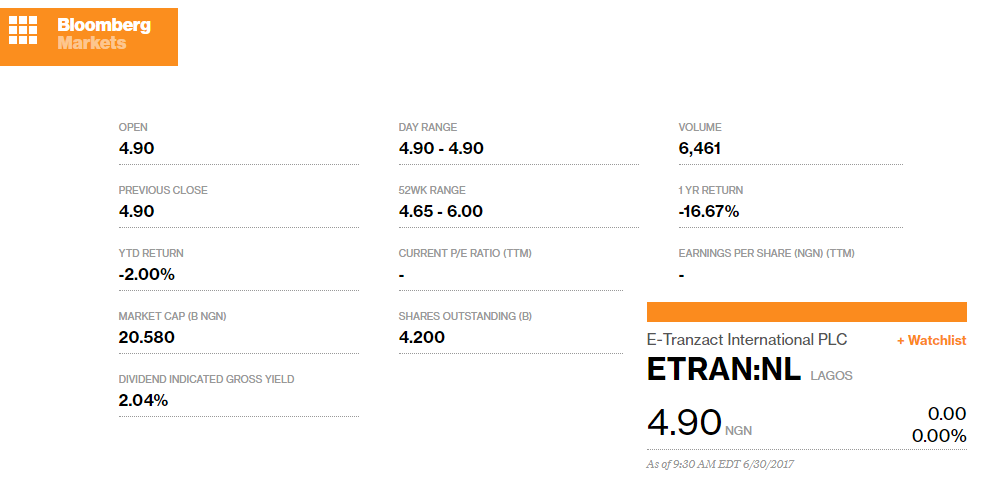
Interswitch, which processes payments for banks and owns a brand of debit cards in Nigeria, is one of the top technology brands in Nigeria. The company was rumored for an IPO in London few years ago. When Helios invested $96 million in 2010 for 52% stake, the company was many multiples away from being a unicorn.  When you consider that E-Transact, a major competitor, has a market capitalization of N20.5 billion (about $68 million) in the Nigerian Stock Exchange, one will expect Interswitch valuation to have been fully priced when Helios invested. The fundamentals in the market have not changed for a revision to hit $1 billion.

Besides Interswitch, Konga is another important local technology company. Konga is worth less than $40 million according to public data from its Swedish investors. Jumia (through its then parent, Africa Internet Group) was once heralded as an African company that became a unicorn when it was valued slightly more than $1 billion. But shortly after that, Nigeria went into recession. The fact remains that Jumia is not really an African company. It is an European firm operating in Africa. Today, its valuation is certainly lower.

The big tech news is the recent torrent of capital to Africa Internet Group (AIG)—which owns online retailer Jumia and 9 other e-ventures.

Yesterday AIG announced €300 million ($326 million) in funding from backers including Goldman Sachs and MTN. CEO Sacha Poignonnec confirmed the new financing brings company equity to €1.005bn ($1.08bn). This clears the hurdle for AIG to become Africa’s first startup unicorn.

While the company would not provide a full round breakdown, it includes the €75 million ($83 million) AXA Insurance commitmentTechCrunch recently reported. AIG’s best funded ecommerce startup Jumia received over $200 million from 2012-2014 and is valued at $555 billion.

The present currency crises, forex scarcity, etc will continue to impact these companies negatively in the Nigerian market which is their largest.

For Pagatech, despite the parade of high quality investors, the firm cannot have a market valuation of more than $100 million when public-traded E-Transact is at $68 million, a close competitor. Pagatech has pivoted from its initial mobile money business to all kinds of electronic payment gateways. Though it has seen its business grown, processing more than a $1 billion in transactions, the market has become more competitive with Konga moving into the sector and foreign entrants like Paystack, Remita, Flutterwave, etc all moving into the domain of facilitating and enabling electronic payments in Nigeria.

The success of SystemSpecs on Remita which processes payments for federal government and its parastatals in Nigeria indicates that the bulk of the profits are outside the reach of Interswitch, Pagatech and others since the public spending at federal level is a big part of the economy. Losing Nigerian Customs, Securities and Exchange Commission, Corporate Affairs Commission, Industrial Training Fund, etc will mean Pagatech and others will have to focus on the private sector.

Incidentally, there is the one technology company in Nigeria the blogosphere does not write a lot, that owner of Remita.  That is the SystemSpecs. SystemSpecs is an old company founded by one of the leading technology pioneers in Nigeria. He has more success than anyone in the technology sector in Nigeria at least within the constructs of creating value in the market. John Obaro, the Managing Director, has penetrated every corner of Nigeria’s economy with his products. He is known in governments and he has internal capital to finance PPPs (public private partnerships) which gives his company an advantage over start-ups. That advantage will be strategic as crude oil price continues to fall cushioning governments to seek partners that can fund projects and share revenue. The Remita business model came from that ideology – one that will drive the future in public sector at federal and state levels. How much does SystemSpecs worth? We put it at around $100 million because of the Remita contract with the Nigerian government.

Why? Because the public-traded technology integrator, Computer Warehouse Group is valued at $22 million. Though CWG does not compete directly with SystemSpecs, there is an indirect component since CWG specializes in representing foreign companies which offer similar services to what SystemSpecs offers. So, the $100 million we have for SystemSpecs is even generous. We had advocated that both companies “merge”.

Together SystemSpecs and CWG can go far. But one is public while the other is private. So largely, only reverse merge can work here. Another is pure acquisition but do not go there. Certainly SystemsSpec is worth more than $22 million the market assigns to CWG Plc, making any talk of acquisition baseless. We also believe that CWG is more than what the market is valuing it, as has noted above.

For Omatek, Zinox and similar companies like Task Systems, the individual market valuation is below $50 million despite their obvious local popularities. Public-traded Omatek is valued at $5 million. The Nigerian Stock Exchange (NSE) has a reputation of diminishing the value of technology companies. It is either the analysts do not understand their values or that the companies have not produced results good enough to change that trajectory; both are of course interrelated.

Moving to the travel and transportation start-ups, Wakanow and Hotels.ng, the best optimistic valuations for these companies will be maximum of $10 million. Hotels.ng is rumored to have raised its last fund from Omidyar Network and EchoVC at about $4 million valuation. Wakanow, an online travel agent, sees competitions from all angles from Jovago to Trivago.

Kuluya, a game company, is valued at $2 million (This company is largely muted now.) Jobberman, the recruitment firm, which was acquired by One Africa Media got out early. Knowing that One Africa Media which owns Jobberman, Cheki, Private Property and other companies has a valuation of $557 million, we deduce the local firms are not even close to being a unicorn. ToLet, Dealdey, NGCareers, Drinks.ng, Oya, and Gloong are promising but none is estimated to be worth up to $10 million yet. Printivo.com, the Nigerian online printing start-up that closed a seed round with EchoVC for the $200 million Nigerian printing sector is estimated to have a valuation of $1.3 million.

Possibly, you are waiting for us to get to the big one – iROKO Partners, the big money-raiser from Tiger Global and others until Konga crashed the records with $25 million.  We value iROKO Partners for $100 million largely because of its investment holdings in OgaVenue and other firms besides the iROKO brands. And AppZone which is very profitable  in which South-Africa’s Business Connexion invested $6 million in 2014 is worth about $25 million.

There are other companies like Paystack, Flutterwave (American, technically though), and African Courier Express which Interswitch invested. In these and others we had left, one is close to $20 million in valuation, based on our estimate. In short $20 million is  very generous when you recall that Paystack raised $1.3 million seed from many investors. They could not be taking anything less than 10% for that investment.

Andela, Wild Fusion and Slot Systems are great companies. Andela which has raised at least $41 million is a top-rate firm. Using peer U.S. firms and discounting its regional operation in Africa (investors do this, unfortunately), we put the valuation at $140 million. Wild Fusion and Slot Systems, individually, will command less than $10 million.

Nigeria; now what next? We are on track but still far from seeing a unicorn. We need the entrepreneurial hunters desperately to kill a unicorn because the earlier we can parade one in the Eagle Square Abuja, the easier it will become to have foreign and local investors come to the funding party. Let’s do it!

You surely have better perspectives on these numbers. The place below is the square to make your case.

The 30th Anniversary Of Time Nigeria Started Its Finest Modern Companies

2

I am a student of Nigerian (business) history especially in the years 1986-1992. That period, in my opinion, represents an era of immersive entrepreneurship. Some of our finest companies were started during that period. If not for the great recession, which resulted to the failure of many banks, the impact of this era would be more evident today.

Under the military rule of former President  Ibrahim Babangida (IBB), Nigeria made many policy moves, starting in 1986. The impact is huge –  between 1987 and 1992, some of the finest (old) technology and (modern) financial institutions in Nigeria were founded. In my analyses, I have zero’d in on Second-Tier Foreign Exchange Market (SFEM) which made it possible for banks to make huge profits on foreign currency transfer/trading, as catalytic.

SFEM brought alternative foreign exchange which made dealing on foreign currency very lucrative in banking. Before then, Naira was largely stable and there was no money to be made, except fees, on forex. The float on treasury transfers was marginal. But SFEM, changed Nigeria. It gave us bureau de change, making trading Naira a product of itself. Nigerian Naira is yet to recover from the impact.

SFEM was one of the policy recommendations of the IMF (and World Bank) which introduced the structural adjustment program. One of the goals  was to open the private sector and subsequently diversify the economy.

In one way, the policies internationalized Nigeria despite making it possible for institutions to make so much money from government. It is arguable, that if Nigeria had eliminated corruption, we could have done better on the outcomes. Around 1989, IBB cracked another policy with profound impacts on finance. He made it possible that people could open Finance Houses withe ease.  He waived most requirements. Most of those firms would later collapse and many people lost their investments in them. But the survived ones flourished and created a new class of super-rich Nigerians. The financial institutions including banks made money on forex with the alternative exchange where Nigeria maintained official and black market rates.

Simply, buy dollars from Central Bank of Nigeria (CBN) for say Nx; in the evening sell to traders at N(x+y) where y is your profit. You do this without any risk. With so much lapses, CBN transferred our commonwealth to banks and finance houses .

But behind the mess, there is something good from that period. We ended up having great companies which are still very critical in modern Nigeria. Sure, most of those companies survived and flourished through innovation, but one thing unites them – they were born when Nigeria was run by a maradona (yes, IBB) and the chaos provided unbridled wealth with many lapses on control and enforcement. Yet, you need to give these institutions credits. The banks changed Nigeria for good. Without them, we might still be waiting for 5 hours to get our money from the old generation banks.

Today is July 1 2017 and it is  the 30th year anniversary of the beginning of the era of immersive entrepreneurship in Nigeria. I have chosen July 1987 as the mid-time of that moment.

These are some samples of companies starred during this time. In short, the phrase “New Generation Banks”, came into the lexicon during that era.

  • Diamond Bank Plc – born 1990
  • Zenith Bank –  1990
  • Fidelity Bank – 1988
  • Access Bank – 1989
  • GTBank – Jan 1990
  • (STB for modern UBA) – 1990
  • Access Bank – 1989
  • SystemSpecs – 1992
  • CWG Plc – 1991