In this piece, I explain why messaging will win Africa. I predict that any business with messaging flavor will do better in the continent than those building solutions only for apps or websites. The success of messaging will cut across industries, from Fintech to education, in coming years in Africa. The success of WeChat has proven that commerce works better under intimate communication node which messaging supports.
Author’s Note: A colleague, after reading through, suggested that I note that we had actually made the same mistake. We cloned Kickstarter.com via StartCrunch.com, becoming the first crowdfunding firm in Nigeria. We failed. We did not know that Nigerians or the world would not open their wallets to back Nigerian projects. So, people, no one has all the answers. We wasted thousands of dollars on StartCrunch, cloning a U.S. company, and failed big.
In this piece, I explain the perils of trying to clone successful foreign startups in Africa. While it is always good to explore how something that worked somewhere can be replicated at home, it is always important to understand the underlining reasons why the foreign companies worked. I present a case study on Yelp, an American company that provides reviews on local businesses, helping people make better decisions on who to hire for repairs, catering or where to eat.
Yelp will struggle to thrive in sub-Saharan Africa because the cornerstone of our economic processes is not contract-driven. We run “carry and pay” system while America is contract before service, thereby pushing people to look for the very best hands since you are paying for the time and not necessarily the outcome. You will still pay a mechanic for spending his time working on your car, even if at the end, he did not fix the problem. In Nigeria, that is not likely: you can pity the guy and give him something but because he did not do his job, he does not deserve the money. So in Nigeria, you have the opportunity to review the work before you pay (carry and pay). In America, by the time the mechanic is done, you are contracted. to spend money, either way. That is why I do think, it is a waste of time trying to clone Yelp in most parts of Africa.
Yes, there are many companies in U.S. you should clone: startups working on tools, productivity, processes and also ones which get competitive advantages owing to regions they operate.
We all know the challenges in the telecom sector in Africa. There is the problem of extra tax burdens on one side and the erosion of revenue, accelerated by OTT (over the top) services like WhatsApp which consume infrastructure capacities without the telecom companies earning decent revenue therein, on the other side.
Yet, these companies have opportunities to unlock more value if they can expand their sectoral focus. African agriculture is one area that promises growth for the industry. Our agriculture desperately needs telecom infrastructure in order to redesign it into the 21st century. Precision technology startups like Zenvus (which I own) will be catalytic for the continent, if connectivity is deepened.
Zenvus is an intelligent solution for farms that uses proprietary electronics sensors to collect soil data like moisture, nutrients, pH etc. It then sends the collected data to a cloud server via GSM, satellite or Wifi. Algorithms in the server analyze the data and advice farmers on the best farming techniques. As the crops grow, the system deploys special cameras to build vegetative health to help detection of drought stress, pests and diseases. Zenvus provides clear visibility for precision agriculture by looking at data in the soil and the crop vegetation. The data generated is aggregated, anonymized and made available via subscription for agro-lending, agro-insurance, commodity trading to banks, insurers and investors.
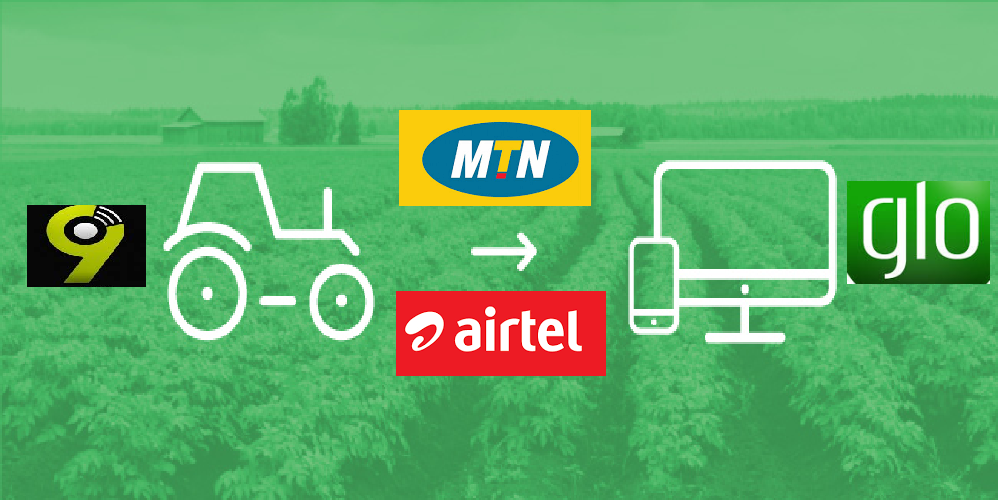
With AgTech IoT (Internet of Things) innovation, companies like MTN, Airtel, 9Mobile and Glo can pipe a lot of agriculture data to farmers, banks, insurers and others, across the food chain. The telcos will aim to improve the connectivity of sensors and other data-capturing devices on farms to help farmers turn data into actionable insights through software platform. The opportunity is huge as this is an untapped market. I am hoping that telcos can come together to seed a new layer of African farming through connectivity. An initiative to connect African farms would be a necessary investment for them to expand beyond where they are today.
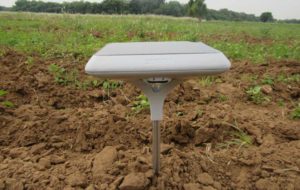
Zenvus precision sensors in farms
Telecom AgTech Initiative Committee
I recommend for the telcos in their respective nations, to come together and setup a special committee, AgTech Initiative Committee, with focus to accelerate agricultural innovation through provision of connectivity infrastructure. (This will be similar to the Bankers’ Committee, in Nigeria.) The goal of this infrastructure will be massive connectivity of rural and farming areas. With this infrastructure, the telcos will develop AgTech businesses. For example, we will have MTN AgTech to provide connectivity support to Agtech entrepreneurs working in the areas of IoT across Nigeria.
People are talking of smartcity in Nigeria. We think that is largely elitist because we have more urgent things to deal with before we care whether the city is smart or not. The real deal right now is agriculture and the demand projection is huge because farming productivity is very low and any improvement in yield will improve the living conditions of more than 60% of the Nigerian working citizens. (It is estimated that more than 60% of Nigerians work in the agriculture sector. across the different layers of the value chains.) Did we note that the telcos will make more money in the process? As Nigerians do well, the bulk being farmers, telcos will have better returns since they have practically lifted the earning powers of the customers.
The telecom companies will help agtech entrepreneurs handle connectivity issues with a national standard, if necessary, set in the nation for the agriculture space. This is good business because the new business will help boost demand for data. We suggest for the telcos to work together and build a new business segment. Bringing a network and platforms, from agtech startups, together will quickly help drive the ag-innovation process.
In addition to providing farmers with the ability to track everything that’s happening in their fields, such as water pipe leak, irrigation, efficient fertilizer application, the telecom firms working with agtech entrepreneurs will aim to provide farmers with prescriptive recommendations, based on the combination of historical, geospatial and on-farm data. The key is partnership with the startups working in the agriculture technology space, who will need ways to move their data to farmers. Farmers pay data subscriptions and telcos enjoy.
Partnership for Agro-Productivity
The telcos need partnership with analytics and precision agtech entrepreneurs, across Africa. I have noted some of these companies in a recent piece in the Harvard Business Review. The telcos in this partnership will focus on their strengths in wireless connectivity and tackle some of the technical challenges of connecting devices and getting data out of the field and into the cloud. We envisage that they could decide to build a completely open IoT platform that any existing and future ecosystem of companies could build farmer-focused solutions upon, without being tethered to any network because the telcos have interoperability agreement. I do believe that participation and interests from the telcos will help accelerate innovation in this area.
Technology will play a major role in food productivity (source: farm connect)
The biggest opportunity for telcos will be soil mapping: document the soil fertility data of any farmland in Africa by taking samples across the areas. The technology exists, but the data requirement is relatively unprecedented and enormous. The soil data will be used to support building growth model for crops for each area as well as managing fertilizer mix, for each region. This means we want farmers to focus on crops where they will earn more, over just following cultural traditions handed by ancestors. To make the call, data will be required.
It is important to note that future opportunities, in telecoms, will come when telcos begin to move into legacy sectors like health, agriculture and begin to connect them. They have to do this connection with a business model that makes sense, for them, though. Specifically, for agriculture, the areas that require connectivity technology from telcos include:
eFarm Diary: farmers need to use electronic farm diary in real-time. This diary will keep all records – financial, staff, tools, etc in one secured place. Farmers will need data to use this tool.
Pricing Information – to empowers rural farmers with real-time produce prices across major cities. This will provide farmers with data to effectively negotiate prices with merchants who normally pay them little, owing to lack of pricing information, by farmers
Capital – helps farmers raise capital (loan or equity) by providing independent farm data from precision sensors to help banks and investors evaluate overall profitability of farms.
Crowdfund – helps farmers crowdfund capital from local donors who they can deliver produce after harvest. Precision sensors validate the claims from the farms providing partners with confidence.
Insurance – helps farmers insure their farms by providing independent farm data from precision sensors to insurers. This will hep insurance companies to model risks based on actual farm data.
Marketplace – provides a platform for farmers to sell their produce. This will be an avenue for farmers to expand their markets by removing geographic limitations. Farmers list their harvest days and buyers connect.
Rounding Up
The promise of agtech is huge for telcos, to radically transform the agriculture sector in Africa. If the telcos adopt a strategy to build the agriculture sector connectivity, they will unlock a new growth area in their businesses. They need to come together in order to make this work.
The Federal Government of Nigeria plans to do the impossible: regulate social media. According to the News Agency of Nigeria, the National Council on Information (NCI) has recommended the “setting up of a Council to regulate the use of social media in Nigeria”. The recommendation is contained in a communique issued at the end of Extraordinary Meeting of NCI on Hate Speeches, Fake News and National Unity held on Friday in Jos, Premium Times reports.
The Council, presided over by the Minister of Information and Culture, Lai Mohammed, noted that Social media has no address as such vetting and editing posting in social media might be difficult.
The Council recommended that Information managers at the state level should open a website to counter report of any misinformation posted by the social media as quickly as the hate speeches, misinformation and fake news are posted.
It recommended immediate killing of whatever postings on social media assumed or presumed to be hate speeches or fake news or misinformation by the information managers in various states.
The Council noted that social media might take over the 2019 elections because Nigerians had come to rely more and believe the social media over the conventional media.
It directed the Federal and State Ministries of Information to use jingles to promote peace and come up with cartoons on the TV and Newspapers telling the dangers of fake news and hate speeches.
“The collaboration must start with National Orientation Agency and the state governments,” the Council recommended.
The Council underscored the need to start talking to those responsible for law and enforcement of justice to address the issues of citizens taking laws into their hands.
The body also emphasised that “the welfare of the people is paramount, people well fed will listen to their government”.
NAN reports that the extraordinary meeting of the council was declared open by Governor Simon Lalong of Plateau, represented by his Deputy Prof. Sonni Tyoden.
Mr. Lalong observed that the combination of hate speech, conducts, commentaries, writing and displays that combined with the engagement of Hate Media Platforms had in global history proven their ability to incite genocide.
He emphasised that any person or group of persons using any media outlet to bait and explore the innocence and gullibility of a few people must be condemned and sanctioned as criminal, by all people of conscience
NAN also reports that the Minister of Information and Culture, Lai Mohammed, in a keynote address, expressed displeasure over the hate spewed on radio stations across the country which according to him has become alarming.
The Minister said the careless incitement to violence and the level of insensitivity to the multi-religious, multi-ethnic nature of the country must not be allowed to continue because it is detrimental to the unity and well-being of our country.
Simply, the government has no luck, to ever succeed in regulating social media. The only good outcome from this will be providing jobs for the young people who will be needed to monitor the web. Internet, by its nature, cannot be contained and it is not possible how government plans to execute its strategy. Maybe, they will share in coming weeks.
Yet, we need to acknowledge that the minister has a point: we need to strengthen our legal system to ensure people do not abuse the social media ecosystem to destabilize Nigeria. It may need to focus on the law, providing tools and processes to make sure that people that violate the law are brought to justice.Without those elements, there is no level of monitoring that will have meaningful impact.
This is not a Nigerian problem – every government including U.S. does social media monitoring. But using the word “regulate” makes it seem like it is an institutionalized process. Nigeria already monitors social media as part of its counter-terrorism process, but regulating social media, is not necessary. We just have to use the Law to make people get back to senses on what they post and do online. Unless the plan is to create more public sector jobs, there is no other likely positive outcome from this.
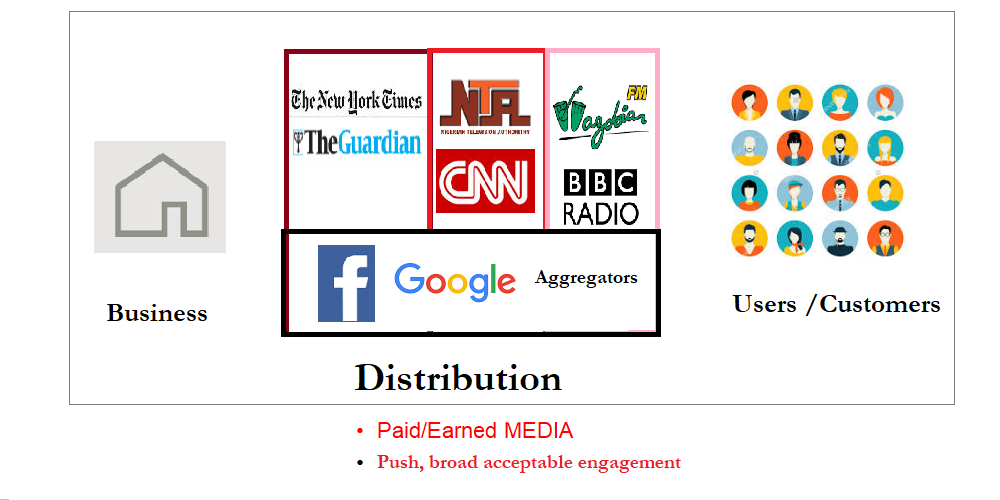
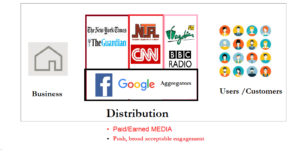
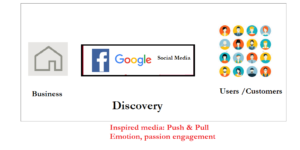
Here, I explain why your business must adopt the inspired media advertising model, over the paid/earned advertising model. The former is discovery-driven, bringing emotions and passions with propensity of virality, while the latter is distribution-driven, lacking any meaningfully customer engagement. I provide a case study.