DD
MM
YYYY

PAGES

DD
MM
YYYY

spot_img

PAGES

Home Blog Page 743

Retirement Plans’ Growing Interest in Tokenized Assets, Exemplified By Michigan’s AKRB Bitcoin ETF Exposure

0

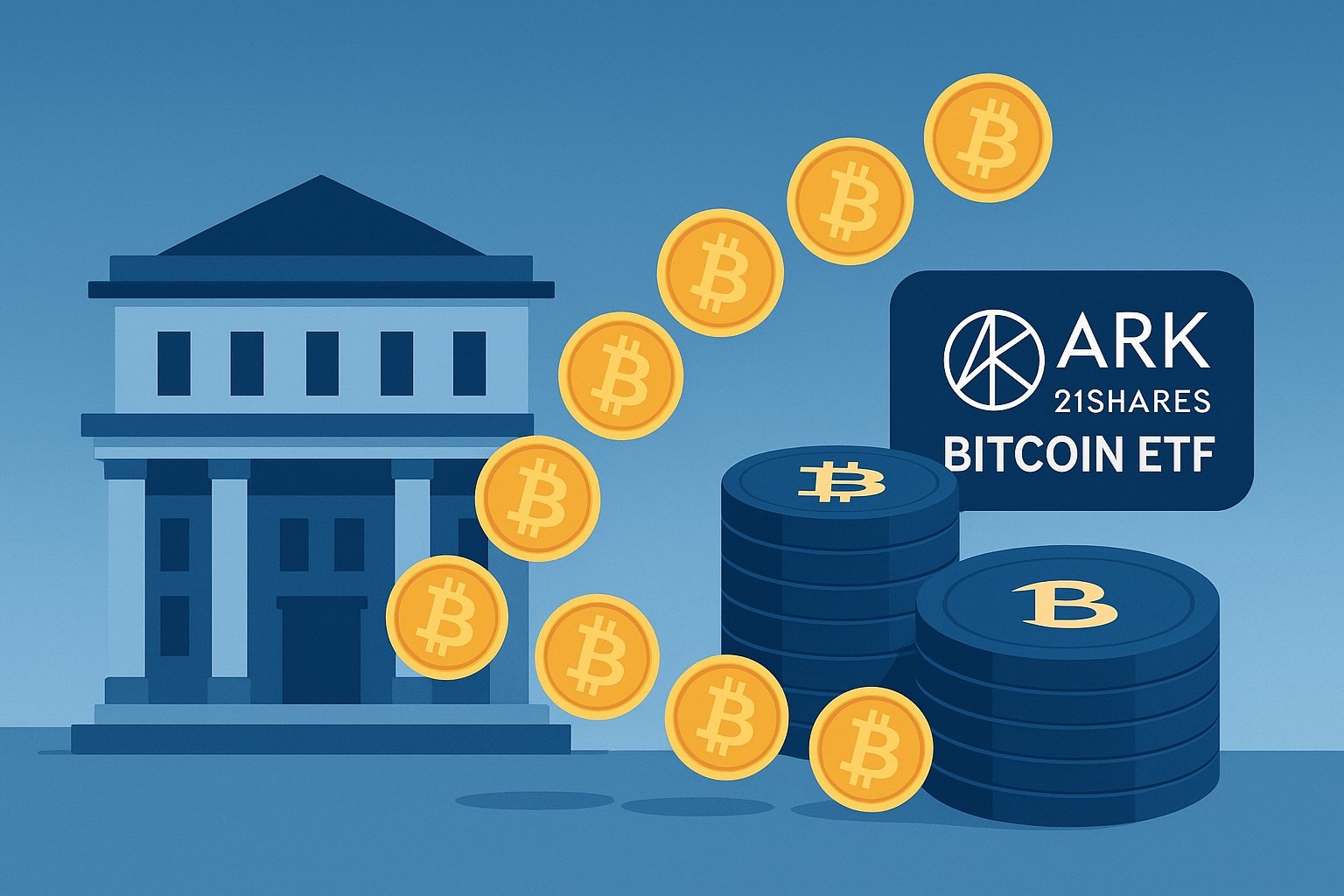
The State of Michigan Retirement System significantly increased its Bitcoin exposure in Q2 2025, tripling its holdings in the ARK 21Shares Bitcoin ETF (ARKB) from 100,000 to 300,000 shares, valued at approximately $11.4 million as of June 30, according to SEC filings. The fund also maintains 460,000 shares in the Grayscale Ethereum Trust (ETHE), worth about $9.6 million, unchanged since September 2024.

This move reflects growing institutional confidence in digital assets, despite recent Bitcoin ETF outflows totaling $1.4 billion over four days. Michigan’s strategy aligns with a broader trend, as seen with Wisconsin’s $387.3 million Bitcoin ETF position, signaling cautious but increasing adoption among state pension funds.

Tokenized assets, such as Bitcoin ETFs or tokenized real estate and private equity, allow fractional ownership, lowering barriers to entry for retail and institutional investors. This enables retirement plans to offer exposure to high-value or illiquid assets previously reserved for high-net-worth individuals or institutional investors, like private equity or real estate.

Traditionally illiquid assets, such as private equity or infrastructure, gain liquidity through tokenization. Retirement plans can rebalance portfolios more dynamically, meeting cash flow needs without sacrificing long-term returns. For instance, tokenized real estate allows pension funds to exit portions of investments rather than entire holdings, addressing liquidity constraints.

Blockchain-based tokenization reduces intermediaries through smart contracts, lowering transaction and administrative costs. For large pension funds like Michigan’s, this can translate into significant savings, potentially reducing fees passed on to retirees.

Blockchain’s immutable ledger provides a transparent, traceable record of transactions, reducing fraud risks and enhancing regulatory compliance. This is particularly appealing for pension funds, which prioritize fiduciary responsibility and accountability. The lack of consistent global frameworks creates fragmentation.

Cryptocurrencies like Bitcoin, even in ETF form, are volatile, posing risks to retirement funds that prioritize stability. The recent $1.4 billion in Bitcoin ETF outflows highlights market fluctuations. Many retirement plans lack the technological expertise or infrastructure to manage blockchain-based assets, requiring costly upgrades.

Tokenized assets are vulnerable to hacks or smart contract errors, necessitating robust security measures. The inclusion of high-risk assets like cryptocurrencies in retirement plans, as enabled by recent U.S. executive actions, raises fiduciary concerns. Plans must balance potential returns with the need to protect retirees from undue risk, especially given warnings about private equity and crypto being diverted into 401(k)s without clear investor consent.

However, limited market liquidity and immature secondary markets could hinder scalability. Following Michigan’s lead, retirement plans are increasingly allocating to Bitcoin and Ethereum ETFs. Wisconsin’s $387.3 million Bitcoin ETF position and Michigan’s $11.4 million ARK 21Shares Bitcoin ETF holdings reflect this trend.

Tokenized money market funds have surpassed $1 billion in assets under management in 2024, driven by high-interest-rate environments. Major players like BlackRock, WisdomTree, and Franklin Templeton offer these funds, which provide instant settlement and can be used for payments, enhancing capital efficiency. Retirement plans are exploring these for stable, on-chain returns.

Pension funds are testing tokenized real estate and private equity to diversify portfolios and access illiquid markets. For example, tokenized real estate allows fractional ownership of properties, enabling pension funds to invest globally without large capital commitments. Goldman Sachs is launching tokenization projects for U.S. fund complexes and European debt markets by late 2024, signaling institutional interest.

Retirement plans are eyeing tokenized bonds and equities for faster settlement and lower costs. Slovenia’s issuance of a digital bond in 2024 and Switzerland’s Helvetia III project for tokenized bond settlements using wholesale CBDCs are notable examples. These offer pension funds efficient, transparent investment options.

A U.S. executive order signed on August 7, 2025, directs the Department of Labor to review fiduciary guidance, paving the way for cryptocurrencies and private equity in 401(k) plans. BlackRock’s planned 401(k) target-date fund with 5-20% private investments and Empower’s collaboration with Apollo reflect this shift, though it introduces risks for retail investors.

The tokenized asset market is projected to grow significantly, with estimates ranging from $2 trillion by 2030 (McKinsey) to $16 trillion (Boston Consulting Group). PwC forecasts tokenized investment funds reaching $317 billion by 2028. Retirement plans are aligning with this trend, with 74% of institutional investors planning to invest in digital assets within five years, per a 2024 Fidelity survey.

Trends like tokenized money market funds, real estate, and digital bonds are gaining traction, supported by regulatory sandboxes and institutional pilots. As the market matures, retirement plans must balance innovation with fiduciary duty to ensure long-term stability for retirees.

“Art Blocks 500” Milestone Solidifies Generative NFTs As A Transformative Force in Art and Tech

0

Art Blocks announced “Art Blocks 500,” marking a milestone of 500 flagship generative art projects from 2020 to 2025. As of August 2025, 495 projects have been released, with five final projects—two Curated and three community-focused Explorations—set to complete the collection by November 2025, coinciding with Art Blocks’ five-year anniversary.

This initiative celebrates their foundational era of on-chain generative art, preserving projects across Curated, Playground, Factory, Presents, Collaborations, and Explorations categories. After reaching 500, Art Blocks plans to focus on preserving these works while exploring new technologies and partnerships through their Studio and Art Blocks Engine.

Art Blocks 500 encapsulates 500 unique, algorithmically generated art projects stored on the Ethereum blockchain, establishing a permanent, immutable archive of digital creativity. This milestone underscores the cultural importance of generative art as a recognized medium, blending code, creativity, and technology.

By including community-driven “Explorations” alongside curated releases, Art Blocks fosters inclusivity, empowering artists and collectors to shape the platform’s legacy. This democratizes art creation and curation, reinforcing the decentralized ethos of Web3. Art Blocks’ success, with over $2.2 billion in secondary market sales and 1.5 million unique outputs, highlights the economic viability of generative NFTs.

The completion of 500 projects may drive renewed interest, potentially increasing demand and value for existing collections. The shift to community-focused releases and the Art Blocks Engine (enabling third-party integrations) could lower barriers for new artists, fostering a broader, more diverse generative art ecosystem. However, market volatility and NFT fatigue could temper speculative enthusiasm.

Art Blocks’ plans to explore new technologies post-500 suggest a pivot toward cross-chain compatibility or layer-2 solutions, addressing Ethereum’s high gas fees and scalability issues. This could expand access but risks fragmenting the community if not executed thoughtfully. The emphasis on archiving and preserving these 500 projects signals a maturing market, prioritizing long-term cultural value over short-term speculation.

Generative NFTs have gained traction in traditional art spaces, with Art Blocks projects exhibited in galleries like Pace and featured at events like Christie’s auctions. The 500 milestone could further legitimize generative art, attracting institutional collectors and museums. By providing a platform for artists to code unique algorithms, Art Blocks has redefined authorship, where artists create systems rather than singular works.

How Generative NFTs Are Shaping Narratives

Generative NFTs shift the artist’s role from creator of a single work to designer of algorithms that produce infinite variations. This narrative of “art as code” emphasizes process over product, with collectors owning unique outputs of a shared system. Example: Projects like Fidenza by Tyler Hobbs create dynamic, unpredictable artworks, sparking discussions about the interplay between human intent and computational randomness.

Blockchain ensures transparent provenance and ownership, fostering a narrative of trust and authenticity in digital art. Collectors are not just buyers but stakeholders in a decentralized ecosystem, as seen with Art Blocks’ on-chain storage. This narrative challenges traditional gatekeepers (galleries, auction houses), empowering artists and collectors to interact directly.

The narrative of NFTs as speculative assets often overshadows their artistic merit. High-profile sales (e.g., Art Blocks’ Chromie Squiggle fetching millions) fuel perceptions of NFTs as status symbols or investments, but the 500 milestone aims to recenter the focus on artistic innovation and cultural significance. Critics argue this speculative narrative risks commodifying art, while proponents see it as a democratizing force, rewarding creators directly.

Generative NFTs bridge art and technology, creating a narrative of interdisciplinary innovation. They appeal to tech enthusiasts, coders, and traditional artists alike, fostering cross-pollination between Silicon Valley and the art world. This narrative positions NFTs as a cultural artifact of the Web3 era, reflecting society’s growing integration with blockchain and decentralized systems.

Generative NFTs challenge elitist art world structures by prioritizing accessibility and programmability. However, they also face criticism for environmental concerns (Ethereum’s energy use) and market exclusivity, as high prices can alienate smaller collectors. The narrative of inclusivity is tempered by the reality of wealth concentration among early adopters and “whales,” sparking debates about equity in the NFT space.

By shaping narratives around decentralized creativity, community participation, and the fusion of code and art, generative NFTs are redefining how we create, own, and value art. However, balancing artistic integrity with speculative fervor and addressing accessibility challenges will be critical to sustaining their cultural impact. As Art Blocks transitions to new phases, the narrative of generative NFTs will likely evolve, influencing broader Web3 and digital culture conversations.

Sheetz’s “Crypto Crave & Save” Promotion, Offers 50% Off Purchases Paid With Cryptocurrencies

0

Sheetz is running a promotion called “Crypto Crave & Save,” offering 50% off purchases paid with cryptocurrencies like Bitcoin, Ethereum, Litecoin, or USDC via the Flexa network. This discount applies daily from 3 PM to 7 PM at participating locations, from August 1 to August 31, 2025, with a maximum discount of $15 per transaction and up to 10 eligible transactions per Flexa account.

The offer is valid for in-store purchases only, excluding gas, gift cards, online, and in-app payments. To participate, customers need a Flexa-enabled app (like SPEDN, Zashi, Nighthawk Wallet, or Nexus Wallet), deposit digital assets into their wallet (e.g., via Coinbase), and present a flexcode at checkout. Sheetz operates over 750 stores across the U.S., and this initiative aims to boost crypto adoption, particularly among younger consumers.

By incentivizing crypto payments with significant discounts, Sheetz is encouraging mainstream consumers, particularly younger demographics, to explore and use digital currencies. This aligns with the growing trend of retailers accepting crypto to tap into tech-savvy markets.

The promotion could normalize crypto transactions in everyday settings, reducing the perception of cryptocurrencies as speculative investments and positioning them as practical payment methods. Sheetz differentiates itself from competitors by embracing innovative payment methods, potentially attracting a younger, tech-forward customer base. This could enhance brand loyalty among crypto enthusiasts.

The time-limited discount (3 PM to 7 PM) creates urgency, driving foot traffic during those hours and potentially boosting sales of high-margin items like food and beverages. The use of the Flexa network ensures fast, low-cost transactions with fraud protection, which could reduce Sheetz’s payment processing costs compared to traditional credit card fees.

However, the $15 discount cap and 10-transaction limit per account suggest Sheetz is managing financial exposure, as widespread adoption could strain profit margins. The exclusion of gas and gift cards further limits potential losses on low-margin items. The partnership with Flexa highlights the growing role of crypto payment networks in retail.

Flexa benefits from increased visibility and user acquisition, as customers must download Flexa-enabled apps to participate. This could spur similar partnerships between retailers and crypto payment providers, accelerating the integration of blockchain-based payments into mainstream commerce.

While the promotion boosts crypto’s visibility, it operates in a regulatory gray area. Cryptocurrency transactions may face scrutiny from tax authorities, and Sheetz must ensure compliance with anti-money laundering (AML) and know-your-customer (KYC) regulations. Public perception of crypto remains mixed due to volatility and scams.

Discounts like Sheetz’s 50% off deal lower the barrier to entry for crypto-curious consumers, encouraging them to set up wallets and engage with digital currencies. This gamifies the payment process, appealing to younger audiences familiar with digital trends. Crypto-based promotions create a sense of exclusivity and innovation, appealing to consumers who value being early adopters.

The limited-time offer taps into FOMO (fear of missing out), driving quicker purchasing decisions. By integrating crypto payments into a familiar retail environment, Sheetz educates consumers on their practical use, potentially reducing skepticism. However, the complexity of setting up crypto wallets could deter less tech-savvy customers.

Cryptomarketing campaigns signal a shift toward integrating digital currencies into everyday commerce. Retailers like Sheetz are testing the waters, potentially paving the way for wider adoption by chains like Walmart or Target. Some brands are exploring crypto-based loyalty programs (e.g., tokenized rewards), which could further influence consumer spending habits by offering tradeable or redeemable digital assets.

Cryptomarketing aligns with the growing influence of decentralized finance (DeFi) and Web3, appealing to consumers who value decentralization and financial sovereignty. This could pressure businesses to adopt crypto-friendly policies to stay relevant. Sheetz’s promotion is a strategic move to capitalize on the rising interest in cryptocurrencies, drive store traffic, and position itself as an innovative retailer.

By offering substantial discounts, Sheetz lowers the psychological and financial barriers to crypto adoption, influencing consumer behavior while testing the scalability of crypto payments. Cryptomarketing, as seen here, is pushing businesses to rethink payment systems and customer engagement, but its success depends on balancing innovation with operational practicality and regulatory compliance.

Trump-Putin Summit Could Be A Pivotal Moment For U.S.-Russia Relations

0

President Donald Trump is scheduled to meet with Russian President Vladimir Putin on Friday, August 15, 2025, in Alaska to discuss ending the Russia-Ukraine war. The announcement was made by Trump on his Truth Social platform, confirming the date and location after weeks of speculation.

The meeting aims to address a potential ceasefire, with Trump suggesting possible “swapping of territories” between Russia and Ukraine, though Ukrainian President Volodymyr Zelenskyy has firmly opposed ceding any land. This will be the first U.S.-Russia summit since 2021.

Implications for U.S.-Russia Relations

The summit marks the first high-level U.S.-Russia meeting since Russia’s invasion of Ukraine in February 2022, signaling a possible thaw in relations strained by sanctions, military tensions, and diplomatic expulsions. Trump’s transactional approach and history of engaging directly with Putin suggest an intent to restore some level of dialogue.

A successful meeting could lead to the normalization of diplomatic channels, such as restoring the functioning of embassies and consulates, which have been severely limited since 2022. For instance, recent talks in Saudi Arabia between U.S. and Russian officials focused on resuming normal diplomatic operations, indicating a mutual interest in stabilizing communication.

However, skepticism about Putin’s reliability as a negotiating partner persists, with experts noting his history of violating agreements. This could limit the depth of any diplomatic reset unless concrete, verifiable commitments are made. The primary agenda is ending the Russia-Ukraine war, with Trump pushing for a ceasefire and suggesting territorial “swapping” as part of a deal.

Russia has proposed a ceasefire that would cede significant Ukrainian territory, a plan opposed by Ukraine and criticized for excluding Kyiv from initial talks. If Trump and Putin reach an agreement, it could reduce tensions by de-escalating the Ukraine conflict, a major flashpoint in U.S.-Russia relations. Improved ties might open discussions on other issues like arms control or energy markets, potentially stabilizing global oil prices and reviving Russian gas supplies to Europe.

Excluding Ukraine and European allies from initial talks risks alienating key partners, echoing historical agreements like the 1945 Yalta Conference, which could undermine trust in U.S. leadership. Additionally, any deal perceived as favoring Russia could embolden Putin, potentially leading to future aggression, which would strain U.S.-Russia relations further.

Trump has threatened secondary sanctions on countries purchasing Russian oil if Putin does not agree to a ceasefire, while also doubling tariffs on India for its Russian oil imports. Meanwhile, Russian officials have floated economic incentives, such as Arctic exploration deals, to improve ties with the U.S.

A successful summit could lead to economic cooperation, benefiting U.S. companies through access to Russian resources or markets. For example, aligning with Russia could counterbalance China’s influence, as Trump may seek to distance Russia from its economic ties with Beijing.

Sanctions and tariffs remain a sticking point. If Trump follows through on his threats, Russia could face severe economic pressure, potentially collapsing its energy markets and forcing a deeper alignment with China, which would counter U.S. interests. Posts on X suggest that such sanctions could be a “global shock test,” disrupting free trade and energy markets worldwide.

Trump has escalated military rhetoric, including moving nuclear submarines in response to Russian provocations, while Putin has maintained a confident domestic stance despite international isolation. The U.S. continues to arm Ukraine, and NATO’s increased defense spending adds pressure on Russia.

A ceasefire could reduce immediate military tensions, allowing both nations to focus on strategic stability, such as arms control talks, as seen in the earlier Alaska Summit. However, Trump’s willingness to offer concessions, like reassurances on Ukraine’s NATO membership, could signal a softer U.S. stance, potentially encouraging Russian assertiveness.

Trump’s rhetoric, including calling Zelenskyy a “dictator” and praising Putin, has raised concerns about a pro-Russia tilt. However, his first term showed a hawkish stance, with sanctions and military support for Ukraine, suggesting a complex strategy rather than outright alignment with Russia.

A deal perceived as favorable to the U.S. could bolster Trump’s image as a dealmaker, strengthening domestic support and U.S. influence globally. Conversely, concessions to Russia could damage U.S. credibility among NATO allies and Ukraine, potentially fracturing Western unity. The exclusion of Ukraine and European allies from the summit has drawn criticism, with comparisons to historical great-power deals that ignored smaller nations.

This could weaken U.S. alliances, particularly if Zelenskyy’s constitutional requirement for a referendum on territorial changes is ignored. A ceasefire agreement could lead to a temporary warming of U.S.-Russia relations, with restored diplomatic channels and limited economic cooperation. This might include deals on energy or Arctic resources, aligning with Trump’s transactional approach.

Sustained dialogue could revive U.S.-Russia cooperation on issues like arms control, counterterrorism, or space, as seen historically. However, this requires mutual trust, which is currently low due to Putin’s track record. Without a durable peace in Ukraine, U.S.-Russia relations are likely to remain adversarial.

Russia’s use of proxy diplomats and informal channels, such as business figures like Kirill Dmitriev, suggests a shift away from traditional diplomacy, complicating long-term agreements. The summit’s outcome will influence the global balance of power. A U.S.-Russia rapprochement could weaken China’s position, but at the cost of alienating European allies and Ukraine.

Conversely, a hardline U.S. stance could solidify NATO’s unity but risk escalating tensions with Russia, potentially affecting global energy and security dynamics. A successful outcome depends on balancing incentives (e.g., economic deals) with pressures (e.g., sanctions, military aid to Ukraine) while ensuring Ukraine and European allies are included in subsequent talks.

Harvard’s $116M IBIT Investment Signals a Turning-Point For Institutional Crypto Adoption

0

Harvard Management Company, which oversees Harvard University’s $53.2 billion endowment, disclosed a $116 million investment in BlackRock’s iShares Bitcoin Trust (IBIT) as of June 30, 2025. This was reported in a filing with the U.S. Securities and Exchange Commission (SEC), indicating Harvard held approximately 1.9 million shares of the ETF.

This position ranks as the endowment’s fifth-largest holding, behind Microsoft, Amazon, Booking Holdings, and Meta, and signals growing institutional adoption of Bitcoin through regulated investment vehicles like ETFs. This move validates cryptocurrency as a legitimate portfolio diversifier, potentially reducing stigma and encouraging other conservative institutions (e.g., pension funds, endowments) to consider Bitcoin exposure.

The choice of a regulated ETF like IBIT, rather than direct Bitcoin ownership, underscores a preference for compliance and risk mitigation, aligning with institutional governance standards. Harvard’s entry could drive increased demand for Bitcoin ETFs, potentially boosting IBIT’s assets under management (AUM) and Bitcoin’s price.

As of August 2025, Bitcoin’s price has been sensitive to institutional flows, and this $116 million allocation (though modest relative to Harvard’s $53.2 billion endowment) may catalyze further inflows. It could spur competition among ETF providers (e.g., Grayscale, Fidelity) to attract institutional capital, potentially leading to lower fees or innovative crypto products.

Harvard’s move serves as a bellwether for other endowments, family offices, and hedge funds. Yale and other Ivy League endowments have previously invested in crypto funds, but Harvard’s public disclosure via an SEC filing amplifies visibility, potentially triggering a “herd effect” among risk-averse institutions.

Retail investors may interpret this as a bullish signal, increasing speculative trading or long-term Bitcoin adoption. Harvard’s allocation (roughly 0.22% of its endowment) suggests Bitcoin is viewed as a hedge against inflation, currency devaluation, or macroeconomic uncertainty, rather than a core holding. This reflects a cautious but strategic embrace of digital assets.

The investment may prompt other institutions to reassess their asset allocation models, particularly in a high-inflation or volatile fiat environment. Institutional adoption through ETFs could soften regulatory scrutiny, as it channels crypto investment into regulated vehicles, aligning with SEC oversight. Public perception of Bitcoin may shift further from a speculative asset to a mainstream investment, influencing broader adoption.

How This Shapes Decisions

Endowments, pension funds, and asset managers may accelerate due diligence on Bitcoin ETFs, prioritizing regulated products like IBIT for compliance and liquidity. They might allocate small, diversified portions (0.1-2%) of portfolios to crypto, balancing risk and upside. They’ll weigh Bitcoin’s volatility (historically 40-60% annualized) against its uncorrelated returns (correlation with S&P 500 ~0.2-0.4).

Individual investors may increase exposure to Bitcoin ETFs or direct crypto holdings, interpreting Harvard’s investment as a vote of confidence. Platforms like Coinbase or Robinhood could see higher trading volumes. Retail investors should assess risk tolerance, as Bitcoin’s price swings (e.g., 20% drops in a week) remain significant. They may favor ETFs for simplicity over managing private keys.

Advisors may face client pressure to include crypto in portfolios. They’ll likely recommend ETFs like IBIT for ease of access and lower custodial risk, integrating small allocations into diversified strategies. Advisors will need to educate clients on crypto’s high volatility and regulatory risks, while highlighting its potential as a long-term store of value.

Crypto funds and blockchain startups may see increased interest from institutional capital, driving innovation in DeFi, custody solutions, and layer-2 scaling. They’ll need to address institutional demands for transparency, security, and regulatory compliance to capture this capital. Regulators may expedite frameworks for crypto ETFs and custody, balancing investor protection with innovation.

Harvard’s investment aligns with a trend of institutional crypto adoption. For example, BlackRock’s IBIT has grown to over $20 billion in AUM since its January 2024 launch, reflecting strong demand. Other institutions, like Wisconsin’s pension fund ($156 million in IBIT) and Morgan Stanley’s ETF offerings, reinforce this momentum.