DD
MM
YYYY

PAGES

DD
MM
YYYY

spot_img

PAGES

Home Blog Page 7436

Farmers, Change that “Guesswork Technology” with Data-driven Technology: Get Zenvus Insights

0

We want African farmers to change strategy on how they farm. Agtech pioneer, Zenvus, wants these farmers to use smart farming over guesswork in their farming processes.

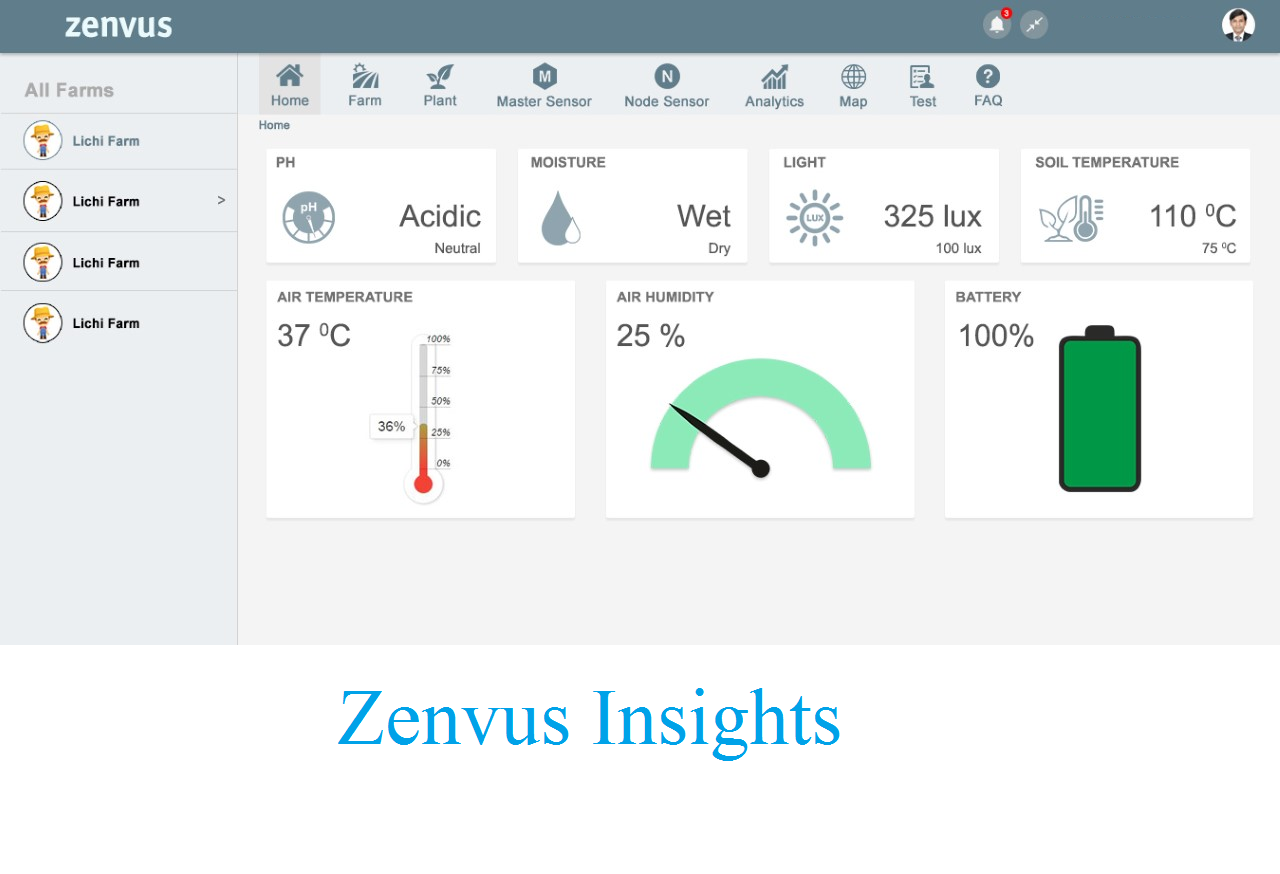
Data from Zenvus Smartfarm and Zenvus Yield which are collected from farms are sent to our servers where our computational models help make sense of them. The Web App is where the data is made actionable for farmers to access.

 
The Web App is a place where farmers / investors:
  • Register and activate their Yield and Smartfarm devices (each product comes with a unique code which makes it impossible for stolen ones to be re-used).
  • Login and understand what is happening in their farms.

Two Products are available:

  • Zenvus Insights: This helps farmers understand the soil conditions of their farmlands through sensors that deliver appropriate data to their phones or computers. With this, farmers can effectively manage fertilizer application, irrigation and in general take guesswork out of farming.
  • Zenvus Insights Pro: This is Zenvus Insights for investors who may want to get real-time insights on farms they have invested.

Become a Zenvus Farmer.

How Google and Facebook could drive higher revenue for Nigerian publishers with technology

0

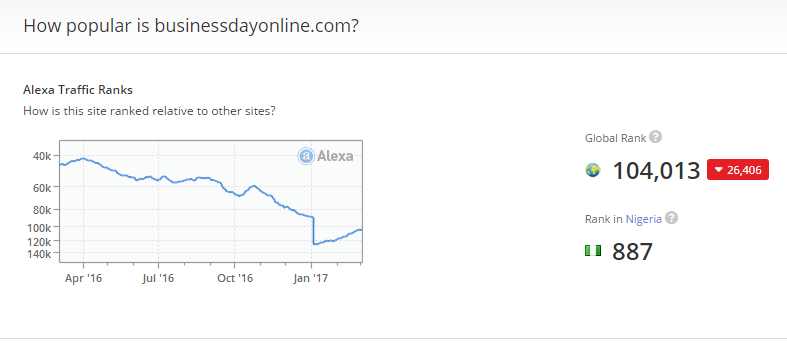
When BusinessDay Nigeria started metering its contents, the newspaper suffered heavy traffic loss.  The company has tried to turn off and on the paywall looking for a balance between revenue and relevance in the digital age.

For all media companies in Nigeria, the only one with a decent chance of making a subscription business work is BusinessDay because it focuses largely on business and financial contents. In other words, readers could see the subscription as an investment, R&D or whatever that is necessary to collect data to drive strategy.

That is different from reading ThisDay, Punch and other local newspapers. Companies are more likely to pay for business contents than political ones.

But there is a problem. BusineddDay does not have ultra-focused and niche contents which would help drive its pay-wall strategy. The financial market in Nigeria is not that dispersed. All newspapers have the same sources and report, to a large extent, the same thing. Once it is on Punch, wait for some minutes, you will read the same content on The Guardian or The Sun.

The same applies in business news as we have few news making companies  to start with.

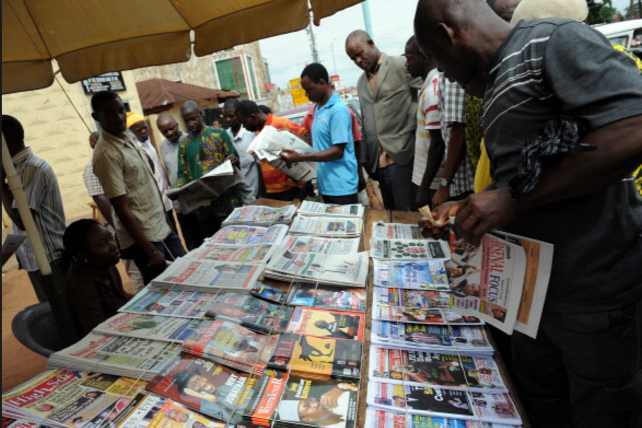
So that brings the question – how can Nigerian media publishing companies survive in the age of Facebook and Google. In reality they can, if government can help them. And if the tech titans will care to assist, also.

This is our suggestion:

  • Let all the publishing houses come together. They need to band together to have any impact to make any strategy work
  • They have to build a platform with pricing system where all contents they will deliver will pass through
  • That platform will have the media companies put prices on what they plan to sell their contents. It could be subscriptions or daily access. Think of hotels.ng but here you are dealing with media contents and not flight tickets or hotel rates.
  • When readers visit the site, they search for contents and the prices are displayed for the specific contents of interests. They pay and read. This pricing could be dynamic.
  • But since there is a risk that some media firms may opt-out since they may not have great quality to command patronage, the group must push for the ultimate killer strategy.
  • Host that platform in Google and Facebook and ask both to collect the money under a revenue sharing formula. With that, no contents from the media houses can be shared without going through the platform. Google and Facebook can make this work, if they receive heat to assist. They are making money without investing in contents.

Yes, if these media companies band together to negotiate with Google and Facebook to sell subscriptions on their behalf, you will see them blossom.

Etisalat Nigeria can fall as Zenith, GTB and Access plan takeover. Nigeria is deteriorating with Etisalat owing $1.72B

0

This is the biggest news in Nigeria this week. Etisalat Nigeria cannot even service its loan. It really means that Nigeria’s economy is deteriorating fast. People are not buying credits and those buying are saving via OTT services like WhatsApps and Skype. This is not a good time for Nigerian government as they cannot find any good news to ride on.

A big news from SR should concern everyone if banks take over Etisalat Nigeria.

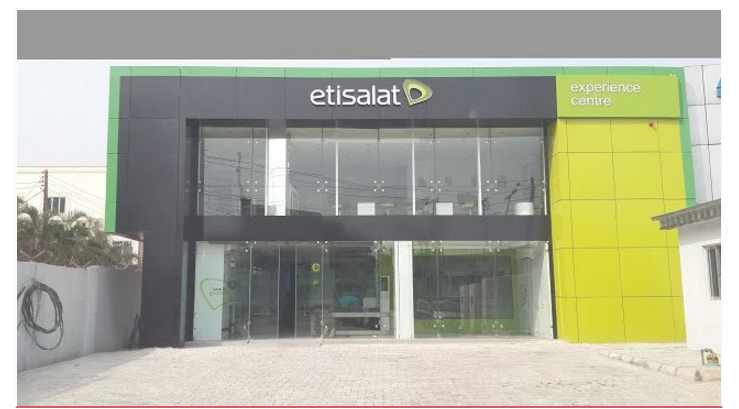
Despite the intervention of the Nigerian Communication Commission, NCC, to broker a peaceful resolution between Etisalat Nigeria and a consortium of banks, it appears the effort may not have yielded a truce, as the banks are set to take over the telecoms firm today (Wednesday), PREMIUM TIMES learnt

The consortium of some foreign and Nigerian banks, including Guaranty Trust Bank, Access Bank, and Zenith Bank, have been having a running battle with the mobile telephone operator over a loan facility totaling $1.72 billion (about N541.8 billion) obtained in 2015.

The loan, which involved a foreign-backed guaranty bond, was for Etisalat to finance a major network rehabilitation and expansion of its operational base in Nigeria.

However, following the failure of the company to meet its debt servicing schedule agreed since 2016, the three Nigerian banks, prodded by their foreign partners, reported Etisalat to banking sector regulator, the Central Bank of Nigeria, CBN, and its communications sector counterpart, the NCC.

Although Etisalat blamed its inability to fulfill its obligation to the banks on the current economic recession in Nigeria, the banks said their attempt to recover the loan, by all means, was fuelled by the pressure from the Asset Management Company of Nigeria, AMCON, demanding immediate cut down on the rate of their non-performing loans.

A senior official of one of the banks who spoke with PREMIUM TIMES late on Tuesday said one of the options they have proposed to Etisalat management as a middle way out of the crisis was for it to request for a bankruptcy status.

The official, who requested that his name should not be revealed since he was not authorized to speak on behalf of the consortium, said the bankruptcy option would require having receivership management appointed by the banks to oversee its operations.

But, the NCC appears not to be favorably disposed to the takeover proposal, the source said, as it believes Etisalat was not only a viable going concern but also willing and able to negotiate its loan servicing.

However, a top source at the NCC said late Tuesday that the commission had approved the takeover, which is expected to occur today.

Etisalat is Nigeria’s fourth largest telecoms operator, with about 21 million subscribers as at January 2017, according to the NCC. It commenced business in Nigeria in 2009.

Why Nigeria’s digital payment pioneer Interswitch abandoned IPO for TA Associates investment

0

TA Associates, a leading global growth private equity firm, has announced it has acquired a minority equity interest in Interswitch, an Africa-focused integrated digital payments and commerce company. Financial terms of the transaction were not disclosed. Helios Investment Partners will remain the majority shareholder of Interswitch.

Founded in 2002, Interswitch is active across the entire payments value chain. A recognized leader in the payments space in Nigeria, the company owns and operates the country’s principal domestic debit card scheme, Verve, as well as serves as a third-party transaction processor for many of Nigeria’s largest banks. In addition, the company offers a number of B2B electronic payment services to public and private sector organizations and businesses, including government entities, hospitals, telecommunications companies and utilities, and also operates Quickteller, the leading B2C bill payments and digital commerce platform in Nigeria. Through add-on acquisitions, Interswitch also operates in Kenya and Uganda.

The digital payments evolution is in the early stages of development in Nigeria, with cash used for 99% of transactions according to McKinsey & Company, versus approximately 50% for developed markets in North America and Europe. Despite the young market, the size of the Nigerian payments opportunity is underpinned by its continent-leading population and sizeable economy. Based on estimates from McKinsey & Company, Interswitch occupies a leading position in the emerging marketplace, especially in debit cards, which comprise 99% of all cards in Nigeria.

Interswitch joins TA Associates’ other current and past payment processing investments worldwide, including BluePay Processing, Cardtronics, IndiaIdeas.com (BillDesk), Procare Software, Retriever Medical/Dental Payments, W.A.G. payment solutions (Eurowag) and YeePay.

It is interesting as in the past Interswitch had sought listing in London Stock Exchange. Apparently, this cash injection will help it scale and then prepare for IPO since it is not likely a buyout is coming soon. Helios needs an exit on this investment as it has to return money back to its backers. Bloomberg noted few months ago that it had hired investment banks looking for $1B sale but none materialized.

The company, which operates in five African countries, said last year it met with banks including Bank of America Corp., Barclays Plc and Standard Bank Group Ltd. about a potential 2016 share sale in Lagos and London. The IPO would have enabled London-based private equity group Helios Investment Partners LLP, a shareholder, to return some money to investors, Interswitch Chief Executive Officer Mitchell Elegbe said in a Dec. 16 interview.

The big deal will be total buyout of Interswitch or IPO. But with Nigeria’s deteriorating economy, IPO may not be a smart move. Cash injection, if done in Naira, will be cheap for foreign investors at this time while Interswitch continues to look for a future where it can prepare for IPO or possibly a total buyout. As also noted by Bloomberg, Interswitch is pivoting owing to the economic circumstances in Nigeria.

“The macroeconomic situation in Nigeria is the determining factor’’ in delaying the plans, Elegbe, 45, said at the company’s offices in Lagos, the commercial hub. Potential investors are “jittery’’ about the naira exchange rate and whether they will be able to buy foreign-exchange to get their money out of the West African country, he said.

But nevertheless, Tekedia congratulates them for raising money in this turbulent economy we have in Nigeria now.

Nigerian telcos and banks should imitate Salesforce Einstein and IBM Watson partnership

0

It is getting harder to have innovation solely built in-house. These days companies are looking outwards to find new growth opportunities through innovations. This is the future, strategic partnerships, driven by core technology innovations.

There is a lesson here, for Nigerian banks and telcos.

Instead  of telcos complaining about OTT services and the associated revenue erosion from them, they could begin exploring how to work with these companies to have a win-win. Similarly, banks could find ways to work closely with fintechs without fear they are created to decimate them.

A new business model is emerging and today IBM Watson and Salesforce Einstein partnership shows the future.

Today’s news is about a tie-up between Salesforce.com and IBM over artificial intelligence.

The two companies plan to integrate the AI products but sell them separately. This would let IBM turn its prediction engine loose on Salesforce’s sales-oriented clients. And it would inject Salesforce’s customer-focused analytics on IBM’s business customers.

Both companies are big on buzzwords and the transformative power of headlines. Actual products from their relationship are “expected” in the “second half of 2017,” the companies said.

Salesforce is worth $57 billion and struggles to make money. IBM’s market value is $172 billion and it has a tough time growing. Might this almost-no-overlap, thousands-of-shared-clients relationship someday be more than a partnership?

Strategic technology innovation will be the order of the day. It shows humility when IBM knows that there are things Salesforce does better, despite its heritage.

In deep future, that is how business will become. Platforms will be shared and everyone will be looking for how to make money at customer facing sides. Imagine if all masts are shared without the duplication we see in some places where Airtel has its own and MTN operates one by the side, creating redundancy and inefficiencies in assets allocations.

Can one provide an AI that will drive MTN operations while MTN allows one to make money from its customer base? At the same time, that AI provides great value to MTN.

Salesforce and IBM have shown that not everything should be built in-house. This type of partnership is the future.

Again, the two companies plan to integrate the AI products but sell them separately. That is a new business model.