DD
MM
YYYY

PAGES

DD
MM
YYYY

spot_img

PAGES

Home Blog Page 7435

Cybersecurity Training Programs in Africa

0

Our Cybersecurity education is structured around four key pillars of policy, management, technology and digital forensics. This implies that we cover all the core needs of any organization or state institutions. While some staff like corporate lawyers may require training on policy, some staff like IT managers may need technical skills. Others like business leaders will find the management module useful. We deliver all these programs through our web portal – www.facyber.com. The program structure is presented below: certificate programs take 12 weeks; diploma programs which require certificate programs as perquisites take 24 weeks (inclusive of the certificate programs) and the nanodegree programs require a live (virtual) one week training with the diploma programs as prerequisites

Program Descriptions

Certificate in Cybersecurity Policy (CCYP): Certificate in Cybersecurity Policy deals with the policy analysis and implementation aspects of cybersecurity. It presents theory and topical issues, at government and enterprise levels, with both technical and managerial components in the fields of information systems security. The program helps learners develop skills on the policy, ethical, and legal issues associated with cybersecurity and information security.


Diploma in Cybersecurity Policy (DCYP) Capstone: This is a practical-oriented program where learners are tasked with developing solutions for a theoretical or real case cybersecurity policy issue with the guidance of a mentor. A project report is required at the end of the program.


Certificate in Cybersecurity Technology (CCYT): The Certificate in Cybersecurity Technology is designed to provide learners with skills to analyze multi-faceted complex cybersecurity issues, develop capabilities to make strategic decisions to protect organizations from threats and become competent cybersecurity professionals.


Diploma in Cybersecurity Technology (DCYT) Capstone: This is a practical-oriented program where learners are tasked with developing capabilities in the core technical aspect of cybersecurity. Learners will have access to some tools and equipment to work throughout this program. A project report is required at the end of the program.

 

Certificate in Cybersecurity Management (CCYM): The Certificate in Cybersecurity Management equips and prepares learners with modern skills to become effective managers across the broad nexus of cybersecurity and intrusion preventions in organizations. The central core is developing capacity to prevent anticipated cyber intrusions, using experiences to mitigate future threats, and formulating and implementing enterprise-level cybersecurity roadmaps. The program also explores the roles of regulation, policy developments, legal instruments and civil liberties.


Diploma in Cybersecurity Management (DCYM) Capstone: This is a practical-oriented program where learners are tasked with developing cybersecurity project management capabilities with the guidance of a mentor. Here, learners develop cybersecurity implementation frameworks. A project report is required at the end of the program.


Certificate in Cybersecurity Intelligence & Digital Forensics (CCDF): The Certificate in Cybersecurity Intelligence & Digital Forensics is structured to provide modern skills to those interested in digital forensics, digital intelligence and uncovering digital evidence. The program equips learners with broad analytical frameworks and prepares them to become competent cyber investigators.


Diploma in Cybersecurity Intelligence & Digital Forensics (DCDF) Capstone: This is a practical-oriented program where learners are tasked with developing capabilities in digital forensics, digital evidence and digital intelligence. Learners will have access to some tools and equipment to work throughout this program. A project report is required at the end of the program.
Using Soil Analysis to Deliver Personalized Region-Centric Fertilizers to African Farmers

0

The era of predictive farming is here in Africa. Computational algorithm could use data collected from IoT devices in farms to make location-based recommendations on fertilizer applications across farming zones, and this will be delivered through mobile devices, to stakeholders that subscribe. With this, we can make fertilizer use more effective in Africa. Welcome to the era where regional soil fertility chemistry drives pre-production of fertilizers.

Imagine if fertilizers sold in Ghana have to be different from the ones sold in Gambia because the two countries have different amounts, on averages, of nitrogen, potassium and phosphorus, in their farmlands.We want fertilizers to be packaged with the locations where they will be sold indicated on the bags. Why? The mix in the fertilizer has to be personalized specifically for the region it will be used. The era of dumb fertilizer application has to end in Africa immediately.

Read on why we think the future of farming in Africa is awesome!

Preamble

Low soil fertility, either as a result of soil degradation or inherent low soil fertility, is a major cause of low crop productivity in West Africa.  Fertilizers can result in dramatic productivity increases. However, in most countries, commodity fertilizers dominate, which do not address soil and crop-specific nutrient requirements and soil acidity constraints, and thus often give poor returns on fertilizer investments.  Much informaton is being generated through various initiatives in many parts of Africa, resulting in different but not necessarily similar or accurate fertilizer recommendations. Recently, the USAID West Africa Fertilizer Program (WAFP) compiled fertilizer recommendations for 10 crops across the agroecological zones (AEZ) of 8 West African countries and summarized them into the Fertilizer Recommendations for West Africa Map (FeRWAM). Approaches that lead to diverse recommendations need to be reviewed, and a more definitive, harmonized approach to delivering better fertilizers to farmers developed.

Roadmap

There is need to design a pathway to deliver fertilizer recommendations that will result in sustaining greater yields and returns on fertilizer investments, particularly for smallholder farmers. Important steps in this process include:

  1.  Soil analysis and nutrient deficiency mapping on a macro scale to determine the extent and variability of nutrient deficiencies and soil acidity constraints
  2.  Developing and validating soil- and crop-specific fertilizer and lime recommendations.
  3.  In collaboration with fertilizer producers, blenders, and distributors, developing the means to deliver improved fertilizer products to farmers
  4.  Addressing regulatory issues and policy constraints that may impede introduction of diverse fertilizer products into the market.

The importance and limitations of soil fertility testing and mapping needs to be understood.  And an understanding of the steps in developing and delivering profitable fertilizer recommendations must be built into any roadmap. Then, an awareness of the multiple players involved in the process of developing and delivering improved fertilizer recommendations strengthened.

Strategic Projects

The following projects will help to drive a new dawn in soil testing and fertilizer recommendations in Africa.

  •  Soil testing and mapping – This covers the benefits and limitations of testing tools, including wet chemistry and spectral approaches, and mapping of soil nutrient deficiencies and acidity constraints as a first step towards developing profitable fertilizer recommendations. Approaches employed by FeRWAM, the ATT project, OFRA, and others must be updated.
  • Developing and Validating Fertilizer Formulations – Information derived from soil testing and mapping nutrient and acidity constraints needs to be translated into fertilizer formulations, and those formulations validated before they can be considered as recommendations. Approaches including best-bet evaluations and nutrient omission trials (NOT trials) need to be pursued.
  • Scaling up fertilizer recommendations – The fertilizer industry must ultimately manufacture, market, and distribute improved fertilizers and lime. Different fertilizer companies must have different strategies and products to address this. Fertilizer subsidy programs are also a means to getting better fertilizers to farmers, and require coordination with governments in development and evaluation of improved fertilizer products.
  • Fertilizer policy and fertilizer regulations – Fertilizer policy and fertilizer regulations have in the past been designed for commodity fertilizers, and often do not facilitate the entry of better fertilizers into competitive markets. The importance of conducive fertilizer policy and regulations, with practical examples of progress, must be examined across Africa.

Zenvus Fusion

Zenvus Fusion is a service for governments and development organizations which is designed to help build Soil Fertility Geography in constituencies. It could be a state Soil Fertility Geography or even a National Soil Fertility Geography. We also support local governments.

Our product provides the data that makes it possible for farmers to understand the natures of the farmlands before they begin planting their crops. We do this by collecting many data samples to appropriately represent the soil fertility equivalence of that region or area.

The aggregated soil fertility data is made accessible for all stakeholders. The data is also GIS-tagged so that the exact locations of the soil are known.

Computational algorithm will use this data to make location-based recommendations on fertilizer applications across farming zones, and this will be delivered through mobile devices, to stakeholders that subscribe.

Also, farmers can get predictive recommendations on the most economically viable crop to grow by feeding present crop prices, fertilizer cost, and population into the algorithm.

With this soil fertilizer geography, fertilizer production will become personalized
and specifically engineered to mitigate deficiencies with deployment regions known pre-production.

We welcome inquiries from governments, development organizations etc.

These two cpanel viruses are slowing your websites – this is how to fix them

0

If your website is hosted on a cpanel, popular for Hostgator and Justhost, there is chance that your site has slowed down considerably. A virus might have attached your site and the slow-down many not be associated with traffic or bandwidth usage.

The viruses make your sites crawl and unusable by attacking your ports, preventing easy transfer of data to your web users. So when they click, they wait for so long before they can see anything.

These are the viruses and you need to watch out for them:

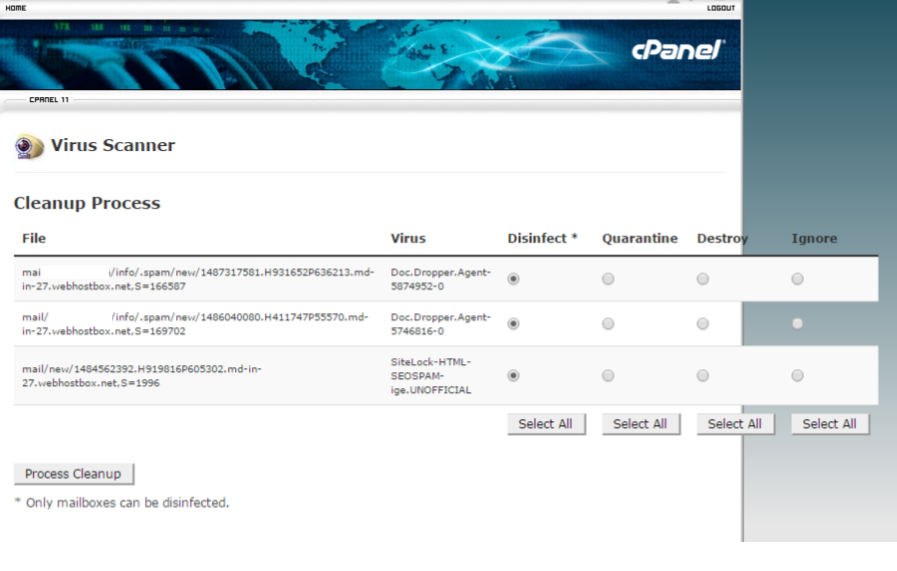
  • Document Dropper Agent
  • SEOSPAM-ige

They are troubling and very difficult to deal with. This is what you have to do if you suspect you have these viruses.

  • Scan your cpanel area with a good anti-virus. Most cpanels come with a Virus Scanner
  • Deleted the viruses and make request to your server support team to tighten your ports. This is the most effective way to handle this issue. These viruses attach emails and can sneak in through emails. So, you must ensure that your ports are secured.


Facyber has updated prices to serve our learners as enrollments accelerate

0

We are very happy to inform our learners and future ones that we have updated our prices, on First Atlantic Cybersecurity Institute (Facyber), with immediate effects. The increase in the prices is to enable us continue to meet demands on network resources.

Over the last few days, we have struggled with capacity overload owing to huge enrollments. This price increase will help us with resources to provide more stable learning infrastructure. We thank you for your understanding.

First Atlantic Cybersecurity Institute (Facyber) is a cybersecurity training, consulting and research company specializing in all areas of cybersecurity including Cybersecurity Policy, Management, Technology, Intelligence and Digital Forensics. Facyber is based in United States. with Fasmicro as its Nigerian liaison.

The clientele base covers universities, polytechnics, colleges of education, governments, government labs and agencies, businesses, civil organizations, and individuals. Specifically, the online courses are designed for the needs of learners of any discipline or field (science, engineering, law, policy, business, etc) with the components covering policy, management, and technology.

Programs are structured as Certificate, Diploma and Nanodegree programs with deep resources to support Learners.   Please see complete Facyber catalog and detailed Table of Contents.

Learn about:
– Cybersecurity Policy (Certificate, Diploma, or Nanodegree)
– Cybersecurity Management (Certificate, Diploma, or Nanodegree)
– Cybersecurity Technology (Certificate, Diploma, or Nanodegree)
– Cybersecurity Intelligence and Digital Forensics (Certificate, Diploma, or Nanodegree)

Enroll today.

As iflix arrives Nigeria, iROKOtv must match iflix telco-driven distribution model

0

This video streaming service market is getting more competitive and Africa seems to be an interesting destination.

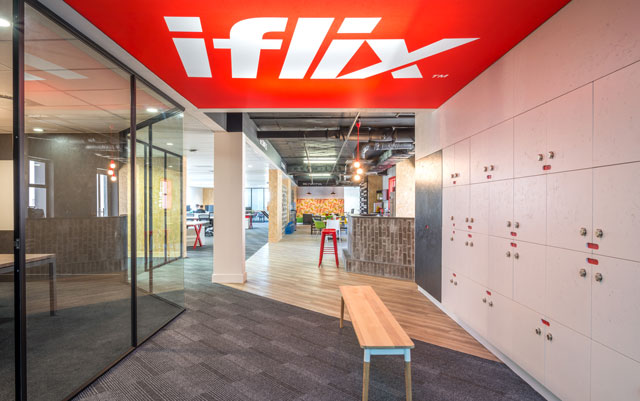
Iflix, a video streaming service with customers mostly in Southeast Asia, raised US$90m in a round led by Liberty Global and  Zain. It plans to take on Netflix and Naspers, which owns ShowMax, in Africa and the Middle East, Techcentral reports.

Iflix is promising a lower-cost alternative video-on-demand service and will be launched in Nigeria by June. This is likely to put it on a collision course with the Naspers-owned ShowMax, with also focuses on emerging markets.

Iflix offers customers in nine countries a mix of Hollywood fare like the film Iron Man and TV series Homeland along with local programming for a monthly subscription fee. The company has signed up more than 5 million customers — more than analysts estimate Netflix, the world’s largest paid video service, has in Southeast Asia.

The partnership with Zain mirrors how Iflix has grown in Southeast Asia. The company has relied on telecoms providers to sell Iflix on top of their phone packages. That way, Iflix doesn’t have to spend much money recruiting customers, and mobile providers can use Iflix to keep customers from defecting to rival carriers.

For Nigeria VOD pioneer, iROKOtv, iflix arrival will be a competitive challenge. If iflix succeeds is convincing one of the big telcos like MTN, Airtel, Glo or Etisalat to carry its contents, it could be a huge blow to iROKOtv. The reality is that the biggest challenge in the industry is broadband costs and if the telco-led model is replicated in Nigeria, by iflix, they will have more success.

Of course, there is an issue of contents which iROKOtv remains the undisputed leader in Nigeria. It has the largest collection of Nigerian Nollywood movies. But do not bank on that. One can have hundreds of Nollywood movies with a budget of $1 million. So iflix can build that business if it sees it as a growth area.

Generally, the competition in emerging markets is ratcheting up. Amazon.com extended its video service to the rest of the world late last year, while Netflix added a feature so people living in countries with inconsistent broadband Internet can download shows to watch later.

As the cost of broadband continues to crash, we expect this market to continue to grow, at least in the number of participants. That will bring cost down and help forge partnerships that will make it economical to watch movies online.

Every local company in this sector should note that the  VOD competitive space is international in scope. This is a global business and Nigeria is right at the center right now.