DD
MM
YYYY

PAGES

DD
MM
YYYY

spot_img

PAGES

Home Blog Page 7443

Why Nigeria’s digital payment pioneer Interswitch abandoned IPO for TA Associates investment

0

TA Associates, a leading global growth private equity firm, has announced it has acquired a minority equity interest in Interswitch, an Africa-focused integrated digital payments and commerce company. Financial terms of the transaction were not disclosed. Helios Investment Partners will remain the majority shareholder of Interswitch.

Founded in 2002, Interswitch is active across the entire payments value chain. A recognized leader in the payments space in Nigeria, the company owns and operates the country’s principal domestic debit card scheme, Verve, as well as serves as a third-party transaction processor for many of Nigeria’s largest banks. In addition, the company offers a number of B2B electronic payment services to public and private sector organizations and businesses, including government entities, hospitals, telecommunications companies and utilities, and also operates Quickteller, the leading B2C bill payments and digital commerce platform in Nigeria. Through add-on acquisitions, Interswitch also operates in Kenya and Uganda.

The digital payments evolution is in the early stages of development in Nigeria, with cash used for 99% of transactions according to McKinsey & Company, versus approximately 50% for developed markets in North America and Europe. Despite the young market, the size of the Nigerian payments opportunity is underpinned by its continent-leading population and sizeable economy. Based on estimates from McKinsey & Company, Interswitch occupies a leading position in the emerging marketplace, especially in debit cards, which comprise 99% of all cards in Nigeria.

Interswitch joins TA Associates’ other current and past payment processing investments worldwide, including BluePay Processing, Cardtronics, IndiaIdeas.com (BillDesk), Procare Software, Retriever Medical/Dental Payments, W.A.G. payment solutions (Eurowag) and YeePay.

It is interesting as in the past Interswitch had sought listing in London Stock Exchange. Apparently, this cash injection will help it scale and then prepare for IPO since it is not likely a buyout is coming soon. Helios needs an exit on this investment as it has to return money back to its backers. Bloomberg noted few months ago that it had hired investment banks looking for $1B sale but none materialized.

The company, which operates in five African countries, said last year it met with banks including Bank of America Corp., Barclays Plc and Standard Bank Group Ltd. about a potential 2016 share sale in Lagos and London. The IPO would have enabled London-based private equity group Helios Investment Partners LLP, a shareholder, to return some money to investors, Interswitch Chief Executive Officer Mitchell Elegbe said in a Dec. 16 interview.

The big deal will be total buyout of Interswitch or IPO. But with Nigeria’s deteriorating economy, IPO may not be a smart move. Cash injection, if done in Naira, will be cheap for foreign investors at this time while Interswitch continues to look for a future where it can prepare for IPO or possibly a total buyout. As also noted by Bloomberg, Interswitch is pivoting owing to the economic circumstances in Nigeria.

“The macroeconomic situation in Nigeria is the determining factor’’ in delaying the plans, Elegbe, 45, said at the company’s offices in Lagos, the commercial hub. Potential investors are “jittery’’ about the naira exchange rate and whether they will be able to buy foreign-exchange to get their money out of the West African country, he said.

But nevertheless, Tekedia congratulates them for raising money in this turbulent economy we have in Nigeria now.


Nigerian telcos and banks should imitate Salesforce Einstein and IBM Watson partnership

0

It is getting harder to have innovation solely built in-house. These days companies are looking outwards to find new growth opportunities through innovations. This is the future, strategic partnerships, driven by core technology innovations.

There is a lesson here, for Nigerian banks and telcos.

Instead  of telcos complaining about OTT services and the associated revenue erosion from them, they could begin exploring how to work with these companies to have a win-win. Similarly, banks could find ways to work closely with fintechs without fear they are created to decimate them.

A new business model is emerging and today IBM Watson and Salesforce Einstein partnership shows the future.

Today’s news is about a tie-up between Salesforce.com and IBM over artificial intelligence.

The two companies plan to integrate the AI products but sell them separately. This would let IBM turn its prediction engine loose on Salesforce’s sales-oriented clients. And it would inject Salesforce’s customer-focused analytics on IBM’s business customers.

Both companies are big on buzzwords and the transformative power of headlines. Actual products from their relationship are “expected” in the “second half of 2017,” the companies said.

Salesforce is worth $57 billion and struggles to make money. IBM’s market value is $172 billion and it has a tough time growing. Might this almost-no-overlap, thousands-of-shared-clients relationship someday be more than a partnership?

Strategic technology innovation will be the order of the day. It shows humility when IBM knows that there are things Salesforce does better, despite its heritage.

In deep future, that is how business will become. Platforms will be shared and everyone will be looking for how to make money at customer facing sides. Imagine if all masts are shared without the duplication we see in some places where Airtel has its own and MTN operates one by the side, creating redundancy and inefficiencies in assets allocations.

Can one provide an AI that will drive MTN operations while MTN allows one to make money from its customer base? At the same time, that AI provides great value to MTN.

Salesforce and IBM have shown that not everything should be built in-house. This type of partnership is the future.

Again, the two companies plan to integrate the AI products but sell them separately. That is a new business model.

What this Snap and NBCU story should tell Nigerian banks on Paystacks, Flutterwave and other fintechs

0

The world of fintech is expanding in Africa. Nigeria is one of the places it is heating up. Flutterwave, Paystacks and others are competing ferociously. Most of the banks seem not worried. After all, the free cash with endless charges on customer accounts is still rolling.

Nigerian banks fail to think on concurrently protecting today while having a hand in the future. They have not learnt anything from Kenya which has seen its banking sector reshaped by M-Pesa. No one expects the banks to cease to being banks. We just expect them to remain to be banks but also have plans to connect into the future.

What NBC Universal did with Snap is a case on how a firm can keep doing what it is currently doing while planning to be relevant in the future, just in case. From Fortune newsletter:

In fact, an otherwise heads-up and thorough account in The Wall Street Journal Saturday of how Burke won the right for NBCU to invest $500 million in Snap’s IPO …NBCU is in a good position to integrate its varied content on Snap’s growing media platform. For Snap’s part, it got the media and entertainment conglomerate, a unit of Comcast, to invest at the IPO price of $17 a share and not at some discounted price justified by the size of its investment.

…These are wise words that speak to a prudent balance between embracing the future without strangling the past. It also helps if your existing businesses throw off enough cash to have a spare $500 million lying around.

Now you may begin to be asking when will a Nigerian bank invest in a big fintech. Or better, when will then gather together, as most banks did in U.S. when they pulled together to challenge Venmo (owned by Paypal) which is eating their into revenues. Venmo is a free digital wallet that lets you make and share payments with friends.

Fintech is a threat to Nigerian banks. The banks must continue to be banks. However, we do hope they could also do what NBCU did by investing in the future. They do not have to acquire; they can simply build from scratch as the fintech market does not have winners yet. They have the resources and infrastructure to win!


Lessons on GoPro struggles for African hardware entrepreneurs

0

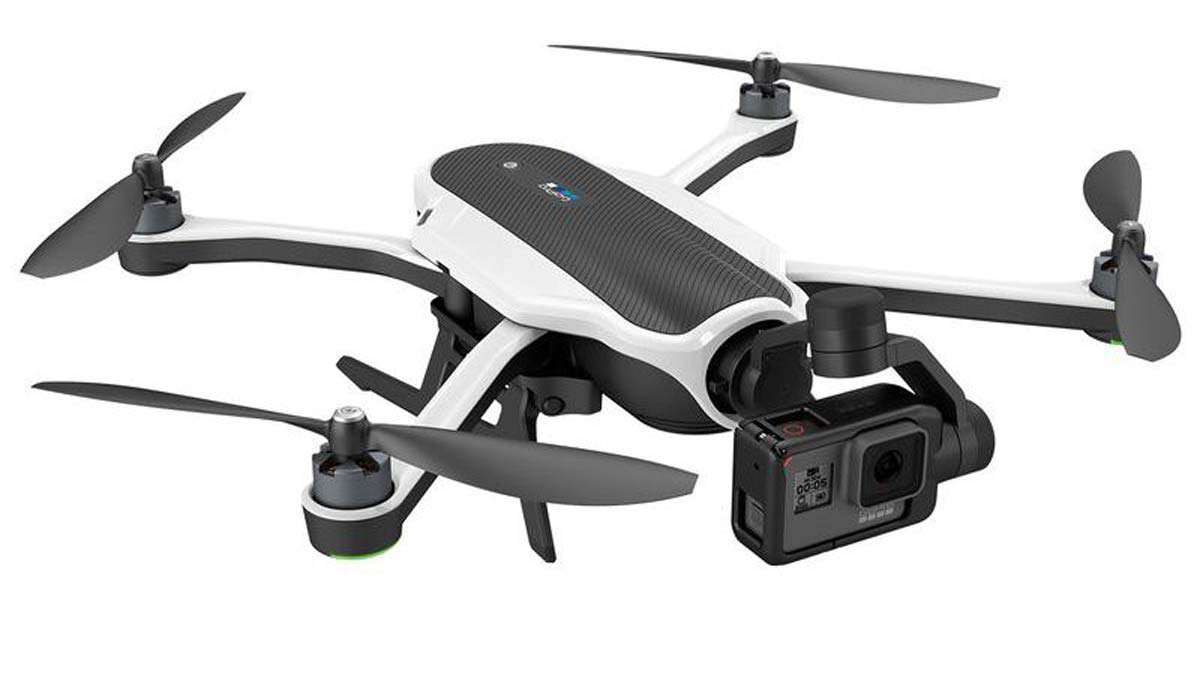
Running a hardware business without a platform ecosystem is hopeless in the 21st century. That is the message we are getting from the struggles of GroPro. The era of the old Sony, Panasonic and other hardware-centric icons had since passed. Today, you cannot just build electronics and expect to survive as a business..

Why? Anyone can clone that electronics. And can do so at a better price model.

You only defense is platform which cannot easily be replicated. That means having an App Store supporting iPhone thereby providing an inherent value which only iPhone as a hardware cannot deliver.

GoPro Inc. fell to a record low Monday after Goldman Sachs Group Inc. became the second firm in two days to recommend selling the stock, highlighting the camera maker’s struggles to compete in an increasingly crowded market and overcome missteps with new products.

“We think GoPro’s main challenge is that its core action market is largely saturated, as it has not attracted a significantly broader and more mainstream audience,” Simona Jankowski, an analyst at Goldman Sachs, wrote in a note to clients. “We expect GoPro to continue to struggle fundamentally.”

The shares fell as much as 10 percent to $7.95, the lowest intraday price since June 2014, when the company first sold shares to the public at $24.

On March 3, Citigroup Global Markets Inc. initiated coverage of the stock with a sell recommendation and a price target of $8. Citi analyst Stanley Kovler called the company the “best house in a deteriorating neighborhood.”

GoPro’s market-leading action camera products are not enough to overcome the overall decline in standalone imaging products like camcorders and cameras, and increased saturation in mature markets like the U.S., he wrote.

For African entrepreneurs, as you become to build hardware companies, you need to quickly think about how to build platforms around them. Without platforms, it is not likely you will do well. Electronics, no matter the quality, will sooner or later become a commoditized product. But when it is supported with a platform ecosystem, you can a have solid defense against commoditization.

App Store is a platform ecosystem for iPhone. Even if someone can make a replica of iPhone, the store is not something that can be easily cloned because of the apps. Had GoPro built a platform, it could have differentiated itself from other camera companies. This is an important lesson to drive any hardware strategy.


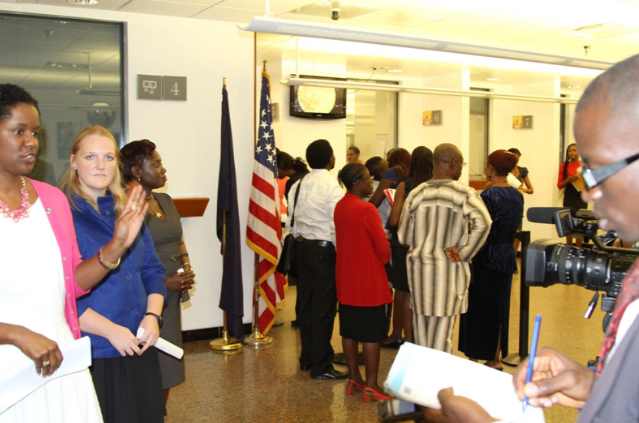
See how US Government is denying entries and deporting Nigerians with valid visas

0

Nigerian government is advising Nigerians who have no “compelling or urgent” reason to travel to the U.S. not to do so.

The Senior Special Assistant to the President on Foreign Affairs, Abike Dabiri-Erewa, advised Nigerians who have no compelling or urgent reason to travel to the U.S. to postpone their travel plans until the Donald Trump administration’s policy on immigration is clear.

In a statement in Abuja, Mrs. Dabiri-Erewa said that the warning became imperative due to series of reports received by her office.

“In the last few weeks, the office has received a few cases of Nigerians with valid multiple-entry US visas being denied entry and sent back to Nigeria.”

“In such cases reported to the office, such affected persons were sent back immediately on the next available flight and their visas were cancelled.”

Mrs. Dabiri -Erewa said that “no reasons were given for the decision by the U.S. immigration authorities.”

The presidential aide said that the statement “is only to advise Nigerians without any compelling or essential reasons to visit the U.S. to consider rescheduling their trip until there is clarity on the new immigration policy.”

Although Nigeria was not on the list, which has since been suspended by a U.S. court, the Nigerian presidency’s statement confirms that several Nigerians may be unjustly suffering from Mr. Trump’s immigration stance.

Editor’s Note: Nigeria’s External Affairs Minister had noted that nothing like this exists. Nigerians are encouraged to travel to U.S. without fear provided they have valid travel documents. It is possible that Mrs. Dabiri -Erewa was not speaking for Nigerian government when she put out her statements.