DD
MM
YYYY

PAGES

DD
MM
YYYY

spot_img

PAGES

Home Blog Page 7506

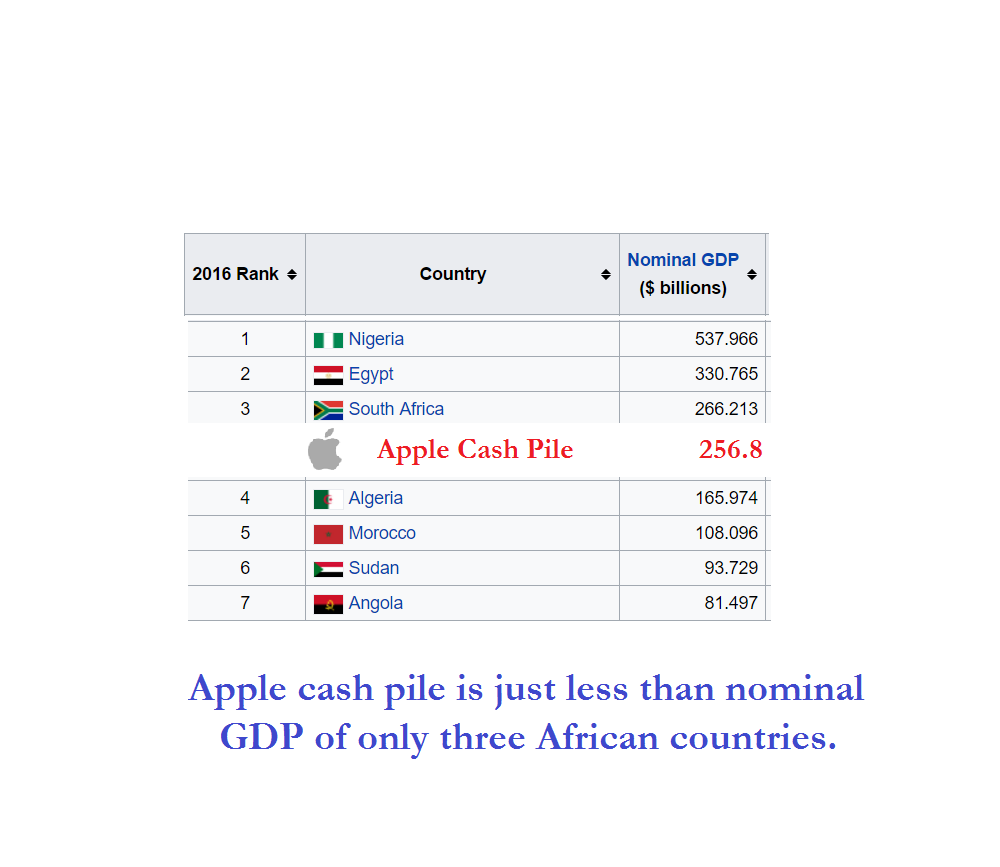
Apple cash pile of $256.8 billion greater than nominal GDP of any African nation but Nigeria, South Africa and Egypt

0

Apple reported a cash pile of $256.8 billion in the second fiscal quarter, up by more than $10 billion from the last quarter.

To put it in relative terms, the spending cash Apple now has on hand is larger than any US company is recent history.

It’s larger than the market value of Walmart, Procter & Gamble, and General Electric, despite the company reporting lower than expected revenue this quarter. The sum even tops the GDP of any African nation except Nigeria, Egypt and South Africa, according to Wikipedia.

2016 Rank Country Nominal GDP
($ billions)
Nominal GDP per capita(US$) Notes
1  Nigeria 537.966 2,929.525
2  Egypt 330.765 3,740.249 2015 data[7]
3  South Africa 266.213 4,768.235
4  Algeria 165.974 4,082.572
5  Morocco 108.096 3,195.564
6  Sudan 93.729 2,366.970
7  Angola 81.497 3,150.476
8  Ethiopia 67.435 739.444
9  Kenya 64.688 1,422.411 [9]
10  Tanzania 45.899 943.797
11  Tunisia 43.989 3,919.332


This means Apple could buy a number of countries with considerable change to spare.

The company could buy the $51 billion Tesla to drive its self-driving car program forward, $65 billion Netflix to plug into its own streaming hardware and compete with Amazon Prime, or even outright purchase the over $180 billion Walt Disney Company. All of this would be possible despite having to pay shareholders $88 billion in dividends.


Apple needs to be regulated by the United Nations!

Simple way to fix Spam Mail

0

Many of us have a love-hate relationship with email: It’s a great way to communicate, but it’s also a favorite way for hackers to send digital threats to innocent computer-users. Although “spam mail” is a very familiar term among computer users by now, there are actually many types of threats which fall under that umbrella.

Different Types of Spam Mail

Spam mail or junk mail has been a major hassle for Internet users since the invention of email, because it’s a cheap way for scammers to make a quick buck. The most common scams involved with junk emails include phishing, pump-and-dump schemes, offshore pharmaceutical advertisements and emails with malware attached.

  • Phishing is one of the worst email scams. In this type of attack, thieves create fake websites to emulate banks and other major companies. After sending out fake alerts to users saying their accounts are in jeopardy, victims are instructed to click a link in the email, which takes them to a fake website. From there, the user is asked to type login and password information — which delivers sensitive data right to the hands of these con artists. The comfort of usage, the beautiful display, the Surface Pen’s feasibility, and the long-lasting battery life makes Microsoft Surface Pro an ideal laptop for artists who wish to use their laptop for drawing and artworks.
  • Pump-and-dump schemes are simply email notices sent out telling victims that they should invest in a stock because it is “about to skyrocket” in value. On the other hand, pharmaceutical ads are commonly sent out promoting cheap Viagra and other major pharmaceuticals from pharmacies overseas. It’s illegal to buy drugs from overseas, anyway, but most of these medicines aren’t genuine in the first place.

As a rule of thumb, you never should purchase anything advertised through spam mail because, aside from the fact the product probably is not legitimate, your purchase only helps criminals to send out more spam. Some criminals even keep lists of victims who fall for their tricks, and then sell those lists to other criminals who bombard the victim with more scams.

The Importance of Firewalls

For many of these threats, knowledge is half the battle: If you know unsolicited advertisements or emails are suspicious, you know to avoid them. But to help weed out problematic emails, security software is a major addition.

Although many computer users are familiar with the importance of anti-spam and anti-malware software for their devices, firewalls are another critical component to keeping hackers from getting into your computer. This especially applies to anyone who uses public Wi-Fi hotspots, because those typically provide little security for users. In a nutshell, firewalls work to block hackers by sealing off entry points commonly used by attackers. Additionally, many firewalls provide outbound traffic control which allows you to prevent any malware on your computer from contacting malicious third parties.

The Importance of Internet Security Software

While the field of Internet security is vast, that doesn’t mean that you need to download a hodgepodge of tools to protect yourself from various infections. In fact, when it comes to Internet security software, any overlap between software suites can cause serious conflicts and issues on your computer.

But by using a solid security suite, you can protect yourself from most Internet threats. While there are many suites on the market, by using a free Internet security software trial you can test different solutions until you find the best package for your needs.

Learn

You can take a course on cybersecurity at Facyber to understand how you can improve your defences on cybersecurity

Micron and Microsoft Partner on IoT Security

0

Cybersecurity is one of the biggest challenges and barriers to the growth of IoT deployments, especially since digitisation and adoption of Internet protocol (IP) for sensors and devices has become increasingly pervasive.

Micron Technology has partnered with tech giant Microsoft to address the major challenge of providing trusted computing models for IoT deployments in industrial, automotive and consumer environments.

The initiative will combine Microsoft Azure IoT cloud with Micron’s Authenta technology. Essentially, the new platform utilises a hardware “root of trust” integrated into Micron’s flash memory in the IoT device along with Microsoft’s Azure IoT cloud to establish a strong trusted link between the device and the cloud.

By using Microsoft’s support of Device Identity Composition Engine (DICE), an upcoming standard from the Trusted Computing Group (TCG), the combination of the Microsoft Azure IoT cloud and Micron Authenta helps ensure that only trusted hardware gains access to the IoT cloud.

Micron’s Authenta is an IoT security platform that helps enable strong cryptographic device identity and device health management in flash memory. Authenta provides a unique level of protection for the lowest layers of IoT device software, starting with the boot process. The approach of utilising existing standard flash memory sockets enables system developers to harden system level security without adding additional hardware components, according to Micron.

Micron and Microsoft also plan to offer software development kits (SDKs) that help make it easier to provide secure IoT cloud management and connectivity for new platforms and devices, as well as the ability to retrofit legacy systems.

Micron’s Authenta platform is initially available in the Serial NOR product family and is sampling now to select customers.

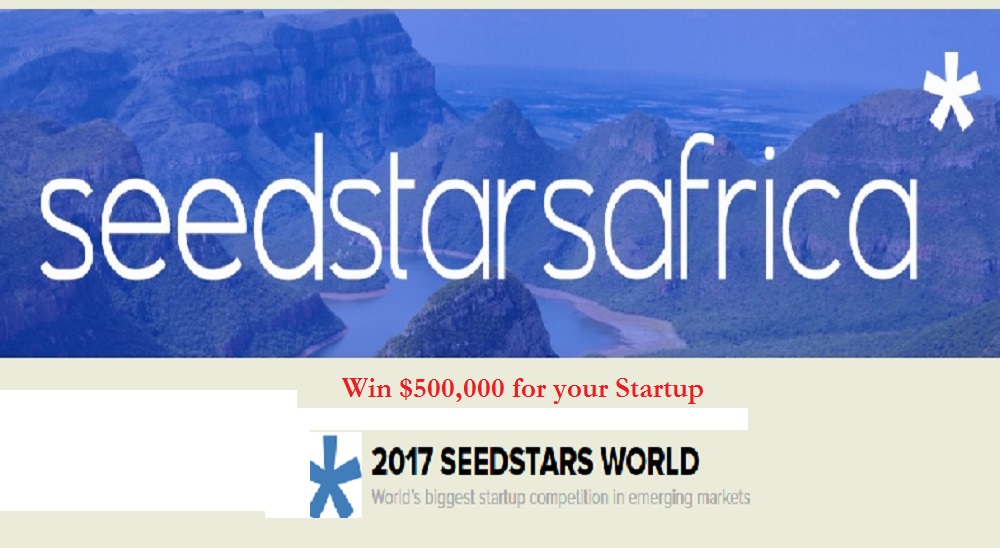
Dates for 2017 Seedstars World $500,000 Competition for 15 African Countries Announced

0

Seedstars World, the biggest seed stage startup competition for emerging markets is coming back to Africa to scout for the top high growth startups and entrepreneurs and accelerate them on their path to global success.

On this 2017 edition of the tour, they will visit over 25 cities across Sub-Saharan Africa to host bootcamps and pitch competitions, adding countries such as Cameroon, Democratic Republic of Congo and Zambia to its tour. The winner from each country is invited to the final at the Seedstars Global Summit in Switzerland to compete for up to $500,000 in equity investment and additional multiple prizes and perks.

1) Applications

Step 1: Make sure you have a venture profile published on the VC4Africa platform with your most recent pitch deck attached.
Step 2: Apply to one of the 15 local events in Africa through the online form.

2) Pitching events

At each Local Event, up to 10 pre-selected startups are invited to pitch in front of an expert jury and quality audience to determine the winner. The event brings together key entrepreneurs, investors, corporates and institutions from the local ecosystem combined with a unique global Seedstars World flavour. The winner of each Local Event gets a free trip to Seedstars World Regional Summit and the Global summit in Switzerland, with a chance to win up to 500,000 USD and other amazing tech prizes.

3) Final Event

The winner of each Local Event will be invited to Switzerland to represent his startup and country at the global finals. The Final Event is a weeklong adventure consisting of a bootcamp, international conference and investor forum. It’s an amazing chance to meet with investors, build a global network and grow your business. And don’t forget there is up to USD 500,000 mn in equity investment on offer to the winning startup and additional money prizes!

Why compete?

Equity Investment
There is a prize package consisting of up to $ 500,000 in equity investment and more in cash and in-kind prizes. You’ll be exposed to VCs, corporates and angels searching for investment opportunities.

Coverage & Prestige

All Seedstars World events are heavily covered by local and international press with around 1000 articles on us last year. Represent your country at the worldwide Seedstars Summit in front of an international audience.

Partnerships & Family

Join the close knit Seedstars Family of talented entrepreneurs in 65+ countries. Find potential partners and business opportunities through the community and at the various events.

Learn & Grow

We hand pick top-quality mentors from all over the world with experience in relevant industries. Benefit from the knowledge of corporate leaders, serial entrepreneurs, accelerator directors and investors.

Time investment

If you get selected
1 day for the Bootcamp hosted 2 – 3 days before the event
1 day for the Local Event

If you win:
– 7 days for the regional summit in december
– 7 days for the global summit in Geneva

Criteria

? Maximum 2 years since founding date
? Maximum USD 0.5m funding
? Minimum Viable Product (MVP)
? Need to use technology to solve a local or regional issue

DATES AND DEADLINES


Country City Event date Registration Deadline
Tunisia Tunis May 15 May 1st
South Africa Johannesburg May 26 May 18
South Africa Cape Town June 8 May 25
Mozambique Maputo June 14 May 31
South Africa Johannesburg Final June 29 June 15
DRC Kinshasa July 7 June 23
Tanzania Arusha July 13 June 29
Morocco Casablanca July 14 June 30
Tanzania Dar Es Salaam July 20 July 06
Kenya Nairobi July 26 July 12
Uganda Kampala August 1st Jul 18
Ethiopia Addis Ababa August 15 August 1st
Nigeria Abuja August 20 August 6
Nigeria Lagos August 25 August 11
Ghana Accra September 1st August 18
Ivory Coast Abidjan September 8 August 25
Mali Bamako September 14 August 31
Senegal Dakar September 21 September 7
Cameroon Douala September 29 September 15
Egypt Alexandria September 30 September 16
Rwanda Kigali October 6 September 22
Algeria Algiers October 6 September 22
Angola Luanda October 13 September 29
Zambia Lusaka October 20 October 6
Libya Tripoli October 20 October 6
Mauritius Port Louis November 3 October 20
Madagascar Antananarivo November 10 October 27
Botswana Gaborone TBD
Zimbabwe Harare TBD

APPLY NOW

These are the 5 African countries driving investment activities

0

Low growth was largely driven by external factors, particularly oil prices, which meant two of the largest three economies in Sub-Saharan African (SSA), i.e. Nigeria and Angola, had to accept lower receipts for their exports.
As a result, both economies fell into recession, with Nigeria hit particularly hard, as the nation dealt not only with reduced terms of trade, but with lower production levels as a result of domestic insurgency.

 
South Africa’s growth in 2016 was only marginally positive (0.3%), while Angola’s growth for the year is likely to be flat. All three of these economies are expected to grow more strongly in 2017, although each one is dependent on a combination of global commodity price recovery and structural economic reform.

 
At the other end of the spectrum, Cote d’Ivoire remains one of the fastest growing countries globally, although once again, highly dependent on commodity (cocoa) prices, and its ability to manage internal conflict. Staying in West Africa, Ghana’s prospects are also looking increasingly promising, with a newly elected administration promising to manage the public purse more prudently.

 
East Africa remains the most buoyant of all, with the four key economies (Kenya, Ethiopia, Tanzania and Uganda) all poised for growth of 6% and above for the decade.
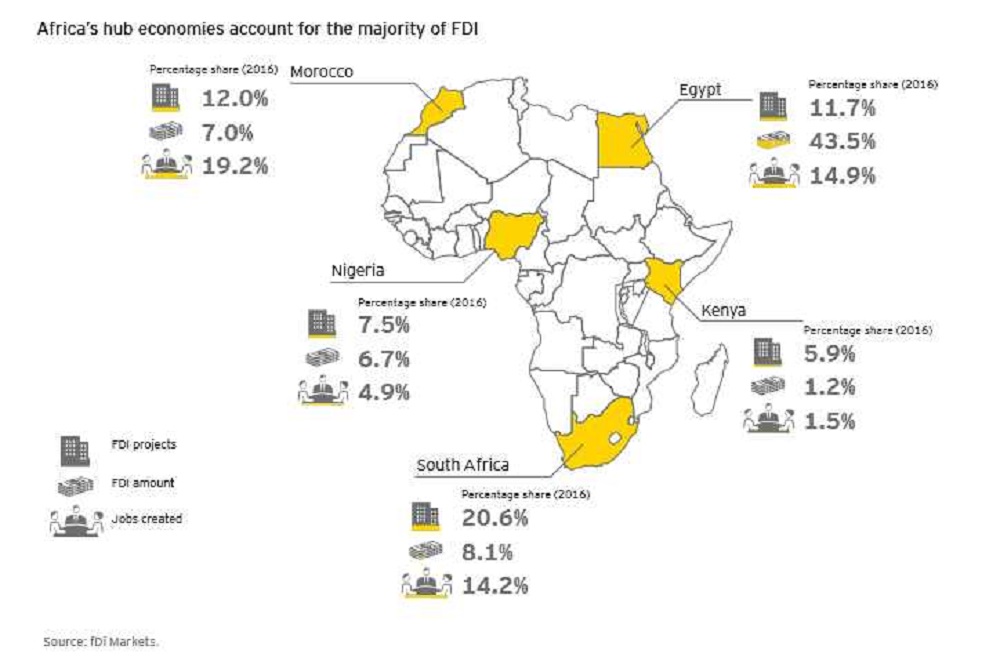

For most of the sub-continent, inflation has peaked and is declining, allowing the space for central banks to ease interest rates. This in itself will add stimulus to economic growth, and should interest rates at the very least remain stable, consumer disposable income will support even stronger growth through 2017.

 
However, there are a number of risks that need to be managed. Countries with high and rising twin fiscal and trade deficits remain at risk of currency devaluation. This becomes all the more evident where national debt levels are either rising too rapidly or are already at high levels. Mozambique is the most notable example, although this has not impacted its growth outlook.

 
Commodity prices are also key to growth assumptions. Oil prices have fallen back to US$50 after trading at US$55 in the first two months of 2017. Price moves will depend on OPEC’s ability to get member countries to agree to production levels. China remains critical to commodity prices more broadly, as its recent slowdown in economic growth rate has already illustrated. Given these unknowns, policy certainty and economic reform are critical to stimulating growth and reducing the impact of exogenous influences.

 
Africa remains on track to be a US$3t economy. To achieve that will require accelerating diversification initiatives thereby boosting resilience to external shocks.
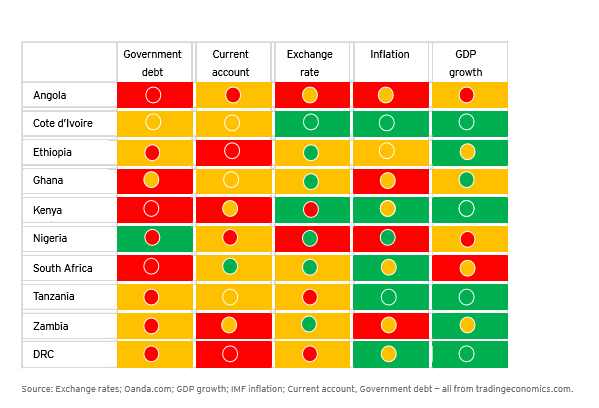
• The color of the individual block represents the long- term position for that metric on a scale of green being more positive to red being more negative.

• The color of the circle in the block represents the current trend

The traffic light illustrates an improving inflation outlook, more stable exchange ratesand stronger growth prospects. Rising national debt and large current accounts are the risks most common to the large SSA economies. Longer term, growth prospects remain robust. More and more countries will grow at 3% or above per annum, with a record number of high-growth economies more than 5% per annum. Between 2001 and 2015, there were 14 such countries. This number is expected to rise to 19 by 2030. At the same time, the number of countries growing on average between 3%–4.9% per annum holds constant at 17.