DD
MM
YYYY

PAGES

DD
MM
YYYY

spot_img

PAGES

Home Blog Page 7524

How to prevent and manage hypertension

0

High blood pressure (also known as hypertension) is the health condition of having blood pressure readings above 140/90 mmHg, over a number of weeks. High blood pressure is a major health risk because it puts extra strain on your heart and blood vessels.
People with high blood pressure are susceptible to stroke, kidney diseases and heart failure. It is popularly called the silent killer for good reason; high blood pressure gives no direct signs or symptoms.

Diet and stress are the main precursors of high blood pressure. People with unhealthy eating habits and stressful lifestyles are advised to check their blood pressure monthly.
Besides serving as a reminder to live healthy, frequent blood pressure checks can help you detect this health condition, so you can take steps to lowering it.

Here are some simple tips for controlling blood pressure:

1) Lose some weight

Blood pressure often increases with body mass index. Being overweight disrupts breathing while sleeping (sleep apnea) in some, this further raises blood pressure.
Weight loss is an effective lifestyle change for controlling blood pressure.

2) Exercising regularly

Frequent physical activity for 30 minutes on most days of the week has be proven to lower blood pressure by 4-9 mm HG. Consistency is important for people diagnosed with high blood pressure, stopping may lead to a relapse. Cycling, jogging, walking, dancing and walking are some of the best types of exercise for lowering blood pressure.

3) Eat a healthy diet

A change in the diet is recommended by physicians advising on lowering high blood pressure. Consume more whole grain meals, vegetables, and low-fat dairy products. Salt and high blood pressure are not good friends. Cut salt from your meals gradually and substitute with natural spices to reduce blood pressure. Reduce the size of your meal portions; eat foods low in cholesterol and saturated fats.

4) Quit smoking, decrease alcohol intake, and reduce caffeine consumption

Regulate habits like smoking, alcohol consumption, soft drinks and caffeine intake. Smoking is a habit that must go; nicotine increases the blood pressure, heart rate, narrows your artilleries and makes your blood more likely to clot (this sets you up for an heart attack or stroke).

5) Reduce your stress

Chronic stress is a top contributor to high blood pressure. Try to figure out what causes your stress. Try organizing possible causes, such as family, work, illness and finance. Once you determine what causes your stress, start considering how to eliminate them.

6) Potassium rich food

Eating potassium rich fruit and vegetable helps in lowering blood pressure. Tomatoes, potatoes, bananas, beans, peas and dried fruits such as resins are rich sources of potassium.

From Doctors on Kangpe.com
As AI improves, BlackRock is replacing about 15% of its stock pickers with algorithms

0
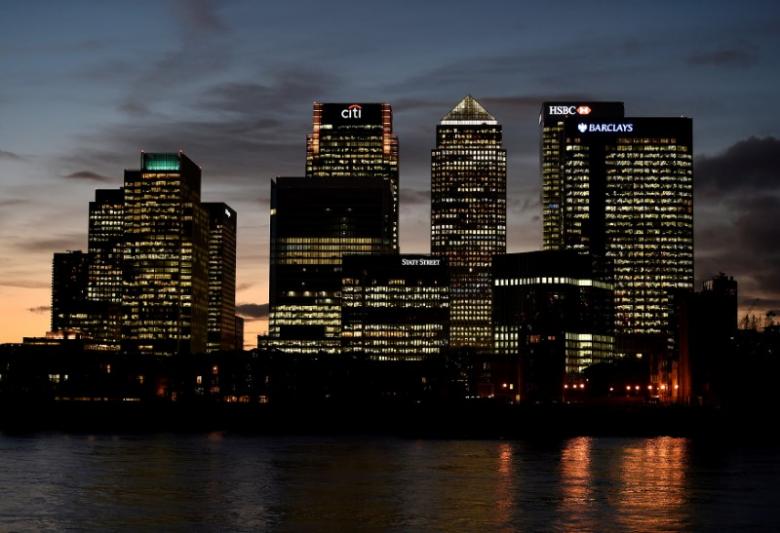
The Canary Wharf financial district is seen at dusk in London, Britain November 7, 2014. REUTERS/Toby Melville

The robots are coming for Wall Street’s jobs. BlackRock is replacing about 15% of its stock pickers with algorithms and mathematical models.

Some $30 billion in assets (about 11 percent of active equity funds) will be targeted, with $6 billion rebranded BlackRock Advantage funds. These funds focus on quantitative and other strategies that adopt a more rules-based approach to investing.

As part of the restructuring, seven of BlackRock’s 53 stock pickers are expected to step down from their funds. Several of the money managers will stay on as advisers. At least 36 employees connected to the funds are leaving the firm.

Adoption of AI in Finance

Most banks and credit unions are in the early stages of adopting AI technologies. According to a survey conducted by Narrative Science in conjunction with the National Business Research Institute, 32% of financial services executives surveyed confirmed using AI technologies such as predictive analytics, recommendation engines, voice recognition and response.

For those firms not adopting AI, challenges such as fear of failure, siloed data sets and regulatory compliance were cited. Based on the Narrative Science survey, 12% of the overall group weren’t using AI yet because they felt it was too new, untested or weren’t sure about the security.

A recent Accenture report noted that in 3 years, most banks will be doing more via AI as they interact with customers.

Artificial intelligence (AI) will become the primary way banks interact with their customers within the next three years, according to three quarters of bankers surveyed by consultancy Accenture in a new report.

Four in five bankers believe AI will “revolutionise” the way in which banks gather information as well as how they interact with their clients, said the Accenture Banking Technology Vision 2017 report, which surveyed more than 600 top bankers and also consulted tech industry experts and academics.

Beyond Finance

This trend goes beyond finance as Robots are already eliminating human jobs. New data from the National Bureau of Economic Research suggests for every one of them deployed in a manufacturing or industrial facility, the jobs of six people are eliminated.

New research released from the National Bureau of Economic Research yesterday shows that between 1990 and 2007, when one or more industrial robots were introduced into the workforce, it led to the elimination of 6.2 jobs within a local area where people commute for work.

The report, which was authored by economists Daron Acemoglu of MIT and Pascual Restrepo of Boston University, found that the wages of workers also declined slightly as a result of robots entering the U.S. economy. Wages dropped between 0.25 percent and 0.50 percent per 1,000 employees when one or more robots came into the picture.

Amazon founder Jeff Bezos now the world’s second-richest man, bought Souq and could come for Konga

0

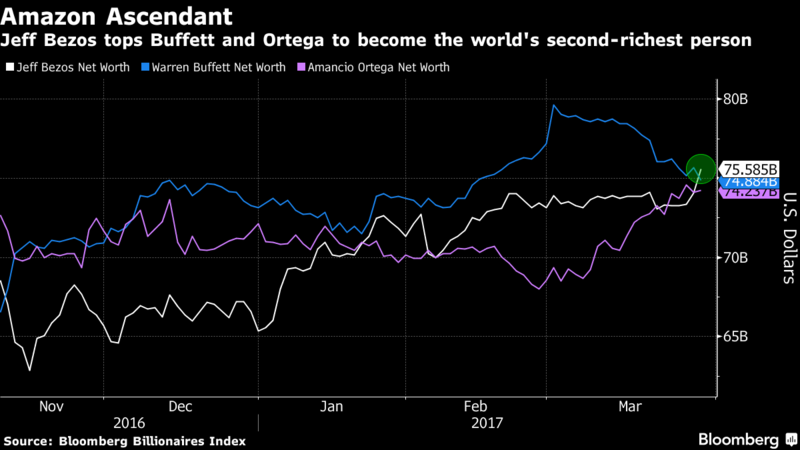
Jeff Bezos became the world’s second-richest man. The Amazon founder has a net worth of $75.6 billion on the Bloomberg Billionaires Index, passing Warren Buffett. Amazon’s already rising stock surged after it announced this week the acquisition of Dubai-based online retailer Souq.com. Barclays expects the company’s market cap to reach $1 trillion.

Bezos, 53, added $1.5 billion to his fortune as Amazon.com Inc. rose $18.32 on Wednesday, the day after the e-commerce giant said it plans to buy Dubai-based online retailer Souq.com. Bezos has a net worth of $75.6 billion on the Bloomberg Billionaires Index, $700 million more than Berkshire Hathaway Inc.’s Buffett and $1.3 billion above Ortega, the founder of Inditex S.A. and Europe’s richest person.

Buffett, who’s added $1.7 billion in 2017, has shed $4.7 billion since his fortune peaked at $79.6 billion on March 1. Ortega is up $2.1 billion year-to-date. Bezos remains $10.4 billion behind Microsoft co-founder Bill Gates, the world’s richest person with $86 billion.

Konga in Play

With the acquisition of Souq.com, there is likelihood that Amazon may be interested in Konga.com. Amazon has always built its businesses from scratch in emerging economies which include India, but with the plan to buy Souq.com, there is chance it may have changed strategy to be growing through acquisition.

This is the news Konga.com may like to hear. But Nigeria has to get out of recession first.

How to prevent diabetes

0

It is very important to make diabetes prevention a priority if you are at increased risk of diabetes, for example, if you’re overweight or have a family history of the disease.

Diabetes can be prevented by doing things as simple as eating more healthy food, becoming more physically active and shedding some weight. It is never too late to start making those simple changes in your lifestyle, as they will help you avoid the serious health complications of diabetes such as nerve, kidney and heart damage.

Here are some tips to help you:

Physical activity:

There are many benefits to regular physical activity. Exercise can help you lose weight, lower your blood sugar and boost your sensitivity to insulin — which helps keep your blood sugar within a normal range

Eat lots of fiber:

Fiber helps reduce your risk of diabetes by improving your blood sugar control. It also lower your risk of heart disease and helps promote weight loss by helping you feel full. Foods rich in fiber include fruits, vegetables, beans, whole grains, nuts and seeds

Whole grains:

Whole grains may reduce your risk of diabetes and help maintain blood sugar levels. Many foods made from whole grains come ready to eat, including various breads, pasta products and cereals

Shed some weight:

If you’re overweight, diabetes prevention may hinge on weight loss. Every kilo you lose can improve your health, and you may be surprised by how much

Eat healthy food:

This can help you manage your weight and lower your chances of getting type 2 diabetes. Eat more vegetables, fruits, and whole grains. Cut back on high-fat foods like whole milk, cheeses, and fried foods. This will help you reduce the amount of fat and calories you take in each day

From Doctors on Kangpe

How Barter, Flutterwave are fixing international payments – make dollar payments with Naira, Cedi, etc

0

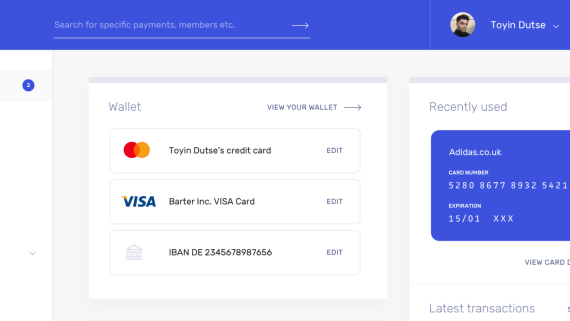
This is a promising progress – you can shop in USD without buying dollars. Barter and Flutterwave are making that possible. At the U.S. side is Barter and in the local side is Flutterwave.

We created Barter to solve a global problem?—?the problem of tracking and understanding expenses as an individual, team or corporate. Barter’s solution is a virtual card creating platform where people can create cards for specific use cases and track the spending on those cards.

Our technology partner for the payments part of our solution is Flutterwave. If you’ve not heard about them, you should totally check them out; they’re doing great work in the African payments space. We chose Flutterwave because expanding to Africa was a key part of our strategy. By leveraging on their technology, we get to spread the goodness of Barter to Nigeria, Kenya, Ghana and South Africa

Users will be able to fund their cards from their local bank accounts in Nigerian Naira, Ghanaian Cedis, Kenyan Shilling or US Dollars.

To make this happen, Barter will leverage on Flutterwave’s virtual card API and platform. Users will be able to fund their cards from their local bank accounts in Nigerian Naira, Ghanaian Cedis, Kenyan Shilling or US Dollars.


Bringing Barter to this market continues our drive to open up Africa to global markets and give African consumers the best payments experience possible. We will continue to work with our partners across the world to achieve that vision. Africans can now trade internationally with Barter cards?—?improving their lives and businesses,” says Iyinoluwa Aboyeji, Founder of Flutterwave.

Now begin shopping.