DD
MM
YYYY

PAGES

DD
MM
YYYY

spot_img

PAGES

Home Blog Page 754

NCC tightens corporate governance rules for telecoms, warns of sanctions for non-compliance

0

In a move to bolster transparency and resilience in Nigeria’s telecommunications industry, the Nigerian Communications Commission (NCC) on Wednesday unveiled the 2025 Guidelines on Corporate Governance, placing telecom operators under stricter compliance mandates.

At the launch event in Lagos, the NCC’s Executive Vice Chairman, Dr. Aminu Maida, underscored the importance of the new rules, calling them a “strategic imperative” in light of growing risks from cybersecurity, climate-related threats, energy shocks, and rising consumer expectations.

According to Maida, the new framework goes beyond mere formality and now stands as a pillar for sustainability in a sector seen as foundational to Nigeria’s digital economy.

The reforms demand clearer board structures, enhanced internal controls, and strengthened audit and compliance functions. A key requirement is the separation of the roles of CEO and Chairman, which must now be held by different individuals. Boards must also include independent directors with relevant expertise in ICT and cybersecurity—a shift aimed at insulating operational decisions from political or commercial interference.

The NCC is also making regulatory officers within telecom firms directly answerable as compliance contacts. Companies will now be required to carry out structured risk assessments and submit mid-year and annual governance compliance reports—each signed off by the board—an effort Maida said was non-negotiable.

An internal review by the commission found that companies with strong governance structures were outperforming their peers in service delivery, financial discipline, and regulatory alignment, a trend the NCC now seeks to replicate sector-wide.

“Companies with robust governance frameworks consistently outperformed their peers in service delivery, financial management, and regulatory compliance,” he said.

Maida admitted the reforms might cause short-term friction for operators but insisted they will unlock long-term gains in investor confidence and service reliability. With over 150 million telecom subscriptions in Nigeria, he described the sector as “critical national infrastructure,” central to everything from financial inclusion to digital government services.

“Operators must view this not as a regulatory burden, but as a blueprint for long-term value creation. Where there is non-compliance, the commission will not hesitate to apply sanctions after the remediation window closes,” he said.

Enforcement will be phased by license category, but Maida issued a stern warning: “Non-compliance will not be tolerated beyond the remediation window.”

The reforms were welcomed by legal experts and regulators. Professor Fabian Ajogwu, a Senior Advocate of Nigeria who helped draft the original telecom governance code in 2014, said the updated guidelines rightly address current challenges, including AI, cybersecurity, and ESG concerns.

Titus Osavwe of the Financial Reporting Council of Nigeria called the initiative a “key step” towards aligning telecom governance with global best practices, especially as foreign investor scrutiny heightens.

The NCC says it will continue working closely with operators and stakeholders to ease the transition through capacity-building and technical support. But the tone is clear—telecom operators must now treat governance not as a checkbox, but as a competitive edge for surviving Nigeria’s complex digital sector.
Musk Seeks $12 Billion Debt Financing to Fuel xAI’s Computing Power Race

0

Some opponents of global digitalization and cautious investors suggest that the boom in investment in AI infrastructure is close to its peak. Tech-heavy indices like NASDAQ 100 (including its derivative, NASDAQ 100 futures) continue to respond sharply to AI-related announcements, reflecting strong investor confidence in the sector’s ongoing growth. However, the actions of key players indicate the opposite — the computing power race is only gaining momentum.

The announcement of Elon Musk’s intention to attract an additional $12 billion in debt financing for his company xAI was a fresh confirmation of growing investment and adoption trends. The billionaire’s main goal is the large-scale purchase of accelerators, which are critical for the development of the Grok chatbot, thereby influencing Nvidia stock price.

Looking at the generous funding attracted by rival OpenAI to grow its computing clusters, the head of xAI doesn’t intend to lag behind.

Earlier, there were rumors that Musk planned to direct the resources of the sister companies, SpaceX and Tesla, to the development of an AI startup. However, the latest information points to a different, larger source: increased debt burden directly on xAI.

This new $12 billion is an addition to $10 billion that ?EO raised just a few weeks ago. The previous amount was formed via a combination of loans and proceeds from the sale of shares of xAI Holding to investors.

The funding structure is also notable: Valor Equity Partners received creditors’ orders to raise the necessary capital. Valor’s founder, Antonio Gracias, is known for his close and long-term business ties with Elon Musk, which adds credibility to the information.

The loan funds raised are expected to be used to purchase a large batch of Nvidia accelerators, presumably the latest models. This equipment will then be leased to xAI to service the needs of the new data center. The main objective of the infrastructure enhancement is to ensure the development and training of the next generation of the Grok chatbot.

Not all lenders are willing to take unlimited risks. Some of the potential participants in the transaction seek to set risk-mitigation conditions, insisting on limiting the repayment period to three years and setting a hard limit on the amount of new borrowings.

Elon Musk himself revealed this week that 230,000 Nvidia accelerators are already involved in Grok training. 30,000 of them belong to the advanced GB200 generation. At the same time, the load associated with reasoning processes is transferred to external cloud providers. Musk also promised to launch a new supercluster of unprecedented power, consisting of 550,000 GB200 and GB300 accelerators.

According to some estimates, xAI’s total spending on computing power could reach a whopping $13 billion until the end of this year. Musk reacted to early rumors about plans to raise external capital for the startup by denying the claims, stating that he and his partners had “enough money.”

The current moves to raise $12 billion in debt, coupled with the previous $10 billion, clearly indicate that xAI’s ambitions require financing well beyond available capital, even for a billionaire like Musk.

Top 4 Next 100x Crypto Picks for 2025: Cold Wallet Is Already Exploding

0

Everyone’s hunting for the next 100x crypto, but most projects crumble under scrutiny, offering hype without substance. Cold Wallet flips that trend with a product that already works and a presale that’s still undervalued. With 2 million users onboarded via its $270M Plus Wallet acquisition, Cold Wallet isn’t starting from zero, it’s scaling from a real base.

The $CWT token powers a cashback model that rewards every on-chain action, with no staking or lockups required. In a market full of empty promises, Cold Wallet is quietly building the infrastructure, incentives, and traction needed to become the next 100x crypto before it hits exchanges.

Cold Wallet (CWT): Cashback-Powered Growth Engine

Cold Wallet isn’t betting on hype, it’s building a system that actually rewards usage. With over 2 million users added overnight thanks to its acquisition of Plus Wallet, Cold Wallet token  already has a massive audience to fuel token velocity once it launches. But the real kicker? Every time you use the wallet, whether it’s paying gas, swapping, or moving funds, you get cashback in $CWT.

The token is more than a reward. It’s the center of a tiered loop where holding more CWT increases your rewards: up to 100% cashback on gas, 50% on swaps, and 50% on on/off-ramp actions. No staking required, no weird lockups. Just hold, use, earn.

Cold Wallet is currently in stage 16 of its best crypto presale with $5.7 million raised so far, selling at $0.00942 per CWT.

The final launch price is set at $0.3517, marking a potential 38x return before it even hits exchanges. Combine that with scalable infrastructure plans, a dedicated rewards pool, and locked team tokens, and it’s clear why many are watching Cold Wallet as the next 100x crypto. The system isn’t built to extract, it’s built to give back.

Bitcoin Hyper: The Velocity-Boosted BTC Derivative

Bitcoin Hyper is taking the Bitcoin thesis and adding something BTC itself never had, tokenized velocity and programmable incentives. It’s not just another Bitcoin fork. Bitcoin Hyper integrates burn mechanics, governance functions, and DeFi utility, all while mirroring BTC’s fixed-supply backbone.

Its value proposition is simple: maintain BTC scarcity while enabling faster price movements and liquidity opportunities. This is achieved through yield incentives for early adopters and hyper-deflationary token burns at key transaction thresholds.

While it’s still early in adoption, Bitcoin Hyper is gaining traction in DeFi circles. Investors looking for a high-upside BTC-adjacent play are watching this one closely. If Cold Wallet is redefining user rewards, Bitcoin Hyper is rebuilding what Bitcoin could’ve been for a more aggressive cycle.

Best Wallet: Utility-Focused with Built-In Social Integration

Best Wallet is going beyond basic storage by combining DeFi tools, social features, and live analytics in a single mobile experience. What makes it stand out isn’t just the tech, it’s the engagement model. Users earn tokens for daily activity, referrals, and even wallet reviews, creating a sticky loop of participation.

Unlike most wallets that simply store assets, Best Wallet turns crypto management into a community-driven, gamified experience. It’s gaining popularity among creators and influencers who want to blend trading with social interaction.

With rumors of a CEX listing in Q3 2025 and an airdrop for early adopters, Best Wallet is creeping into the conversation about the next 100x crypto. If it can hold user retention and keep expanding utility, that upside isn’t just possible, it’s calculated.

DexBoss: DEX Aggregator With Built-In Arbitrage Engine

DexBoss is doing what most DEXs don’t: making sure users actually get the best deal, every time. As an aggregator, it pulls liquidity from across multiple chains and platforms, but its unique selling point is its built-in arbitrage engine. Every swap is analyzed for possible cross-DEX profits, and users are rewarded when arbitrage opportunities are routed successfully.

What this means is that traders don’t just swap, they potentially earn. And that alone has pulled in early DeFi whales looking to automate opportunity.

DexBoss’s native token, BOSS, is used for fee discounts and governance, but more importantly, stakers share in arbitrage revenue, creating a passive income model that’s grounded in actual usage. With a capped supply and cross-chain expansion underway, DexBoss is putting itself on the shortlist for the next 100x crypto based on real volume and user profit.

Final Takeaway

The window to catch the next 100x crypto before the crowd rushes in is short. Each of the projects on this list offers something structurally different, but Cold Wallet leads with immediate traction and a built-in value loop that rewards every action. Whether it’s cashback from gas or referral rewards paid in real time, Cold Wallet isn’t just checking boxes, it’s rewriting what users expect from Web3 tools.

Miss it, and you might be reading about it from the sidelines while others watch their CWT stack multiply. The better move? Dig deeper, do the math, and get in while the presale window’s still open.

Best Crypto to Buy: BlockDAG, BNB, TRON, and Monero Momentum Picks

0

Crypto markets are shifting fast, and certain projects are drawing more attention due to clear use cases and technical setups. Some are rising because of strong demand, while others stand out with early pricing or active platform upgrades. This period may offer key chances for those watching for timing-based entries.

If you’re thinking about the best crypto to buy, this overview highlights four projects showing real movement right now. BlockDAG (BDAG) brings in new features through live trade simulations and a $0.0016 offer still open. Meanwhile, BNB, TRON, and Monero are gaining traction through major ecosystem shifts and market signals.

1. BlockDAG: Live Simulation Tools and 10 BTC Auction

BlockDAG is taking a new approach during its presale. Instead of just a price offer, it comes with Dashboard V4, where you can explore live price tracking, trading simulations, and a working wallet interface. This allows users to plan ahead and test strategies in real time, even before the coin is listed.

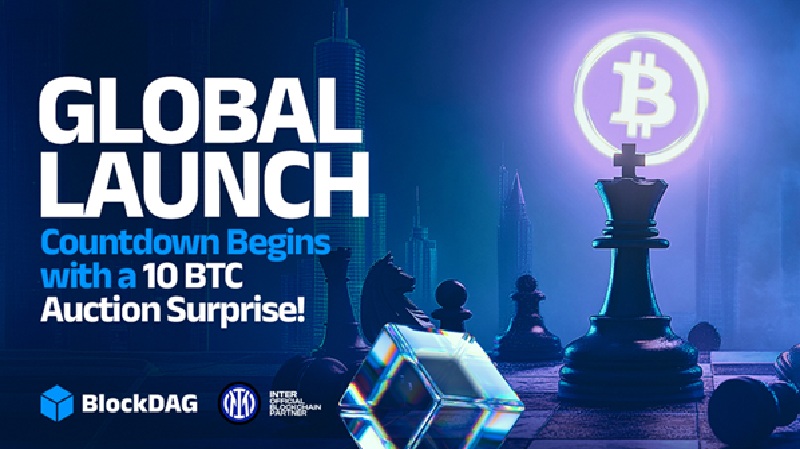
The $0.0016 pricing tier is available only until August 11. That’s a possible 3,025% increase from the planned $0.05 listing value. Already, 24.8 billion BDAG has been sold and $364 million raised. All buyers during this period are also added to the 10 BTC auction. Rewards are based on purchase size, not random draws. Higher spend means higher share.

BlockDAG brings tech, urgency, and clear features together. Most presales only promise what’s coming. This one lets you use tools and earn as the presale ends. For those looking at the best crypto to buy, this setup is one to watch closely before the price increases after August 11.

2. BNB Activity Grows with Whale Moves and Price Holding Firm

BNB is now priced at $758.86 and remains stable after small pullbacks. The market cap stays above $105 billion, while trading volume has climbed past $1.9 billion. This is supported by rising whale activity and increased buying strength. Analysts point to $762 as the next major resistance. If that breaks, the chance of reaching $800 rises, especially as BNB Chain sees more use in DeFi.

Development on the BNB Chain continues with energy. The recent BNB Hack rewarded ChainSure for their work in decentralized insurance, showing developers are still engaged with the network. BNB’s past growth is another reason it’s viewed as one of the best cryptos to buy. CryptoRank notes a $1,000 buy in 2017 would now be worth over $7 million. Combined with Binance’s large global role, BNB brings both market presence and solid structure.

3. TRON’s Market Buzz Grows After Blue Origin Spotlight

TRX is trading at about $0.3330, seeing a slight rise in the last day and holding a market value of $31.5 billion. What’s drawing attention isn’t just price action. TRON’s founder, Justin Sun, recently traveled on Blue Origin’s New Shepard rocket, putting a media spotlight on TRX at a key moment.

The platform itself is also growing. TVL on the TRON network now exceeds $27.1 billion, and there are over 323 million user accounts. Analysts are watching for a break past $0.34, which could lead to a range between $0.40 and $0.48. Whale wallet activity is increasing, and usage metrics are strong. As one of the best crypto to buy in a bounce-back market, TRON shows both traction and interest.

4. Monero Faces Hash Rate Crisis and Opens a Key Price Zone

Monero (XMR) is priced near $296, dipping slightly over the last two days. But behind the surface is one of the week’s most notable events. A 51% attack attempt was launched by Qubic Pool, linked to an IOTA founder. A DDoS response weakened the pool’s hash rate, dropping it from 2.6 GH/s to just 0.8 GH/s, and helped stop the attack. This sparked major debate around network security and decentralization.

Meanwhile, speculation is rising about Kraken possibly removing XMR from its European listings. That helped trigger short-term price drops. But for those focused on the bigger picture, this could signal a key zone for entry. Monero’s privacy focus continues to find real-world use, especially as regulations around identity checks grow. For those considering the best crypto to buy, privacy may gain more value in the months ahead.

Final Thoughts

These four projects are not just moving with market trends; they are building them. BlockDAG leads with a hands-on presale that includes live simulation tools, a $0.0016 entry until August 11, and a 10 BTC auction that splits rewards by purchase size.

BNB shows long-term power backed by user demand and big holder support. TRON combines strong technicals with media buzz after its founder’s space trip. Monero brings a mix of risk and potential, with privacy becoming even more relevant in today’s regulatory climate.

If you’re searching for the best crypto to buy, this group offers a mix of real-world value, active development, and momentum-driven setups. Each one presents a unique angle in the current market cycle.

Google Pledges $1bn to Empower U.S. Colleges with AI Training and Tools

0
A university

Alphabet’s Google is intensifying its push into the U.S. education system with a sweeping $1 billion initiative aimed at equipping colleges and nonprofit institutions with artificial intelligence training, tools, and infrastructure.

The three-year commitment, announced on Wednesday, positions Google at the center of efforts to make generative AI foundational to how students learn and innovate.

The plan includes cash grants, cloud computing credits, and free access to advanced AI tools, including premium versions of its Gemini chatbot, for college students. Over 100 universities have already signed on, including major state university systems like Texas A&M and the University of North Carolina.

Senior Vice President James Manyika said the tech giant wants the program to reach every accredited nonprofit college in the U.S. and is exploring similar expansion into other countries.

Google hopes to expand the program to every accredited nonprofit college in the U.S. and is discussing similar plans in other countries, he said.

Although the company has not broken down how much of the $1 billion will go toward direct financial support to institutions versus the value of in-kind services like software and cloud usage, the scale of the offering is massive. It underscores Google’s intent to gain deeper traction in the education space at a time when competitors are making similar moves.

Microsoft, for instance, pledged $4 billion in July to support global AI integration in education. Amazon, OpenAI, and Anthropic have also launched education-focused initiatives, each vying to shape how schools, teachers, and students interact with next-generation tools. Tech firms are betting that early exposure will create loyalty and future enterprise deals, as students transition into the workforce.

But the rollout of AI in classrooms has come with some controversy. Critics warn that AI tools can erode critical thinking, enable cheating, and widen existing inequalities in access to quality education. Some schools are reportedly weighing bans or restrictions.

Yet according to Google, resistance has been minimal so far. Manyika acknowledged that while administrators have embraced the initiative, there are “many more questions” around responsible deployment and long-term effects. The company’s approach, he said, is to collaborate with institutions and adapt as it learns what works — and what doesn’t.

“We’re hoping to learn together with these institutions about how best to use these tools,” Manyika noted, adding that insights from the academic community could influence future product development at Google.

Ultimately, Google’s billion-dollar bet on education reflects both a strategy to stay ahead in the AI race and an effort to shape how future generations engage with the technology that will define their careers.