DD
MM
YYYY

PAGES

DD
MM
YYYY

spot_img

PAGES

Home Blog Page 7577

What is Robotic Process Automation (RPA)?

0

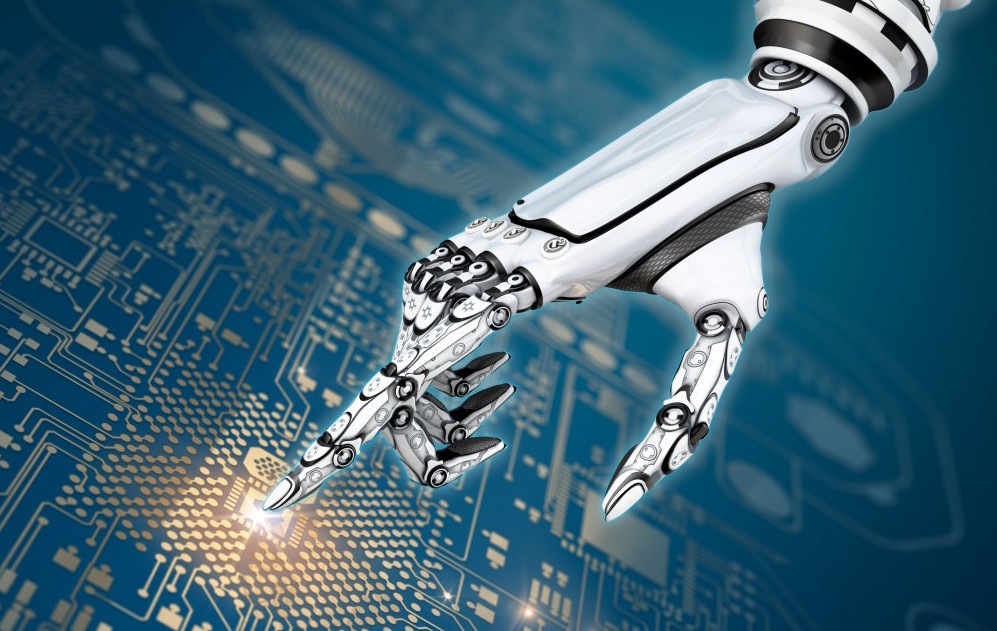
A typical software ‘robot’ is an application that has the ability to share and assist in the activities of a human interacting with a computer system. The software robot works on the user interface (UI) in a similar way as that of humans – this is a substantial deviation from traditional forms of IT integration, which have historically been machine-to-machine forms of communication created on data layers which operate at an architectural layer under the UI. After the RPA software has been educated to understand any specific process, it can automatically route transactions, work with data, initiate responses and collaborate with other systems as and when required. The technology is designed to provide an alternative to perform high-volume IT support, workflow and back-office processes (finance, accounting, supply chain management, customer service and human resources related processes).Moreover, RPA does not require any coding experience and is non-disruptive to the existing environment, besides being user-friendly – features that make it easy and convenient to deploy.

The adoption potential around RPA varies as per the volumes and transactional business processes. The Finance and Accounting functions such as accounts receivable, general ledger etc. in banking and financial services and manufacturing industry have high adoption potential. On the other hand, procurement and human resources function have low adoption potential in the insurance industry.

Impact of RPA

In the coming years, service provider capabilities around RPA could well be the deal maker when it comes to outsourcing contracts. RPA is expected to play a major balancing the role between the various tiers of outsourcing service providers.

Traditionally, more work required more manpower to complete; the emergence of RPA has changed this equation. With automation in place, where sophisticated computer programs are equipped with much better processing capabilities than those of humans, routine, rule-based work can be done far more rapidly.

Emergence of RPA has created cost deferential in the outsourcing engagement models. However, the cost difference does not necessarily result in loss of jobs as companies might move the freed resource from volume-driven work to value-driven and more complex jobs thereby adding value to their organisation

At present, close to 50% of business process outsourcing engagements are based on traditional models; however, a large number of companies are expecting transformational changes to this model in the next two to three years. While this does not mean that the traditional engagement models will disappear, it presents cost-saving and operational efficiency opportunities for service providers that are embracing change and adding automation capabilities to their portfolio.

Future outlook for outsourcing companies

In the years ahead, RPA capabilities will be one of the most crucial considerations for selecting an outsourcing vendor. Companies have started including ‘RPA capability’ as a criterion while inviting outsourcing service providers. They are considering an onshore plus automation solution as a substitute to a purely offshore solution. They are also considering the compliance and productivity benefits of using robots over humans.

As the BPO landscape evolves, service providers that incorporate RPA capabilities at the earliest are set to reap huge benefits from this emerging trend in the BPO space. As RPA has the capability to reduce cost substantially – the very factor which led to the boom in the outsourcing industry, RPA would visibly and permanently alter the business and pricing models in the ITO and BPO spheres. RPA will support, BPO providers to get up to speed and offer new service capabilities to their existing clients.

As per industry experts, traditional outsourcing would not become obsolete very soon; in fact, RPA is expected to strengthen and boost existing relationships. Deloitte Business-Process-as-a-Service (BPaaS) is investing heavily to further develop its existing RPA capabilities. The firm has already established a number of strategic alliances and partnerships with companies that offer Robotic Automation platforms, such as Automation Anywhere, Open Span (Grid Infocom) and Bizagi. To hone its RPA capabilities and push further innovation in existing and new engagements, the firm is developing an innovation & automation lab in the Woodmead, Johannesburg office. This lab will house state-of-the-art facilities and capabilities to offer clients a live demonstration of its latest automation tools and smarter technologies.

Cost: No longer a differentiator

As software robots increase in sophistication, more and more process will be automated and outsourcing companies will begin to lose the cost advantage they previously enjoyed as the cost of robots will be lesser. Consequently, they will have to look beyond cost and focus more on high-end services. However, before embracing RPA capabilities, providers need to perform an objective assessment of these capabilities. Their decision to implement RPA should be genuine, and should be executed strategically only in required areas of the business.


Mobile transactions continue to grow in Nigeria

0

The Central bank of Nigeria has noted that over 37.33 million transactions with total value of ?589.34 billion was recorded, across mobile money ecosystems, as at October 2016. The final figure at Dec 31, 2016 is not yet available.

Speaking at a local event, Chai Gang, who represented the Director, Banking and Payment System at the apex bank stated that since the launch of mobile money few few years ago, the scheme has experienced significant transaction both in number and value year to year.

“We know there are challenges making mobile money not to have gotten the desired attention and subsequent growth, but we are glad to announce that mobile money has continued to experience growth of 2.29 million transactions with a total value of ?31.50 billion in 2012 to 27.74 million transactions with a total value of ?339.23 billion in 2014. It has also moved up to over 37.33 million transactions with total value of ?589.34 billion by October 2016,” he stated

Naira exchanges for $1 in the interbank at about N325.


Cashless society will improve public health in Nigeria

0

Cash is dirty and it is also risky. Besides robbers that come for cash, cash carries bacteria. Bacteria is one of the reasons why we fall sick.

Studies have piled up in recent years describing exactly how filthy—specifically how bacteria-laden—our Naira, and kobo can be. The result has been a systemic risk to our health whenever our money changes hands.

That public health risk may bolster the argument for considering a cashless society. For reasons that have more to do with reining in crime and promoting economic policy than public health, the shift is on in Nigeria. However, the pace has not been excellent.

The BVN put a pedal in that trajectory as more people think government can track their financial transactions. So, they still like to use cash and in some cases pay the fines associated with cashed transactions. Besides, the electronic payment systems and non-cash ecosystems are still evolving to support a truly based cashless society in Nigeria.

We think government has to look at the public sector aspect of holding and using cash – with that, we do think the move will be faster. People are killed on the suspicion of having cash. In a Nigerian society with zero cash, that risk is taken out.

When there is no cash, we will have lesser robberies for cash. Also, bacteria will be curtailed and that is  a big score for Public Heath.


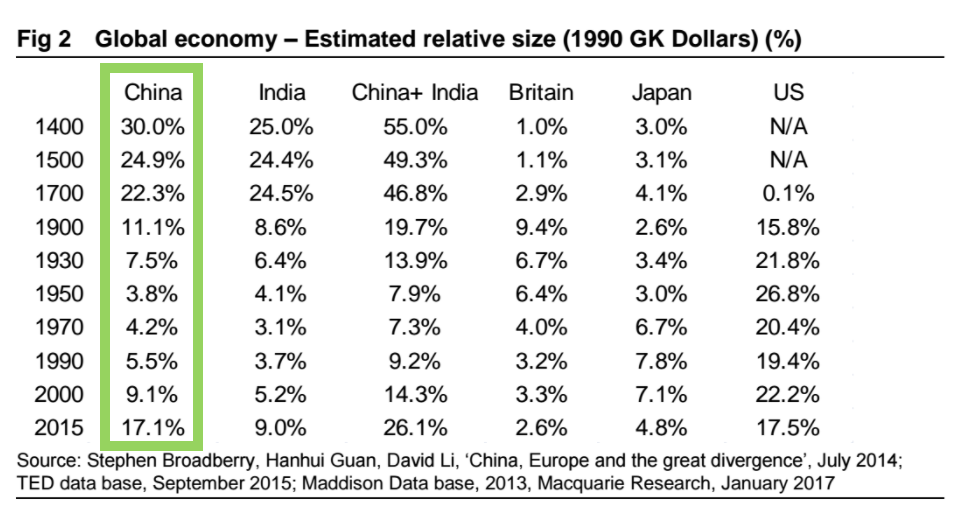
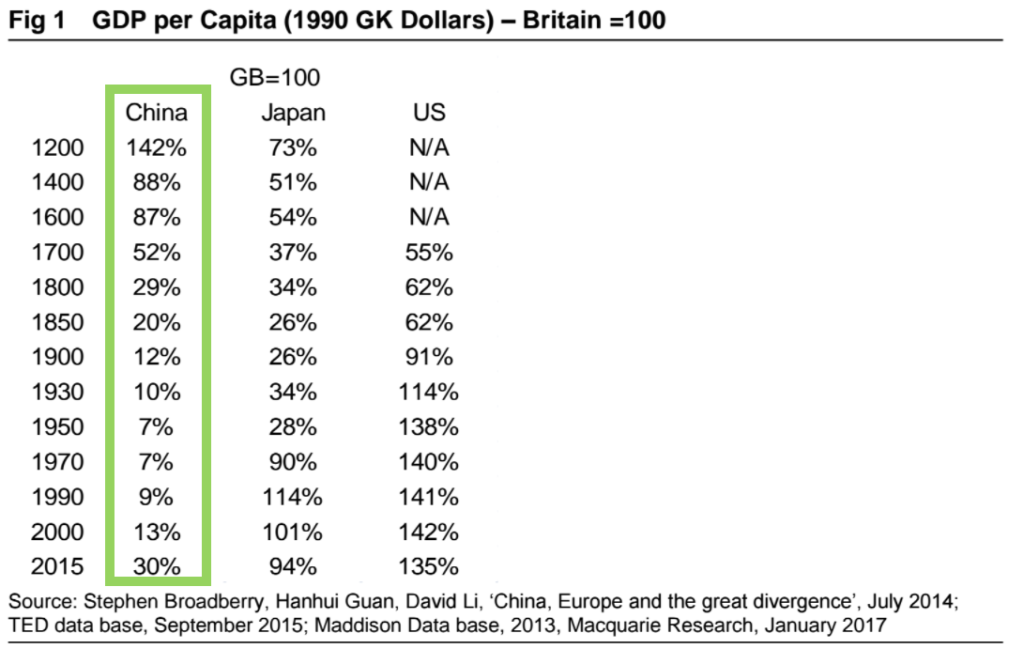
These two plots show how big China had dominated the world economy before the 19th century

0

China had dominated the world in at least 6 times in the last ten centuries.

In the 15th and 16th centuries, China was about 25-30% of the global economy, but come 1950-1970, after the destruction of World War II and under the rule of Mao Zedong, it was under 5%. Today, its economy is about 17% of the global economy — roughly the same as the US.

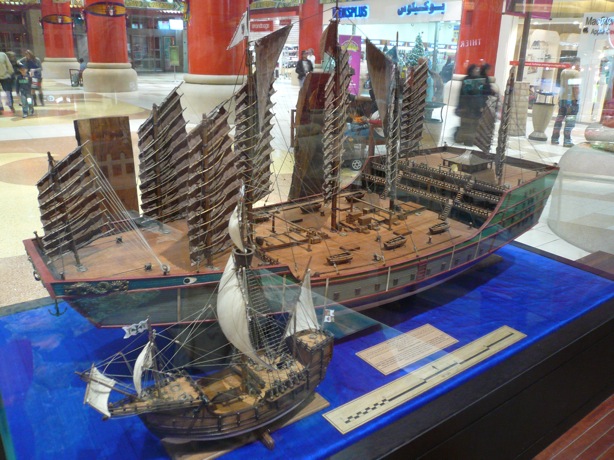
China had pioneered many technologies and by the start of the 15th century, China already had the compass, movable type print, and excellent naval capacity.

But notice how U.S. emerged below with the reversal of fortune in the GDP per capita. U.S. grew, China shrank.

After Our First Meeting, How To Help Me To Quickly Learn About Your Startup and Maybe Say Yes

0

Let’s be open. I am not going to make up my mind about investing in your startup after just one meeting. And, I definitely am not making my decision wholly based on looking at your pitch deck.

I like to do my own homework. So I think of your pitch deck as only a starting point.  After I have met you I will spend some time describing what it is I think you do for myself. I will state the problem you are trying to solve in my own words. Once I feel I understand what you do, I will spend a lot of time trying to understand why your customers would care. Does it save them time? Does it make them safer? Does it make them more money? Does it make them happier?

After this I want to understand if there are alternatives to the solution you want to bring to market. What will people do if they don’t adopt the solution you have developed? I know. You have no competitors. Still, I need to confirm that for myself. If what you are doing is as important as you say it is, is it possible that no one else has thought along the same lines as you before now? May be they failed. That is fine. I just need to study and understand what happened. Doing so will give me a better sense of the biggest challenges you might face given what we know. Things change. Technology. Competition. Preferences, and tastes. Regulations. But, at least we would have a historical guide to refer to. I am not wedded to history, nor do I think history has to repeat itself. Nevertheless, I’d still like to know what steep hills and sharp corners we might encounter.

Next, I want to get a sense of how much value people assign to the solution you have developed. Is their perception of the value high, low, or somewhere in-between? I want to understand if they will perceive that its value increases the more they consume it, or if they will feel that it has less value the more they consume it. I don’t want to invest in a startup whose customers feel that they get decreasing satisfaction value from its product as their cumulative consumption increases. It may be too early to know the exact pricing for the product, but I want to gain a sense of the dynamic that might develop around how you price your product and how the market responds.

Then I’d like to get a sense of just how big you could get. Is this an opportunity that is purely domestic? Why? What prevents you from getting bigger? Are there regulations that prevent you from expanding? Is the barrier cultural? If there’s a barrier how might we overcome it once we start gaining traction and have overcome the growing pains that your startup will encounter?

But this is all preliminary due diligence that I will do before I determine if I want to proceed with further discussions. So here’s how you can help me.

Surely there’s some research that you read while you were in the planning stages, before you committed to actually building your startup. Share it with me. If there’s a website that covers the area in which your startup will be focused, send me the link. Send me enough information so that I can be more efficient in finding answers to the questions I will be thinking about as I engage in my internal-debate about the merits or demerits of an investment in your startup. It will move things along faster.

I am not asking for anything confidential, just public information. I was studying a startup doing something really unique related to a device billions of people use. Its technology could also be used by the businesses that serve content to those devices. That mode of content delivery has exploded as these devices have become more powerful.

After our first meeting, I dug around on Google and found two great research reports from Oracle that answered the most important questions I had been thinking about. It took me a few hours of searching the Internet, and reading through some other crappy material before I found that report. Of course I was delighted, and then I asked myself why the entrepreneur did not simply send that, and possibly another one – a report that’s published by Qualcomm every year – to me. Those two publications answered all the initial questions I had, but it took a few days before I found them, read them, and got all the answers I felt I needed.

What would I do if I were you? Prepare a draft email that you can send potential investors1. It would look something like this:

Dear Brian:

Thanks for meeting with me to discuss my startup. I look forward to hearing from you once you decide on next steps. I have attached a copy of our investor presentation. I have also included some links to publications and articles that will quickly help you find independent data and information about the problem we are solving and the potential for us to build a profitable business doing so.

1. The Problem

1. Link #1

2. Link #2

3. Link #3

2.The Competition

1. Link #1

2. Link #2

3. Link #3

3. The Customers

1. Link #1

2. Link #2

3. Link #3

4. The Market

1. Link #1

2. Link #2

3. Link #3

5. The Technology

1. Link #1

2. Link #2

3. Link #3

I hope you have more questions after you have had a chance to study the information that you will find there. I’d love to discuss your questions and give you a better sense of how we have interpreted the data and the information that we have studied so far.

Entrepreneurial Founder

This email should sit in your drafts folder, so that you can copy and paste it many times. Send it to every investor that you meet. Your goal is to help me see things the way you see them. At the end, I might disagree with you anyway. That is okay. But, at least using the approach I have suggested, you helped me gain perspective based largely on some of the same information you have relied upon up till now. You are now better positioned to try to interpret data and information that I might have misunderstood simply because I do not know the topic as intimately as you. In other words, you are more likely to succeed in walking with me as I try to make the intellectual journey that you and other people with whom you are building your startup have presumably made numerous times already.

A calculus textbook I owned in college2 had this Chinese proverb inscribed inside the front cover:

I see and I forget. I hear, and sometimes I remember. I do, and it becomes part of me.

Notwithstanding your list, I will still do a lot of research on my own. The difference is that thanks to your email, I will know what to look for from the outset. That means I can spend more time thinking about your startup and your team, and less time reading crappy research reports. All else equal, that ought to tilt the scales in your favor.


  1. Katie Smith Milway describes The Art of Irresistible Emails at HBR ?
  2. I still own it. I know exactly where it is ?