DD
MM
YYYY

PAGES

DD
MM
YYYY

spot_img

PAGES

Home Blog Page 7578

Johnson & Johnson launches $100,000 Africa Innovation Challenge to support healthcare entrepreneurs

0

Throughout Africa, Johnson & Johnson is driving entrepreneurship and helping to advance promising consumer healthcare solutions. It is looking for the next generation of healthcare innovators.

Chosen applicants will receive a combination of awards including funding up to US $100,000, potential lab space in Africa and/or business and technical mentoring from some of the brightest minds at Johnson & Johnson to help bring their idea to life and create meaningful change in their community or country.

We invite you to apply to one or more consumer solution categories within our Africa Innovation Challenge. … Please remember that the categories are: Promoting Early Child Development and Maternal Health, Empowering Young Girls, and Improving Family Well-being.

Should you have any questions or comments about this application site or the application process, please contact africainnovation@its.jnj.com.

To apply, visit this page. Due by: 1/17/2017

How well do you know IOT?

0

Editor’s Note: This piece was contributed by Arjun Dedaniya, a business manager from Teksun Microsys.

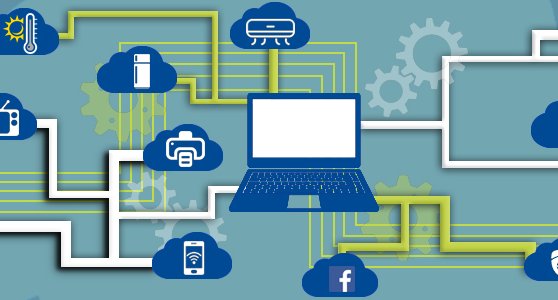
These days latest buzz word is IOT (Internet of things). So what is IOT? In simple term, it refers to a virtual internet connection from people, things and almost everything around you. Without any human intervention, it allows communicating with each other in our surrounding environment. Definitely, Internet of Things can be beneficial in our day to day life.

Applications of Internet of Things

IOT is beneficial to increase the productivity and speed. With such a great advantage, proficiencies will increase and also helpful to save cost. Sensors would give relaxation to humans from task monitoring and improve the productivity.

For instance, it has been a hard day at work and you are going back to home. It’s a very hot day and you want to turn on your Air conditioning system so your home will be nice and chilled when you reached. Or you are rushing off to work and all of sudden you to wonder whether you forget to turn off the air conditioner before you left the home.

Even though all our sophistication of technology firstly you are likely to give a call to a neighbor (who has the key of your home) to go to your home and do the job. This is a perfect example as many people would like to have bit control network at home managing your AC with the use of thermostat and you would also have internet access at home.

IOT is intended at systematizing our lives by improving efficiency. With this technology one can track the behavior with facial recognition or motion sensors. It recognizes when the people are in the same and automatically makes the required changes to the temperature and lighting of the home.

IT is predicted that around $2 trillion of economic benefit from connected devices by the end of 2020. These objects will be dedicated ones such as vending machines, jet engines, and other applications. IOT will have great influence on the digital world also as it would ease the new business prototypes and expand the productivity at the same time.

Presently, business prototypes and IOT technologies that support IOT are still in developing phase. Although they are being used across many industries. Organizations and Enterprise all over the world should make plans and must use IOT to get maximum advantage from it.

Security

Information Technology has many security concerns. IOT faces rare security challenge. Addressing these problems is a must. Peoples are sure to trust IOT devices and associated data collection services as they are included in their routine lives. There are great chances of leaking and theft of data because data can expose to the IOT devices. Organizations around the world are looking forward to solve this concerns.

Wrap Up

IOT comes with various challenges, but the main intention to solve these problems and make full use of this technology to simplify our day to day job.

The world’s latest operating system after Windows, Linux, iOS, Android, is ….Alexa

0

The CES has confirmed that we have a new operating system that works via voice and that OS is Alexa. The number of devices supported by Alexa dominated the CES.

In the less than two years since she debuted as the artificial intelligence housed within the Amazon Echo smart speaker, Amazon’s voice-activated virtual assistant has seen her popularity — and her prominence — skyrocket. The Echo is one of Amazon’s top-selling gadgets, a frequent sellout, and Alexa doesn’t show any signs of slowing down in 2017, either.

Alexa is a “virtual assistant,” which isn’t a new concept in tech. Chances are you’re already familiar with Siri, Cortana, Google Now or Watson — or with any of the countless fictional virtual assistants we’ve seen portrayed in the last half century or so’s worth of sci-fi flicks.

But right now, the key one for voice is Alexa and it is winning. So after Windows, Linux, iOS, Android, we have Alexa as a new OS.

Why Alexa for your application development?

Alexa, the voice service that powers Echo, provides capabilities, or skills, that enable customers to interact with devices in a more intuitive way using voice. Examples of these skills include the ability to play music, answer general questions, set an alarm or timer and more. Alexa is built in the cloud, so it is always getting smarter. The more customers use Alexa, the more she adapts to speech patterns, vocabulary, and personal preferences. With Alexa, developers can build new voice experiences and take advantage of the following benefits:

Visit this link to begin developing on the new OS Alexa.

This is to how to prepare for the biggest career opportunity in Nigeria right now

0

Prepare or gift a new career in 2017. Cybersecurity and digital forensics are careers in high demand and First Atlantic Cybersecurity Institute, Pittsburgh USA (www.Facyber.com) provides the education needed to enter these fields.

Our online learning programs are flexible and affordable and come with a (first week)100% money back guarantee.

Learn about:
– Cybersecurity Policy
– Cybersecurity Management
– Cybersecurity Technology
– Cybersecurity Intelligence and Digital Forensics

Each program category is phased as Certificate (online 12 weeks), Diploma (online 12 weeks), and Nanodegree (1 week live). Our programs are relevant for engineers, lawyers, policymakers, law enforcement, health professionals, students, investors, bankers,insurers, etc as they cover all areas of cybersecurity – from policy to technology to management.

Start today and you can finish your program in a few months with real world skills you can use on the job. Alternatively, gift it to someone you love (cousins, friends, students, children, etc). He/she can begin a new journey to a new career.

Paypal, debit & credit cards, and bank transfer supported across Africa.

The Program Catalog and detailed Table of Contents.
We’re looking for local partners and students across Africa to help promote our programs. For more, contact Audrey Kumar via info@facyber.com

How a cashless system can speed up rebuilding of Northeast Nigeria

0

Editor’s Note: This piece was written by Emmanuel  Okoegwale

For the first time in years, residents of the North East of Nigeria are enjoying relative peace, thanks to the renewed efforts of the Nigerian military in routing the Boko Haram, one of the world’s deadliest terror groups, from most of their strongholds in the region.

As the North-East transits to post insurgence era, rebuilding efforts is commencing gradually by the Nigerian government with billions of dollars pledged by the World Bank, United States, United Kingdom and many other international development partners.

The North East is historically one of the least educated and developed regions in Nigeria with very poor financial services infrastructure which were priority targets for the insurgents in the early stages of the bloody insurgency. The region is clearly without a functional, effective and efficient financial services system that can support the rebuilding efforts considering the sheer volume of intervention programs such as cash transfer programs, feeding programs, education grants, health, re-integration etc, covering extensive distances in the region with Bornu state alone estimated to cover over 70,000 km2!

The rebuilding efforts will create an entire new industry in the region covering diverse stakeholders like vendors, suppliers, beneficiaries, contractors, service providers to be paid using cash or exploring digital options to reduce or remove the inefficiencies that are usually associated with the use of cash.

Gaps in the use of cash in rebuilding efforts in North East, Nigeria:

Security

Despite the fact that peace is gradually returning to the region, it will take years to complete mop-up operations, establish civil protection programs and institutions, achieve pre-conflict security level status and de-radicalize the insurgents.

It will take years of planning, implementation and sustained budgets to provide adequate security in the states. With cash based operations, cash security will have to be extended to extensive coverage of cities, towns, communities, but with cashless operations, cash security may be limited to wholesale cash movement while payouts are made in digital form.

Banking infrastructure

Banks branches were fixed targets for the insurgents in the early days and they suffered huge losses. Most Bank branches had been looted, burnt and destroyed during the attacks. Few bank branches operate skeletal services in some parts of the state capitals in the North east and do not venture out into the towns and rural communities as these are low-hanging targets for insurgents.

Rebuilding banks branch network within the affected states will take longer to achieve without any state support. Expanding services into the hinterlands or unbanked communities will not be a priority in the short term without compelling incentives.

Cost of cash

Cash movement, staffing cost and time required to disburse cash is significant in any given clime and much more expensive in an insurgency ravaged region. The inefficiencies that come with the use of cash is also high, due to the fact the beneficiaries travel long distances and  physically present themselves to collect cash at collection points with long waiting hours thereby costing them time that could be used for their businesses.

Cash disbursements are open to abuses and theft from the middlemen by charging beneficiaries higher fees, pilfer cash, etc. Moving to digital payment eliminates these challenges and ensures direct payment mechanism to intended beneficiaries in full value.

Pertinent considerations before going cashless

Telecommunications infrastructure is in a very bad state across the region due to the fact that the insurgents destroyed and looted many of the base stations. The implication is that whatever digital options to be considered, availability of mobile network should be a factor in product designs, end-user technology, user of data services etc.

An identification protocol for beneficiaries should not necessarily be the Nationally acceptable National Identification card for Know-Your-customer purposes since most of the displaced people had lost most of their personal effects during the insurgency. A new identification that addresses their documentation requirements can be deployed and factored into the cash transfer programs of the governments and international development agencies.

As the Nigeria keeps pushing the frontiers of cashless transactions driven by the determination of the regulator, increased telecommunications networks and  adoption of mobile technology, uptake in the adoption of cards and e-commerce, will the North East of Nigeria leverage on the rebuilding efforts  to move away from cash and  leapfrog to digital payments? Only time will tell.

Emmanuel  Okoegwale is a Principal Associate, MobileMoneyAfrica