DD
MM
YYYY

PAGES

DD
MM
YYYY

spot_img

PAGES

Home Blog Page 761

Trump Announces 100% Tariff on Imported Chips, But Offers Exemption for U.S. Manufacturers

0

President Donald Trump on Wednesday said his administration will impose a 100% tariff on all imported semiconductors and chips, ramping up pressure on global technology and manufacturing giants to shift production to the United States.

The measure marks Trump’s most aggressive trade stance yet in his effort to localize advanced manufacturing, especially in critical sectors like AI, electronics, and defense infrastructure.

“We’re going to be putting a very large tariff on chips and semiconductors,” Trump declared from the Oval Office. “But the good news for companies like Apple is if you’re building in the United States or have committed to build… there will be no charge.”

“So in other words, we’ll be putting a tariff on of approximately 100% on chips and semiconductors.”

The president emphasized that the tariffs would not apply to companies with significant U.S.-based manufacturing operations, but did not clarify what qualifies a firm for this exemption. It remains unclear whether current investments or future pledges would be enough, or how much domestic manufacturing would be considered sufficient to bypass the new duties.

The announcement follows a growing wave of concerns that the U.S. supply chain is dangerously reliant on foreign-made chips — particularly from Asia — at a time when semiconductors are foundational to everything from smartphones and satellites to electric vehicles and artificial intelligence systems.

Several of the world’s leading chipmakers, including Taiwan Semiconductor Manufacturing Company (TSMC), Nvidia, GlobalFoundries, and Texas Instruments, have already begun expanding their U.S. presence, hoping to qualify for both subsidies under the CHIPs Act and protection from Trump’s looming tariffs.

  • Apple, which Trump singled out as an example, has committed to invest an additional $100 billion in U.S. operations over the next four years. That’s on top of its previously pledged $500 billion.
  • TSMC has pledged $165 billion toward U.S.-based fabs, including its facility in Arizona.
  • Nvidia, now the world’s most valuable company, says it will invest $500 billion in U.S. AI infrastructure by 2029.
  • GlobalFoundries committed $16 billion in June to boost semiconductor production at its New York and Vermont facilities.
  • Texas Instruments recently announced $60 billion in upgrades to seven U.S. chip fabrication plants, supplying major customers like Apple, Ford, Nvidia, Medtronic, and SpaceX.
  • The Semiconductor Industry Association reports that over 130 chip-related projects worth a combined $600 billion have been announced in the U.S. since 2020, signaling strong momentum toward reshoring advanced manufacturing.

However, most of these projects are still under construction or early-stage development, with only a handful of new fabs currently operational. Building a semiconductor plant typically takes three to five years, raising concerns that tariffs imposed before those projects go live could disrupt supply chains or inflate costs for American companies still dependent on global imports.

Tariffs, CHIPs Act, and Strategic Leverage

Wednesday’s announcement builds on earlier hints Trump made on Tuesday during his CNBC appearance, where he said the tariffs would be rolled out imminently. The decision also appears to be timed strategically as part of the broader Section 232 investigation launched in April, which probes the national security risks tied to America’s semiconductor import reliance.

While the CHIPs and Science Act of 2022 already provided $52 billion in federal incentives to bring chipmaking back to U.S. soil, Trump’s latest move underscores his administration’s shift from carrots to sticks — from subsidies to penalties.

This approach is aimed not only at compelling multinationals to “build where they sell”, but also to reduce U.S. vulnerability in a world increasingly shaped by geopolitical tensions and AI arms races.

Yet, experts warn that such drastic tariffs, especially at 100%, could raise prices for consumer electronics, strain smaller U.S. firms, and provoke retaliation from major trading partners. The administration has not released a formal framework explaining enforcement mechanisms or how it will verify whether a company’s “commitment to build” in the U.S. is credible enough to warrant exemption.

With the semiconductor sector already in flux due to AI-driven demand, shifting supply chains, and growing regulatory uncertainty, Trump’s tariff bombshell may further complicate business planning.

While the administration portrays the policy as a wake-up call to foreign and domestic firms alike, critics argue that the lack of clarity and absence of a measured rollout strategy may undermine its effectiveness.

Still, with companies like Apple, TSMC, Nvidia, and others racing to deepen their roots in the U.S., it’s clear that the global chip race is entering a new chapter.


I Commend the Nigerian Embassy in Washington DC For Excellent Passport Issuance Services

0

Good People, I had a business in Washington DC yesterday and got into the Nigerian embassy to get a passport for my younger boy. When I went to the embassy, I found less than 12 people who came to get possibly a passport/visa. And within minutes, everyone was gone. The workers there were EXCELLENT.

In short, I could not believe the level of transformation which the team has engineered that a place which used to look like Terminus Market Jos, Ariaria Market Aba and Oshodi Market Lagos is now calm.  I want to commend the Government, the Minister in charge of the embassy, the consulate general and all the people executing the mission. You have all done well.

In the past it used to be a mayhem with young people asking for help to get their passports which have been waiting for months. What I saw yesterday was a world-class system in all forms. Truly commendable.

That takes me to this point: whatever Nigeria has done in the passport issuance system in America, can we replicate it in other areas? They have fixed this problem that I assume no one needs any big man or woman for a passport. Little things and one by one, Nigeria can improve. Salute to the #TeamPassportNigeria

Generative AI Begins Reshaping Labor Market, With Young Tech Workers Hit The Hardest

0

According to a new analysis by Goldman Sachs economist Joseph Briggs, the rise of generative AI is beginning to show tangible effects on the labor market, particularly within the technology sector.

While widespread AI deployment is still in early stages, early employment data reveal a clear trend that young tech workers face increased job displacement and reduced opportunities.

Speaking on the “Goldman Sachs Exchanges” podcast, Briggs explained that tech employment which had been growing steadily for two decades has recently diverged from its long-term trend.

“Over the last three years, we’ve seen a pullback in tech hiring that has led it to undershoot its trend,” he noted, highlighting a shift that coincides with the explosive growth of generative AI tools like OpenAI’s ChatGPT since late 2022.

The launch of ChatGPT marked a pivotal moment in AI, sparking widespread adoption and interest in conversational models. Built on OpenAI’s GPT architecture, it showcased the power of large language models to generate human-like text, answer questions, and assist with tasks, making AI accessible to millions.

The massive adoption and success of the AI platform, drove competition leading to advancements like Claude, Gemini, and Grok, amongst others, while raising debates on ethics, bias, and job displacement. The ripple effect continues, with AI now integral to industries, research, and daily life.

The surging automation in job roles is hitting younger tech workers the hardest. Reports reveal that unemployment among tech professionals aged 20 to 30 has jumped by 3 percentage points in 2025, a sharper increase than in the broader tech industry or among young workers in other fields. Entry-level tasks like form-filling and basic coding, once considered stepping stones into the industry, are now easily automated, reducing opportunities for new graduates.

Despite most companies not yet integrating AI at scale, the technology is already replacing tasks previously assigned to junior-level employees. This is particularly visible in coding, content generation, and data processing areas where AI has proven capable of matching or exceeding human performance.

Major tech firms such as Alphabet, Microsoft, and Salesforce have openly acknowledged that AI now contributes to 30–50% of work in some projects.

IBM: IBM has openly discussed using AI chatbots to replace 200 HR employees, with CEO Arvind Krishna noting that the company’s overall headcount increased as they reinvested in other areas. AI is used for tasks like fraud detection and process automation in industries like healthcare and banking.

Klarna: The fintech company has been transparent about AI reducing its workforce from 5,000 to around 3,000 employees, with CEO Sebastian Siemiatkowski highlighting AI’s role in automating tasks like customer service and operations.

FedEx: FedEx employs conversational AI to streamline hiring processes, reducing the time from application to offer to under 10 minutes for some roles, enhancing recruitment efficiency.

The broader impact of AI on jobs is increasingly being documented. A Challenger, Gray & Christmas report reveals that AI adoption contributed to over 10,000 job cuts in the first seven months of 2025 alone. Since 2023, more than 27,000 layoffs have been directly linked to AI. Tech companies led the way, announcing over 89,000 job cuts so far this year a 36% increase from 2024.

At the same time, job postings for entry-level corporate roles have declined 15% over the past year, according to Handshake, a career platform popular among Gen Z. They also reported a 400% rise in employers including “AI” in job descriptions, reflecting shifting expectations and required skills in the workplace.

With employers adding only 73,000 jobs in July, falling short of forecasts, analysts warn that AI-related disruptions may continue to reshape hiring trends — especially for younger, less-experienced workers seeking to enter an evolving job market.

Sector-Specific Ad Spend Patterns: What SMEs Can Learn from the Leaders

0

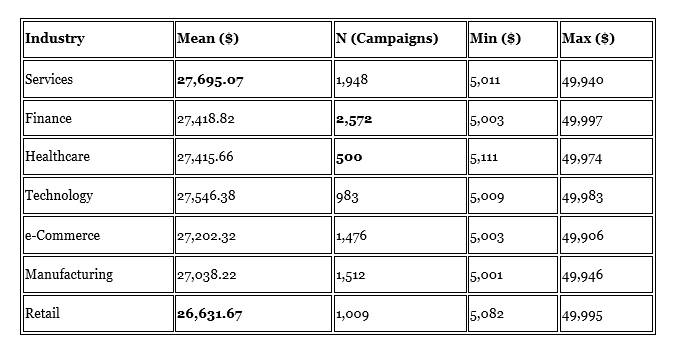
In a world where digital marketing has become essential for business growth, small and medium-sized enterprises (SMEs) are navigating a complex landscape of spending decisions. Analysis of a global data from 10,000 digital marketing campaigns by our analyst reveals intriguing patterns in how different industries approach ad spending. While the overall average investment hovers around $27,000 per campaign, the insights across sectors tell a much deeper story. Understanding these differences can help SMEs make smarter choices and compete more effectively.

Among all sectors, service-based businesses emerge as the top spenders on digital advertising. With an average investment of nearly $27,700 per campaign, the services industry appears to place strong emphasis on visibility and customer acquisition. This makes sense when you consider how competitive and diverse the service sector is. From consulting to hospitality to personal care, service businesses often rely on digital platforms to stand out and build trust with potential customers. For SMEs in this space, the lesson is clear: consistent and bold investment in digital channels can pay off, especially when differentiation is key.

Finance and technology also sit near the top of the list, with average spending just slightly below that of the services sector. Financial firms, in particular, lead the pack in terms of campaign volume. This suggests a high level of engagement with digital marketing strategies. For finance-related SMEs, from fintech startups to small advisory firms, this level of investment reflects a push to attract and retain digitally savvy customers. Trust, clarity, and visibility are critical in this sector, and digital ads offer a fast track to earning them.

Technology firms follow closely behind. These companies often operate in highly dynamic markets, where speed, innovation, and customer attention are everything. Their relatively high ad spend suggests that tech SMEs understand the importance of staying top-of-mind. For entrepreneurs in this space, the takeaway is that digital presence is not just an option. It is often the foundation of long-term growth.

Exhibit 1: Average ad-spend by industry

Source: Otto, 2013; Fong, 2017; Infoprations Analysis, 2025

At the other end of the spectrum lies the retail sector, which shows the lowest average spend among all industries in the analysis. While the difference is not drastic, it is still notable. Given how competitive and fast-paced retail has become, this lower investment might come as a surprise. One possible explanation is the continued reliance on organic reach through social media, foot traffic, or word-of-mouth. However, the data raises a question: Are retail SMEs missing out on opportunities by not investing more aggressively in digital campaigns? With changing consumer habits and growing online competition, there may be real value in revisiting old strategies.

The healthcare sector presents another interesting case. Though it shares a similar average ad spend with top-performing industries, it had the smallest number of campaigns. This may reflect the specific challenges healthcare businesses face, such as advertising restrictions or the highly personalized nature of patient relationships. Still, the relatively high average spend suggests that when healthcare SMEs do engage in digital marketing, they do so with purpose. For businesses in this space, the message is that while digital marketing may require careful planning, it also holds strong potential for outreach and education.

What stands out most from this data is the wide range of spending behaviors, even within the same industry. This shows that there is no one-size-fits-all approach. Some SMEs spend close to the minimum, while others commit near the top of the range. These variations likely reflect differences in business size, digital maturity, growth goals, and market conditions.

For any SME looking to refine its marketing strategy, these sector-specific patterns offer a valuable benchmark. Leaders in services, finance, and technology are setting the pace, showing that smart digital investment can lead to broader reach and stronger brand positioning. Meanwhile, sectors like retail and healthcare reveal opportunities for growth, especially for businesses willing to evolve their approach.

Ultimately, the key takeaway is that ad spend is more than just a number. It reflects a mindset. SMEs that treat digital marketing as a long-term investment rather than a short-term expense are more likely to stay competitive, reach new audiences, and build lasting connections with their customers.

What the Cost of a Healthy Diet Reveals in Northern Nigeria

0
A farmer prepares water channels in his maize field in Ngiresi near the Tanzanian town of Arusha on Tuesday, July 17, 2007. Millions of farmers around the world will be affected by a growing movement to change one of the biggest forces shaping the complex global food market: subsidies. Many experts agree farmers need help to grow food year in and year out, but Western farmers may get too much and African farmers too little. (AP Photo/Karel Prinsloo)

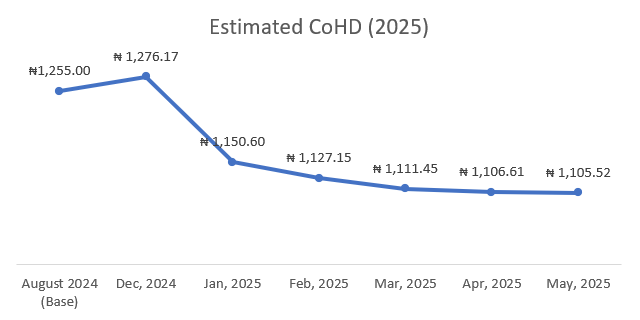
Between December 2024 and May 2025, the Cost of a Healthy Diet (CoHD) in Nigeria dropped by 13.36% from N1,276.17 to N1,105.52. On the surface, it looks like a win, prices are falling, and for many households, it feels like a step toward relief, a chance to put healthier food on the table without breaking the bank.

But behind the numbers lies a different story. In Northern Nigeria, where hunger cuts deeper and recovery is slower, falling prices don’t always lead to full plates. The barriers go beyond economics, they’re built into the land, the systems and the daily lives of those who still struggle to access even the most basic nutrition.

The CoHD, tracked by the National Bureau of Statistics, measures the minimum cost to meet daily nutritional needs. It’s not just another statistic. Our analyst notes that it’s a direct reflection of whether people can afford food that nourishes. And while the trend suggests progress, the reality on the ground tells us there’s more to uncover.

Exhibit 1: Steady decline in the estimated Cost of a Healthy Diet (CoHD) between December 2024 and May 2025, signalling improved affordability but not necessarily improved access.

Why Are Prices Dropping?

The decline in CoHD stems largely from seasonal abundance. In the first quarter of 2025, prices for staples like yams, maize, soybeans, and sorghum fell significantly due to post-harvest supply surges. Yam, in particular, emerged as a key driver, with its price movements closely tied to CoHD trends (correlation: 0.954). This aligns with a dip in the Food Consumer Price Index (CPI), reflecting broader food price relief.

National averages blur the truth. A N100 drop in yam prices may sound like progress, but what it means depends entirely on where you live and how much you earn. For a family in Katsina, Kebbi, or Jigawa, scraping by on the bare minimum, it could mean an extra meal, a small but meaningful relief. For a household in Lagos, it may barely register.

These numbers don’t tell the full story. They hide the deep, daily inequalities in food access, income, and opportunity. In Northern Nigeria, the challenge isn’t just about rising prices, it’s about barriers that go far beyond cost. Because when roads are broken, markets are closed, and incomes are stretched to the limit, even the cheapest food can remain out of reach.

The Northern Nigeria Challenge

In Northern Nigeria, access to healthy food remains constrained by more than just prices. Insecurity has crippled farming and market systems, making food supply chains unreliable.

“Bandits are not allowing us to go to the farms. If you go to the farm, you will be kidnapped, and we don’t have the capacity to pay ransom. That is why we are avoiding our farm. Those who go to the farm are more vulnerable, said a farmer in Plateau State, highlighting how bandit attacks have disrupted agriculture in the region (Daily Post, July 29, 2025).

Even when food is available, poor roads and lack of storage cause spoilage and price swings. For families earning under N1,000 daily, small price drops offer little relief. Worse still, entire markets are now inaccessible. In some communities across Zamfara, Kaduna, and Niger states, residents are not just facing high prices, they’re being cut off from food altogether. Bandits have seized control of key areas, turning once-bustling markets into ghost towns. Movement is restricted. Trade is stalled. Hunger deepens.

“The bandits have barred them from accessing the only market… and threatened to kill anyone who violates the instruction,” reported The Sun in July 2025, describing the situation in Zumba, Niger State, where the Saturday market, a vital economic lifeline for the region, remains closed under threat of violence.

For these communities, it’s not a matter of whether food is affordable; it’s whether it’s even reachable. When markets vanish, so does the possibility of feeding a household, no matter how low the prices may fall. In this context, a national drop in the Cost of a Healthy Diet offers limited hope. Without addressing insecurity and access, affordability gains will remain out of reach for millions in the North.

What Should Be Done

The 13.36% drop in the Cost of a Healthy Diet is encouraging, but for millions in Northern Nigeria, it’s not a breakthrough. The dream of a nutritious meal remains painfully out of reach, held back by the heavy weight of poverty, insecurity, and broken systems. Because food security isn’t just about lower prices, it’s about real access, for every Nigerian, in every region, every day.

To make that possible, we need more than policy. We need purposeful action. Our analyst notes that starting with the safety of farmers, especially in rural areas, is important because without security, there’s no farming, no trading, no food. Then, support local production, invest in resilient crops, smart irrigation, and the farmers who know how to turn dry land into abundance. Let them grow, even in the face of conflict or climate.

And don’t stop at supply, equip communities with knowledge. Sometimes, better nutrition starts with knowing the value of what’s already growing in your backyard. A healthy diet shouldn’t be a privilege. With the right choices, it can become a guarantee, no matter where you live or how much you earn.

Editor’s Note: Abdulazeez Sikiru Zikirullah, a Data Analyst Intern at Infoprations, led the team that conducted analysis for this article.