

DD
MM
YYYY

PAGES

DD
MM
YYYY

spot_img

PAGES

Home Blog Page 7696

Neuromorphics – Electronics Inspired By Nature

0
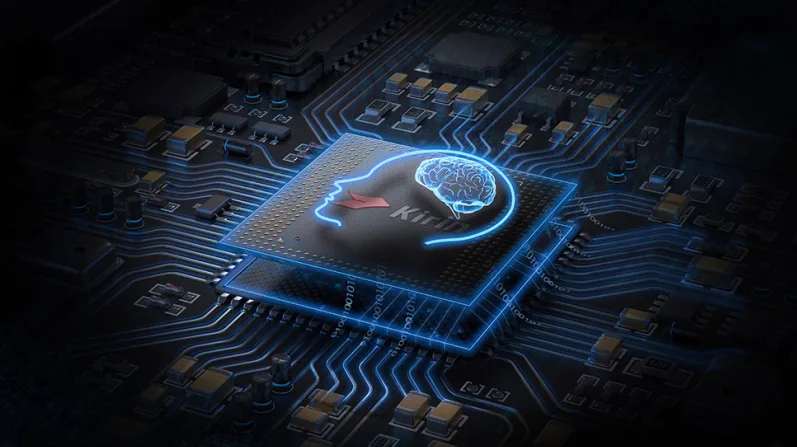
Neuromorphic chip

Neuromorphic systems are inspired by the structure, function and plasticity of biological nervous systems. They are artificial neural systems that mimic algorithmic behavior of the biological animal systems through efficient adaptive and intelligent control techniques. They are designed to adapt, learn from their environments, and make decisions like biological systems and not to perform better than them. There are no efforts to eliminate deficiencies inherent in biological systems.

This field, called neuromorphic engineering, is evolving a new era in computing with a great promise for future medicine, healthcare delivery and industry. It relies on plenty of experiences which nature offers to develop functional, reliable and effective artificial systems. Neuromorphic computational circuits, designed to mimic biological neurons, are primitives based on the optical and electronic properties of semiconductor materials. These are the revolutionary integrated circuits, which have already transformed the modern industry since invention by Jack Kilby and Robert Noyce.

Dr. Carver Mead, professor emeritus of California Institute of Technology (Caltech), Pasadena pioneered this field. He reasoned that biological evolutionary trends over millions of years have produced organisms that engineers can study to develop better artificial systems. By giving senses and sensory-based behavior to machines, these systems can possibly compete with human senses and brings an intersection between biology, computer science and electrical engineering.

Neuromorphic systems depend on parallel collective computation, adaptation, learning and memory implemented locally at each stage of processing within the artificial neurons (the computational elements). Analog circuits, electrical circuits operated with continuous varying signals, are used to implement these algorithmic processes with transistors operated in the sub-threshold or weak inversion region (a region of operation in which tranistors are designed to conduct current though the gate voltage is slightly lower than the minimum voltage, called threshold voltage, required for normal conudction to take place) where they exhibit exponential current-voltage characteristics and low currents.

This circuit paradigm produces high density and low power implementations of some functions that are computationally intensive when compared with other paradigms (triode and saturation operational regions). {A triode region is operating transistor with gate voltage above the threshold voltage but with the drain-source voltage lower than the difference between the gate-source voltage and threshold voltage. For saturation region, the gate voltage is still above the threshold voltage but with the drain-source voltage above the difference between the gate-source voltage and threshold voltage. Transistor has four terminals: drain, gate, source and bulk. Current flows between the drain and the source when enough voltage is applied through the gate that enables conduction. The bulk is the body of the transistor}.

Artificial neuromorphic systems are applied in the areas of vision, hearing, olfaction, touch, learning, decision-making, pattern recognition among others to develop autonomous systems in robotics, vehicle guidance and traffic control, pattern recognizers etc. As the systems mature, human parts replacements would become a major application area. The fundamental principle is by observing how biological systems perform these functions robust artificial systems are designed.

Read it in PDF here: http://www.acm.org/crossroads/wikifiles/13-1-R/13-1-3.pdf or locally neuromorphics

(I wrote this article for ACM Crossroads in 2006)

What Greece Is Teaching The African Union On Currency Union And Trade Shocks

0

The debt-ridden Greece is yet to completely get out of the hook. EU, IMF and the host of other parties are yet to solve the problem, perfectly.


Hopefully in few years, the lessons will not be forgotten. In a currency union under a control of supranational central bank, one country can cause lots of pains to all the members. The euro was evidently weakened because of the debt crises in Greece and other PIIGS countries. Fortunately, the euro zone has great economies in the likes of Germany (and say France) that can rally other countries to salvage its member. The IMF concluded the deal when it saw that Germany and other countries in the union bought into the deal. 

This is a big lesson for Africans in Ethiopia planning a single currency in the continent. One country has the potential to drag the single currency down. The euro just rebounded to a two-month high after the passage of the package within a week. That shows that Greece sovereign debt was affecting the euro in the international market. You cannot decouple one nation from the union.


If Nigeria accumulates debt and experiences trade shocks through oil and fails to service its debts, it can drag the currency into a level that will break the African economy. The bad news for Africa is that the most financial irresponsible nations are the big ones. That means they will be the ones that will be bailed out by the smaller ones.  How do you handle that? Maybe, ask IMF to ‘buy’ them all since the small ones are already too weak.

Euro zone is learning practical lessons it could not learn since it began the experimentation on currency union more than fifty years ago. But one good thing works for them, their economy is not too leveraged on minerals and trade shocks are minimal.  From France to Italy, there is a kind of uniformity in their economic landscapes. They are driven by knowledge. Unlike Africa, our over dependence on minerals and hydrocarbons implies we can bust anytime.  In the 21st century, commodity market is not a good fulcrum to drive a currency union.  It could be catastrophic as technologies advance and create alternatives.


If you think that crude will matter in 25 years, think again. I foresee scrapping of all the crude indices in the major international exchanges within the next three decades.  Before 2030, either Europe or US will require all new cars to be solely powered by electricity (i.e., zero gas). And all utilities will be required to offer green energy to all its customers. Then who will care to know when OPEC is meeting!


For Africa, I maintain that the way forward is to approach a knowledge based strategy and develop structured Knowledge Economic Communities across the regions. Let the states pull resources and advance technology and revamp the economic nerve cells of Africa. Currency union could come after we have integrated technologically. If we do this, at least, we can afford to raise $41 billion to bail out Nigeria or South Africa if either gets into sovereign debt crises.

Structure of Global Knowledge Economy

0

Knowledge rules the world. This is evident as many new firms operate on the capacity of knowledge without the luxury of massive natural resources. While natural resources are still very important for survival and growth of some business models, the world is experiencing a shift where knowledge is a major component of organizational factors of production. Today, at both national and organizational levels, progress in knowledge creation, acquisition and processing is an indication of the state of competitiveness.


Figure below shows the distribution of the global Knowledge Economy Index (KEI) for three nations: Ghana, USA and Brazil representing a combination of a developing nation (Ghana), a developed nation (USA) and an emerging nation (Brazil). Also included are Western Europe and Africa. The figure, obtained from the World Bank/kam (2009), shows that there is a relationship between the level of innovation and education and the degree of national KEI.


To move from a low KEI, a nation must have the capacity to advance its educational program. It is well understood that there is a relationship between education and KEI. Education not only helps in developing new knowledge, it also helps in diffusing technologies and established knowledge. That is why innovation and excellent education are closely related. In other words, education can become a conduit through which major innovations can be introduced in an economy.


These data show that education plays major roles in advancing national KEI and development. It is a very vital component for innovation systems in any economy. It is also a source for creating and assimilating new knowledge. Accordingly, towards advancing emerging technologies in Africa, education must play a very important role. It offers organic succession pathways that will sustain any national progress in technology diffusion. Without solid education in Africa, the sustainability of any technology diffusion program cannot be sustained.


There are two major benefits of developing technology in Africa. It will stimulate the economic competitiveness of the continent. A very vibrant hi-tech industry will expand and diversify the Africa’s economy out of mainly minerals and hydrocarbons. It will increase the level of productivity and massively employ a major population of the citizens. This will become a new dawn in the emergence of Africa’s knowledge workers who will play significant roles in moving millions of the populace from poverty to middle class status. Armies of knowledge workers are needed in Africa as this century is basically a knowledge one and ability to compete will depend largely on the skill capabilities of the citizens.


Closely associated with improved capacity of the continent to compete is outsourcing. Outsourcing is subcontracting a process, such as product design or manufacturing, to a third-party company.  The decision is usually influenced by the desire to lower cost or to make more efficient use of land, labor, capital, technology and resources. This is essentially a division of labor at process levels. With comparative cheap labor in Africa, Africa has immense advantage over other developing nations or emerging nations to attract major outsourcing projects if the knowledge base can be developed.


A lot has to be done if the continent must improve its KEI as shown in the figure. The continent has the lowest values while countries like United States and Western Europe record the highest (8-10). Many African nations have not made progress in their KEI; some of the nations have actually depressed as in Nigeria. This is due to poor funding of education, infrastructure and economic regime. Addressing those challenges will be vital to the success of the continent.


Figure: KEI of Ghana, Brazil, Western Europe, Africa and USA (most recent data compared with 1995: Source, World Bank)

Peace In South Sudan – The Map And Geography From Google

0

We are signing off today with this nice one. It is late in Lagos, 10pm.  Call it a blurb, sure, too short but we saw the map of South Sudan and were touched.


Google worked with the World Bank, UNOSAT, and RCMRD and some Sudanese in diaspora to map the young nation that became independent on July 9th. What a nice shape. Did you notice it? What does it look like? Hope!


We continue to congratulate the people of Sudan and  we thank Google for getting this out.


This is how Wikipedia captured it and it seemed to be how it is there

South Sudan officially the Republic of South Sudan,is a landlocked country in East Africa. Its capital and largest city is Juba.South Sudan is bordered by Ethiopia to the east; Kenya to the southeast; Uganda to the south; the Democratic Republic of the Congo to the southwest; the Central African Republic to the west; and Sudan to the north. South Sudan includes the vast swamp region of the Sudd formed by the White Nile, locally called the Bahr al Jabal.


Resourcery Plc Wins Intellectual Property Champ Nigeria Award From Microsoft

0

Resourcery Plc has won Microsoft funded  Intellectual Property Champ Nigeria award in a recent event ceremony in Lagos marking this year’s World Intellectual Property, IP Day.


Over the last few years, Microsoft has been looking at ways of motivating its partners. By giving this award, the company makes it clear that it values those firms that can maintain its intellectual property. Microsoft loses millions of dollars across the developing world owing from theft of IP on their popular products like Office and Windows.


Microsoft Anti-Piracy Manager, Microsoft Nigeria, Seye Oloruntoba, explained that the significance of the awards to the partners arises from  Microsof’s realisation that such partners are capable of ensuring that consumers receive the highest quality experience, best protection and most value for their money. He went ahead and noted that the awards recognised the tireless efforts of partners who are doing exemplary work in that area.


On receiving the Intellectual Property Champ Nigeria award, Resourcery’s Aderemi Adejumo said,


“I am honoured to be recognised by Microsoft with this award. As a trusted advisor to our customers, we remain committed to recommending the use of genuine Microsoft software.”


About Resourcery:

Resourcery is one of the leading Systems Integrators in Nigeria providing a comprehensive range of enterprise-wide, information and communication technology solutions and services. Founded in 1985, Resourcery has grown to a staff strength of over 180 professionals with offices in Lagos, Abuja and Port Harcourt.