DD
MM
YYYY

PAGES

DD
MM
YYYY

spot_img

PAGES

Home Blog Page 8

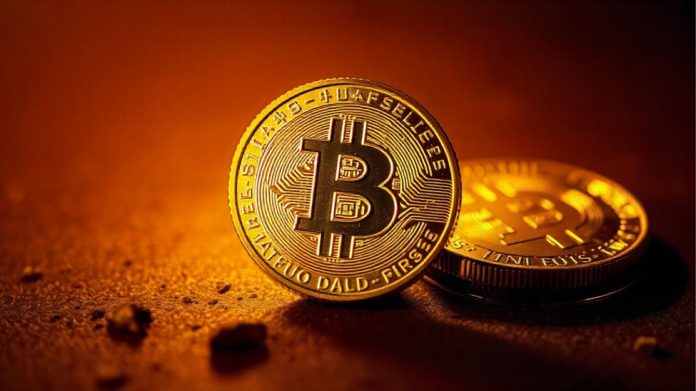
Bitcoin Surges Past $70,000 Amid Geopolitical Tensions and ETF Anticipation

0

Bitcoin climbed above the $70,000 mark on Monday, April 6, for the first time since March 25, as investors reacted to shifting geopolitical signals and renewed institutional interest.

The world’s largest cryptocurrency rose more than 3.5%, climbing as high as $70,234,  before trimming gains to trade around $69,660 at the time of reporting.

The rally triggered significant market liquidations, with over $71 million in short positions wiped out and nearly $4 million in other positions also cleared within a short period.

According to data from Coinglass, approximately 85,506 traders were liquidated over the past 24 hours, bringing total liquidations to $324.83 million. Bearish bets accounted for about $273 million of that figure, highlighting the scale of the market squeeze.

The price movement came as reports emerged that Iran was exploring a potential ceasefire in the ongoing conflict, even as Donald Trump intensified rhetoric, threatening strikes on Iranian civilian infrastructure if key conditions were not met. Trump warned that the United States could take action against Iranian power plants if the Strait of Hormuz—a critical global trade route—remains closed.

Market analysts noted that many short positions had been opened over the weekend amid escalating tensions, making the market vulnerable to a sudden reversal. Damien Loh, Chief Investment Officer at Ericsenz Capital, pointed out that reduced liquidity due to public holidays across parts of Europe and Asia further amplified the volatility.

Despite recent gains, Bitcoin has largely traded within a range of $63,000 to $72,000 in recent weeks. It remains significantly below its October peak above $126,000, though its resilience amid geopolitical instability, oil price shocks, and broader equity market corrections has drawn attention from investors.

Ethereum, the second-largest cryptocurrency, also posted gains, rising as much as 5.1% during the same period. Rising oil prices have added another layer of complexity to the market outlook. West Texas Intermediate crude has surged to $112 per barrel, overtaking Brent crude, the global benchmark.

Analysts suggest that continued conflict could drive inflation higher, with forecasts indicating that the US Consumer Price Index (CPI) may rise to 3.4% in March from 2.4% previously.

Investor sentiment has also been supported by anticipation surrounding the upcoming launch of a spot Bitcoin ETF by Morgan Stanley, scheduled for April 8. The product is expected to mark a significant milestone as the first such offering from a major Wall Street bank, potentially unlocking new institutional capital flows into the cryptocurrency market.

Outlook

Bitcoin’s near-term trajectory remains closely tied to both macroeconomic and geopolitical developments. A de-escalation in Middle East tensions could reduce market uncertainty, lower oil prices, and ease inflationary pressures, conditions that typically support risk assets such as cryptocurrencies.

Additionally, the launch of institutional investment vehicles like the Morgan Stanley spot Bitcoin ETF could strengthen demand and improve market liquidity over time. However, persistent geopolitical risks, inflation concerns, and broader financial market volatility may continue to cap upside momentum in the short term.

If Bitcoin manages to break decisively above the $72,000 resistance level, analysts believe it could signal the start of a stronger bullish phase. Conversely, failure to sustain momentum may keep the asset range-bound as investors await clearer signals from global markets.

Custodian’s Regulatory Fines Jump 2,000% to N419m, but Strong Earnings Cushion the Blow

0

Custodian Investment Plc’s latest audited accounts show a sharp spike in regulatory penalties in the 2025 financial year, a development that throws fresh light on compliance risks within Nigeria’s financial services sector, even as the group delivered a robust earnings performance.

According to the company’s audited financial statements filed with the Nigerian Exchange, total penalties paid to the Central Bank of Nigeria and other regulators rose to N419.13 million in 2025, from just N19.17 million in 2024, representing an increase of more than 2,000 per cent year-on-year.

The steep rise was driven overwhelmingly by sanctions from the CBN, which accounted for roughly N391 million, underscoring how regulatory scrutiny has intensified across financial institutions amid tighter oversight of liquidity management, anti-money laundering controls, and governance processes.

At the center of the sanctions was a N240 million fine for a breach of the intraday liquidity facility (ILF) linked to a CBN bond trade. This is a significant infraction because the ILF window is a critical short-term settlement mechanism that financial institutions rely on to complete same-day transactions and manage liquidity gaps. Breaches in this area are typically viewed seriously by regulators because they touch directly on systemic settlement risk and market confidence.

Custodian disclosed, however, that this particular penalty arose from transactions conducted on behalf of Sterling Bank Plc, and has since been fully recovered from the counterparty, materially reducing the effective financial burden on the group.

That recovery is a crucial nuance in interpreting the numbers. While the headline figure of N419.13 million appears substantial, the actual earnings impact is considerably lower once the reimbursed ILF fine is stripped out.

Beyond the ILF issue, the accounts also point to broader compliance concerns. The group paid N76 million for breaches related to Customer Due Diligence regulations, alongside N75 million for failure to implement internal audit remediation on a misclassified high-risk customer. These two sanctions are particularly notable because they speak to governance, risk controls, and AML/CFT processes, areas where regulators have been increasingly uncompromising.

Additional penalties included:

  • N9.93 million for AML/CFT risk-based supervision issues
  • N10 million for late filing of FRCN returns
  • N1.7 million for the delayed submission of financial statements to the NGX
  • N1.5 million for the delayed SEC filing on an infrastructure fund
  • N5 million for environmental fee non-payment to NESREA

Together, these infractions suggest that the issue goes beyond a single isolated breach and points instead to compliance lapses across multiple reporting and control functions. This raises the more important investors’ question of whether these sanctions materially weaken the earnings story.

On that score, the numbers remain resilient. Custodian posted pretax profit of about N75.97 billion to N77.35 billion, depending on line-item classification, while net income remained strong at roughly N65.83 billion to N91.32 billion on a group basis, supported by robust insurance revenue growth, investment gains, and stronger non-insurance earnings.

That means the reported fines account for well below 1 per cent of pretax earnings, and even less after adjusting for the N240 million recovery. In other words, this is more of a compliance and governance story than an earnings impairment story.

The company’s core business performance remained strong, with total revenue climbing to N222.56 billion in 2025 from N164.16 billion in 2024, while operating income surged to N65.44 billion from N36.70 billion. A major driver was the rebound in the insurance service result, which moved from a loss position in the previous year to profitability, alongside strong fair value gains and improved investment income.

From a market perspective, the incident also reflects a broader trend. Nigeria’s regulators, especially the CBN and anti-money laundering supervisors, have intensified enforcement actions across the banking and financial services landscape as part of efforts to strengthen risk controls and restore confidence in the sector.

The immediate financial hit is manageable for the Custodian. However, the bigger issue is reputational and operational: repeated compliance penalties, particularly those tied to due diligence and internal audit controls, may raise questions among investors about the strength of internal risk management systems.

Still, given the scale of earnings and the recovery of the largest single fine, the sanctions are unlikely to materially alter the group’s dividend capacity or medium-term profitability outlook. What they do underline is that even strong earnings performers are not insulated from the cost of regulatory lapses when there is tougher oversight.

JP Morgan CEO Jamie Dimon Warns: Iran War Could Spike Inflation And Crash Markets

0
JP Morgan Chase puts contents through its CEO account, it goes viral. But the same content via JPMC account, no one cares (WSJ)

JPMorgan Chase CEO Jamie Dimon has issued a stark warning about the ongoing war with Iran, highlighting its potential to disrupt global energy markets and reignite inflationary pressures.

Dimon, who leads the $4.8 trillion banking giant, pointed to the risk of significant and persistent oil and commodity price shocks stemming from the conflict. These disruptions, combined with potential reshaping of global supply chains, could lead to “stickier” inflation and push interest rates higher than markets currently anticipate.

“Now, because of the war in Iran, we additionally face the potential for significant ongoing oil and commodity price shocks… which may lead to stickier inflation and ultimately higher interest rates than markets currently expect,” Dimon wrote.

He described gradually rising inflation as “the skunk at the party”, an unwelcome surprise that could emerge in 2026, potentially dragging down financial markets further if interest rates climb in response. Dimon drew parallels to past episodes, noting that rapid increases in oil prices alongside inflation contributed to deep recessions in 1974 and 1982.

Dimon’s comment comes as oil prices rose on Monday, after U.S. President Donald Trump warned of “hell” for Iran unless it reopens the Strait of Hormuz by his self-imposed deadline, but a report of a push for a ceasefire appeared to ease some nerves.

Trump’s repeated threats to destroy civilian infrastructure including power plants and bridges if the vital waterway is not open by Tuesday have put traders on edge for reciprocal attacks by Iran on targets in the Gulf states.

Amid the geopolitical tension, the JPMorgan chief acknowledged that the U.S. economy remains relatively resilient, with healthy consumers and businesses. However, he warned that the Iran conflict adds to existing vulnerabilities.

“I tell people anything that happens is a straw on the camel’s back,” Dimon said in recent interviews. “The war is a couple of straws on that camel’s back. Whether that causes a tipping point [into recession], I don’t know. Hopefully not stagflation.”

He emphasized that while short-term market volatility is concerning, the long-term outcome of the conflict matters far more. “What’s more important to the future of the world is that the war is successfully conclude,” Dimon stated, adding that a decisive resolution could improve prospects for stability in the Middle East.

In the same shareholder letter and accompanying remarks, Dimon touched on other risks facing the U.S. economy, including a potential credit cycle, ongoing trade negotiations, AI-driven job displacement, and regulatory concerns around banking rules like Basel III. Despite the warnings, Dimon noted that the economy may be less fragile than in previous cycles, though he stopped short of ruling out downside risks entirely.

The remarks from one of Wall Street’s most influential voices contributed to cautious sentiment on Monday, with investors monitoring oil prices, inflation data, and Federal Reserve expectations closely.

Energy markets have already shown volatility in response to Middle East developments, and analysts are watching whether prolonged conflict could push oil toward significantly higher levels, spilling over into broader commodity costs (including fertilizer and transport fuels) and consumer prices.

Dimon’s message is clear: while the U.S. economy has shown strength, the Iran war represents a meaningful additional risk that could complicate the path toward sustained disinflation and stable growth.

Helium Shock from Iran War Threatens Chips, Hospitals, and Space Missions as Prices Double

0

The global economic fallout from the Iran war is now extending far beyond oil, with helium emerging as one of the most strategically vulnerable commodities in the conflict’s wake.

Often dismissed as a gas for party balloons, helium has become a critical industrial input whose sharp price surge is already sending ripples through semiconductor manufacturing, healthcare, and aerospace. With Qatar accounting for roughly one-third of global supply, the disruption to its gas-processing infrastructure has exposed just how fragile the helium market has become.

Market estimates now suggest that spot helium prices have doubled since the conflict escalated in late February, following attacks on Qatar’s Ras Laffan energy hub and subsequent production halts. Reuters and industry consultants say the rise is among the steepest supply shocks the market has seen in years, though the absence of a formal global benchmark makes precise pricing difficult.

The significance lies in helium’s irreplaceability. Unlike many industrial commodities, helium has no viable substitute in several high-precision applications because of its unique physical properties. It is chemically inert, extremely light, and exceptionally effective at transferring heat at cryogenic temperatures. Those characteristics make it indispensable in industries where stability, cooling, and contamination control are non-negotiable.

The semiconductor industry is among the first sectors likely to feel the pressure. Helium is central to advanced chip fabrication, where it is used for rapid cooling, vacuum chamber cleaning, and maintaining controlled manufacturing environments. This comes at a time when the global technology sector is already under strain from the explosive growth in AI-related demand for processors, servers, and fiber-optic infrastructure.

According to U.S. Geological Survey data, about 17% of helium consumption is tied to controlled atmospheres, fiber optics, and semiconductor production. That means any sustained rise in helium costs could eventually feed into the pricing of consumer electronics, cloud infrastructure, and electric vehicles, all of which rely heavily on advanced chips.

The immediate threat may not be an outright shutdown, at least not yet. South Korean chipmakers, including Samsung Electronics and SK Hynix, reportedly hold four to six months of helium inventory, offering a temporary cushion. But analysts warn that if the disruption persists beyond the second quarter, supply chain pressures could intensify sharply.

Healthcare Faces A Different Kind Of Risk

MRI scanners depend on liquid helium to cool superconducting magnets to extremely low temperatures. Without helium, the machines cannot function. This is not a marginal use case. Medical imaging accounts for about 15% of helium demand, making hospitals and diagnostic centers particularly exposed to price spikes and supply delays.

The risk is not merely higher equipment costs for new installations. Existing machines also require helium replenishment, especially after a quench, when the magnet loses superconductivity and rapidly vents gas.

As industry expert Tobias Gilk noted, a single MRI system can use the equivalent of roughly 90,000 party balloons’ worth of helium. If supply chains tighten further, maintenance providers may struggle to service hospitals promptly, potentially affecting patient care timelines.

“The ability to deliver new MRI scanners [is] probably not at risk (though at significantly higher cost), but if deployed MRIs quench, service organizations’ ability to respond promptly with adequate quantities of liquid [helium] will tested,” said Tobias.

The aerospace sector is equally exposed as helium is used in rocket propulsion systems for fuel tank pressurization, leak detection, and cooling. It remains a crucial input for both public and private space missions.

This includes missions involving NASA’s Artemis programme as well as launches by SpaceX and other commercial operators. With aerospace accounting for roughly 9% of U.S. helium use, higher prices could translate into increased launch costs and added pressure on research budgets, some of which are taxpayer-funded.

The broader issue is that helium’s supply chain is unusually concentrated. The U.S. and Qatar together account for roughly three-quarters of global supply, leaving the market highly vulnerable to geopolitical disruptions. Because helium is extracted as a byproduct of natural gas processing, any damage to LNG infrastructure directly constrains output.

This makes the current crisis more than a temporary commodity spike. It is a strategic supply-chain risk that could raise costs across technology, healthcare, and scientific research.

But the impact is not expected to be immediately visible in a line-item price increase. Instead, it is more likely to appear through higher prices for smartphones, cloud services, medical scans, and even space-sector contracts.

In effect, a gas commonly associated with balloons is becoming one of the more consequential hidden inflation drivers of the conflict.

OPEC+ Agrees to Raise Output Quotas by 206,000 bpd for May as Iran War Triggers One of the Worst Oil Shocks in History

0

OPEC+ has agreed in principle to increase its collective oil production quotas by 206,000 barrels per day for May, three sources familiar with the group’s talks told Reuters on Sunday.

The move, however, amounts to little more than a paper adjustment while the U.S.-Israeli war with Iran continues to paralyze the world’s most vital oil artery.

The decision, which mirrors the increase approved for April, comes as the closure of the Strait of Hormuz since late February has caused the largest single supply disruption ever recorded, removing an estimated 12 to 15 million barrels per day — up to 15% of global supply. With physical production severely curtailed by damage to Gulf infrastructure and ongoing attacks, the quota hike is widely viewed as symbolic, signaling the group’s readiness to flood the market with additional barrels the moment the strait reopens.

Increasing output appears to be the only viable short-term option left for OPEC+ to help moderate the punishing price surge triggered by the shutdown. Crude has already climbed to a four-year high near $120 a barrel, and JPMorgan warned Thursday that prices could spike above $150, an all-time record, if the disruption drags into mid-May.

Gulf officials have privately told industry contacts that repairing damaged facilities and restoring full export capacity could take months, even if hostilities cease and the strait is reopened immediately. Russia, another major OPEC+ member, remains hobbled by Western sanctions and infrastructure damage from its war in Ukraine, leaving only a handful of producers with any meaningful spare capacity.

The timing of Sunday’s meetings added to the sense of urgency. Ministers from the Joint Ministerial Monitoring Committee were scheduled to convene around 1300 GMT, followed by separate talks among the eight core members who actually set production policy. These eight nations had spent most of 2025 unwinding 2.9 million bpd of earlier cuts before pausing further increases for the first three months of 2026.

A source close to the discussions described the May adjustment as largely “academic” while Hormuz remains blocked. Energy Aspects, a respected consultancy, called the increase “academic” as long as the physical constraints persist.

Tensions escalated further on Easter Sunday when President Donald Trump issued an expletive-laden post on Truth Social threatening direct strikes on Iranian power plants and bridges if the strait is not reopened.

“Tuesday will be Power Plant Day, and Bridge Day, all wrapped up in one, in Iran. There will be nothing like it!!!” Trump wrote. “Open the Fuckin’ Strait, you crazy bastards, or you’ll be living in Hell — JUST WATCH!”

He ended the post with the sarcastic sign-off: “Praise be to Allah.”

The president also announced he would hold a news conference in the Oval Office on Monday, following the U.S. military’s rescue of two American pilots whose aircraft were downed over Iran.

Iran, for its part, said on Saturday it would exempt Iraqi tankers from restrictions on using the strait. Shipping data on Sunday showed at least one tanker carrying Iraqi crude had successfully transited the waterway, but sources cautioned that few ship owners are willing to risk their vessels and crews until the security situation dramatically improves.

The war has exposed the fragility of global energy security. With the Strait of Hormuz, which normally carries about one-fifth of the world’s seaborne oil and LNG, effectively shuttered for more than a month, traditional market-balancing mechanisms have been rendered almost powerless.

OPEC+’s modest quota increase is one of the few tools still available to signal that additional supply could eventually reach the market, even if the actual barrels remain trapped behind the conflict.

There is little hope that this symbolic step, combined with Trump’s increasingly bellicose rhetoric, will pressure Tehran to reopen the strait.

However, with physical supply severely constrained and repair timelines stretching into months, traders and consuming nations are left hoping that diplomacy, or force, can restore the flow before prices inflict even greater damage on the global economy.