DD
MM
YYYY

PAGES

DD
MM
YYYY

spot_img

PAGES

Home Blog Page 8

Germany’s Industrial Confidence Rises as Sugar-Tax Dispute Exposes Coalition Tensions

0

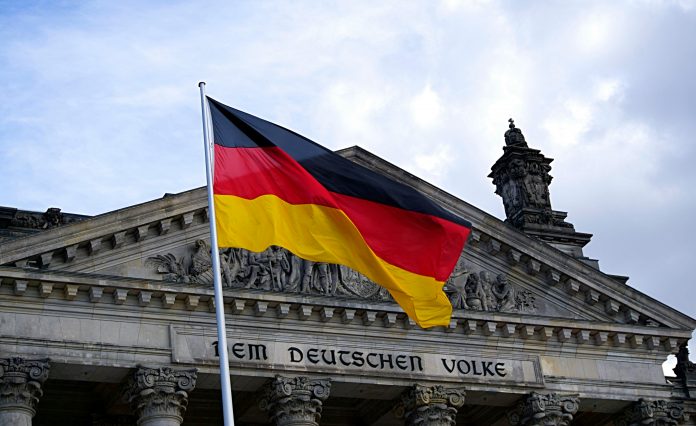
Germany’s economic recovery is beginning to show a striking contrast between industrial confidence and domestic policy uncertainty. The Munich-based ifo Institute reported a sharp improvement in sentiment across the country’s electrical industry.

With the sector increasingly emerging as one of the strongest parts of German manufacturing. At the same time, the government has temporarily halted a proposed levy on sugary drinks put forward by Finance Minister Lars Klingbeil, highlighting the political and economic difficulties surrounding new consumer taxes.

The electrical industry’s business climate index jumped 8.3 points in September to 24.8, according to ifo. The assessment of current business conditions rose even more dramatically, climbing 14 points to 29. Expectations for the coming months also improved.

The improvement is being driven by tangible demand rather than optimism alone. German electrical manufacturers reported significantly more new orders and, for the first time in some time, expressed satisfaction with their order backlogs.

Companies are responding by planning higher production, while foreign demand is expected to provide an additional source of growth. The development is particularly significant because Germany’s wider manufacturing sector has spent years confronting weak demand, high energy costs, global competition and structural challenges.

The electrical industry is benefiting from long-term investment in digitalisation, data centres, artificial intelligence and automation. Earlier ifo surveys had already identified these trends as important drivers of stronger orders in the sector.

Yet the recovery is not without constraints. Around 40% of companies reported shortages of intermediate products, according to the latest survey, while a growing number are considering higher selling prices.

In other words, the problem is increasingly shifting from a lack of demand toward the ability of suppliers to keep pace with production. That industrial momentum comes alongside a more complicated debate over German fiscal and consumer policy.

Finance Minister Lars Klingbeil’s proposed sugar levy on beverages has been temporarily stopped by the Chancellery, according to German government sources reported by Deutschlandfunk. The proposal reportedly envisaged a levy on drinks containing more than five grams of sugar per 100 millilitres, with rates between €0.26 and €0.38 per litre.

The Finance Ministry had expected the measure to raise roughly €1 billion annually, while encouraging beverage manufacturers to reduce sugar content. However, the proposal reportedly differed from the framework developed by the government’s health-finance commission, which had anticipated more than €400 million in revenue.

Government sources said the draft was not currently capable of securing sufficient support within the coalition. The developments illustrate Germany’s uneven economic transition. Industrial companies are beginning to see stronger orders and investment.

While policymakers remain under pressure to manage inflation, public finances and household costs without creating additional friction for consumers or businesses.

Germany’s broader business climate improved in September, with the ifo index rising to 89.9 from 88.8 in August. The challenge now is converting improving confidence into sustained growth while ensuring that supply bottlenecks, energy costs and policy uncertainty do not undermine the recovery.

The electrical industry may be providing an important engine for that recovery, but Germany’s economic revival will depend on whether stronger industrial demand can spread across the wider economy.

Fuel Taxes, Households and Germany’s Cost-of-Living Crisis

Germany’s motorists received some welcome relief on Thursday as fuel prices fell sharply across much of the country following the introduction of the government’s second fuel tax cut of the year.

The measure, which came into force at midnight, is designed to reduce pressure on households and businesses after energy costs surged in the aftermath of the Iran war. The timing is significant.

Fuel prices are closely tied to the broader cost of living because transportation is embedded in almost every part of the economy. When petrol and diesel become more expensive, households pay more at the pump, while companies face higher logistics, manufacturing and delivery costs.

Those increases can eventually filter through to food, services and consumer goods. For Germany, Europe’s largest economy and a major industrial power, the energy shock has carried particular weight.

The country remains heavily exposed to fluctuations in global energy markets, while its manufacturing sector depends on reliable and affordable transportation. The latest tax reduction therefore represents more than a narrow measure for motorists.

It is also an attempt to cushion the wider economy from an external energy shock. Yet fuel-tax cuts come with an important limitation: governments can reduce the tax component of the price, but they cannot directly control international oil markets.

Crude prices are influenced by geopolitical developments, production decisions, shipping routes, inventories and expectations about future supply. A new escalation in the Middle East could therefore quickly offset part of the relief created by the German measure.

For drivers even temporary relief can matter. A commuter filling a tank every week has limited ability to avoid higher fuel costs, particularly in regions where public transportation is less convenient. Small reductions at the pump can therefore translate into meaningful savings over several months.

Businesses face a similar calculation. Trucking companies, logistics operators, construction firms and other fuel-intensive industries can see their operating expenses move significantly when diesel prices rise.

Lower fuel taxes can provide immediate breathing room, potentially helping businesses absorb some of the increase rather than passing the full cost to customers. The policy highlights the difficult balance facing European governments.

Energy-price shocks can weaken household purchasing power at the same time that inflation pressures constrain monetary and fiscal policy. Governments want to protect consumers, but broad subsidies and tax reductions can become expensive for public finances and may reduce incentives to conserve energy.

There is another question: how durable is the relief? If global oil prices remain elevated because of geopolitical tensions, the tax cut may function primarily as a temporary buffer rather than a lasting solution.

Germany remains exposed to the international energy system, meaning domestic fiscal measures cannot eliminate external price risks. Still, Thursday’s reduction demonstrates how quickly energy geopolitics can reach the household budget.

A conflict thousands of kilometres away can influence crude prices, transport costs and eventually the amount a German driver pays at a petrol station. The immediate story is straightforward: fuel has become cheaper in response to government intervention.

For policymakers, the larger challenge is more complicated. Germany must navigate the intersection of energy security, inflation, industrial competitiveness and fiscal sustainability. The fuel-tax cut can ease the pressure today.

But the longer-term solution depends on whether Germany can reduce its vulnerability to volatile global energy markets without placing another heavy burden on households and businesses.


Anthropic Eyes Mid-November IPO in Potential $2 Trillion AI Market Debut

0

Anthropic is targeting a public debut as early as mid-November, according to people familiar with the matter, in a move that would allow its shares to begin trading before the Thanksgiving holiday.

The artificial intelligence company behind the Claude family of models could start formal marketing for the initial public offering as soon as the week of November 9, sources told Bloomberg.

Anthropic had previously been positioned for a potential listing after the summer and later shifted expectations toward October before settling on a November window.

Company executives and advisers wanted to present investors with a fuller set of third-quarter financial results before launching the roadshow.

Deal activity in the IPO market typically slows sharply around the Thanksgiving period, which falls on November 26 this year, making the pre-holiday window strategically important.

Anthropic is still expected to complete its public-market debut by the end of 2026 even if the precise mid-November target shifts slightly. The offering is shaping up as one of the largest in market history.

Prospective investors have discussed valuations in the range of $1.8 trillion to $2 trillion, a figure that would match or exceed the size of SpaceX’s earlier debut and rank among the biggest IPOs ever.

The company, founded in 2021 by former OpenAI researchers including CEO Dario Amodei, has attracted major backing from Amazon and Google and has positioned Claude as a leading alternative in the competitive generative AI landscape.

In 2025, it generated roughly $4.6 billion in revenue, a sharp increase from the prior year, while recording a net loss of nearly $42 billion.

Operating losses also widened as the company invested heavily in computing infrastructure and model training. More recent internal figures have pointed to a much higher annualized revenue run rate later in 2026, reflecting accelerating enterprise adoption.

Anthropic’s potential public listing is emerging as one of the most closely watched events in the artificial intelligence and technology markets, as investors weigh the company’s rapid revenue growth against the enormous costs required to compete in the frontier AI race.

The Claude developer is reportedly considering a valuation of up to $2 trillion and could seek to raise as much as $100 billion through an initial public offering. The company has also reportedly selected Nasdaq as its preferred listing venue.

The potential IPO has attracted attention because Anthropic’s growth has been accompanied by an equally dramatic increase in its spending requirements

The planned listing comes amid intense competition with OpenAI and other AI developers, as well as ongoing industry discussions about the scale of capital required to train and deploy advanced models.

For investors, the central question is whether Anthropic’s rapidly expanding AI business can eventually generate enough revenue and margins to justify the enormous capital being deployed today.

Some analysts have pointed to customer concentration, potential shareholder dilution and the company’s significant infrastructure obligations as risks that could become more important once Anthropic is subject to public-market scrutiny.

Anthropic has emphasized safety and responsible development in its public messaging, themes that have also appeared in materials prepared for the offering process. Deliberations around final timing and terms remain fluid, sources cautioned, and the company has not yet publicly confirmed the schedule.

If successful on the targeted timeline, the IPO would mark a major milestone for the AI sector, bringing one of its most prominent private players onto public markets and offering investors a direct way to participate in the technology’s commercial expansion.

Absa Becomes First African Bank to Launch Institutional Digital Asset Custody

0

Absa Group has become the first bank in Africa to offer institutional digital asset custody services, marking a significant step in the integration of traditional banking with cryptocurrency infrastructure on the continent.

The service, which went live last month September, is powered by Ripple’s custody technology. It provides secure storage, administration, and transfer capabilities for digital assets within a regulated banking environment.

The offering is aimed exclusively at institutional clients, including asset managers, corporates, and non-bank financial institutions. Retail customers are not currently eligible.

The platform supports Bitcoin, Ethereum, assets on the XRP Ledger, and USD Coin (USDC). Bitcoin currently accounts for the largest share of assets under custody. Absa has indicated plans to expand the range of supported assets over time.

Announcing the launch, Robyn Lawson, Head of Digital Product, Custody, Absa Corporate and Investment Banking said,

“As we continue to innovate and respond to the evolving financial ecosystem, we recognise the importance of providing our customers with secure, compliant, and robust custody solutions for their digital assets. Ripple’s custody solution allows us to leverage proven and trusted technology that meets the highest security and operational standards. Together, we can deliver the next generation of financial infrastructure to our customers.”

Also commenting, Rob Downes, head of digital assets at Absa Corporate and Investment Banking said,

“Financial services are changing, and we see digital assets as an important part of where the industry is heading. Our strategy is to build the capabilities that will allow us to serve clients as these markets develop, while bringing the trust and oversight they already expect from us. Banks will continue to have an important role to play in the future of finance, and we want Absa to be at the forefront of that development, helping create the infrastructure that will support new opportunities across the continent.”

Absa frames the offering as a natural evolution of banking into the digital era, aimed at bridging traditional finance with digital assets while maintaining bank-grade security, regulatory alignment, and client control.

The banking industry’s approach to crypto is changing from simply viewing digital assets as an emerging financial product to building the infrastructure needed to support them.

For institutions, owning Bitcoin or stablecoins involves more than purchasing an asset. They need secure private-key management, transaction controls, regulatory reporting, governance, recovery mechanisms and protection against operational and cyber risks.

That creates an opportunity for established banks. Absa itself describes custody as a foundation for a broader digital-asset strategy that could eventually include tokenisation, digital securities, stablecoins and digital payments.

Bank executives have described the launch as part of a broader strategy to build capabilities that will support clients as digital asset markets develop. Absa is also exploring the possibility of extending the service to other African jurisdictions where regulatory frameworks and client demand allow.

By combining regulated banking infrastructure with specialised custody technology, Absa has established an early foothold in institutional crypto services across Africa.

Outlook

Absa’s move could signal the beginning of a broader shift in Africa’s banking sector as financial institutions respond to growing institutional interest in digital assets.

As regulatory frameworks become clearer across African markets, more banks could begin exploring custody, stablecoin infrastructure, tokenised assets and blockchain-based settlement services.

The development could also strengthen the role of traditional banks in Africa’s emerging digital-asset ecosystem. Rather than competing directly with crypto-native platforms, banks may increasingly position themselves as the regulated infrastructure layer connecting institutional investors and corporates to blockchain-based financial products.

Nike Shares Plunge 10% as Revenue Falls and $2.5bn Cost-Cutting Plan Signals Deeper Reset

0

Nike shares plunged in premarket trading Friday after the sportswear giant reported another decline in revenue and warned that sales will fall at a high-single-digit rate in fiscal 2027, adding pressure to a turnaround that is increasingly being defined by cost reductions, restructuring and job cuts.

The stock fell 10.36% in premarket trading, extending a decline that has already wiped out nearly 45% of its value since the beginning of the year. The selloff came a day after Nike reported fiscal first-quarter revenue of $11.2 billion, down 4% from a year earlier, while net income fell 2% to $712 million from $727 million.

The results exposed continued weakness in some of Nike’s most important businesses. Revenue declined in Greater China, one of the company’s largest international markets, although growth in North America partially offset it.

Nike’s outlook was even more concerning for investors. The company expects revenue to decline in the high-single digits in 2027, indicating that the recovery will take longer and require a more extensive restructuring than the market had hoped.

“We have more work to do in NIKE Sportswear, Jordan Brand and Greater China, and we’re taking deliberate actions to strengthen those businesses the right way for the long term,” Nike President and CEO Elliott Hill said.

The combination of weak sales guidance and a new cost-reduction programme has shifted the focus of the turnaround from simply restoring growth to rebuilding the company’s operating model.

Nike unveiled a new operating model called “Pace,” which is expected to generate $2.5 billion in cost savings by 2031. The programme will include changes to the company’s global supply chain, a reorganization around three geographic regions, the establishment of a new campus in India, and further efforts to streamline its corporate structure.

Those changes will also reduce Nike’s workforce.

“This work will result in fewer roles across Nike, and I want to acknowledge that news like this creates uncertainty. I don’t take that lightly,” Hill said in a separate announcement. “Decisions about impacted roles related to this work will begin in calendar year 2027 and beyond.”

The planned reductions add to a restructuring process that has already resulted in two rounds of layoffs this year. Nike cut 775 jobs across its US distribution centers in January and eliminated another 1,400 positions, primarily in its technology division, in April.

The repeated workforce reductions indicate that Nike is not treating the current weakness as a temporary sales problem. Management is changing the company’s cost base and organizational structure in an effort to generate savings even while revenue remains under pressure.

That approach could improve profitability over time, but it also creates a difficult trade-off for investors. Cost reductions can provide a near-term lift to margins, but they cannot by themselves solve weaker demand in major product categories or restore momentum in markets where the brand has lost ground.

Citi analysts captured that tension in a note on Friday, describing Nike as increasingly a “cost-cutting story” and maintaining a neutral view on the shares after the company’s sales guidance came in below market expectations.

“Nike is turning into a cost-cutting story, announcing a $2.5bn cost savings program as management is adapting to the reality of significant pressure within Sportswear, Jordan, and China,” the analysts said.

The challenge for Nike is that the areas identified for improvement include some of the brands and markets that have historically carried significant weight in its growth story. Sportswear and Jordan remain important parts of the company’s product portfolio, while China has been a critical international market.

Nike’s cost programme provides a potentially significant source of savings, but the timeline is long. The company expects to realize $2.5 billion in savings by 2031, while Citi noted that investors may not get meaningful evidence of when the programme will materially change the company’s trajectory until 2029.

Management is expected to provide greater detail on its five-year outlook at its investor day, giving investors another opportunity to assess whether the restructuring can translate into stronger revenue and earnings performance rather than simply a smaller cost base.

“It isn’t out of the question that Nike can beat some of the guidance they just provided, but there really is no justification (in our view) for Nike to receive a premium multiple versus its growing peers,” Citi analysts said.

That valuation issue is becoming more prominent as Nike’s growth outlook weakens. A company undergoing restructuring can still command investor confidence if there is evidence that the measures are restoring demand and improving returns. But with revenue expected to decline at a high-single-digit rate in 2027, the burden is now on management to demonstrate that the cost savings are part of a broader recovery rather than a substitute for it.

North America currently provides one of the clearer areas of support, but continued weakness in China and pressure across Sportswear and Jordan leave Nike with a narrower path to growth. The company must simultaneously rebuild its product momentum, address regional weakness and reduce operating costs without allowing restructuring to further disrupt its ability to innovate and market its products.

That makes the latest earnings report more consequential than the headline revenue decline suggests. Nike is no longer simply managing through a weak sales cycle. It is redesigning its organization while preparing investors for another year of declining revenue and additional workforce reductions.

While the $2.5 billion savings target gives Nike a substantial financial lever, the company’s falling revenue guidance shows why investors are demanding evidence that the turnaround can eventually produce growth rather than simply lower costs.

Friday’s share-price reaction suggests that the market is placing greater weight on that distinction. Nike has outlined how it plans to become leaner. What remains unresolved is when the company can become a stronger growth business again.

The Pulse of Nations – Register for Capital Market Masterclass; We Begin on Monday, Oct 5th

0

I worked at one of the finest banks ever established: the peerless Diamond Bank in Lagos. It lives forever because it is diamond!

Our journey began with an intensive three-month training programme in Apapa, where the bank transformed engineers, doctors, accountants and graduates from many other disciplines into bankers. It was a remarkable experience. Diamond Bank helped me understand systems far beyond the constructs of natural philosophy I had encountered while studying engineering at FUTO.

The bank was exceptionally generous. It funded master’s programmes and supported my doctorate in banking and finance. During my doctoral studies, I focused on currency and globalisation, producing working papers for institutions including the World Bank and the African Union. You can read one of my contributions to the African single-currency debate on the African Union’s website.

Banking helped me understand money. But later, as I read The Economist, Forbes, Businessweek and Fortune (I subscribed to them for more than a decade), I began to appreciate a more evolutionary state of money: capital. Money ideally is a unit of capital.

Interestingly, the money we commonly discuss is not itself a factor of production. Capital is. A. O. Lawal had explained that distinction in his elementary economics textbook, but its deeper meaning became clearer to me through banking, investing and business.

If you miss the distinction between money and capital, you miss a central mechanism of the modern economy. Money stores and transfers value. Capital is deployed to build productive capacity, finance companies and create wealth. Capital markets are the theatres.

On Monday, October 5, 2026, Tekedia Institute’s Nigeria Capital Market Masterclass will begin. Over eight weeks, participants will study the following:

Module 1: Market Frictions, Nature and Mission of Companies, Capital as a Factor of Production, and Capital Markets
Module 2: Introduction to Nigeria’s Capital Market: Foundations and Architecture
Module 3: SEC Nigeria: Registration, Regulations and Market Oversight

Module 4: Market Operators: Roles, Responsibilities and Interdependencies
Module 5: Capital-Raising Instruments: IPOs, Bonds, Commercial Papers and Private Markets
Module 6: Listing Processes, Documentation and Regulatory Compliance

Module 7: Capital-Market Operations: Trading, Settlement and Surveillance
Module 8: Benefits of Listing and Capital-Market Participation
Module 9: Market Data, Analytics and Investment Research Systems
Module 10: Derivatives, Structured Products and Hedging Instruments

Module 11: Technology and Financial Market Infrastructure
Module 12: Digital Assets, Tokenisation and the ISA 2025 Framework
Module 13: Compliance, Risk Management and Ethics in Capital Markets

Module 14: Careers, Business Opportunities and Promising Regulated Sole Proprietorships
Module 15: Business Development, Market Strategy and Capital-Market Innovation
Module 16: Investment and Portfolio Management

The programme concludes with a practical capstone project.

If you want to deepen your understanding of how money becomes capital, how companies raise funds and how markets compound wealth, register here: school.tekedia.com/course/market .
Programme fee: ?350,000 or US$500. Join us for your login.