DD
MM
YYYY

PAGES

DD
MM
YYYY

spot_img

PAGES

Home Blog Page 892

Global Ambitions Grow as Expansion Pace Holds Steady for African Startups in H1 2025

0

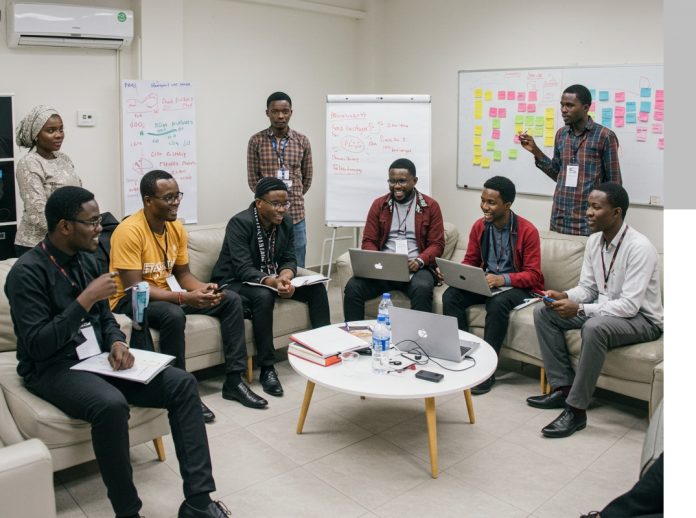
The first half of 2025 marked a pivotal moment for African startups, as ambitions shifted firmly toward global horizons.

According to “The State of Tech in Africa” report by Tech Cabal insights, out of 20 documented expansion moves by startups, nearly half (9) extended beyond Africa’s borders, a clear indication that African companies are now setting their sights on international markets in pursuit of long-term growth and resilience.

Within the continent, expansion strategies favored regional dominance over single-country plays. Startups launched operations across multiple African countries (5 expansions), while 4 targeted new markets within West Africa. The trend highlights a strong drive toward building pan-African influence before or alongside international ventures.

Nigeria and Egypt, two of the continent’s most mature and well-funded startup ecosystems continued to serve as the springboards for broader expansion. Nigerian startups accounted for 5 of the expansions in H1 2025, with Egyptian counterparts following closely with 4. These figures underscore how companies rooted in strong domestic markets and backed by robust funding are leveraging local traction to scale beyond their borders.

The overall pace of expansion remained steady compared to the previous year, with 10 expansions recorded in both Q1 and Q2 of 2025. This total of 20 represents a modest increase from the 19 expansions seen during the same period in 2024, reflecting a measured, sustainable approach to growth rather than aggressive land grabs.

Fintech stood out as the most expansion-driven sector, responsible for 9 of the 20 total expansions. Logistics and transport followed with 4 expansions, signaling a strong appetite for replicating scalable, operations-heavy models across new regions.

Notable expansion moves in H1 2025 include:

  • Moove (Nigeria): Acquired Brazil’s Kovi to enter Latin America.

  • LemFi (Asia to Europe): Expanded into the UK and Germany after operating in China, India, and Pakistan.

  • Raenest (Africa to US and Egypt): Secured Series A funding to enter the U.S. and North African markets.

  • Gozem (Togo to West and Central Africa): Expanded vehicle financing and digital banking services.

  • PalmPay (Nigeria to South Africa, Côte d’Ivoire, Uganda, and Tanzania): Broadened its fintech footprint across four new African markets.

  • Peach Payments (South Africa to Senegal): Entered Francophone West Africa through a partnership with PayDunya.

  • Craydel (Kenya to Rwanda): Continued its Pan-African edtech push, now operating in five countries.

  • AURA (South Africa to the US): Raised $14.6 million to support its U.S. expansion plans.

Commenting on these expansion trends, Dotun Olowoporoku, Managing Partner at Ventures Platform, explained that the surge in global expansion is not a departure from Africa but a strategic adaptation to new realities. In his words, “what we’re seeing isn’t an
abandonment of Africa, but a strategic response to evolving challenges and opportunities”.

He identified three primary drivers behind this outward shift, which includes the following;

First, currency devaluation in key African markets like Nigeria and Kenya has led founders to seek financial stability by entering dollarized economies, mitigating the risks of foreign exchange volatility.

Second, many African startups are addressing global problems such as access to credit or cross-border payments making international growth a logical step.

Third, the rise of African diaspora talent has created cross-border networks that facilitate market entry, provide cultural insights, and enable smoother transitions into new geographies.

While global expansion introduces complex regulatory and cultural challenges, Olowoporoku noted that the long-term benefits include enhanced brand credibility, diversified revenue streams, and increased investor appeal. These expansions signal a maturing ecosystem with startups poised to compete internationally while still rooted in solving homegrown problems.

Fintech’s dominance in the expansion space is no coincidence, Olowoporoku added. The sector forms the backbone of digital economies, offering payment infrastructure and credit solutions that other industries depend on. He argued that fintech is not just foundational, it is essential. Until widespread financial access challenges are resolved, fintech will remain at the forefront, enabling broader sectoral growth and powering innovation in healthtech, e-commerce, and beyond.

In summary, African startups in H1 2025 are not retreating from the continent but stepping onto the global stage with purpose. Their expansion strategies, particularly in fintech, reveal a calculated effort to build durable, world-class businesses that can scale sustainably, weather macroeconomic shocks, and lead Africa’s digital transformation from both within and beyond its borders.

Elon Musk’s Tapping of US Conglomerate Tax, As Trump Reveals On Preserving Subsidies

0

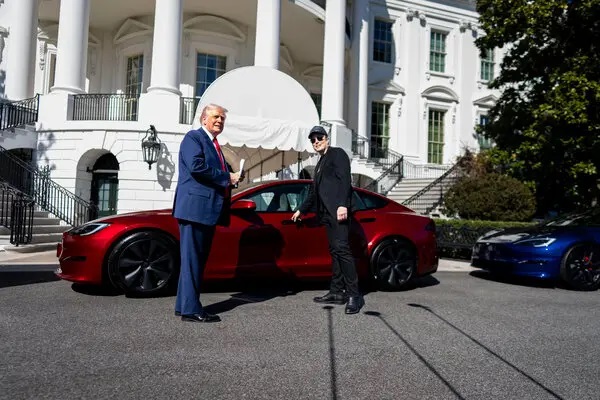
‘“Everyone is stating that I will destroy Elon’s companies by taking away some, if not all, of the large scale subsidies he receives from the U.S. Government,” Trump wrote on Truth Social. “This is not so! I want Elon, and all businesses within our Country, to THRIVE, in fact, THRIVE like never before! The better they do, the better the USA does, and that’s good for all of us.”’

What Trump just wrote is what I have called Conglomerate Tax as described in my book – The Dangote System. All industrialized conglomerates tax nations where they operate because only those companies have the capacities to deal with major challenges governments want solved but unable. And as those companies execute, governments send them goodies via subsidies. When people complain of Dangote in Nigeria, you are complaining because Nigeria does not have many Dangotes. Ideally, we should have 20 Dangotes, and if we do, nobody will care that much.

Do you know that US changed tax laws to help Amazon when it waived the collection of sales tax for online companies when it was ONLY Amazon that was in doing so at scale? Do you know that any Tesla sold gets subsidies from all Americans due to EV subsidies?

Governments do those to enable the creation and stimulation of new industries. It is a great policy when used strategically!

Trump Says He Wants Elon to Thrive – Won’t Take Away All Subsidies

As Ghana Comes Home on Crypto, Africa Must “Dot the i’s and Cross the t’s”

0

Ghana comes home: “The Central Bank of Ghana (Bank of Ghana, BoG) is finalizing a regulatory framework for cryptocurrency platforms, set to be submitted to parliament by September 2025. The proposed Virtual Asset Providers Act aims to license and regulate Virtual Asset Service Providers (VASPs), including crypto exchanges and wallet providers, to ensure transparency, consumer protection, and financial stability.”

Crypto. Crypto. Crypto – how many times did I call you?

Has any person in Africa modelled the impact of normalizing crypto investments on government’s treasury bills, bonds, etc? In other words, if those options are available with cryptos locally and in accessible forms, some government-backed assets will see real competition. Of course, digital capital is here, and Ghana like other African countries must do what it must do.

But we must be nuanced on these assets since it is evident that the US is now the “reserve country” and the USD the “reserve operating currency” of major cryptos which means very soon, local central banks will be drawn into the fray as local banks will be entwined in cryptos!

Trump Says He Wants Elon to Thrive – Won’t Take Away All Subsidies

0

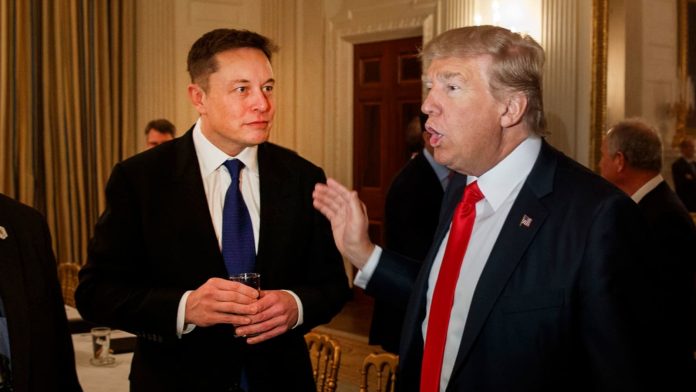
President Donald Trump on Thursday pushed back against growing speculation that he plans to dismantle federal support for Elon Musk’s companies, amid escalating tensions between the two high-profile figures and mounting challenges at Tesla.

In a post on Truth Social, Trump addressed claims that he wants to dismantle Musk’s business empire by stripping away government subsidies, calling such reports “not so.”

“Everyone is stating that I will destroy Elon’s companies by taking away some, if not all, of the large scale subsidies he receives from the U.S. Government,” Trump wrote. “This is not so! I want Elon, and all businesses within our Country, to THRIVE, in fact, THRIVE like never before! The better they do, the better the USA does, and that’s good for all of us.”

The reassurance came amid a deepening fallout between the president and the Tesla CEO, triggered by Musk’s vocal opposition to Trump’s signature legislation—the “One Big Beautiful Bill Act” (OBBBA)—and inflamed by personal jabs, including Musk’s reference to Trump’s ties with convicted sex offender Jeffrey Epstein.

Once allies, Trump and Musk have turned into bitter critics of each other. Musk, who previously headed Trump’s so-called Department of Government Efficiency and donated hundreds of millions of dollars to his reelection campaign, has become increasingly critical of the administration’s policies.

Their feud intensified in June when Trump threatened to pull federal contracts from Musk’s companies, saying they “might be due for a review.” The remark rattled investors and analysts who flagged the heavy reliance of Musk’s ventures—especially SpaceX, Tesla, and xAI—on U.S. government support.

The move, which removes the $7,500 electric vehicle incentive effective September 30, is already reshaping the market, with Tesla scrambling to sell its inventory and American automakers bracing for a turbulent second half of the year.

Tesla reported $439 million in regulatory credit sales for Q2 2025, according to FedScout, but these revenues are declining as more competitors enter the EV space and as federal and state incentives become uncertain.

Since 2015, Tesla has earned $12.24 billion from selling these credits, largely tied to environmental mandates that require automakers to sell a minimum number of zero-emission vehicles or buy credits from companies like Tesla. These credits have been critical to Tesla’s profit margins, as they are pure revenue with no associated manufacturing cost.

The EV company warned customers on Wednesday that the expiration of federal EV subsidies and rising tariff costs would push it into “a few rough quarters.”

“Given the abrupt change, we have limited supply of vehicles in the US this quarter,” said Tesla CFO Vaibhav Taneja. “If you are in the US and looking to buy a car, place your order now as we may not be able to guarantee delivery orders placed in the later part of August and beyond.”

He made the comment during Tesla’s second-quarter earnings call on Wednesday, where the automaker posted weaker-than-expected results and warned of margin pressure ahead.

With the “OBBBA” legislation potentially eliminating or altering these subsidies, Tesla’s filing warned that “the loss of previously available tax credits and carbon offset mechanisms may further negatively impact our financial results.” The company also noted that “provisions of the OBBBA could affect battery cell expenses and impact costs for our consumers, negatively impacting demand.”

On top of that, Tesla’s gross margin has shrunk due to aggressive price cuts aimed at staying competitive in a crowded global EV market. Deliveries fell short of Wall Street expectations for the third consecutive quarter, and free cash flow slipped into negative territory.

The fallout extends beyond Tesla. SpaceX has received over $22 billion in government contracts since 2008, including work with NASA, the Air Force, and the Space Force. The Trump administration reportedly launched a review of those contracts, though The Wall Street Journal noted most were deemed “critical” and unlikely to be cut.

Meanwhile, Musk’s new artificial intelligence venture, xAI, on July 14, the Pentagon awarded contracts worth up to $200 million each to xAI and three other AI firms. But just days later, White House press secretary Karoline Leavitt hinted that federal agencies may be discouraged from working with Musk’s AI startup due to growing friction with the administration.

For Tesla, the expiration of federal EV benefits at the end of September, combined with inflationary pressure from tariffs and weakening demand, raises serious questions about its growth trajectory. The company is hinting that the worst may still lie ahead, and analysts are downgrading expectations for 2025.

At the heart of it all is a once-powerful alliance turned toxic. The Trump-Musk fallout is now spilling into boardrooms, government agencies, and investor forecasts, with Tesla bearing the brunt of the uncertainty. Despite Trump’s latest assurance that he wants Musk’s businesses to “thrive,” markets remain cautious.

U.S. Presidential Digital Assets Group To Release Reports On July 30th 2025

0

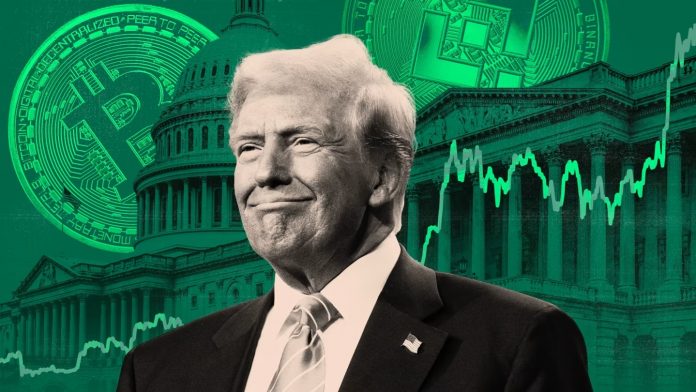
The President’s Working Group on Digital Assets completed its 180-day report, which was due on July 22, 2025, and is set to be released publicly on July 30, 2025, according to multiple sources, including statements from Bo Hines, Executive Director of the President’s Council of Advisors for Digital Assets. The report, commissioned by President Trump’s Executive Order on January 23, 2025, aims to propose a federal regulatory framework for digital assets, including stablecoins, focusing on market structure, oversight, consumer protection, and risk management.

It may also address the potential creation of a national digital asset stockpile and a Strategic Bitcoin Reserve, potentially using cryptocurrencies seized through law enforcement efforts. The release is anticipated to be a significant moment for U.S. digital asset policy, potentially influencing global standards. The report is expected to propose a federal regulatory framework for digital assets, including stablecoins, addressing market structure, oversight, and consumer protection.

A clear, innovation-friendly framework could boost institutional adoption, stabilize crypto markets, and attract investment, potentially driving up asset prices (e.g., Bitcoin, which some X posts suggest could benefit from a Strategic Bitcoin Reserve). Emphasis on mitigating illicit finance risks (e.g., money laundering, fraud) could lead to stricter compliance requirements for crypto exchanges and custodians, increasing operational costs but enhancing market legitimacy.

Specific guidelines for stablecoins could position them as a bridge between traditional finance and crypto, potentially increasing their use in payments and cross-border transactions. The report may endorse a Strategic Bitcoin Reserve, possibly using seized cryptocurrencies. This could signal U.S. government confidence in Bitcoin, potentially driving its price higher. However, it could raise concerns about market manipulation or fiscal risks if the government becomes a major holder.

A national digital asset stockpile could position the U.S. as a leader in the global digital economy, countering moves by countries like China with its digital yuan. This could enhance U.S. financial influence but also escalate geopolitical tensions. Domestically, it could spur innovation in blockchain technology, creating jobs and fostering new financial products.

Stronger consumer protections could increase public trust in digital assets, encouraging retail participation. However, overly stringent regulations might stifle smaller projects or push innovation offshore. The report, influenced by a Trump administration initiative, may face resistance from Democrats or regulators skeptical of crypto’s risks (e.g., Senators Warren and Brown, who have historically criticized crypto for enabling crime). A federal framework might clash with the crypto community’s ethos of decentralization.

Institutional players (e.g., banks, hedge funds) may benefit from regulatory clarity, gaining easier access to crypto markets. Retail investors, however, could face barriers if compliance costs raise fees or limit access to smaller platforms. A Bitcoin price surge from a Strategic Reserve could disproportionately benefit early adopters and wealthy investors, widening wealth gaps. Crypto advocates view the report as a step toward mainstream adoption, while skeptics (including some traditional finance experts) argue it risks financial instability or scams.

The report’s push for U.S. leadership in digital assets could alienate international partners or spur competing frameworks in the EU or Asia, fragmenting global standards. The report could be a pivotal moment for digital assets, potentially fostering innovation and adoption while addressing risks. However, it risks deepening divides between political factions, economic classes, and ideological camps. The crypto community’s reaction—visible on X—ranges from optimism about market growth to wariness of government overreach.