DD
MM
YYYY

PAGES

DD
MM
YYYY

spot_img

PAGES

Home Blog Page 896

Fasmicro Opens Calls for Microprocessors & AI Training for African Governments

0

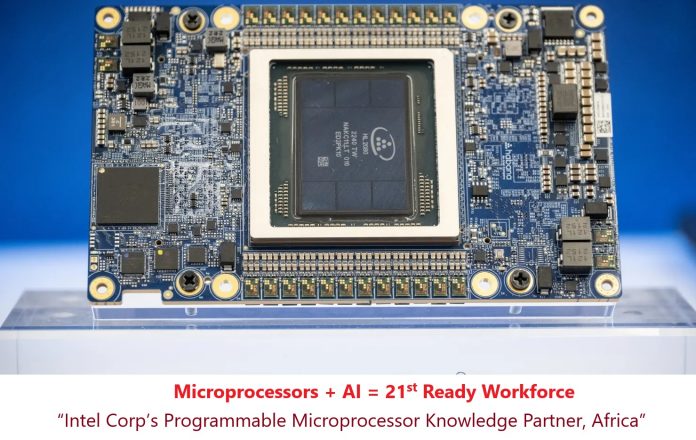
Our microelectronics business will be running some special workshops sponsored by governments at state and national levels across Africa. Yes, Fasmicro, Africa’s only programmable microprocessor knowledge partner for Intel Corp in Africa, will begin teaching the fusion of microprocessors and artificial intelligence (AI). Fasmicro is here to ensure companies, research institutions and broad customers understand how these systems will help in this fledgling AI era. We have the tools and knowledge capabilities to support Africa in the evolving amazing era of AI-driven opportunities.

While most have focused on the software aspect of AI, it is important to note that until microprocessors have evolved, software will have limitations. With more than a decade of partnership with Intel in programmable microprocessors, we will be introducing new systems into the African markets.

Visit intel.com and contact Fasmicro through the email provided https://www.intel.com/content/www/us/en/support/programmable/support-resources/fpga-training/overview.html . You must be a state or national government in Africa to qualify. We come with microchips, designkits, process systems, etc. We have just a few slots for this batch of training, and we look forward to support governments as they design and architect AI roadmap, pushing them to remember that AI doesn’t end with software; we are the hardware people, and we have provided engineering services across Africa with absolute quality.

Prof Ndubuisi Ekekwe

(PhD, Electrical & Computer Engineering / with focus on Microelectronics & Robotics Engineering, Johns Hopkins University)

Chairman, Fasmicro Microelectronics

Fasmicro recently celebrated 15 solid years of Intel Corp partnership

Server CPU Impact on Forex EA Performance – What Trading Session Data Reveals

0

During a particularly volatile Asian session, a trader running multiple grid EAs watched in horror as his execution times doubled. His MT4 platform showed all the usual metrics – stable internet, normal ping times, and steady broker connection. The culprit? CPU throttling on his supposedly “optimized” VPS.

This scenario highlights why selecting vps for forex traders requires understanding how processor architecture affects automated trading performance. The relationship between CPU cycles and EA execution isn’t linear – it’s exponential under certain market conditions.

CPU Threading Patterns During High-Impact News Events

When analyzing server performance during major economic releases, single-threaded CPU performance becomes critically important. MT4 and MT5 platforms primarily utilize single-core processing for trade execution, regardless of how many cores your VPS has available. During the recent Fed rate decisions, traders using multi-core servers but lower single-thread performance experienced significant delays.

Providers like NewYorkCityServers typically optimize for this with processors featuring higher base clock speeds, but many traders don’t realize why this matters more than total core count. A 4-core CPU running at 3.5GHz often outperforms an 8-core system at 2.8GHz for forex automation.

Memory-to-CPU Pipeline Optimization for Multiple EAs

Running concurrent expert advisors creates unique memory access patterns that can bottleneck even powerful servers. Each EA instance needs rapid access to both market data and its own operational memory space. The speed of this data transfer between RAM and CPU becomes a critical performance factor.

In testing environments, we’ve observed that EAs processing tick data can generate up to 2GB of memory transactions per hour per instance. Without proper memory channel configuration, this creates processing queues that delay trade execution. 

The Hidden Cost of CPU Power Management

Modern server processors include sophisticated power management features that can severely impact trading performance. These systems often take microseconds to ramp up from power-saving states – an eternity in forex trading terms. During recent volatility in EUR/USD pairs, traders experienced delays of up to 200ms due to processor power state transitions.

Proper configuration requires disabling various C-states and ensuring consistent CPU frequency. This maintains immediate response times but increases power consumption – a tradeoff many traders don’t consider when selecting budget VPS options.

Real-World Impact on Grid Trading Systems

Grid trading strategies are particularly sensitive to processor performance due to their concurrent order management requirements. Each grid level needs constant monitoring and rapid execution capability. A system running 20 grid levels across multiple currency pairs can generate over 100 processor interrupts per second during active market periods.

The processing overhead increases exponentially with each additional grid level or currency pair. Traders often discover this limitation only after scaling their strategies, leading to missed opportunities and inconsistent execution.

Network Interface Controller (NIC) CPU Offloading

One frequently overlooked aspect of server configuration is NIC processor offloading. Modern network interfaces can handle packet processing independently, reducing CPU load. However, many VPS providers don’t properly configure these features, forcing the main processor to handle network tasks that could be offloaded.

During high-frequency trading periods, this can consume up to 15% of available CPU cycles – resources that should be dedicated to EA execution and market analysis.

Session-Specific Performance Requirements

Different trading sessions demand varying levels of processor performance. Asian session algorithmic trading typically requires more consistent, sustained performance due to the nature of price movement. European and US sessions often need burst performance capability to handle sudden market shifts.

Configure processor performance profiles based on your primary trading sessions. European session traders might benefit from higher turbo boost frequencies, while Asian session strategies often perform better with steady base clock speeds.

Monitoring and Optimization Strategy

Implement continuous CPU performance monitoring focusing on three key metrics: process time, thread switching, and interrupt handling. These measurements provide early warning of potential execution problems before they impact trading performance.

NewYorkCityServers and similar quality providers typically offer monitoring tools, but traders should implement their own metrics tracking. Record execution times across different market conditions and correlate them with CPU performance data to optimize their setup.

The relationship between processor architecture and trading performance becomes more critical as strategies grow more sophisticated. Understanding these technical requirements helps traders build infrastructure that scales with their strategies rather than becoming a bottleneck to growth.

Remember: CPU performance isn’t just about raw speed – it’s about consistent, reliable execution under all market conditions. Choose and configure your trading infrastructure with this principle in mind.

New Exit Model and IP Dynamics: Scale AI, Windsurf, OpenAI/ Microsoft [podcast]

1

The video podcast discusses a “new exit model” emerging in the startup world, particularly in the context of Artificial Intelligence. Driven by the increasing value of “knowledge” (embodied in human talent and IP) and the desire to avoid regulatory scrutiny, large tech companies are opting to “dis-member” startups rather than acquire them outright.

Examples like Meta’s “reverse acquire-hiring” of Scale AI’s leadership and Google’s acquisition of key R&D teams (e.g., from Windsurf) illustrate this trend. These strategies allow big tech to gain crucial human capital and intellectual property without triggering antitrust concerns associated with full company acquisitions.

The lecture highlights that this approach, while legally permissible currently, may lead to the degradation of the “stripped” companies and could have long-term implications for market competition and innovation. The IP dynamics between OpenAI and Microsoft also underscore how intellectual property can be shared or accessed through strategic alliances, further diversifying the ways in which valuable assets are transferred in the tech landscape.

Lecture summary is available here.

OpenAI’s planned $3 billion acquisition of AI coding startup Windsurf collapsed due to tensions with Microsoft, OpenAI’s largest investor. Microsoft’s existing partnership with OpenAI entitled it to Windsurf’s intellectual property (IP), but OpenAI was reportedly unwilling to grant this access, creating a major sticking point in the deal.

The situation was further complicated by Windsurf’s reluctance to share its IP with Microsoft. The collapse of the deal created an opportunity for other companies:

Google stepped in to acquire Windsurf’s leadership team and licensed the company’s technology for $2.4 billion.

Cognition subsequently acquired the remaining assets of Windsurf, including its product, IP, and the majority of its employees.

The Windsurf deal highlights the intensifying competition in the AI sector for talent and technology.

The failed acquisition also exposed the complexities and potential limitations that can arise in partnerships between large tech companies and smaller startups in the rapidly evolving AI landscape.

In summary, OpenAI did not understand what it signed into. Yes, OpenAI is tethered to Microsoft and anything it gets belongs to Microsoft. Simply, whether the IP was created internally or acquired like the Windsurf failed deal, Microsoft is going to partake in the IP cake.

Of course, we can also learn a new exit model. Largely, Windsurf has been cannibalized without annoying the regulators. Google picked the things it liked, and the remaining parts have been absorbed by Cognition. And just like that, the exit happened and that is it!

The podcast video is at Blucera.com.

How To Listen to Tekedia Daily

At Blucera, home of Blucera WinGPT (AI personal educator and coach), eVault Legal Custodial services (store vital personal, family and business documents securely), business tools to grow enterprises, and global archives of Tekedia courses and libraries, Ndubuisi Ekekwe podcasts every week day. Some Tekedia Institute programs offer bonus access to Tekedia Daily or one can register at Blucera for the podcast.

Rwazi Raises $12M Series A to Revolutionize Global Consumer Insights with Real-Time AI-Powered Data

0

Rwazi, a data intelligence startup, has secured a $12 million Series A funding round led by Bonfire Ventures to expand its AI-powered platform that delivers real-time consumer insights across global markets.

The startup was born out of a stark realization, while regions like the U.S., UK, and parts of Western Europe had an abundance of consumer and market-level data, vast international markets including India, Brazil, Mexico, China, and Turkey lacked usable, real-time insights into consumer behavior. “There was no real picture on consumption, what consumers wanted, or how their behavior was shifting,” Rutakangwa told TechCrunch.

Initial attempts to rely on data from government trade agencies and consumer reports proved unreliable—often outdated, fragmented, or unverifiable. This led the founders to pioneer a new approach: zero-party data—consumption data voluntarily shared by consumers as part of their everyday routines. Using advanced validation and verification tools, Rwazi captures this data across global markets in real time.

The result is a powerful AI-driven intelligence system that allows companies to visualize consumer behavior live, predict market trends, and optimize decision-making. This has helped Rwazi’s clients among them global giants like Coca-Cola, Visa, Pampers, and Nestlé cut customer acquisition costs, boost loyalty, and stay competitive in fast-moving markets.

This new round of funding follows a $4 million seed round in 2023 also led by Bonfire Ventures, and includes participation from Santa Barbara Ventures, Newfund, and Alumni Ventures. Rutakangwa emphasized that the raise was “selective,” focused on investors who fully understood the challenges of building data infrastructure for underrepresented markets.

With presence in 190+ countries and clients primarily in the U.S. and Europe, Rwazi plans to use the funds to scale its AI co-pilot, expand engineering talent, and further refine its data infrastructure.

In a space dominated by legacy players like GFK and Ipsos, Rwazi distinguishes itself by offering direct, real-time, non-modeled insights. “Winning today means anticipating shifts, seeing around corners, and making confident moves before the competition even senses a change,” Rutakangwa said.

Founded in 2021 by Joseph Rutakangwa and Eric Sewankambo, Rwazi is redefining how global brands make decisions turning real-time, voluntarily shared consumer data into actionable insight at a global scale. The system captures how people consume and shop both online and offline, at home and away across 190+ countries.

The platform crowdsources data collection through an app, working with on-the-ground consumers who are paid for sharing details about the products they buy. This information comes in handy for global brands that leverage Rwazi’s customer dashboard to access actionable insights

The AI identifies what’s working, where demand is shifting, and how to respond—so teams move faster, waste less, and grow revenue with precision. Its AI processes millions of data points daily to help businesses fine-tune product-market fit, launch smarter campaigns, and move faster in an increasingly noisy and competitive market landscape.

Rwazi is playing big in the data analytics market, which is projected to reach $745.15 billion by 2033, with a CAGR of 10.3%. The increasing integration of AI and machine learning technologies is enhancing data analytics capabilities, allowing businesses to derive more insights from their data.

The rise of big data analytics is crucial, as organizations are generating massive amounts of data that require sophisticated analysis to drive decision-making. With its latest raise, Rwazi hopes to position itself as a market leader and capture a larger share of its expanding market.

Landmark Africa Begins N10bn Overhaul of Nike Lake Resort in Enugu After Lagos Beach Demolition

0

Landmark Africa has begun the phased renovation of the historic Nike Lake Resort in Enugu, kicking off what it calls the first leg of a N10 billion investment plan aimed at transforming the once-iconic destination into a world-class leisure, tourism, and hospitality hub.

This marks the company’s biggest public redevelopment project since the 2024 demolition of its Landmark Beach property in Lagos, which left the group without its flagship location and forced a broad recalibration of its expansion strategy.

A video shared on Tuesday via the official X (formerly Twitter) handle of Landmark Nike Lake Resort Enugu gave the public its first glimpse into the renovation progress. Footage featured project managers and interior designers walking viewers through the construction zones, highlighting both technical improvements and aesthetic changes already underway. The team noted that Phase A of the project is about 50% complete.

Work so far has involved gutting rooms, removing aging fittings, breaking down cramped structures, and reworking outdated designs.

“We’ve removed outdated elements such as the old television sets and bed frames,” said one of the interior designers featured in the video. “These previous fixtures have been incorporated into our redesign concept and taken out to make room for the new installations.”

In a demonstration of structural intervention, another designer showed how the old bathrooms, once described as “tight and inefficient,” had been completely overhauled.

“One of the first things we did was break down the existing toilet walls… to expand the space,” she said. “There’s now a dwarf wall in place because we plan to install a full-height glass wall. At the moment, we’re finishing the gypsum board ceiling, and screeding has already been completed. By tomorrow, we should begin painting.”

She added that the design philosophy behind the renovation is to create a space that’s “modern yet simple—classy but not excessive.”

Public-Private Partnership with Enugu Government

The extensive renovation follows a landmark joint venture agreement signed in January 2025 between Landmark Africa and the Enugu State Government. Under the deal, the state provided the Nike Lake Resort—situated on a 150-hectare lakeside property—as an equity contribution. Landmark Africa, in turn, secured a 35-year lease to manage, operate, and redevelop the resort under its hospitality portfolio.

Sources familiar with the deal say the state is banking on Landmark’s brand and track record to revive what had become a largely neglected government-owned facility. Nike Lake Resort, once a popular getaway in the Southeast, had fallen into disrepair over the years, unable to compete with more modern hotels and destination resorts in other parts of the country.

The N10 billion earmarked for this first phase of redevelopment will cover the overhaul of the hotel rooms, the construction of private waterfront villas, beach lounges, fine dining outlets, a children’s play park, and a golf course. Other features will include expanded event facilities, boat cruises on the lake, and integrated green spaces—components Landmark says are necessary for attracting both local and international visitors.

From Coastal Crisis to Inland Rebirth

The company’s move to Enugu is seen as part of a major pivot following the loss of its beachfront operations in Lagos. In 2024, Landmark’s multibillion-naira beachfront property—which hosted the Landmark Beach Resort, a top attraction for locals and tourists—was demolished to pave the way for the federal government’s Lagos-Calabar Coastal Highway project. The demolition sparked widespread criticism, with Landmark alleging that its investments were bulldozed without adequate compensation or viable relocation alternatives.

With its Lagos base gone and core operations disrupted, Landmark said it would relocate its Nigerian headquarters and initiate new expansion efforts. Company founder and CEO Paul Onwuanibe described the shift as a “strategic reset” aimed at reducing dependency on Lagos and tapping into underutilized tourism markets across Nigeria and Africa.

Shortly after the demolition, Landmark announced that it had received expressions of interest from governors across 12 states offering land and support to host new developments. After internal evaluations, Landmark selected Enugu and Rivers States as the first two confirmed locations for its next phase of expansion.

In Rivers State, the company signed an agreement with the state government to redevelop the Port Harcourt Tourist Beach into a modern leisure and hospitality destination. Initial plans suggested that work would begin in the first quarter of 2025, with a phased delivery schedule expected to run through the end of the year.

However, as of mid-July, no official update has been issued by either Landmark or the Rivers State Government regarding the status of that project. Sources close to the matter say delays may be tied to land documentation issues and internal administrative changes in the state.

Reviving Domestic Tourism

Tourism analysts say Landmark’s pivot to states like Enugu could mark a turning point for Nigeria’s struggling domestic tourism industry, long held back by infrastructural decay, poor policy execution, and insecurity. Enugu, with its peaceful setting and long-standing reputation as a cultural and historical center, offers significant untapped potential, particularly if supported by private sector capital and modern hospitality standards.

While construction continues at Nike Lake, Landmark Africa says it remains committed to building iconic destinations that not only serve local communities but also attract global attention. If successful, the Nike Lake Resort could become the centerpiece of that new vision—one born not from expansion, but from crisis.