DD
MM
YYYY

PAGES

DD
MM
YYYY

spot_img

PAGES

Home Blog Page 9

Wall Street Banks Ride Record Massive Deals and Trading Boom, But Executives Warn Risks Are Building Beneath Markets

0
The logo for Goldman Sachs is seen on the trading floor at the New York Stock Exchange (NYSE) in New York City, New York, U.S., November 17, 2021. REUTERS/Andrew Kelly/Files

Wall Street’s largest banks delivered another quarter of exceptional earnings, powered by a resurgence in investment banking, record trading activity and blockbuster capital markets deals, underscoring how the artificial intelligence investment boom and elevated market volatility have become the industry’s biggest profit engines.

Second-quarter results from JPMorgan Chase, Bank of America, Goldman Sachs, Citigroup and Wells Fargo showed broad-based strength across fee-generating businesses, with mergers and acquisitions, equity underwriting and trading revenue helping offset persistent concerns over inflation, geopolitical tensions and stretched asset valuations.

The results suggest that the U.S. banking industry is benefiting from one of its strongest operating environments in years, as corporations rush to raise capital, pursue acquisitions and finance massive AI-related investments.

“We’ve had really terrific global markets performance and investment banking performances,” Bank of America Chief Financial Officer Alastair Borthwick said during the bank’s earnings call. “Business continues to feel good.”

The earnings also bolster expectations that 2026 could become one of the busiest years for global investment banking since the post-pandemic dealmaking boom, as companies race to secure funding for AI infrastructure, semiconductor manufacturing and digital transformation projects.

JPMorgan posted the highest quarterly profit ever recorded by a U.S. bank, bringing its market capitalization above $920 billion and edging it closer to becoming Wall Street’s first trillion-dollar bank.

Chief Financial Officer Jeremy Barnum said activity across equity markets remained exceptionally strong.

“What’s going on in equities is a booming environment with a ton of activity, big IPOs, the AI theme, a very active environment,” Barnum said.

Investment banking has emerged as one of the industry’s fastest-growing revenue streams after several subdued years marked by rising interest rates and weaker corporate confidence.

According to Dealogic, global investment banking revenue climbed 24% in the first half of 2026 to $61.4 billion compared with a year earlier. JPMorgan retained its position as the world’s leading investment bank by revenue, while Goldman Sachs remained the top adviser on mergers and acquisitions.

The surge reflects a revival in corporate confidence as executives pursue acquisitions and public offerings tied to AI infrastructure, cloud computing and semiconductor expansion.

Among the largest transactions during the quarter were Alphabet’s $85 billion share sale, Cerebras Systems’ $6.4 billion initial public offering, and SpaceX’s IPO, which generated an estimated $500 million in underwriting fees for participating banks.  Trading businesses also benefited from unusually volatile financial markets as investors repositioned portfolios amid the U.S.-Iran conflict, fluctuating oil prices, changing Federal Reserve expectations and continued enthusiasm for AI-related stocks.

Higher market volatility typically boosts client activity, increasing demand for hedging, market-making, and derivatives trading, all of which translate into stronger revenue for investment banks.

Analysts said the scale of the earnings outperformance exceeded expectations.

“I’m a little bit surprised by the magnitude of the beats,” said Robert Pavlik, senior portfolio manager at Dakota Wealth Management, which owns shares of Bank of America and JPMorgan.

Goldman Sachs, whose earnings are heavily tied to investment banking and capital markets, also exceeded analysts’ forecasts, while Citigroup reported its highest quarterly revenue in a decade alongside a 45% jump in profit. Wells Fargo also beat Wall Street estimates, demonstrating that earnings strength extended well beyond pure investment banks.

“The biggest beats were coming from investment banking, capital markets, and trading,” said Neville Javeri, portfolio manager at Allspring Global Investments.

He said Goldman Sachs and JPMorgan benefited most from the rebound, adding that “capital markets and investment banking have sort of been the drivers for all the banks.”

The results highlight a broader structural shift underway across global finance. Unlike previous banking cycles that relied heavily on loan growth and widening net interest margins, today’s earnings are increasingly driven by advisory services, securities trading and financing for AI-related investments.

Banks are acting as financial intermediaries for one of the largest capital spending cycles in decades, as technology companies collectively invest hundreds of billions of dollars to build AI data centers, semiconductor fabrication plants and computing infrastructure.

That financing wave has generated robust demand for equity offerings, bond issuance, structured financing, and acquisition advisory services.

Macrae Sykes, portfolio manager at Gabelli Funds, said the strength of the quarter exceeded even optimistic expectations.

“We thought the second-quarter earnings were going to be very good, but they turned out to be extraordinary,” Sykes said.

“We continue to believe the environment for the major banks is very constructive due to business activity, market engagement and demand for capital with average loans up around 10%.”

Investors rewarded some of the strongest performers. Goldman Sachs shares surged 7.3%, while JPMorgan gained 1.7% and Bank of America rose 1.8%. Citigroup shares fell 4.3%, however, as investors focused on the prospect of higher expenses and softer profitability later this year. Wells Fargo also declined 2.6%.

“It’s the best bank set up in years,” said Lauren Cassidy, chief investment officer for the Founders 100 ETF. “And this is an unusual quarter. Everything’s working.”

Still, executives cautioned that today’s favorable conditions may not persist indefinitely. Barnum warned that elevated valuations and increasing leverage across financial markets could leave investors vulnerable if conditions deteriorate.

“How fragile, dangerous, overheated, exuberant is the current moment?” he asked, noting that leverage and valuations have become “quite high.”

“It would be naive not to be worried – but it’s easy to be worried and the market keeps going up.”

JPMorgan Chief Executive Jamie Dimon also highlighted several macroeconomic risks that could eventually unsettle markets.

“Several risks are shifting below the surface like tectonic plates, including geopolitical tensions and wars, sticky inflation, large global fiscal deficits and elevated asset prices,” Dimon said, adding that they “could also cause meaningful disruptions when they shift or collide.”

Bank of America CEO Brian Moynihan echoed those concerns, saying the U.S. economy has remained more resilient than expected but warning that inflation and restrictive monetary policy continue to pose significant risks.

Wells Fargo CEO Charlie Scharf also cautioned that unusually favorable market conditions rarely last.

“Strong environments like this don’t last forever, and we see large amounts of capital being deployed by both banks and non-banks across a broad range of risk assets,” Scharf said.

Citigroup Chief Financial Officer Gonzalo Luchetti added that the conflict in the Middle East could eventually weigh on mergers and capital markets activity if geopolitical uncertainty persists, even though current deal pipelines remain healthy.

The second-quarter earnings show the extent to which Wall Street has become one of the biggest financial beneficiaries of the global AI investment boom. Analysts believe that as long as companies continue raising capital for AI infrastructure and markets remain active, investment banking and trading businesses are likely to remain the primary drivers of profitability.

World Stocks Steady As AI Rally Offsets Oil Shock; ASML Lifts Chip Sector While Markets Weigh Fed Outlook And Middle East Risks

0

World equity markets traded cautiously on Wednesday as renewed enthusiasm for artificial intelligence-related stocks, sparked by stronger-than-expected results from Dutch chip equipment giant ASML, offset rising geopolitical tensions after fresh hostilities involving Iran pushed oil prices higher.

The mixed performance highlighted the competing forces driving global markets: optimism over AI-driven corporate earnings and technology investment on the one hand, and mounting geopolitical and inflation risks on the other.

The pan-European STOXX 600 index slipped 0.05% by 0849 GMT after posting strong gains in the previous session, when weaker-than-expected U.S. inflation data boosted expectations that the Federal Reserve could keep interest rates unchanged in the near term.

Technology-heavy markets outperformed. Nasdaq futures climbed 0.5%, South Korea’s KOSPI surged 6.2%, while Japan’s Nikkei 225 advanced 1.5%, reflecting renewed investor appetite for semiconductor and AI-related stocks.

“The divergence between the U.S. and Europe seems to be driven mainly by technology stocks, which are outperforming again,” said Swissquote senior analyst Ipek Ozkardeskaya.

“ASML’s results came in sweet.”

The MSCI World Price Index edged up less than 0.1%.

The latest rally was driven by ASML, the world’s largest supplier of semiconductor manufacturing equipment, after the Dutch company raised its 2026 financial forecasts and unveiled plans to expand production capacity, citing sustained demand for advanced chipmaking tools used in artificial intelligence applications.

The company also delivered quarterly earnings that exceeded market expectations, sending its shares up as much as 8% in Amsterdam and lifting semiconductor stocks globally.

The upbeat outlook helped restore confidence in AI-related equities after recent volatility triggered by concerns that valuations had run ahead of earnings fundamentals and questions over whether massive AI infrastructure spending by technology companies would generate sufficient returns.

The renewed optimism also comes as semiconductor companies continue to benefit from unprecedented capital expenditure by hyperscale cloud providers including Microsoft, Amazon, Alphabet and Meta, which are collectively spending hundreds of billions of dollars to expand AI computing infrastructure.

South Korea’s technology-heavy market was among the biggest beneficiaries of the improved sentiment, with investors returning to chipmakers after several weeks of profit-taking.

Markets Balance AI Optimism Against Geopolitical And Monetary Policy Risks

While AI-driven gains supported equity markets, investor sentiment remained restrained by escalating tensions in the Middle East.

Oil prices extended gains after President Donald Trump reimposed a naval blockade on Iranian ports and Tehran launched strikes targeting U.S. infrastructure in the region, raising fears of further disruptions to energy supplies. Brent crude futures rose 0.7% to $85.31 per barrel, increasing concerns that higher energy costs could eventually complicate the global inflation outlook.

Those concerns partly offset the positive impact of Tuesday’s softer U.S. inflation report.

Data released a day earlier showed headline U.S. consumer prices fell 0.4% in June, marking the first monthly decline since the COVID-19 pandemic, while core inflation was unchanged, reinforcing expectations that inflationary pressures are easing.

The figures prompted investors to scale back expectations of another near-term Federal Reserve interest rate increase.

U.S. Treasury yields and the dollar fell sharply after the inflation data. Although two-year Treasury yields edged up one basis point to 4.2% on Wednesday, they remained roughly nine basis points below Tuesday’s 17-month high.

The euro held above $1.14 against the dollar, reflecting the broad weakness in the U.S. currency following the inflation report.

“For market bulls this is even better than Goldilocks could have imagined,” J.P. Morgan analysts said in a client note.

“This print should remove any fears over a July rate hike and may assuage fears on September, too. This sets up the market to move higher and to broaden as it does so.”

However, Federal Reserve Chair Kevin Warsh cautioned lawmakers that one encouraging inflation report was insufficient to conclude that inflation had been defeated, tempering market optimism.

Investors will closely monitor Warsh’s second day of congressional testimony later Wednesday, alongside U.S. producer price inflation data and the Federal Reserve’s Beige Book, for additional clues on the central bank’s policy trajectory. Attention is also turning toward the corporate earnings season, which is increasingly becoming a key driver of market direction.

Morgan Stanley, BlackRock, and Johnson & Johnson are scheduled to report results before the opening bell, following stronger-than-expected earnings from Goldman Sachs, JPMorgan Chase, and Bank of America that reinforced confidence in the resilience of the U.S. banking sector despite elevated interest rates.

Strong bank earnings have helped justify lofty equity valuations and strengthened hopes that corporate America can continue delivering earnings growth even as economic activity slows.

Elsewhere, investors are awaiting the Bank of Canada’s latest monetary policy decision, with the Canadian dollar trading broadly steady at 1.4051 per U.S. dollar. In China, official data showed the world’s second-largest economy expanded 4.3% year-on-year in the second quarter, falling short of analysts’ expectations as persistent weakness in domestic demand outweighed resilient exports and industrial production.

While softer growth highlighted ongoing structural challenges, stronger-than-expected June retail sales and hopes for targeted government stimulus helped cushion investor sentiment.

“I don’t think they will be worried enough to announce any big stimulus, but it is going to be targeted, since they are aware that growth is only for the tech areas whereas the broader economy is continuing to underperform,” said UOB economist Woei Chen Ho.

China’s yuan traded at 6.7715 per dollar, just below a one-month high.

Meanwhile, gold prices retreated after surging more than 2% in the previous session. Spot gold fell 0.7% to $4,023.70 an ounce as rising oil prices revived inflation concerns and investors reassessed the outlook for U.S. monetary policy.

While the combination of improving inflation data, resilient corporate earnings and renewed enthusiasm for AI has strengthened the case for risk assets, geopolitical tensions and uncertainty over central bank policy continue to limit broader market gains. Investors are increasingly balancing optimism surrounding the AI investment cycle against risks from higher energy prices, slowing global growth and ongoing conflicts that could quickly alter the inflation outlook.

Why Visa, Mastercard, and Coinbase Are Backing Open USD

0

Circle Internet Group is facing a fresh wave of skepticism from Wall Street as analysts increasingly question whether the stablecoin issuer can maintain its competitive advantage in a rapidly evolving digital payments market.

The latest blow came from investment bank Mizuho, which downgraded Circle’s stock to underperform and slashed its price target from $85 to $50, implying a downside of roughly 21% from the company’s recent closing price of $63.22.

The downgrade highlights a growing concern that Circle’s flagship product, USD Coin (USDC), may soon face intense competition from a new generation of stablecoin networks designed to distribute economic benefits more broadly among ecosystem participants.

At the center of these concerns is Open USD, an emerging stablecoin initiative backed by more than 140 companies, including financial heavyweights Visa, Mastercard, and Coinbase.

Unlike traditional stablecoin models, Open USD introduces a different economic framework. Stablecoin issuers such as Circle primarily generate revenue from the interest earned on reserves backing their tokens. As interest rates rose globally over the past several years, this reserve income became an exceptionally lucrative business.

Circle’s profitability has largely depended on the billions of dollars held in Treasury bills and cash equivalents supporting USDC. Open USD challenges this structure by allowing participating firms to retain the yield generated from their own reserves instead of transferring those earnings to a centralized issuer.

This seemingly simple change could significantly alter the economics of the stablecoin industry. For banks, payment providers, fintech firms, and large corporations, the ability to keep reserve yields represents a powerful incentive to adopt alternative stablecoin infrastructures.

Rather than acting merely as distribution channels for a third-party issuer, these companies become direct beneficiaries of the interest income generated by their stablecoin activities. Such a model could encourage greater participation and potentially accelerate adoption across global payment networks.

Mizuho’s downgrade reflects fears that Circle’s current business model may become increasingly vulnerable if major institutions migrate toward yield-sharing alternatives. The firm’s analysts argue that the stablecoin industry is entering a new competitive phase where network effects and revenue distribution mechanisms may matter more than first-mover advantages.

The involvement of giants like Visa and Mastercard further intensifies these concerns. Both companies possess enormous payment infrastructures and longstanding relationships with financial institutions worldwide.

Their participation signals that stablecoins are no longer merely a niche crypto product but are rapidly becoming an integral part of mainstream financial infrastructure. Coinbase’s backing of Open USD also carries particular significance.

Coinbase has historically been one of Circle’s closest strategic partners, with both companies sharing revenues generated from USDC reserves. Any shift in Coinbase’s priorities toward competing stablecoin ecosystems could raise additional questions about the long-term growth trajectory of USDC.

Circle still maintains several strengths. USDC remains one of the world’s largest and most trusted stablecoins, benefiting from strong regulatory compliance, deep liquidity, and widespread integration across crypto exchanges, decentralized finance applications, and payment platforms.

The company has also positioned itself as a leader in regulatory engagement, an advantage that could become increasingly valuable as governments introduce clearer rules for digital assets.

Yet investors are beginning to realize that the stablecoin market may not be a winner-takes-all industry.

As new competitors emerge with more attractive economic incentives, pricing pressures and market share battles could intensify. The debate surrounding Circle ultimately reflects a broader transformation occurring within digital finance.

Stablecoins are evolving from simple crypto trading instruments into foundational payment rails for the global economy. In this new environment, the companies that succeed may not necessarily be those that created the earliest products, but those that build the most compelling economic ecosystems around them.

For Circle, the challenge ahead is clear: adapt its business model to a changing competitive landscape or risk seeing its once-dominant position gradually eroded by a new generation of collaborative stablecoin networks.

Bitcoin Surges Past $65,000: Is The Bull Run Back on?

0

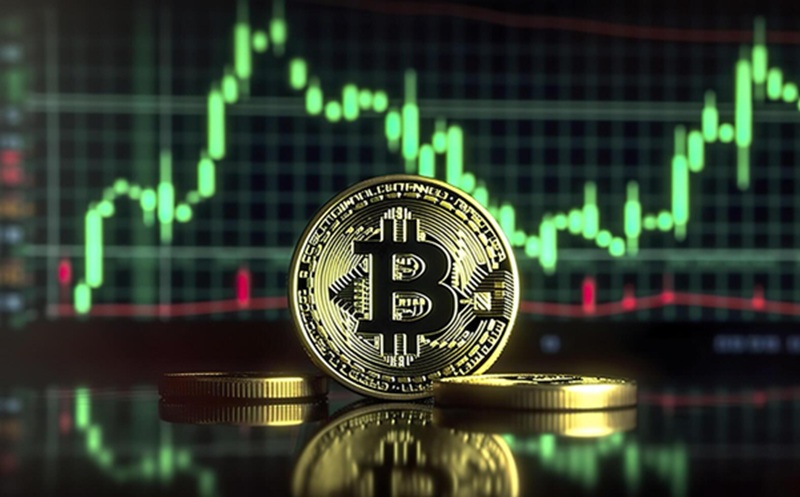
Bitcoin has climbed back above the key $65,000 level, drawing fresh attention from traders and crypto enthusiasts.

The crypto asset continued its recovery on Wednesday, trading around $65,551 after gaining more than 4% in the previous session.

Recent trading data shows the surge followed a period of consolidation in the low-to-mid $60,000 range earlier in July. On July 14, Bitcoin moved from around $62,000 to a daily high near $65,046 before closing the session above $64,900.

This rebound comes after the asset traded as low as the $58,000–$61,000 zone in the first half of the month, highlighting the volatility that continues to define the 2026 market cycle.

The latest rally has improved short-term sentiment, as Bitcoin continues to trade near the three-week high reached earlier, supported by the reduced prospect of the Federal Reserve raising interest rates in the near term.

However, Bitcoin still faces significant technical hurdles before confirming a broader trend reversal. The asset may hit up to $80,000 by August, a new prediction says as data lays out key nearby BTC price levels.

In an X update on Wednesday, crypto trader and analyst Michaël van de Poppe said that BTCUSD was successfully defending crucial support.

“It’s holding the crucial level at $61,000 and flipping important MAs for support, indicating that there’s more momentum on the horizon,” he wrote, referring to moving average trend lines.

“I’m expecting to see a rally to $68,000 in the next 1-2 weeks, followed by a continuation towards $75,000-80,000 in August”, he added.

Bitcoin Price Reaction And Sentiment

The price action of Bitcoin has triggered mixed reactions in the crypto community. While some celebrated the milestone as a sign of renewed bullish momentum, others warned of potential pullbacks.

Several crypto enthusiasts cautioned about an imminent crash back toward lower levels and mentions of trader liquidations triggered by the rapid move higher.

Some comments on X,

@Michaelbowman wrote,

“BTC to the moon!! This time is different. We won’t hit new lows in Oct like every other time. Buy now or miss it. Trust me”.

@breakdownsnipa wrote,

“65K reclaim is a good sign, curious if we see 70K or 60K first”.

@Mark Han wrote,

“Next goal is 70K. Can we actually hit it?”

Market participants are watching whether the cryptocurrency can maintain support above this psychologically important threshold or if resistance will push it back into the $62,000–$64,000 trading band.

This latest development underscores Bitcoin’s resilience amid broader economic uncertainties and shifting institutional flows. Whether the move marks the start of a stronger recovery or a temporary spike remains a key question for investors heading into the second half of 2026.

Outlook

Looking ahead, Bitcoin’s short-term direction will likely depend on whether it can firmly establish support above the $65,000 level.

A sustained hold above this zone could strengthen bullish momentum and pave the way for a retest of the $68,000–$70,000 resistance area, with some analysts projecting a move toward $75,000–$80,000 if buying pressure continues through August.

However, volatility is expected to remain elevated. Failure to maintain the current breakout could see Bitcoin retrace toward the $62,000–$64,000 range, with the $61,000 level emerging as a critical support zone that traders are closely monitoring.

Beyond technical factors, macroeconomic developments including expectations surrounding U.S. Federal Reserve policy, inflation data, institutional investment flows, and spot Bitcoin ETF activity are expected to play a significant role in shaping market sentiment over the coming weeks. Any shift in these factors could either reinforce the current rally or trigger another period of consolidation.

Why Goldenbet Is The Best Platform For Secure Betting

0

Introduction

Online sports betting and live casino gaming are thrilling, but platform safety must always be your top priority. Goldenbet stands out as an industry leader by combining strict licensing, advanced encryption, and guaranteed payouts to deliver a highly secure betting environment.

Key Takeaways

Verified Licensing: Legal protection through international gaming authorities.

Data Protection: Advanced SSL/TLS encryption for all personal and financial data.

Fair Play: Certified Random Number Generators (RNG) for unbiased game outcomes.

Fast Payouts: Partnership with secure, globally recognized payment gateways.

How Goldenbet Secures Your Account

Goldenbet uses cutting-edge cybersecurity to establish an encrypted connection between your device and its servers. This guarantees:

Privacy: Your login credentials and personal files are fully shielded from hackers.
Integrity: Casino games are audited regularly to prevent any manipulation.
Transaction Safety: Highly protected deposits and withdrawals with fraud detection.

Smart Bankroll & Betting Strategy

Personal security also means managing your money wisely. Set a fixed, disposable budget before you play, and use this proportional betting strategy:

Bankroll Level Suggested Strategy Recommended Bet Size
$20 – $50 Conservative, high-volume wagers $0.10 – $1.00
$50 – $200 Balanced sports & casino plays $1.00 – $5.00
$200+ Multi-market & calculated system bets Moderate bets based on comfort

Game Transparency: RTP & Volatility

Goldenbet displays clear game metrics to help you make informed choices:

Return to Player (RTP): The long-term theoretical percentage a game pays back to players.

Game Volatility: The payout frequency model, ranging from Low (frequent, smaller wins) to High (fewer, larger payouts).

Core Security Features

Goldenbet provides advanced, built-in safety tools to protect your profile:

Multi-Factor Authentication (MFA): Adds a secondary verification code to block unauthorized logins.

Secure Gateways: Supports trusted e-wallets, credit cards, and major cryptocurrencies.

Cashout Tools: Lets sports bettors settle bets early to secure winnings or minimize losses.

KYC Verification: Quick identity checks to ensure only you can withdraw your funds.

Common Pitfalls to Avoid

Password Recycling: Never use the same password on multiple sites.
Public Wi-Fi: Avoid logging into your account on unencrypted public networks.
Chasing Losses: Do not deposit extra, unplanned money in frustration.
Phishing Links: Only access Goldenbet by typing the official URL directly.

Conclusion

While no platform can guarantee a win, Goldenbet successfully eliminates external security risks. By combining their robust technical security with disciplined bankroll habits, you can enjoy a premium betting experience with absolute confidence.

FAQs

Is Goldenbet officially licensed?

Yes. It operates under a recognized international gaming license, meaning your funds are legally protected and held in secure, segregated accounts.

Are my cryptocurrency deposits safe?

Yes. Crypto transactions utilize decentralized blockchain technology, providing industry-leading cryptographic security and financial privacy.

How do I know the games aren’t rigged?

All virtual games on Goldenbet use certified Random Number Generators (RNGs) audited by independent, third-party testing labs to guarantee truly random outcomes.