DD
MM
YYYY

PAGES

DD
MM
YYYY

spot_img

PAGES

Home Blog Page 9

SOL Price Eyes $250 & XRP Whales Accumulate 1.53 Billion Tokens While BlockDAG’s $1 Target Heats Up in 2026

0

The cryptocurrency market is rebuilding after a brutal correction wiped $280 billion from total market capitalisation. Bitcoin dominance holds at 58%, the Fear and Greed Index reads 22, and most altcoins remain below cycle peaks. But a clear divide is emerging between assets driven by structural fundamentals versus those still searching for catalysts.

Solana, XRP, and BlockDAG sit at three distinct points on that spectrum, Standard Chartered targeting $250 for SOL, whales accumulating 1.53 billion XRP, and BlockDAG offering a published $0.10 buyback with a $1 trajectory anchored to programme execution rather than analyst speculation.

BlockDAG (BDAG) – $0.00000044 Entry With $0.10 Buyback Positions BDAG for a $1 Trajectory

BlockDAG just completed a network upgrade to 5,000 transactions per second with approximately 2-second consensus, marking its largest infrastructure milestone to date. The Layer-1 PoW blockchain, built on DAG-based parallel processing with dual EVM and WASM virtual machine support, is now offering a 24-hour direct swap event: buy BDAG at $0.00000044, sell through the Buyback Programme at $0.10.
The $0.10 buyback rate itself represents proven execution, but the structural path doesn’t end there. Analysts tracking DAG-based Proof-of-Work architectures have compared BlockDAG’s positioning to Kaspa’s pre-breakout phase, similar supply mechanics, similar ecosystem readiness, similar narrative momentum. The BlockDAG Casino, live since May 14 with 25 payment methods across 30-plus sports, generates continuous on-chain demand. BDUSD locks BDAG as collateral on every mint. Four million X1 miners are active globally.

A move from $0.10 to $1 represents a 10x, but it’s anchored to a published buyback rate that has already executed at scale, not a speculative price target. Among top crypto coins setting up for the next cycle, BlockDAG’s combination of completed upgrade, live utility, and defined exit makes the $1 trajectory mathematically grounded rather than narratively wished.

Solana (SOL) – Standard Chartered Maintains $250 Target Through 2026

Solana trades near $71 after recovering from sub-$60 lows during the June selloff. Standard Chartered’s head of digital assets Geoff Kendrick trimmed his 2026 SOL target to $250 from $310, while maintaining a $2,000 forecast by the end of 2030, citing near-term macro headwinds rather than structural concerns. The $250 target represents approximately 3.5x from current levels.

Cumulative net inflows into spot Solana ETFs reached roughly $1.45 billion as of June 8, with May alone posting $115.3 million, the strongest month since launch. Pantera Capital’s Cosmo Jiang has suggested ETF approval and ecosystem momentum could drive SOL toward $1,000 in the most bullish scenario. SpaceX stock is launching on Solana the same day it lists on Nasdaq, with eligible shares convertible back into tokens, bridging traditional brokerage accounts and on-chain markets.

CME Group’s new crypto index futures product includes Solana alongside Bitcoin and Ethereum. Firedancer is advancing toward full deployment, and Mastercard’s global stablecoin settlement routing remains the strongest long-term volume catalyst.

XRP – Whales Accumulate 1.53 Billion Tokens as Standard Chartered Targets $8

XRP made one of its sharpest recoveries of the year on June 16, jumping 13% in a single session from $1.03 support after US-Iran conflict resolution reports pushed risk assets sharply higher. XRP currently trades around $1.23 with a market capitalisation of approximately $76 billion.

The accumulation pattern is striking: wallets holding 1 million tokens or more now control 74.1% of total circulating supply, with large holders quietly adding 1.53 billion tokens over the last six months as retail sentiment turned negative. Cumulative inflows into spot XRP ETFs sit at approximately $1.39 billion, with US spot XRP ETFs recording a record $60.5 million in a single mid-May week, the strongest institutional accumulation of 2026.

Analyst forecasts cluster between $1.20 and $4.00 for 2026, with bullish outliers reaching toward $8, Standard Chartered’s Geoffrey Kendrick maintains the $8 target based on continued ETF inflows and post-SEC settlement regulatory clarity.
Top Crypto Coins With Verifiable Paths Forward

Solana offers institutional ETF momentum and SpaceX integration with a Standard Chartered $250 target, clear path, requires macro cooperation. XRP offers whale accumulation, regulatory clarity, and the AI-payments narrative with an $8 bullish target, clear catalysts, requires CLARITY Act passage. BlockDAG offers a published $0.10 buyback with over 1 billion coins of execution evidence and a 5,000 TPS upgrade already live, a $1 trajectory anchored to programme terms rather than speculative scenarios. Three of the top crypto coins for 2026, three different risk profiles, three different timelines. The structure underneath each is what separates conviction from hope.


Presale: https://purchase.blockdag.network

Website: https://blockdag.network

Telegram: https://t.me/blockDAGnetworkOfficial

Discord: https://discord.gg/Q7BxghMVyu
BlockDAG’s Zero-Fee Ecosystem Reinforces Its Growth Appeal While Polkadot Loses Momentum & BNB Remains Under Pressure

0

The digital asset market in June 2026 continues to show a clear divide where practical utility plays a major role in determining long-term value. Current market data shows BNB Coin trading near $616 after recording an 11% monthly decline, while the Polkadot price has fallen to multi-year lows around $0.96.

As many participants move away from highly volatile open-market assets, portfolio managers are searching for the best crypto to buy right now to preserve capital and reduce risk. At the same time, growing attention is shifting toward BlockDAG (BDAG), with many targeting its low $0.00000044 entry price and zero-fee transaction framework as a possible alternative during uncertain market conditions.

BNB Coin Faces Pressure Near Major Support

Latest network data from June 16, 2026, indicates that BNB Coin remains under heavy downward pressure, trading between $612 and $616 after the wider market selloff. The asset has declined more than 11.3% since the beginning of the month and has moved below its 50-day moving average. Technical analysts point out that the token is now testing a major support zone around the psychological $600 level. If that level fails to hold, the next important support area could appear near $580.

Many high-frequency trading firms are shifting liquidity toward decentralized alternatives as they attempt to avoid compliance-related challenges affecting parts of the exchange sector. Although the network continues to carry out its scheduled quarterly token burn programme, the reduction in supply has not fully offset ongoing institutional selling pressure, leaving the asset exposed to further market weakness.

Polkadot Price Drops Below Key Levels

Heavy retail exhaustion continues to weigh on the Polkadot price, which has fallen into the $0.94 to $1.01 range during June 2026. This marks a major decline from earlier yearly highs and reflects a noticeable absence of strong institutional demand. Technical indicators continue to show a bearish setup, with the asset trading significantly below its 200-day Simple Moving Average (SMA). The Relative Strength Index (RSI) remains close to the 30 mark, suggesting oversold conditions may be approaching, though overall momentum remains weak.

Strong resistance remains around $1.05. Without a major catalyst capable of pushing the token above this level, the asset could remain trapped inside a narrow trading range. Many capital allocators are directing attention elsewhere toward assets offering clearer return structures, while on-chain data continues showing a gradual decline in daily active users throughout the parachain network.

BlockDAG Opens the Door to the Sub-Cent Economy

Finding the best crypto to buy right now often means identifying projects that solve long-standing scalability challenges affecting older blockchain networks. High transaction fees have made many small-value transactions impractical across legacy systems, limiting the growth of micro-payment economies. BlockDAG addresses this challenge through its newly activated 5,000 transactions per second (TPS) network upgrade. Using advanced Directed Acyclic Graph (DAG) technology, the network reduces transaction costs to zero while creating a strong foundation for global low-value payment activity.

This level of efficiency gives developers the ability to build pay-per-use services, instant tipping systems, and micro-subscription platforms directly on-chain. The live 5,000 TPS capacity supports true micro-transactions, providing merchants with the speed needed to process large numbers of small payments without delays or congestion. To mark the launch of this network upgrade, the team has also opened a limited-time opportunity through its native dashboard.

During this short event window, participants can access BDAG at the entry price of $0.00000044 while also gaining access to a buyback payout fixed at $0.10 through the Buyback Programme. This direct swap structure creates a substantial difference between entry and buyback values while remaining separate from traditional market order-book volatility. However, the available window continues to narrow as participation increases. Those following the project are paying close attention before the available allocation reaches its limit and the opportunity closes.

Final Thoughts on the Current Market

Looking across today’s digital asset market reveals a growing separation between utility-focused infrastructure and highly volatile tokens. Technical analysis shows BNB Coin attempting to defend the important $600 support level, while the Polkadot price continues to struggle with weak momentum and declining participation.

BlockDAG, on the other hand, is following a different path. Through its 5,000 TPS architecture that removes transaction fees and its active Buyback Programme featuring a $0.10 payout alongside a $0.00000044 entry, the project is attracting significant attention. For many market participants evaluating the best crypto to buy right now, the combination of live infrastructure, growing utility, and a structured buyback framework is making BlockDAG increasingly difficult to ignore.


Presale: https://purchase.blockdag.network

Website: https://blockdag.network

Telegram: https://t.me/blockDAGnetworkOfficial

Discord: https://discord.gg/Q7BxghMVyu

 

BlockDAG, XRP, Ondo Finance, & Hyperliquid Lead the Fastest-Growing Cryptos Race

0

The crypto market frequently realigns its focus, shifting capital between speculative token trends and highly integrated, real-world utility networks. As international liquidity pools adjust and institutional participation matures, market participants are looking beyond transient chart hype. Instead, they are actively investigating protocols that demonstrate verifiable on-chain transaction metrics and fully operational Web3 environments.

For investors analyzing the fastest-growing cryptos, keeping a close track of structural updates across BlockDAG, XRP, Ondo Finance, and Hyperliquid provides an objective look at where global capital is moving. Each of these distinct projects addresses scalability, processing efficiency, and ecosystem velocity from a unique angle, whether through regulated financial tokenization, cross-border banking rails, or innovative treasury liquidity models.

1. BlockDAG: Arbitrage Mechanisms Converge with Multi-Layer Network Execution

BlockDAG is capturing considerable market attention as an elite candidate among the fastest-growing cryptos, backed by concrete performance data. The protocol runs an exclusive Legacy Sale that sets a low entry point of $0.00000044 per coin, running right alongside a parallel Buyback Program that permits participants to route those tokens back to the protocol treasury at a fixed, premium valuation of $0.10.

This economic architecture creates highly predictable parameters for incoming capital, leading to the successful return of over 1 billion coins to the system by active holders. Long-term network participants can access a separate layer at $0.00025 per token, with all final settlements fully guaranteed via a single USDT payment on October 1, 2026.

Beyond its creative token economics, BlockDAG stands out by delivering real-world, live infrastructure. The platform features an active Layer 1 casino running over 100 fully operational games where real users are depositing and playing daily, establishing an organic driver of transaction velocity that traditional projects rarely achieve at this phase.

Furthermore, BlockDAG’s expanding global footprint includes live trading across 13 diverse platforms, such as XT.com, Coinstore, Biconomy, AscendEx, and P2B, while core engineering teams actively advance premium Tier-1 exchange integrations. The underlying ledger demonstrates major technical milestones, including millions of successfully generated blocks, over 8 billion BDAG tokens locked in consensus staking by long-term holders, and an active user base exceeding 4 million miners on the x1 mobile application. With the native Super App confirmed to launch on June 15, the protocol provides an incredibly robust framework.

2. XRP: Streamlining Global Settlement Rails for Major Financial Institutions

XRP maintains its position as a primary pillar of institutional utility, engineered explicitly to function as a high-speed, low-cost settlement bridge for cross-border banking transfers. The underlying architecture is optimized to replace slow legacy international wire frameworks that typically take days to clear, settling transfers in mere seconds.

The digital asset trades near $1.14, experiencing a fresh wave of institutional capital consideration following major spot ETF structural developments in the United States. For macro observers, XRP remains a strong contender among the fastest-growing cryptos due to expanding global transaction volume and a highly visible wave of domestic regulatory progress.

While long-term holders often track expanding RippleNet corporate partnerships and real-world banking adoption as primary signals of network expansion, the asset’s spot price has moved within a consolidated horizontal range. Nevertheless, the network remains tightly anchored to transactional utility rather than short-term retail speculation.

3. Ondo Finance: Bridging Institutional Securities with Compliant Blockchain Infrastructure

Ondo Finance has established itself as a leading force in the tokenization of real-world assets (RWAs), focusing its protocol development on migrating U.S. Treasury products and institutional financial instruments onto public ledgers. Trading around $0.36, the platform manages an impressive pool of over $1.8 billion in total tokenized digital assets, making it a central point of interest in discussions regarding the fastest-growing cryptos.

The platform achieved an important compliance milestone by completing its strategic acquisition of Oasis Pro, successfully absorbing an entity that commands SEC-registered broker-dealer, transfer agent, and alternative trading system licenses in the United States. This structural move allows Ondo to host fully regulated, tokenized securities trading completely within strict domestic compliance frameworks. While short-term token velocity faces regular market volatility and standard programmatic token unlock schedules, the project’s long-term expansion is tied directly to the global institutional migration toward secure digital asset tokenization.

4. Hyperliquid: Delivering Scalable Derivative Performance via Custom Order Books

Hyperliquid operates as a high-performance decentralized trading protocol, built upon a specialized, custom Layer 1 blockchain architecture. The platform concentrates entirely on perpetual futures trading, utilizing a fully on-chain order book model to deliver low-latency settlement execution and support competitive leverage tiers reaching up to 40x.

The platform frequently ranks among the fastest-growing cryptos due to explosive monthly trading volumes and heavy user acquisition, driven by an extensive community airdrop program that distributed native allocations directly to early participants without allocating tokens to traditional venture capital groups.

The multi-layer ecosystem seamlessly merges spot and derivative trading pairs under low transactional fees and rapid block execution. Although observers regularly track the protocol’s gradual expansion of its validator set to improve long-term decentralization, the network continues to absorb significant liquidity from high-volume derivative traders.

Key Takeaways

While the vast majority of early-stage digital assets require market participants to wait for unproven, future roadmaps, BlockDAG establishes its network parameters through verifiable numbers. XRP continues to scale its institutional cross-border banking footprint, Ondo Finance commands the compliant real-world asset tokenization sector, and Hyperliquid captures high-volume perpetual futures trading.

However, when analyzing the fastest-growing cryptos through a lens of clear economic design, BlockDAG introduces an independent trajectory. By combining an active layer-1 utility ecosystem, including a live 100-game casino, 8 billion staked tokens, and a June 15 Super App rollout, with a $0.00000044 entry rate that transitions into a fixed $0.10 USDT buyback structure, the network delivers a highly structured capital environment.

CFTC Chair Pushes for Onshore Crypto Perps Market in the United States

0

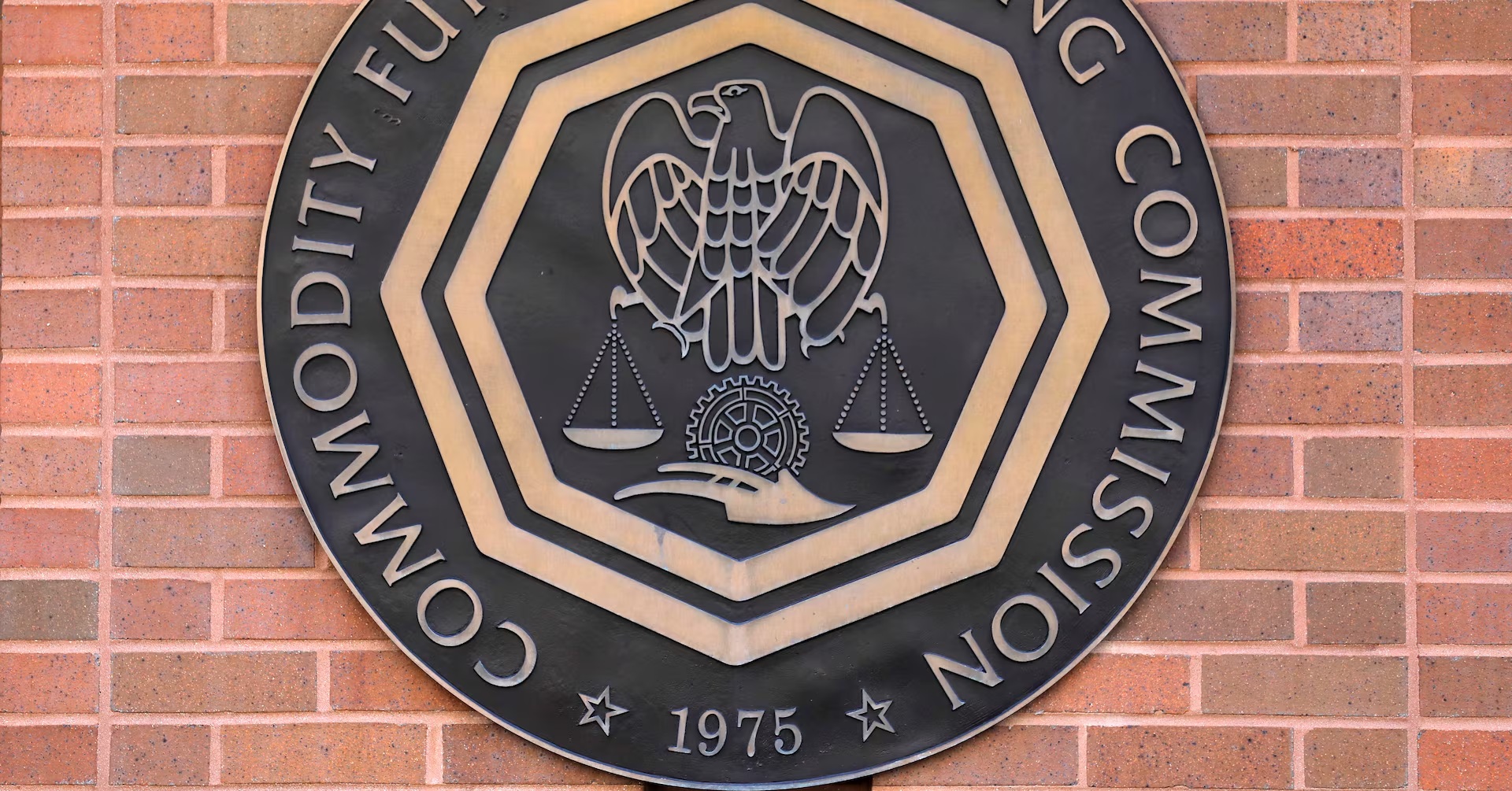
The United States may be moving closer to embracing one of the most popular products in global cryptocurrency trading: perpetual futures contracts, commonly known as Perps. Recent comments from the Chair of the U.S. Commodity Futures Trading Commission (CFTC) have signaled support for the approval of regulated perpetual futures in the American market.

Such a development could represent a significant shift in the regulatory landscape and potentially reshape the future of digital asset trading in the United States. Perpetual futures are derivative contracts that allow traders to speculate on the price movement of an asset without an expiration date.

Unlike traditional futures contracts, which settle at a predetermined time, perpetual futures remain open indefinitely as long as traders maintain sufficient margin. These products have become immensely popular on international cryptocurrency exchanges because they offer flexibility, liquidity, and leverage, making them attractive to both retail and institutional participants.

Despite their popularity globally, perpetual futures have faced regulatory hurdles in the United States.

U.S. regulators have historically taken a cautious approach toward leveraged crypto products, citing concerns about investor protection, market manipulation, and systemic risk. Many American traders have been unable to access the same range of products available in overseas markets, leading some to seek alternatives outside regulated U.S. platforms.

The CFTC Chair’s openness to regulated perpetual futures suggests a growing recognition that demand for these products is unlikely to disappear. Instead of pushing trading activity offshore, regulators may see greater value in creating a framework that allows these instruments to operate within a supervised and transparent environment.

A regulated market could provide stronger consumer protections while enabling U.S. firms to compete more effectively with international exchanges. Supporters of regulated perpetual futures argue that approval would strengthen the competitiveness of the U.S. financial system.

The global crypto derivatives market processes billions of dollars in daily trading volume, with perpetual futures accounting for a significant share of activity. Allowing U.S.-regulated exchanges to offer these products could attract capital, increase market liquidity, and encourage innovation in digital asset finance.

It could also provide institutional investors with access to sophisticated risk-management tools under familiar regulatory standards. At the same time, regulators remain mindful of the risks. Perpetual futures often involve leverage, which can amplify both gains and losses.

Excessive leverage has been linked to market volatility and large-scale liquidations during periods of sharp price movement. For this reason, any approval process would likely include strict safeguards regarding margin requirements, risk disclosures, capital standards, and market surveillance mechanisms.

The potential approval of regulated perpetual futures also reflects a broader trend in U.S. crypto policy.

Policymakers are increasingly exploring ways to integrate digital assets into existing financial frameworks rather than excluding them entirely. As the cryptocurrency industry matures and institutional participation grows, regulators face mounting pressure to provide clear rules that balance innovation with investor protection.

If the CFTC approves regulated perpetual futures, the decision could mark a turning point for the American crypto market. It would signal that regulators are willing to adapt to evolving financial technologies while maintaining oversight and accountability.

For traders, exchanges, and investors, regulated perps could open a new chapter in U.S. digital asset markets, potentially bringing greater legitimacy, transparency, and competitiveness to one of the fastest-growing segments of global finance.

AI Prediction Markets Face Pressure as Ventuals Delists OpenAI and Anthropic Contracts

0

Ventuals’ decision to close its OpenAI and Anthropic prediction markets on Hyperliquid marks a notable inflection point in the evolution of onchain synthetic exposure to artificial intelligence narratives.

The move reflects both the rapid maturation of decentralized derivatives infrastructure and the increasing sensitivity of markets that price speculative outcomes tied to frontier AI companies. While seemingly narrow in scope, the delisting highlights broader tensions between liquidity, regulatory uncertainty, and the sustainability of event-driven crypto markets.

Hyperliquid has emerged as one of the more active venues for perpetual futures and synthetic markets, enabling users to take leveraged positions on both crypto-native and macroeconomic themes. Within this ecosystem, Ventuals operated niche markets that allowed traders to express sentiment on high-profile AI firms such as OpenAI and Anthropic.

These contracts functioned less as traditional derivatives and more as probabilistic instruments, reflecting collective expectations about valuation milestones, funding events, or structural corporate developments in the AI sector.

The closure of these markets likely stems from a combination of liquidity constraints, risk management considerations, and potential legal ambiguity surrounding the trading of event-based instruments tied to private or semi-private technology companies. As AI firms like OpenAI and Anthropic remain structurally opaque.

Pricing their forward-looking outcomes introduces substantial model risk. Market operators may also face increasing scrutiny as regulators examine whether such contracts constitute unregistered derivatives or circumvent existing securities frameworks.

The withdrawal of OpenAI and Anthropic markets signals a maturing phase for onchain prediction ecosystems, where experimental instruments are increasingly tested against real-world constraints rather than purely speculative enthusiasm.

As liquidity fragments across venues, market participants are likely to migrate toward platforms with deeper order books and clearer compliance postures, particularly as institutional capital begins to intersect with decentralized derivatives infrastructure.

This shift may reduce the prevalence of niche event contracts tied to private technology firms, while simultaneously encouraging the development of more standardized, liquid benchmarks that can withstand regulatory scrutiny and cross-market arbitrage pressures. The closure also underscores how difficult it remains to translate frontier research progress into tradable financial primitives without introducing excessive ambiguity or speculative distortion.

Ventuals’ decision may be interpreted not as an isolated product adjustment but as part of a broader recalibration in how decentralized markets interface with rapidly evolving AI companies whose governance structures, capital formation pathways, and disclosure regimes remain fluid and difficult to price with precision.

This dynamic is likely to shape the next generation of prediction market design, pushing developers to prioritize standardized data feeds, verifiable event resolution mechanisms, and tighter integration with regulated financial infrastructure if they hope to attract sustained liquidity and institutional participation over time.

We may therefore be witnessing a structural transition from highly flexible, narrative-driven markets toward more disciplined, institutionally legible systems that trade off expressive freedom for durability, compliance alignment, and deeper capital efficiency. The evolution of platforms like Hyperliquid suggests that demand for synthetic exposure to real-world narratives will not disappear.

But will instead re-emerge in more regulated or structurally robust forms that can accommodate both retail speculation and institutional risk frameworks without relying on fragile or opaque market constructs over time as infrastructure, governance, and disclosure standards converge across decentralized and traditional financial systems creating more resilient and investable information markets globally over long term.