DD
MM
YYYY

PAGES

DD
MM
YYYY

spot_img

PAGES

Home Blog Page 9

Nigerian Fintech Stabyl Raises $2.7 Million to Tackle Africa’s Hidden Foreign Exchange Infrastructure Challenge

0

Stabyl, a Nigerian exchange platform that allows banks, PSPs, and traders to access deep FX stablecoin liquidity, has emerged from Stealth to raise $2.7 million in pre-seed funding.

The funding round was led by Konga, which will also become Stabyl’s first real-world implementation partner.

By leveraging established fiat capabilities through KongaPay’s licensed rails and pairing them with robust, institutional-grade crypto infrastructure, Stabyl provides predictable execution that reduces FX risk.

Although many payment companies across Africa can collect and move funds with relative ease, the process of sourcing foreign exchange before settlement remains highly fragmented.

Treasury teams often rely on manual processes, contacting banks, payment providers, and liquidity partners individually to compare exchange rates and secure liquidity.

Stabyl aims to eliminate this inefficiency through a central limit order book, where buyers and sellers of foreign exchange can automatically post and match orders in a transparent marketplace. The platform is designed to streamline FX sourcing while improving price discovery and execution speed

Notably, in the world of cross-border payments, the company has accepted this paradox that information moves instantly, but capital moves slowly. While a Payment Service Provider (PSP) can confirm a transaction in milliseconds via a chat or API, the actual settlement may take days to reflect. This delay creates what is known as “trapped capital” in modern financial markets. 

As financial technology evolves, the institutions that will enjoy the advantages of advanced technology will be those that don’t treat liquidity as a static pool but rather as something that is capable of depth and movement. 

Stabyl provides a unified layer for instant settlement and real-time price discovery by enabling its partners to move capital at the speed of information and to turn trapped float into a powerful engine for global commerce.

Co-founded by Ekeh, Schwartzman, and Michael Anyi, Stabyl, is a technology company building liquidity and settlement infrastructure for stablecoin and foreign exchange transactions.

The company’s leadership team is made up of experienced business leaders, financial analysts, and technical experts.

Stabyyl’s solution is to replace those fragmented bilateral negotiations with a central limit order book (CLOB), in which buyers and sellers of foreign exchange can automatically post and match orders.

The fintech is neither a consumer-facing app nor a cross-border payments platform. The problem it aims to solve lies at the point where financial institutions source foreign exchange before a payment can be made.

The company’s co-founder Ekeh illustrated this with the example of a large institution like Konga. He explained that when the e-commerce company needs foreign exchange, its treasury team typically reaches out to multiple banks, payment service providers, and liquidity providers to compare rates and source liquidity.

By the time approvals are received and counterparties respond, market prices may already have shifted, forcing the process to begin again or settle at a less favourable rate.

The startup disclosed that its liquidity is aggregated from participating payment service providers (PSPs) and financial institutions, and maintains its own liquidity reserves with unnamed selected partners to ensure liquidity remains available when demand exceeds natural market activity.

On Stabyl, settlement occurs across both traditional banking infrastructure and blockchain networks. For fiat transactions, Stabyl noted that it partnered with KongaPay as its official naira settlement partner. On the stablecoin settlement side, wallet infrastructure is provided by DFNS, a multi-party computation (MPC) wallet provider.

The company noted that it currently supports USDT (Tether) and USDC (USD Coin) stablecoins. Still, it maintained that its infrastructure is blockchain-agnostic, selecting networks based on cost, speed, settlement finality, and the needs of its institutional clients.

While many fintech startups compete for consumer attention with payment apps and cross-border transfer services, the platform is taking a different approach by building the infrastructure that powers the financial ecosystem behind the scenes.

Rather than serving end users directly, Stabyl is focused on solving one of the most overlooked challenges in African fintech: foreign exchange liquidity. The company’s mission is to become the liquidity backbone for Africa’s PSPs and liquidity providers.


Young People, the Next Gold Rush in Nigeria Is the Capital Market

4

Young People of Nigeria, you need to pay attention to what is coming.

Bitcoin and cryptocurrency may create pockets of wealth, and artificial intelligence will certainly reshape industries, but neither is likely to deliver the broad-based economic alpha for Nigeria in the coming decade. AI, in particular, requires enormous capital, reliable electricity, deep research ecosystems, and computational infrastructure. For now, Nigeria is more likely to participate in AI primarily at the consumer and application layers rather than as a dominant producer of foundational technologies.

But there is something else that could transform Nigeria in a profound way: the Capital Market. Interestingly, the capital market has already surpassed agriculture as the largest component of Nigeria’s GDP, yet I do not sense enough excitement among our young people. That concerns me because Nigeria’s economic evolution has historically been remarkably predictable.

If you study Nigeria’s business history closely, you will notice a pattern: roughly every decade, the economy undergoes a structural redesign driven by a new operating system. These redesigns rarely announce themselves loudly, but when they arrive, they reorder winners, redraw value chains, and quietly retire old playbooks.

In the 1990s, the new generation banks emerged with technology as their weapon. They deployed VSAT systems to connect branches, collapsed distance, and made banking largely location-agnostic. Overnight, proximity lost its power, and legacy institutions had to reinvent themselves or gradually fade.

Then came the 2000s and the GSM revolution. Mobile telephony did far more than connect calls. It rewired commerce, accelerated coordination, expanded markets, and raised national productivity. A new layer of economic energy entered the system.

The 2010s deepened that transformation. Phones ceased to be mere communication devices and became economic terminals – mini banks, mini schools, mini offices, and marketplaces in our pockets. Economic life moved into the palm of the hand.

Today, we are living through the decade of application utility. Young people are recombining APIs, stacking digital tools, and fixing frictions across payments, logistics, healthcare, commerce, and education. But the next great inflection point is already visible.

Because of the Investment and Securities Act (ISA) 2025, the 2030s will likely become Nigeria’s Capital Market Decade. ISA 2025 is one of the most consequential pieces of business legislation enacted in Nigeria in a generation. It does not merely amend regulations; it expands the imagination of what can exist within our markets. New asset classes will emerge. New instruments will be engineered. New forms of wealth will be created.

I want you to pay attention to the capital market.

WhatsApp Finally Rolls Out Usernames, Offering Users a Long-Sought Privacy Layer While Keeping Phone Numbers at Its Core

0

WhatsApp on Thursday introduced usernames, a feature users have been anticipating for years, allowing people to share their profiles and connect without revealing their phone numbers — though the Meta-owned messaging app will still require a phone number for account creation.

The rollout marks a significant evolution for the world’s most popular messaging platform, which has more than 3 billion users. Starting today, users can reserve their usernames, with the feature set to fully launch later this year. Individuals can choose any username between 3 and 35 characters, subject to WhatsApp’s policies.

The company is reserving certain usernames for top celebrities, VIPs, and organizations to prevent impersonation. Businesses and creators can also claim their existing Facebook or Instagram usernames for consistency across Meta’s ecosystem.

Users will receive a notification when the reservation option becomes available in their country. Once active, they can navigate to Settings > Account > Username to select their handle. WhatsApp is also introducing a username key that others will need to know in order to message them.

The company emphasized that usernames will not be searchable within the app. Only those who know the exact username can initiate contact. Users can turn off the feature or change their username at any time.

“When you meet someone new, whether it’s a classmate, a neighbor, or someone you met at an event, sharing your phone number can feel like a big step. Your phone number is personal, and it’s tied to so many other parts of your life,” Alice Newton-Rex, Vice President and Head of Product at WhatsApp, said in a briefing. “So usernames are designed to give you control of who gets to see your phone number in the first place.”

At present, users will need to share their username verbally or via text, as there is no QR code scanning option for contact without knowing a phone number.

Meta noted that the reservation process is necessary to avoid duplication across its massive user base. The feature gives WhatsApp parity with rivals like Telegram, Signal, and Wire, which have offered usernames for years, allowing users to keep their phone numbers private.

The introduction of usernames represents WhatsApp’s latest attempt to address growing privacy concerns while preserving the phone-number-based verification system that has been central to its security model and massive scale. By decoupling profile sharing from phone numbers, the company aims to make the app more appealing for users wary of exposing personal contact details, particularly in professional, social, or public contexts.

This change comes shortly after WhatsApp underwent a leadership transition, suggesting a renewed focus on user experience enhancements. The timing also aligns with broader industry trends, as messaging platforms face increasing pressure to offer more flexible and privacy-centric features amid heightened awareness of data security.

Analysts see the ability to link usernames across Meta’s platforms as an opportunity for businesses and creators to streamline communication and branding efforts. A uniform handle across WhatsApp, Instagram, and Facebook simplifies customer outreach and content distribution, potentially strengthening Meta’s ecosystem lock-in.

However, the feature has limitations. Without searchability or easy QR code sharing, usernames may not immediately transform how people connect on the app. Users will still need to exchange handles manually, which many believe could slow adoption in some scenarios. Additionally, the continued requirement for a phone number to create an account maintains WhatsApp’s core identity verification method, which the company argues enhances security against spam and fraudulent accounts.

Balancing Privacy, Security, and Scale

WhatsApp’s approach underpins a careful balancing act. While usernames enhance privacy for everyday interactions, the platform’s scale and reliance on phone numbers have long been credited with helping curb abuse. The company’s decision to reserve premium usernames for notable figures, which also aimed to prevent impersonation and maintain trust, has been lauded.

The move, however, is expected to have meaningful implications for user behavior. In regions where sharing phone numbers carries social or safety risks, usernames may encourage greater engagement. For global users, it offers a more modern, flexible way to connect without compromising the app’s fundamental security architecture.

As competitors like Telegram have demonstrated, username systems can coexist with phone-based verification, providing users with choice and control. WhatsApp’s implementation, while delayed compared to some rivals, benefits from the company’s vast user base and integration within Meta’s broader social ecosystem.

Cursor Launches Mobile App as AI Coding Shifts From Writing Code to Managing Autonomous Agents

0

Artificial intelligence coding startup Cursor is expanding beyond the desktop with the launch of its first mobile application, betting that the future of software development will increasingly revolve around supervising autonomous AI coding agents rather than manually writing code.

The new iOS app, announced on Monday, allows developers to create, monitor and communicate with Cursor’s AI coding agents directly from their smartphones, extending the company’s push into agentic software development just weeks after its blockbuster $60 billion acquisition by SpaceX.

Rather than replacing the desktop experience entirely, the application serves as a companion platform that enables developers to remain connected to coding projects while away from their computers. Users can launch entirely new coding agents from their phones or continue conversations with agents that were originally started on Cursor’s desktop application.

The launch builds on Cursor 2.0, unveiled in October, which marked a significant shift in the company’s strategy from AI-assisted code completion toward autonomous coding agents capable of independently handling increasingly complex software development tasks.

The AI software development industry is witnessing a transformation. Instead of using AI merely to autocomplete lines of code or answer programming questions, developers are increasingly assigning entire programming tasks to intelligent agents that can write, edit, debug and test software autonomously while human programmers focus on reviewing outputs, setting objectives and making architectural decisions.

This transition is changing not only how software is written but also where developers work. Traditionally, professional software engineers relied on powerful desktop computers equipped with multiple monitors to manage large codebases, documentation, and debugging tools simultaneously. Agentic AI is beginning to reduce that dependency because developers no longer need to constantly interact with every line of source code.

Instead, much of their work involves issuing instructions, reviewing progress and refining objectives for AI agents that execute programming tasks independently.

That workflow lends itself naturally to mobile devices. With coding agents running remotely in the cloud, smartphones increasingly function as control interfaces rather than programming workstations, allowing developers to supervise software projects from virtually anywhere.

Cursor is not alone in pursuing this vision. The company joins a growing list of leading AI developers bringing coding capabilities to mobile platforms. Both Anthropic and OpenAI have introduced mobile applications that enable users to interact with their AI coding assistants, reflecting growing demand for continuous access to AI-powered development tools.

Industry observers are describing this as the emergence of “ambient software engineering,” where AI agents work continuously in the background while developers periodically review progress instead of actively writing code throughout the day.

One of the strongest public endorsements of that shift has come from within Anthropic itself. Speaking during a recent presentation, Anthropic’s Claude Code lead Boris Cherny said the arrival of autonomous coding agents had fundamentally changed his own workflow.

“Most of my coding now is on my phone,” Cherny said. “I would have said ‘you’re crazy’ if you told me that six months ago, but yeah, here we are.”

Developer habits are quickly evolving as AI systems become more capable of independently understanding codebases, planning software changes and executing programming tasks with minimal supervision. The mobile launch also demonstrates that Cursor is continuing to execute its product roadmap despite undergoing one of the largest acquisitions in artificial intelligence history.

SpaceX’s $60 billion acquisition of Cursor signaled Elon Musk’s ambition to integrate advanced AI coding capabilities into the company’s broader software engineering ecosystem, including its work on aerospace systems, robotics, and artificial intelligence infrastructure.

Rather than slowing development, Cursor appears to be accelerating product releases. The company’s strategy aligns with a wider trend across the AI industry, which has seen leading firms competing to build not simply coding assistants but fully autonomous software engineering platforms capable of handling larger portions of the development lifecycle.

As AI models improve their ability to reason through complex programming problems, industry analysts expect developers to spend progressively less time typing code and more time defining business objectives, reviewing AI-generated work and orchestrating multiple specialized coding agents.

Cursor’s mobile application is another step toward that future, where software development becomes less about writing every line of code manually and more about directing increasingly capable AI systems that can build, modify, and maintain software on behalf of human engineers.

Baidu Shares Jump on Report Kunlunxin Could Seek Hong Kong IPO at $50 Billion Valuation

0

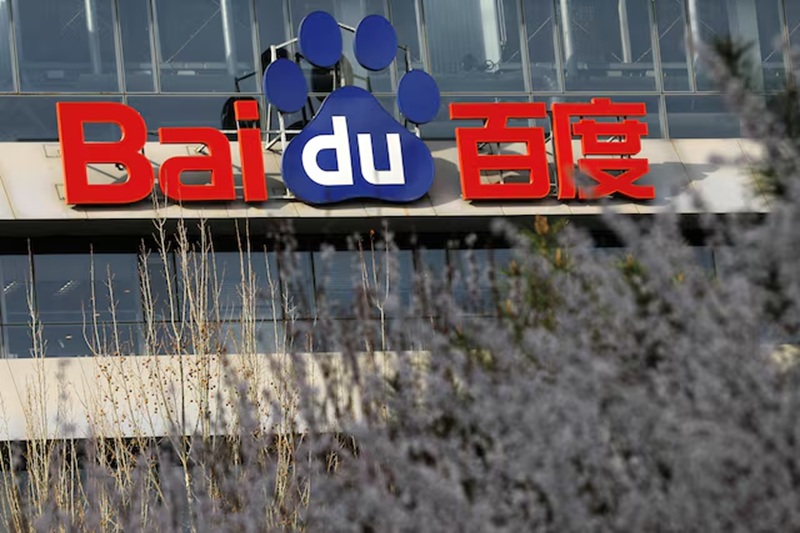
Shares of Chinese technology giant Baidu climbed more than 7% in Hong Kong on Monday after a report said its artificial intelligence chip subsidiary, Kunlunxin, is preparing for a Hong Kong initial public offering that could value the business at as much as $50 billion.

The rally comes as Chinese AI chipmakers increasingly attract investor interest amid Beijing’s push to reduce dependence on foreign semiconductor technology and challenge U.S. dominance in the rapidly expanding AI hardware market.

According to The Information, citing two people familiar with the matter, prospective investors have been asked to commit to purchasing semiconductor products worth three to seven times the value of their intended investment in Kunlunxin’s planned share sale, an unusual structure designed to demonstrate commercial demand for the company’s chips while strengthening customer relationships.

The report added that Baidu confidentially submitted a listing application for Kunlunxin to the Hong Kong Stock Exchange earlier this year, although the size, valuation, and final structure of the offering had yet to be determined.

Neither Baidu nor Kunlunxin has publicly commented on the report.

Founded in 2011, Kunlunxin was established to develop artificial intelligence processors primarily for Baidu’s own cloud computing, search, and large language model businesses.

Although Baidu continues to hold a controlling stake, the semiconductor company has increasingly operated as an independent business and has expanded sales to external customers over the past two years, positioning itself as one of China’s emerging domestic AI chip suppliers.

The company develops AI accelerators used for machine learning inference, cloud computing, autonomous driving and generative AI workloads, areas that have become strategic priorities for China following tightening U.S. export restrictions on advanced semiconductor technologies.

ByteDance, the owner of TikTok, had expressed interest in Kunlunxin’s processors as Chinese technology companies diversify chip suppliers amid restrictions on access to leading-edge U.S. AI hardware, according to a Reuters report.

The potential IPO comes as China accelerates investment across the AI value chain, spanning semiconductors, computing infrastructure, cloud services and foundation models.

U.S. export controls have significantly limited Chinese companies’ access to the most advanced AI processors produced by Nvidia and other American firms, prompting Beijing to support domestic alternatives capable of powering increasingly sophisticated AI applications.

That effort has benefited companies including Kunlunxin, Huawei’s semiconductor operations, Cambricon, and other Chinese chip developers seeking to build competitive AI computing platforms. Investor enthusiasm reflects expectations that demand for domestic AI chips will continue rising as Chinese cloud providers, internet companies and industrial users expand deployment of large language models and AI-powered applications.

China Narrowing The Technology Gap

While the United States maintains a clear lead in advanced AI semiconductors, analysts believe China is narrowing the gap.

According to Brussels-based economic think tank Bruegel, the United States currently remains ahead in what it described as the artificial intelligence “hardware stack,” encompassing the advanced semiconductors, computing infrastructure and supporting technologies required to train and deploy frontier AI models.

“Despite Chinese progress, the United States remains for now ahead in the race for dominance over the so-called artificial intelligence hardware stack – the resources and equipment, especially semiconductors, needed to run AI models,” Bruegel said in a recent report.

However, the think tank noted that China’s progress has become increasingly evident.

“The signs of Chinese catch-up are real,” Bruegel added, citing China’s growing open-source AI ecosystem, state-backed research pipeline and a sufficiently large domestic market capable of sustaining AI companies while their technologies mature.

China’s vast home market gives domestic AI hardware developers a significant advantage by providing large-scale commercial deployment opportunities even as international expansion remains constrained by geopolitical tensions.

If completed at a valuation approaching $50 billion, Kunlunxin would become one of the world’s most valuable standalone AI semiconductor companies and one of the largest technology listings in Hong Kong in recent years.

The prospective offering also denotes investor focus from consumer-facing AI applications toward the infrastructure underpinning artificial intelligence, including chips, cloud computing, networking equipment and data centers. That trend has driven soaring valuations for AI hardware companies globally as hyperscalers and technology firms continue investing hundreds of billions of dollars to expand AI computing capacity.

Spinning off Kunlunxin is expected to unlock shareholder value while providing the chipmaker with independent access to capital needed to accelerate research, manufacturing partnerships, and commercial expansion.