
DD
MM
YYYY

PAGES

DD
MM
YYYY

spot_img

PAGES

Home Blog Page 999

ETH to $2,000: Ethereum Price Chart Signals Imminent Pullback Amid Profit-Taking, But Little Pepe (LILPEPE) Is Just Getting Started

0

Ethereum (ETH), the king of smart contracts, is dancing on the edge of a key price cliff—and traders are watching closely. After surging to new local highs, ETH now shows signs of exhaustion on the charts, and the pressure from big-money profit-taking is stacking up. Analysts are calling it: a pullback to $2,000 could be on the horizon. But while ETH holders brace for a possible cooldown, another player is stealing the spotlight and capturing attention across Crypto Twitter and Telegram groups. Little Pepe (LILPEPE)—the meme-fueled, EVM-powered machine that’s been sending shockwaves through the presale scene. While Ethereum may be slowing down, LILPEPE is simply roaring its engines, and early investors are sprinting to get their bags before the currency releases for $0.003.

Ethereum Approaching $2,000: A Strategic Dip or the Calm Before the Next Storm?

After a strong push above $2,400, Ethereum is beginning to show classic pullback signals. On-chain metrics indicate that whales have been transferring substantial amounts of ETH to exchanges—over 385,000 ETH was moved in the past week alone. Historically, such a movement is often a precursor to large-scale sell-offs. Add to that rising open interest, bearish RSI divergence, and a mounting wall of resistance near $2,600, and the writing on the chart is clear: a short-term correction is very likely. If ETH drops to around $2,000–$2,200, this would align with Fibonacci retracement levels and provide a healthy consolidation range before any major upward continuation. Smart traders aren’t panicking, though—they’re simply looking for better entries. But while ETH recalibrates, something far more exciting is unfolding in the altcoin jungle.
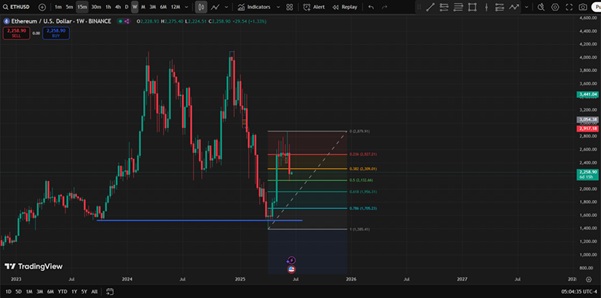
ETH’s current market outlook                 Source: Tradingview

Meanwhile, Little Pepe (LILPEPE) Is Building a Fortress of FOMO

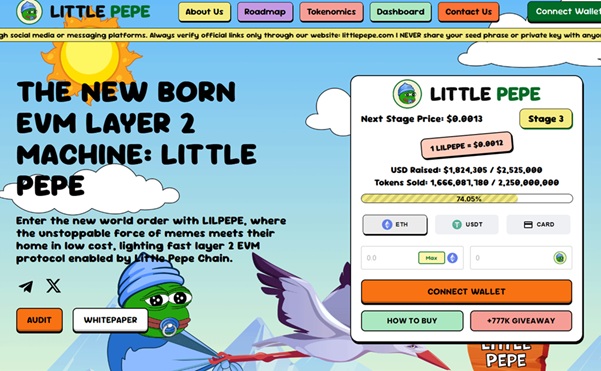
While Ethereum prepares for a breather, LILPEPE is on fire. Deep-pocketed investors are piling into this next-generation meme coin, and for good reason. Built on its own Layer 2 EVM blockchain, LILPEPE is more than just another frog-themed token—it’s a full-blown movement. At the time of writing, Stage 3 of the LILPEPE presale is already 74.01% filled, with over $1.82 million raised out of the $2.525 million target. Investors have purchased 1.66 billion out of the 2.25 billion tokens allocated for this round. Once this stage closes, the price moves up to $0.0013, inching closer to the official listing price of $0.003.
Let’s break that down:

  • Buying now at $0.0012 means you’re staring at an immediate 150% gain once LILPEPE lists.
  • Those who invested at $0.0010 are already enjoying 20% profits—and the token hasn’t even launched yet!
  • Stage 2 sold out in just two days, and if history repeats itself, Stage 3 could close at any moment.
    Buy LILPEPE at $0.0012 now before the next price jump.

A Potential 445x Gain Before 2025 Ends?

Here’s where it gets wild. Crypto analysts—and even some daring insiders—are eyeing $0.534 as a potential price target for LILPEPE by the end of 2025. That’s a 445x return from the current presale price of $0.0012. Sound insane? Maybe. But meme coins have made crazier runs before. Just ask early DOGE or SHIB holders.

LILPEPE’s $770,000 Giveaway: Yes, You Read That Right

To intensify the excitement, LILPEPE is distributing tokens valued at $770,000, with each lucky winner receiving $77,000 in LILPEPE. Enter the $770K Giveaway Here. With this kind of community-driven momentum, the project is gaining momentum rapidly across Telegram, Discord, and YouTube. Influencers are talking. Deep-pocket investors are buying. And retail traders are rushing in, desperate not to miss what could be the subsequent big meme explosion.

Final Thoughts: Rotate, Don’t Retreat

Ethereum is a solid long-term play—nobody’s denying that. But with ETH possibly heading for a dip around $2,000, many savvy investors are rotating profits into high-upside gems like LILPEPE. With its Layer 2 edge, rapid presale growth, community hype, and potential for 445x returns, LILPEPE could become 2025’s meme coin king. Have you overlooked DOGE in 2021? If you missed SHIB’s historic run. Don’t miss LILPEPE. The third stage of presale is almost complete. The next price is $0.0013, and early investors will benefit once the public listing hits $0.003. Secure your LILPEPE tokens now before it hits 100% The Ethereum dip may be your perfect signal not to exit the market but to enter a new kingdom. Enter the kingdom of frogs. LILPEPE is just getting started.


For more information about Little Pepe (LILPEPE) visit the links below:

Website: https://littlepepe.com

Whitepaper: https://littlepepe.com/whitepaper.pdf

Telegram: https://t.me/littlepepetoken

Twitter/X: https://x.com/littlepepetoken

Dollar Index Dropping To 98 May Potentially Boost Gold And Cryptocurrencies

0

The dollar index dropping to 98 suggests continued weakness in the U.S. dollar, potentially boosting assets like gold and cryptocurrencies, which often move inversely to the dollar. However, gold falling to its 50-day SMA at $3,318 indicates short-term bearish pressure, possibly testing support at this key technical level.

The Nasdaq futures forming a golden crossover (typically when the 50-day SMA crosses above the 200-day SMA) signals bullish momentum in tech stocks, which often correlates positively with crypto market sentiment. Crypto markets may see upside potential, but gold’s decline could temper enthusiasm unless it holds above $3,318.

A weaker dollar (down to 98) typically supports higher prices for dollar-denominated assets like gold, bitcoin, and other commodities, as it takes more dollars to buy them. This could fuel bullish sentiment in crypto markets, especially for bitcoin, often seen as a store of value akin to gold. However, a sustained dollar sell-off may signal economic uncertainty, potentially spurring risk-off behavior in traditional markets, which could dampen crypto gains if investors shy away from speculative assets.

Gold at 50-Day SMA ($3,318)

Gold hitting its 50-day SMA suggests a technical pullback, testing a key support level. If it holds, gold could stabilize or rebound, reinforcing its safe-haven appeal, which often aligns with crypto (e.g., bitcoin as “digital gold”). A break below this level could signal further declines, potentially dragging sentiment for alternative assets like crypto, especially if driven by broader market risk aversion.

The golden crossover (50-day SMA crossing above the 200-day SMA) is a bullish signal for Nasdaq futures, suggesting potential gains in tech-heavy stocks. Given the historical correlation between tech stocks and cryptocurrencies (e.g., bitcoin and Ethereum often track tech sentiment), this could drive positive momentum in crypto markets. However, if the crossover fails to sustain upward momentum (e.g., due to macroeconomic headwinds), it could limit crypto’s upside.

The dollar’s weakness and Nasdaq’s bullish signal point to risk-on sentiment, which typically benefits crypto. However, gold’s drop to its 50-day SMA suggests caution in safe-haven assets, potentially indicating mixed investor sentiment. Crypto markets, often caught between risk-on (tech-like) and safe-haven (gold-like) narratives, may experience volatility as investors weigh these signals.

Crypto’s reaction may hinge on whether it aligns more with tech optimism (Nasdaq) or safe-haven caution (gold). Historically, bitcoin and major altcoins tend to follow tech stock momentum during bullish phases but can decouple during risk-off periods. The Nasdaq’s golden crossover is a strong bullish cue, but gold’s test of its 50-day SMA introduces bearish risk. This divide could create uncertainty in crypto markets, where sentiment is highly sensitive to both tech and macroeconomic trends.

If gold breaks below $3,318 and the dollar continues to weaken, it could signal broader economic concerns (e.g., inflation fears or policy shifts), potentially capping crypto gains despite Nasdaq’s optimism. A weaker dollar and strong Nasdaq futures could drive capital into cryptocurrencies, especially if investors view them as hedges against dollar depreciation or tech-like growth assets. Bitcoin and Ethereum could rally, with altcoins potentially following.

If gold’s drop signals a broader risk-off move and Nasdaq’s bullish signal falters (e.g., due to macro pressures like interest rate hikes or geopolitical tensions), crypto could face selling pressure alongside traditional markets. The mixed signals (dollar down, gold at support, Nasdaq bullish) suggest crypto markets may see choppy trading until clearer trends emerge. Key levels to watch include gold’s 50-day SMA and bitcoin’s reaction to Nasdaq movements.

Beyond traditional markets, crypto sentiment could be swayed by regulatory news, institutional adoption, or network developments (e.g., Ethereum upgrades or bitcoin ETF flows). The dollar’s decline could reflect expectations of looser monetary policy or economic slowdown. If the Federal Reserve signals rate cuts or pauses, it could boost both crypto and tech stocks. Conversely, tighter policy could exacerbate gold’s decline and pressure crypto.

Toncoin Makes Headlines With Listings, But Lightchain AI Makes Headlines With Real Presale Numbers

0

Toncoin may be capturing headlines through exchange listings, but Lightchain AI is earning attention with something far more substantial—real presale performance. With all 15 stages successfully completed, Lightchain AI has launched its Bonus Round at a fixed token price of $0.007, already attracting nearly $21 million in early contributions.

This isn’t just a presale—it’s a statement of traction backed by actual infrastructure. From its AI-powered virtual machine to strategic builder incentives, Lightchain AI is drawing in serious attention from wallets that matter. In a sea of listing hype, it’s Lightchain AI’s concrete numbers and ecosystem momentum that are commanding the spotlight.

Toncoin Grabs Attention Through New Exchange Announcements

TONCOIN (TON) has made its way in the news with the exchange news circulating to the chagrin of other exchange who failed us as?day traders. By far, the token was added to Zondacrypto on April 10, 2025,?as trading pairs TON/USDC and TON/PLN, increasing its market coverage.

Its listing on Binance?on August 8, 2024, for example, was accompanied with a 9% rise in price, further indicating the influence of large exchange listings on Toncoin’s market performance. These are important developments that show how Toncoin is?becoming established as a serious player in cryptocurrency (this means more seriousness from investors as well).

Lightchain AI Impresses With Over $21M Raised Across 15 Presale Stages

Lightchain AI has impressed the market by raising over $21 million across 15 structured presale stages, demonstrating sustained investor confidence. Now in its Bonus Round, the project shifts focus toward full ecosystem activation.

DeFi partnership onboarding is underway, with protocols integrating Lightchain’s infrastructure for advanced AI and DeFi use cases. Decentralized validator and contributor nodes will secure and scale the network post-mainnet, emphasizing resilience and decentralization.

Public GitHub repositories will soon go live, opening protocol development to global contributors and researchers. Meanwhile, the Meme Launchpad and core ecosystem tools are launching, providing meme coin creators with smart contract automation, grant access, and liquidity support. These concrete developments show that Lightchain AI is not just raising funds—it’s deploying real infrastructure.

From Listings to Loyalty — How Lightchain AI is Redefining Market Trust

Lightchain AI isn’t just crunching numbers—it’s building trust that sticks. By moving beyond basic listings to creating deep, lasting loyalty, it’s setting a new standard. With 15 major milestones achieved and $21 million raised, this is more than just hype—this is real progress with substance.

The tokenomics speak for themselves; 40% allocated to presale, 28.5% reserved for staking rewards, and no more team-locked tokens. It’s all about fairness and transparency. Combine that with cutting-edge sharding technology for unbeatable scalability and performance, and you’ve got a system built for speed, equity, and a thriving community.

Lightchain AI isn’t just another platform—it’s a movement. Join a future built on trust, progress, and a vision that lasts.

https://lightchain.ai

https://lightchain.ai/lightchain-whitepaper.pdf

https://x.com/LightchainAI

https://t.me/LightchainProtocol

Lightchain AI Kicks Off Bonus Round While Solana Loses Steam After Its Latest Ecosystem Push

0

Solana’s latest ecosystem push is losing steam, with momentum fading after initial excitement and technical hurdles emerging. In contrast, Lightchain AI is kicking off its Bonus Round, offering investors a new chance to participate in a project gaining strong traction. Having raised $20.9 million in its presale at a fixed token price of $0.007, Lightchain AI is attracting increasing interest from builders, traders, and whales alike.

Its intelligent blockchain infrastructure and focused roadmap provide a compelling alternative for those seeking growth beyond Solana’s cooling enthusiasm. As Solana slows, Lightchain AI’s Bonus Round marks the beginning of a fresh wave of momentum and opportunity.

Solana’s Ecosystem Growth Faces a Slowdown After Recent Gains

The Solana ecosystem, with?strong long-term growth prospects, is currently trending downward after recent gains. The total value locked (TVL) in Solana’s decentralized finance (DeFi) protocols was $10.9 billion in May 2025, which is more than on Ethereum?Layer 2 solutions. This jump was spurred on by activity in decentralized?exchanges and volumes in stablecoins.

But the analyst also warned that the use case of riding meme coin trading, a big part of the recent action, may have topped out, leading to a fall in engagement on?the platform and in the capital coming in.

In addition, there have been some concerns regarding the scalability of network and security weaknesses in smart contracts, which?can affect future growth prospects. Although institutional interest still exists, the future success of the ecosystem will be reinforced by more diverse use cases and the resolution?of these issues.

Lightchain AI Launches Bonus Round to Accelerate Presale Momentum

Lightchain AI has launched its Bonus Round to accelerate presale momentum, offering tokens at a fixed price of $0.007. This phase is attracting increased attention as DeFi partnership onboarding progresses, expanding the protocol’s reach and utility.

Core infrastructure includes decentralized validator and contributor nodes, enabling scalable AI-driven transactions and computations. Anticipation grows for the public repository release, which will provide full transparency and access to the codebase. Additionally, the Meme Launchpad and ecosystem tools are set to go live, supporting the launch of the first meme coin projects with native tooling, grant programs, and liquidity incentives.

Complementing this is a comprehensive Developer Portal featuring technical documentation, APIs, and SDKs—empowering builders to innovate confidently within Lightchain’s AI-powered ecosystem.

Momentum Shifts—Lightchain AI on Rise as Solana Stumbles

With Solana grappling with congestion and latency issues, Lightchain AI is stepping into the spotlight as a game-changing alternative built for speed, scalability, and efficiency.

What sets Lightchain AI apart? Its dynamic gas optimization adjusts transaction fees based on complexity, keeping operations cost-effective. The low-latency design powers real-time AI processing, perfect for decentralized apps that demand fast data handling. Plus, its cross-chain infrastructure ensures seamless interoperability, making it a versatile choice for developers and traders alike.

As other networks struggle with limitations, Lightchain AI is proving to be a standout contender, offering high-performance solutions and reliable decentralized AI technology. Ready to bet on the future? Lightchain AI is making bold moves you don’t want to miss.

https://lightchain.ai

https://lightchain.ai/lightchain-whitepaper.pdf

https://x.com/LightchainAI

https://t.me/LightchainProtocol

Judge Blocks Trump Administration’s Freeze on $5bn EV Charger Funds, Citing Illegal Policy Shift

0

A federal judge in Seattle has temporarily blocked President Donald Trump’s administration from halting billions in electric vehicle (EV) infrastructure funding allocated to 14 states under a program established during the Biden presidency.

In a ruling issued Tuesday, U.S. District Judge Tana Lin sided with the states, stating they are likely to succeed in their lawsuit against the Department of Transportation (DOT), which abruptly froze disbursement from the $5 billion National Electric Vehicle Infrastructure (NEVI) program earlier this year. The program, a key part of former President Joe Biden’s Inflation Reduction Act, was designed to fund the nationwide buildout of EV charging stations.

The legal challenge was brought by a coalition of Democratic-led states, including California, New York, Illinois, and Washington, who accused the Trump administration of illegally suspending the program and rescinding previously approved state-level EV infrastructure plans without lawful justification.

“This ruling reaffirms that the federal government cannot abruptly derail legally established programs and betray commitments made to states and the public,” said California Attorney General Rob Bonta, one of the lead plaintiffs. “The administration cannot dismiss programs illegally, like the bipartisan Electric Vehicle Infrastructure Formula Program, just so that the President’s Big Oil friends can continue basking in record-breaking profits.”

Judge Lin’s injunction gives the administration seven days before it takes effect, giving the government a window to appeal the decision to a higher court and potentially seek a stay on the order.

The ruling applies to 14 plaintiff states, but excludes three others—District of Columbia, Minnesota, and Vermont—which also joined the suit but did not present sufficient evidence of imminent harm resulting from the funding freeze.

Judge Lin found that the states had relied on federal commitments to plan, launch, and co-finance their EV charging infrastructure, investing their own resources in anticipation of federal cost-sharing. She ruled that revoking those funds midstream caused irreparable harm, disrupting state-level projects aimed at improving EV access, reducing carbon emissions, and fostering clean energy economies.

Trump’s Policy Shift Reignites Climate Funding Tensions

The lawsuit follows a broader push by the Trump administration and Republican-led Congress to roll back federal support for electric vehicles and repeal climate-focused provisions enacted under Biden.

In February, the Department of Transportation under Trump rescinded approvals for state EV charger deployment plans and effectively paused the NEVI program, arguing that the administration was “reassessing” all federally funded EV-related initiatives.

The administration has since taken further steps to dismantle climate-focused transportation policies. In March, the General Services Administration instructed agencies to deactivate EV chargers at federal buildings unless deemed “mission critical” and barred the installation of new charging infrastructure. In May, the House passed a bill seeking to eliminate the $7,500 tax credit for new EVs and repeal federal vehicle emissions rules designed to spur EV manufacturing.

Most recently, California and 10 other states filed a separate lawsuit challenging Congress’s repeal of the state’s 2035 zero-emission vehicle mandate and strict emissions rules for heavy-duty trucks, a repeal viewed as a win for fossil fuel interests and a blow to states’ environmental autonomy.

The plaintiff states argued that freezing the EV infrastructure funds could undermine U.S. climate goals, disrupt state green economies, and slow down the transition to zero-emission transportation at a time when global investment in EVs and renewables is rapidly accelerating.

In their complaint, they indicated that the Trump administration’s withholding of the funds will devastate the ability of states to build the charging infrastructure necessary for making EVs accessible to more consumers, combating climate change, reducing other harmful pollution, and supporting the states’ green economies.

With Judge Lin’s ruling, the Biden-era funding plans remain alive—at least for now—but the broader legal and political battle over America’s clean energy future appears far from over.

The White House and Department of Transportation have not yet issued formal responses to the ruling.