

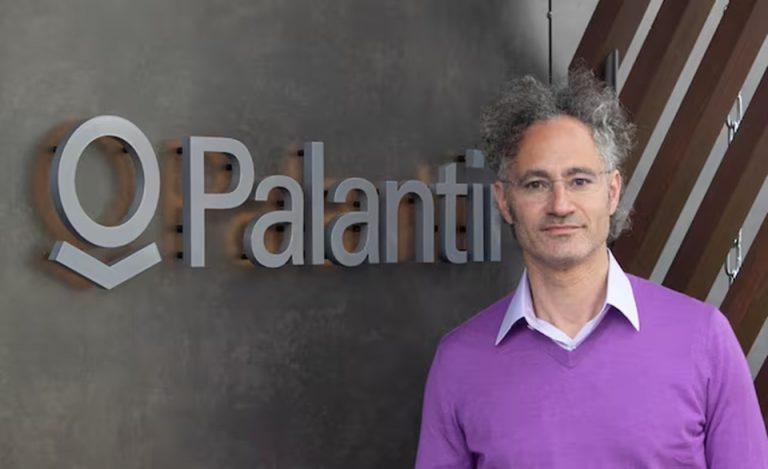
Palantir Technologies has secured a landmark contract with the U.S. Army worth up to $10 billion, in what is shaping up to be one of the most significant government software deals of the decade.
The agreement is aimed at consolidating and modernizing the military’s digital operations and will span the next ten years.
Under the terms of the arrangement, Palantir will replace 75 existing contracts with a single enterprise deal designed to streamline software procurement, reduce bureaucratic friction, and increase agility across the Army’s data infrastructure. The deal forms what the Army calls a “comprehensive framework for its future software and data needs,” providing not just a roadmap for digital modernization, but also reducing contract-related fees and shortening procurement timelines.
Register for Tekedia Mini-MBA edition 20 (June 8 – Sept 5, 2026).
Register for Tekedia AI in Business Masterclass.
Join Tekedia Capital Syndicate and co-invest in great global startups.
Register for Tekedia AI Lab.
According to the U.S. Army, the new framework will allow for a modular procurement structure, enabling military agencies to buy mission software on demand—an arrangement that eliminates rigid procurement cycles and offers greater financial and operational flexibility. The Army says the contract is part of a broader strategy to modernize operations by relying on artificial intelligence and integrated data systems to anticipate and respond to threats more effectively.
The deal marks another milestone in Palantir’s growing influence in U.S. national security circles, particularly under President Donald Trump’s administration, where cost-cutting and technological modernization have been key priorities. Trump’s Department of Government Efficiency has slashed funding for outdated programs while pivoting toward AI-driven platforms, a shift that has strongly benefited private-sector partners like Palantir.
CEO Alex Karp, a longstanding advocate of U.S. national interests and public-private collaboration on AI, said the contract highlights the increasing role of software in warfare. “Software is now as essential as bullets,” Karp said earlier this year, when the company delivered the first two AI-powered systems under its $178 million defense contract.

Palantir’s role in military transformation is part of a larger pattern. Defense contracts are emerging as a key revenue stream for AI firms, with competition intensifying as governments ramp up spending to keep up with rival nations. The U.S. Department of Defense has already expanded its Maven Smart Systems program—an initiative to infuse AI into battlefield intelligence—by an additional $795 million, with Palantir as a lead contractor.
Other tech giants are also benefiting from this surge. Anduril Industries recently won a contract with the U.S. Special Operations Command worth up to $1 billion to provide AI-driven surveillance and autonomous systems. Anthropic has partnered with Palantir and AWS to embed its Claude AI models within classified environments for intelligence and defense analysis. Some of these models operate at the Pentagon’s Impact Level 6 (“secret” clearance) environment.
The U.S. Department of Defense’s Chief Digital & Artificial Intelligence Office (CDAO) has awarded up to $200?million contracts each to OpenAI, Anthropic, Google, and Elon Musk’s xAI to prototype “agentic AI” capabilities tailored for warfighting, logistics, intelligence, and enterprise operations.

Meanwhile, Microsoft and Amazon are participating in the Pentagon’s Joint Warfighting Cloud Capability (JWCC), a $9 billion program to upgrade cloud computing and AI capabilities across all branches of the military. In May, Scale AI secured a $250 million contract to provide data labeling services and AI model testing for the defense department.
Palantir’s new contract reflects the increasing dependence of modern militaries on commercial AI and software solutions. As warfare shifts toward digital and data-heavy strategies, AI companies are rapidly becoming central players in defense planning, turning battlefield intelligence, logistics, and operations into a race for computing superiority.
Shares of Palantir have more than doubled this year, buoyed by growing investor confidence in its government portfolio and expanded AI footprint.