

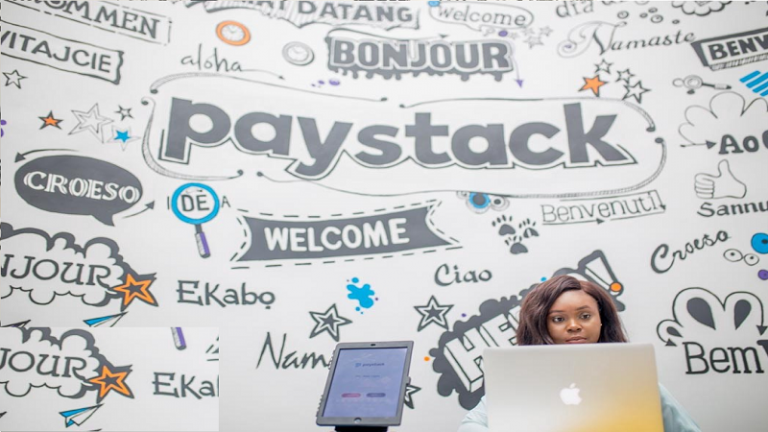
African fintech giant Paystack has announced the launch of The Stack Group (TSG), a new parent holding company that oversees Paystack and a family of ventures focused on building the technology to drive African ambition.
These ventures include Paystack, Zap, Paystack Microfinance Bank (MFB), and TSG Labs, a venture studio focused on emerging technologies such as artificial intelligence.
Under the new structure:
Register for Tekedia Mini-MBA edition 20 (June 8 – Sept 5, 2026).
Register for Tekedia AI in Business Masterclass.
Join Tekedia Capital Syndicate and co-invest in great global startups.
Register for Tekedia AI Lab.
-
Paystack will continue to focus on merchant payments.
-
Zap will innovate in consumer payments.
-
Paystack Microfinance Bank will operate within the banking and credit infrastructure space.
-
TSG Labs will explore emerging technologies and develop new products, both within and beyond the financial services sector.
Paystack CEO Shola Akinlade stated that the creation of TSG reflects a broader vision for the future, noting that years of working with thousands of African businesses have revealed deep structural gaps that go beyond payments.
In his words,
“The launch of TSG signals a larger scope of ambition for us and sets the tone for the next decade of our company. Having worked with thousands of companies across the continent since 2016, it is clear that there are significant opportunities to support businesses beyond payments, and TSG enables us to address the challenges African companies face. Thank you to the Stripe team for their continued belief in Africa’s potential and our ability to create transformative technology companies for the continent, and beyond.”

This larger scope of ambitions comes with a new ownership structure, pending regulatory approvals. TSG will have 3 founding shareholders which include; Stripe, Shola Akinlade, and Paystack employees, highlighting a long-term commitment to internal ownership and innovation.
Notably, the launch of TSG follows the recent rollout of Paystack MFB in Nigeria, following its acquisition of Ladder Microfinance Bank. The microfinance bank will allow the group to internalize core financial rails and offer compliant banking and credit infrastructure to over 300,000 Nigerian merchants. This vertical integration enables Paystack to build end-to-end money movement solutions, strengthening its ability to serve African businesses more holistically.
Founded in 2015, Paystack began with a simple mission: to help African businesses get paid. The company was accepted into Y Combinator in 2016, received early-stage funding in Silicon Valley, and publicly launched later that year. By 2020, it was serving over 60,000 businesses and was acquired by Stripe for over $200 million, the largest startup acquisition from Nigeria at the time and Stripe’s biggest ever.

Since its acquisition by Stripe, Paystack has recorded 12x growth in payment volume. Today, the fintech giant is licensed and operational in Nigeria, Ghana, Kenya, Côte d’Ivoire, and South Africa, with regulatory approvals in Egypt and Rwanda, covering nearly 46% of Africa’s GDP.
Outlook
The launch of The Stack Group marks a strategic shift that could redefine Paystack’s role in Africa’s digital economy. Rather than remaining solely a payments company, TSG positions itself as a platform for building and scaling multiple technology businesses across sectors.
By internalising financial infrastructure through Paystack MFB, experimenting with emerging technologies via TSG Labs, and expanding into consumer and merchant solutions, the group is building a tightly integrated ecosystem. This could give it a strong competitive advantage in a continent were fragmented systems often slow innovation.