

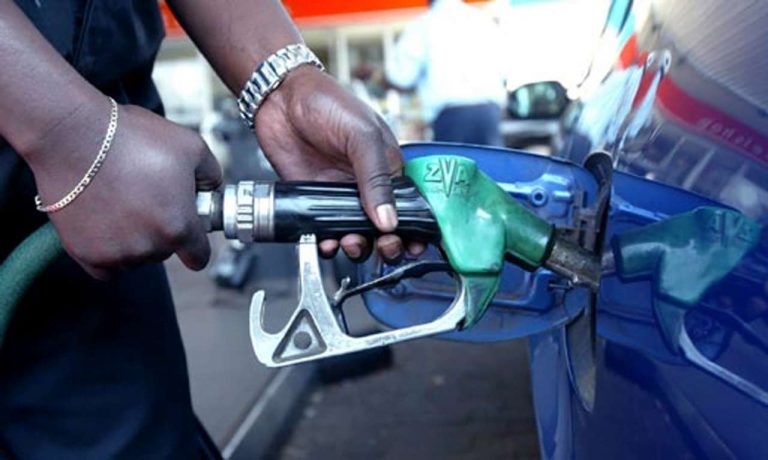
The Petroleum Products Retail Outlets Owners Association of Nigeria (PETROAN) has warned that the pump price of Premium Motor Spirit (PMS) could surge to nearly N2,000 per liter if tensions in the Middle East continue to disrupt global oil supply chains.
The association said Nigeria must urgently accelerate domestic refining to shield the economy from escalating international petroleum market shocks triggered by the conflict involving Israel, the United States, and Iran.
PETROAN’s National President, Billy Gillis-Harry, delivered the warning in Port Harcourt while presenting a keynote address titled “Deconstructing Energy Trilemma” at an event organized by the Department of Petroleum Economics and Policy Studies at Ignatius Ajuru University of Education.
Register for Tekedia Mini-MBA edition 20 (June 8 – Sept 5, 2026).
Register for Tekedia AI in Business Masterclass.
Join Tekedia Capital Syndicate and co-invest in great global startups.
Register for Tekedia AI Lab.
The remarks were contained in a statement signed by the association’s National Public Relations Officer, Dr. Joseph Obele.
According to PETROAN, the conflict in the Middle East is already exerting significant pressure on global oil markets, with sustained drone and missile attacks threatening critical energy infrastructure and major oil shipping routes.
The association said the resulting uncertainty around global supply has pushed petroleum prices higher internationally and is beginning to transmit directly into Nigeria’s domestic fuel market.

Before the latest escalation in the conflict, PMS sold at around N774 per liter. The price has since climbed above N1,000 per liter, representing an increase of roughly 30 percent. Automotive Gas Oil (AGO), or diesel, has risen even faster. The product previously sold for about N950 per liter but now trades above N1,400 per liter, a jump of nearly 49 percent.
Gillis-Harry warned that if the geopolitical crisis persists and global crude supply tightens further, PMS could approach N2,000 per liter, while diesel may climb toward N3,000 per liter.
The warning highlights Nigeria’s continued exposure to global petroleum price volatility despite being one of Africa’s largest crude oil producers. Although the country exports crude oil, it still depends heavily on imported crude and refined petroleum products due to years of underperforming state-owned refineries.

In a deregulated downstream market, international price movements now translate more quickly into domestic pump prices. Brent crude futures have already surged to around $120 per barrel amid fears of supply disruptions tied to attacks on oil facilities and the potential escalation of hostilities in the Middle East.
Market analysts say sustained disruptions in the region could tighten global crude supply and drive prices even higher, especially if key shipping lanes such as the Strait of Hormuz face security threats.
Call To Revive Domestic Refineries
PETROAN said strengthening local refining capacity remains the most effective way for Nigeria to cushion the impact of international oil price swings.
The association urged the Group Chief Executive Officer of Nigerian National Petroleum Company Limited (NNPC Ltd.), Bayo Ojulari, to prioritize the immediate resumption of operations at key state refineries. It specifically called for accelerated completion of rehabilitation work at the Area 5 plant in the Port Harcourt Refinery, as well as the Warri Refinery.
According to the association, operational domestic refineries would reduce Nigeria’s reliance on imported refined products and provide a buffer against global supply disruptions.
Gillis-Harry added that state-owned refineries that process domestically produced crude are less vulnerable to international supply chain disruptions than privately operated facilities that rely on imported crude feedstock.
Inflation And Economic Risks
PETROAN warned that further increases in fuel prices would deepen Nigeria’s economic strain by driving inflation, raising transportation costs, and increasing the price of goods and services.
PMS remains the dominant fuel for transportation across the country, while diesel is critical for manufacturing, logistics, and electricity generation in industries that rely on diesel-powered generators.
A sustained spike in both fuels could therefore ripple across nearly every sector of the economy. The association said prolonged high energy costs could also lead to job losses in energy-intensive sectors and further weaken consumer purchasing power.
Nigeria’s petroleum regulator has already acknowledged that fuel prices are now driven largely by global market dynamics. The Nigerian Midstream and Downstream Petroleum Regulatory Authority (NMDPRA) said fluctuations in pump prices are a direct result of the country’s fully deregulated downstream petroleum sector.
The authority’s spokesperson, George Ene-Ita, said the pricing changes reflect the supply-and-demand dynamics typical of open fuel markets.
“Nigeria has been operating a fully deregulated downstream petroleum regime since the inception of the current administration. Therefore, pump price vagaries are purely a result of market dynamics,” he said.
Dangote Refinery And Crude Supply Challenge
Even Nigeria’s newest refining asset, the $20 billion Dangote Petroleum Refinery in Lagos, faces supply constraints that limit its ability to stabilize the domestic fuel market. The refinery requires between 13 and 14 cargoes of crude oil each month to operate at full capacity, but NNPC currently supplies only about five cargoes monthly.
As a result, the refinery has had to source additional crude from international traders, often at a premium price because of heightened geopolitical tensions and rising global crude benchmarks.
Industry officials said the refinery has absorbed about 20 percent of the recent price increase to cushion the market, but the remaining costs have been passed on to fuel marketers and eventually consumers. Oil dealers have also reported temporary pauses in PMS loading at the Lekki facility, fueling speculation about additional price adjustments.
Against that backdrop, the federal government, through the Nigerian National Petroleum Company Limited, took steps to secure crude oil supply for the Dangote Petroleum Refinery via third-party international traders to sustain local refining operations.
Meanwhile, major global economies are exploring emergency measures to contain the oil price surge.
Finance ministers from the Group of Seven (G7) countries are considering a coordinated release of crude from strategic reserves managed by the International Energy Agency.
The move is aimed at stabilizing global supply if disruptions linked to the Middle East conflict worsen.
Analysts say the crisis lends credence to the calls for urgent building of a resilient domestic energy system capable of insulating the Nigerian economy from geopolitical shocks.