

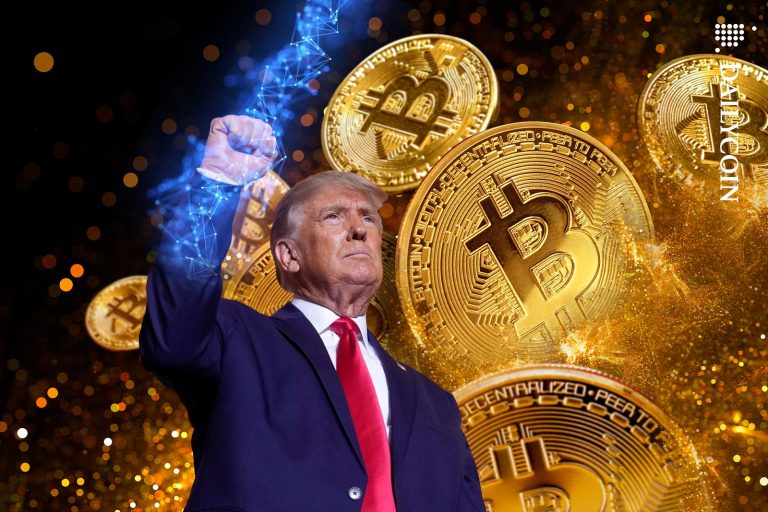
President Donald Trump has repeatedly pledged to end what he describes as Joe Biden’s “war on cryptocurrency” if elected, a stance he emphasized during his 2024 presidential campaign and has continued to highlight following his victory. These narrative frames Biden’s administration as hostile to the crypto industry, citing aggressive regulatory actions, while positioning Trump as a pro-crypto advocate aiming to foster innovation and make the United States a global leader in digital assets.
Under Joe Biden, the cryptocurrency industry faced significant regulatory scrutiny, which Trump and crypto advocates have labeled a “war.” Key actions include: The Securities and Exchange Commission (SEC), led by Chair Gary Gensler, pursued over 100 enforcement actions against crypto firms, including major exchanges like Coinbase and Binance, alleging violations of securities laws. Gensler’s skepticism—evidenced by his remarks calling crypto a field where leading figures end up “in jail or awaiting extradition”—set a tone of strict oversight aimed at curbing fraud and protecting consumers.
Operation Choke Point 2.0: Industry leaders coined this term to describe perceived efforts by Biden-era bank regulators to discourage financial institutions from servicing crypto businesses, echoing a prior Obama-era initiative targeting risky sectors. This led to banking challenges for exchanges like Binance.US, culminating in its 2023 suspension of USD services.
Register for Tekedia Mini-MBA edition 20 (June 8 – Sept 5, 2026).
Register for Tekedia AI in Business Masterclass.
Join Tekedia Capital Syndicate and co-invest in great global startups.
Register for Tekedia AI Lab.
Proposed Taxes and Rules: Biden’s administration pushed for measures like a 30% tax on crypto mining energy use to address environmental concerns and IRS rules treating wallet developers as brokers, moves seen by critics as stifling innovation. These policies, intended to mitigate risks like money laundering and financial instability, were interpreted by the crypto community as an existential threat, driving Trump’s rhetoric of a “slow and painful death” for the industry under Biden.
Trump’s stance marks a dramatic shift from his earlier skepticism—dismissing Bitcoin in 2019 as “not money” and “based on thin air”—to a full embrace by 2024. During his campaign, he made bold promises:
Ending the “War”: Trump vowed to halt Biden’s regulatory crackdown, declaring, “I will end Joe Biden’s war on crypto,” in speeches like his June 2024 address in West Palm Beach, Florida, and posts on Truth Social. He positioned this as a contrast to Biden’s policies, which he claimed favored adversaries like China.
U.S. Crypto Leadership: He pledged to ensure “the future of crypto and Bitcoin will be made in America,” including plans for a national digital asset stockpile using seized cryptocurrencies, a concept he floated to prevent government sell-offs that depress prices. Trump promised to fire Gensler (though the president lacks direct authority to do so) and rescind restrictive SEC guidance like SAB 121, which complicates banks holding crypto. Post-election, he signed an executive order on January 23, 2025, creating a crypto advisory council to draft new regulations and explore the stockpile idea.

Industry Support: His campaign accepted crypto donations, and he courted industry leaders, raising significant funds—nearly half of 2024’s corporate donations came from crypto sources, per some estimates.
Since winning the presidency on November 5, 2024, Trump has moved swiftly. His January 2025 executive order signals intent to overhaul U.S. crypto policy, cheered by industry figures like Anchorage Digital’s Nathan McCauley as a “sea change.” Appointments like Paul Atkins—a crypto-friendly former SEC commissioner—as SEC chair further underscore this shift, contrasting with Gensler’s tenure. Bitcoin’s surge past $100,000 in December 2024 reflects market optimism tied to these developments.
Trump’s narrative taps into a growing political divide. Biden’s allies defend their approach as balancing innovation with consumer protection, while Trump frames it as stifling American competitiveness. Critics argue his deregulation could invite fraud—recalling FTX’s 2022 collapse—yet supporters see it as a chance to reclaim U.S. dominance in a trillion-dollar industry. Whether Trump fully delivers remains uncertain; executive orders can signal intent, but lasting change often requires Congressional action, and his first term showed mixed crypto engagement.

In short, Trump’s pledge to end Biden’s “war on crypto” is both a critique of past regulation and a promise of a crypto-friendly future, already influencing markets and policy as of February 21, 2025. Whether it’s sustainable or merely campaign hype will hinge on execution. What do you think—will this shift hold, or is it just political theater?