

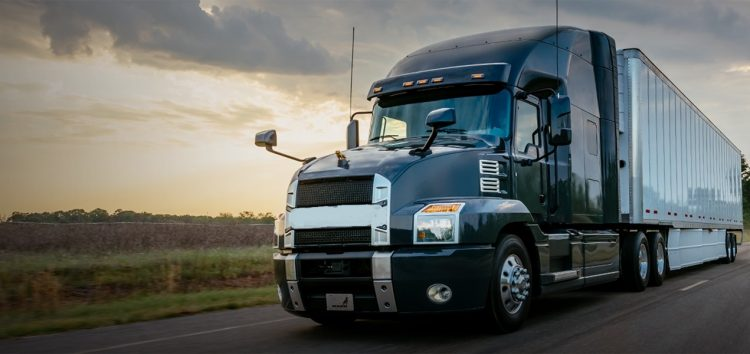
Daimler Truck, the world’s largest commercial vehicle manufacturer, reported a significant decline in its third-quarter financial performance primarily due to ongoing weakness in the North American market.
The company’s adjusted earnings before interest and taxes (EBIT) dropped 40% year-over-year to €716 million, while revenue fell 13% to €11.45 billion. Global unit sales also decreased 15% to 98,009 vehicles from 114,917 in the same period of 2024.
Key factors contributing to the downturn include a cautious “wait-and-see” mode among North American customers amid a weak freight environment and regulatory uncertainties. The Trucks North America segment, which includes brands like Freightliner and Western Star, saw operating profit plummet 64% to €257 million, with orders down 29% to 26,168 units.
Production in the region declined 42% to 28,108 units. In contrast, the Mercedes-Benz Trucks division benefited from stronger European and Latin American sales, boosting its EBIT to €283 million from €57 million a year earlier. Sales of zero-emission vehicles rose sharply by 175% to 1,833 units, signaling progress in electrification efforts.
Register for Tekedia Mini-MBA edition 20 (June 8 – Sept 5, 2026).
Register for Tekedia AI in Business Masterclass.
Join Tekedia Capital Syndicate and co-invest in great global startups.
Register for Tekedia AI Lab.
Despite the quarterly setback, Daimler Truck maintained its full-year 2025 guidance, projecting 410,000–440,000 unit sales, €44–47 billion in industrial business revenue, and an adjusted return on sales of 7–9%. Net profit for the quarter fell 27% to €458 million. The company recently unveiled its “Stronger 2030” strategy and announced a €2 billion share buyback program over two years.
This performance underscores broader challenges in the global truck sector, including softening freight demand and geopolitical pressures, though European recovery provides some offset.
Electric and Combustion Car Prices Converge in Germany, Study Finds
A recent analysis by automotive expert Ferdinand Dudenhöffer highlights a narrowing price gap between electric vehicles (EVs) and internal combustion engine (ICE) cars in Germany, with average discounts now nearly identical at around 17% for both categories as of August 2025.

This convergence is driven by rising list prices and reduced discounts for ICE vehicles, coupled with falling list prices and increased incentives for EVs. In January 2025, EV discounts trailed ICE by three percentage points, but promotional efforts and production efficiencies have accelerated parity.
The global truck market, valued at approximately USD 7.5–7.9 trillion in 2024, is projected to grow modestly at a CAGR of 7–11% through 2034, driven by e-commerce and logistics demand.
However, 2025 forecasts indicate a slowdown, with medium- and heavy-commercial vehicle (MHCV) sales expected to decline 1.4–1.7% year-over-year, totaling around 7.08 million units. This uneven recovery stems from post-pandemic supply normalization, regional disparities, and structural shifts.

The trend aligns with broader market data: New car list prices in Germany rose 6.9% year-over-year in the first half of 2025, amid higher production costs and subsidy reductions, yet EV registrations surged 22.7% to support a 4.7% overall market contraction.
Industry reports project full price equality for many models before 2030, potentially as early as 2025 for select segments, aided by tightening EU CO2 fleet regulations. However, challenges persist—EV average transaction prices climbed to €52,700 in late 2024 with slight rises into 2025, and residual values for battery EVs lag at 37.1% after three years versus 49% for ICE cars.
Global freight volumes remain subdued due to softening trade, high interest rates despite expected cuts, and inflation, leading to cautious fleet investments. North America, a major market, faces a 14–20% drop in Class 8 truck sales, with production down 42% in Q3 2025.
Europe sees sluggish GDP growth 0.7% in Western Europe, while China’s MHCV sales stagnate at ~1.03 million units amid trade disputes. Replacement cycles are delayed; truck fleets have aged since COVID-19, exacerbating future demand volatility.
This shift could boost EV adoption, especially as manufacturers ramp up affordable models to meet 2030 targets of 15 million EVs on German roads, though infrastructure gaps and budget-segment penetration remain hurdles.