

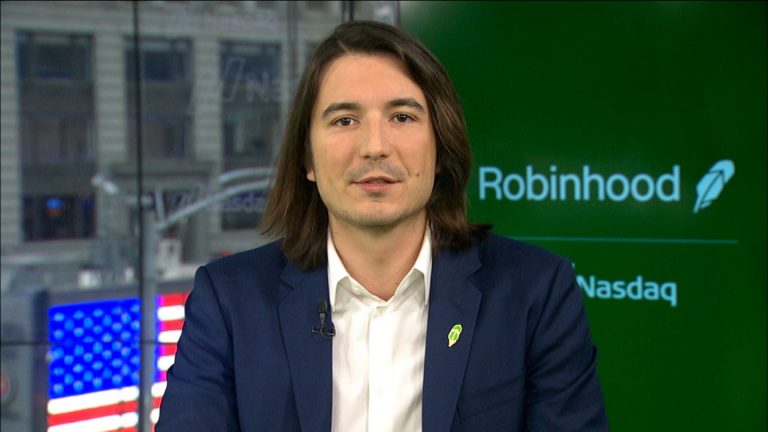
Robinhood Markets (HOOD) reported Q1 2026 earnings after the bell on April 28, 2026, and the stock dropped roughly 7-10%+ in after-hours trading with some reports of further weakness into the next session.
Total net revenue: $1.07 billion, up 15% YoY but missing consensus ~$1.14 billion. Diluted EPS: $0.38, up 3% YoY but below expectations ~$0.39–$0.42. Net income: $346 million, up 3% YoY. The main culprit was a sharp 47% year-over-year drop in cryptocurrency transaction revenue, which came in at $134 million. Crypto notional trading volumes on the app also fell ~48% to $24 billion.
This weakness aligned with the broader crypto market slump that started late 2025 and carried into early 2026 where Bitcoin and other assets saw significant pullbacks. Robinhood isn’t a pure crypto play anymore. Other areas showed strength: Other transaction revenue; mainly event contracts and prediction markets: Surged 320% to $147 million — a bright spot as retail interest shifted toward betting on events.
Options revenue: +8% to $260 million. Equities revenue: +46% to $82 million. Net interest revenue: +24% to $359 million. Robinhood Gold subscribers: Hit a record 4.3 million, up 36% YoY. Net deposits: $18 billion; 22% annualized growth; total platform assets reached $307 billion.
In short, recurring and subscription-like revenue and new products like event contracts are helping diversify away from volatile trading fees, but the crypto drag was big enough to cause the earnings miss and the post-market selloff. Traders and analysts focused on the crypto weakness and the revenue shortfall roughly $70–100M below expectations even though overall revenue still grew and the company is expanding its user base and product mix.
Register for the next Tekedia Mini-MBA.
Register for Tekedia AI in Business Masterclass.
Join Tekedia Capital Syndicate and co-invest in great global startups.
HOOD has historically been sensitive to crypto cycles, so this wasn’t surprising—but the magnitude of the miss disappointed relative to high expectations heading into the print.Crypto markets have since shown some recovery, but Q1 volumes were clearly impacted. Longer term, Robinhood’s push into Gold, event contracts, and international and crypto expansions including Bitstamp is an attempt to reduce that volatility.
This is classic for a trading platform: strong underlying business growth can still get punished when a high-margin segment collapses. If crypto volumes rebound in Q2/Q3, the stock could recover; if not, the diversification story will be tested more. The crypto market slump from late 2025 into Q1 2026 was driven by a convergence of macroeconomic headwinds, leverage unwinds, institutional flows turning negative, and risk-off sentiment.
Bitcoin fell about 22-24% in Q1 2026 alone; its worst opening quarter in years, with some periods showing ~48% drawdown from the all-time high, while the broader market cap dropped significantly and trading volumes contracted sharply—explaining the ~47-48% collapse in Robinhood’s crypto revenue and notional volumes.
President Trump’s October 2025 announcement of steep tariffs including 100% on Chinese imports, later signals of 10-25% on Europe and a broader 15% global shock escalated U.S.-China and transatlantic trade frictions. This acted as a classic risk-off signal: investors pulled back from high-volatility assets like crypto and tech stocks in favor of cash or safer havens.

Tariffs raised concerns about inflation, slower growth, and disrupted global supply chains, hitting speculative markets first. Geopolitical escalations compounded this, including U.S.-Iran tensions in early 2026 that pushed oil prices higher; WTI above $100/barrel in some reports and increased uncertainty. Crypto, with its high beta to risk assets, amplified the move.
Crypto markets entered 2026 with elevated leverage; perpetuals, futures, options, and collateralized positions. As prices dipped on tariff/news headlines, automatic liquidations triggered a cascade: BTC futures open interest dropped sharply, with $2-4 billion in total liquidations in concentrated periods, including over $3 billion in a single day in some reports. This turned modest corrections into sharper drawdowns, with thin liquidity exacerbating the spiral.
Overleveraged retail and institutional positions including corporate treasuries and vehicles like MicroStrategy, viewed by some as a leveraged BTC proxy faced margin pressure, leading to forced selling. 2025 saw strong Bitcoin ETF inflows as a major bull catalyst, but this reversed in late 2025–early 2026. U.S. spot Bitcoin ETFs recorded significant net outflows.
This removed a key demand pillar. Bitcoin ETFs flipping to net sellers, combined with compressed premiums on vehicles like MicroStrategy, reduced buying pressure. Broader institutional de-risking occurred amid recession fears or portfolio rebalancing—unlike retail HODL behavior, institutions often sell into downturns to meet redemptions or risk mandates.

The Federal Reserve maintained a cautious stance with sticky inflation; core around 3.2% in early 2026 reports and limited rate cuts. Rates stayed elevated with some projections of zero cuts in 2026 and Powell’s term ending in May adding policy uncertainty. This reduced liquidity tailwinds for risk assets. Quantitative tightening had eased but no aggressive QE materialized without a deeper shock. Crypto’s correlation with equities.
Retail trading volumes dried up as fear dominated, contributing directly to platforms like Robinhood seeing ~48% lower crypto notional volumes. Regulatory tailwinds were generally positive; shift toward clarity via bills like the Clarity Act and market structure legislation, stablecoin frameworks, and SEC moves from enforcement to rules, but these provided longer-term structural support rather than immediate price relief amid macro pressure.
Robinhood saw strong growth in event contracts and prediction markets and Gold subscribers, showing retail engagement shifting away from pure crypto trading. By late Q1/early Q2 2026, some stabilization occurred, with analysts eyeing potential bottoms around $60k for BTC and recovery later in the year if macro conditions eased or crypto volumes rebounded.
The slump wasn’t caused by one event but a perfect storm of external macro shocks amplifying internal market mechanics. This reduced overall trading activity, directly impacting revenue for brokers like Robinhood. Crypto remains highly sensitive to liquidity and risk sentiment; a rebound in volumes would likely require cooling trade tensions, Fed easing signals, or renewed institutional inflows. Markets are cyclical—many view this as a deleveraging and reset phase rather than a fundamental breakdown, though Q1 2026 tested that narrative.
A very big thank you to Cyberberspy Recovery for their help and support. I am truly grateful—I finally got back my stolen Bitcoin with their help.
I would like to express my sincere gratitude to Cyberberspy Recovery for their help and support. Thanks to their assistance, I was finally able to recover my stolen Bitcoin.