

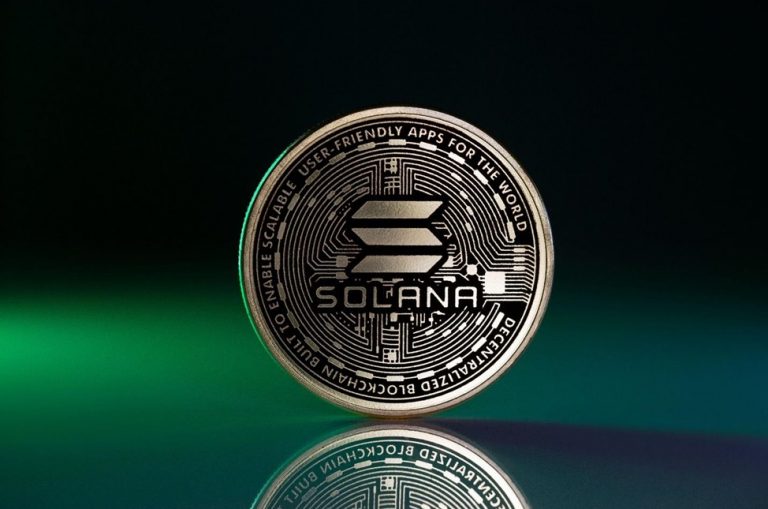
RockawayX, a crypto-focused venture capital firm based in Dubai, London, and Prague, has raised $125 million for its second early-stage fund, with 50-75% (approximately $62-94 million) allocated to startups building on the Solana blockchain.
The firm, which manages $2 billion in assets, has been a Solana supporter since 2018, backing over 15 projects including Kamino, Squads, Exponent, and DoubleZero. The fund, closed in Q1 2025, will also invest in decentralized finance (DeFi), infrastructure protocols, and decentralized networks, with about two-thirds for seed rounds and the rest for liquid assets.
RockawayX’s strategy emphasizes hands-on support, providing engineering, liquidity, and infrastructure resources. It runs validators, develops protocol-ready hardware, and is launching Solana City, a Dubai-based accelerator hub with the Solana Foundation and Helius Labs. The fund’s limited partners include Rockaway Capital, family offices, private equity firms, high-net-worth individuals, and Solana co-founders Anatoly Yakovenko and Raj Gokal. The raise follows a strong track record, with RockawayX’s 2021 fund achieving a 2.1x DPI and 5.4x MOIC, driven by investments in Solana, Wintermute, and Morpho Labs.
Register for Tekedia Mini-MBA edition 20 (June 8 – Sept 5, 2026).
Register for Tekedia AI in Business Masterclass.
Join Tekedia Capital Syndicate and co-invest in great global startups.
Register for Tekedia AI Lab.
This move comes despite a 30% drop in Solana’s total value locked ($9.16 billion) and a 41% decline in its token price ($148.26) over the past three months, reflecting confidence in Solana’s long-term potential. The $125M fund raised by RockawayX for Solana ecosystem startups has several implications. Allocating 50-75% ($62-94M) to Solana-based startups signals strong confidence in Solana’s scalability and developer adoption, despite recent declines in its total value locked (30%) and token price (41%).
This could drive innovation in DeFi, infrastructure, and decentralized networks, strengthening Solana’s competitive position against rivals like Ethereum. The fund’s focus on seed-stage investments and hands-on support (engineering, liquidity, infrastructure) via initiatives like Solana City in Dubai could lower barriers for early-stage Solana startups, fostering a robust pipeline of projects and enhancing ecosystem resilience.
The participation of high-profile LPs, including Solana co-founders and family offices, alongside RockawayX’s strong 2021 fund performance (2.1x DPI, 5.4x MOIC), may attract more institutional interest to Solana, potentially stabilizing its market perception amid volatility. The Solana City accelerator in Dubai, backed by RockawayX, Solana Foundation, and Helius Labs, positions the UAE as a hub for blockchain innovation, potentially drawing global talent and investment to the region.

The heavy Solana focus carries risks, given its recent market downturn. A bearish crypto market or failure to deliver scalable solutions could limit returns. Additionally, the fund’s success hinges on identifying high-potential startups in a competitive landscape. The fund could catalyze Solana’s growth and solidify its ecosystem, but its impact depends on market conditions and the quality of supported projects.
Solana’s scalability challenges stem from its high-throughput design, which prioritizes speed and low costs but introduces trade-offs. Solana’s architecture, processing up to 65,000 transactions per second (TPS) via Proof of History (PoH) and Proof of Stake (PoS), has faced congestion during peak usage, notably in DeFi and NFT surges. Historical outages (e.g., 17-hour downtime in September 2021, multiple in 2022) exposed vulnerabilities in transaction prioritization and spam handling, eroding user trust and developer confidence.
Solana’s validators require powerful hardware (e.g., 12-core CPUs, 128GB RAM) to handle its high TPS, increasing operational costs. This raises barriers for decentralization, as only well-funded entities can run validators, potentially concentrating network control compared to lighter chains like Ethereum. Solana’s low transaction fees (~$0.00025) encourage spam attacks, where bots flood the network with low-value transactions, clogging queues. Unlike Ethereum’s dynamic fee market, Solana’s static fees struggle to prioritize legitimate transactions, leading to delays or failed transactions during spikes.

Solana’s high transaction volume generates massive state data, inflating storage needs for nodes (currently ~1TB for full history). This could deter smaller validators, further centralizing the network and increasing costs for infrastructure providers. Solana’s unique architecture (e.g., PoH, parallel transaction processing) requires developers to master complex tools like Rust and its account model, steeper than Ethereum’s Solidity. This learning curve can slow dApp development, limiting ecosystem growth.
Implications for RockawayX’s Investment
Startups building on Solana may face delays or user attrition if network instability persists, impacting RockawayX’s returns. Solana’s ongoing upgrades (e.g., QUIC protocol, fee market reforms, Firedancer client by Jump Crypto) aim to address congestion and reliability. RockawayX’s hands-on support (engineering, validators) could help portfolio companies navigate these challenges.
Continued scalability issues could dampen Solana’s appeal, reducing the fund’s ability to attract top-tier projects or exit investments at high valuations. If Solana resolves these issues, its high TPS and low costs could outpace competitors, boosting RockawayX’s portfolio, especially in DeFi and infrastructure.
Solana’s scalability challenges are significant but not insurmountable. RockawayX’s $125M bet hinges on the network’s ability to deliver promised upgrades while maintaining developer and user momentum.