

Salesforce has announced a sweeping $15 billion investment in San Francisco over the next five years, a move the cloud software giant says will accelerate artificial intelligence adoption while deepening its economic and technological roots in the city where it was founded.
The announcement, made on Monday, comes just ahead of the company’s flagship Dreamforce conference scheduled to take place between October 14 and 16, where nearly 50,000 attendees are expected to converge — generating about $130 million in local economic activity. Salesforce, headquartered in San Francisco since its founding in 1999, said the investment would go toward expanding AI infrastructure, launching a new AI incubator hub, and supporting companies eager to integrate AI-powered systems into their operations.
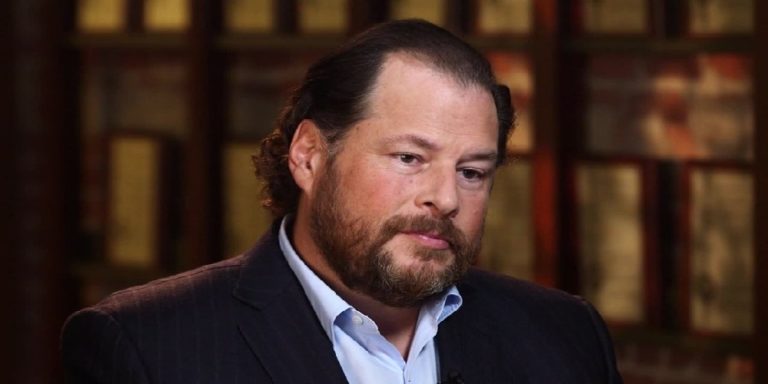
“This $15 billion investment reflects our deep commitment to our hometown — advancing AI innovation, creating jobs and helping companies and our communities thrive,” said Marc Benioff, Salesforce’s co-founder and CEO.
Register for Tekedia Mini-MBA edition 20 (June 8 – Sept 5, 2026).
Register for Tekedia AI in Business Masterclass.
Join Tekedia Capital Syndicate and co-invest in great global startups.
Register for Tekedia AI Lab.
The commitment comes at a critical time for Salesforce, which is racing to sharpen its competitive edge in the rapidly evolving AI industry. The company has been integrating AI across its product lines — from its customer relationship management suite to its workplace messaging platform, Slack — as it competes with tech heavyweights such as Microsoft, Oracle, and ServiceNow.
The San Francisco investment is part of Salesforce’s broader effort to reposition itself at the center of the AI revolution, transforming enterprise software. The company recently launched “Agentforce 360,” a new AI platform designed to enable businesses to deploy customizable AI agents that can handle complex customer interactions, streamline workflows, and enhance productivity.
The AI incubator hub, to be housed within Salesforce’s San Francisco campus, will serve as a testbed for developing and scaling new generative AI solutions. According to the company, the incubator will bring together startups, developers, and corporate clients to collaborate on next-generation applications that automate business tasks, from sales forecasting and marketing personalization to real-time customer service.

Salesforce’s latest investment follows a series of aggressive AI-related moves across the tech industry. Microsoft has doubled down on its AI partnership with OpenAI, Oracle has integrated generative models into its cloud infrastructure, and ServiceNow has rolled out AI-driven productivity tools aimed at enterprise automation. Benioff’s latest pledge underscores his determination not to let Salesforce fall behind.
A Boost for San Francisco’s Economy and Tech Identity
For San Francisco, the announcement represents both a major economic win and a symbolic gesture. The city, long regarded as the heart of the U.S. technology industry, has struggled in recent years with post-pandemic economic headwinds, declining downtown activity, and a sharp pullback in commercial real estate demand.
Salesforce’s commitment could help revitalize the city’s tech ecosystem and restore confidence in its future as an innovation hub. The company’s AI incubator and expanded operations are expected to create thousands of jobs and attract fresh investment to the Bay Area, reaffirming the region’s global leadership in technology.

Salesforce has also made clear that its focus on AI extends beyond technological development to workforce growth. The firm plans to invest in local education programs and upskilling initiatives to help address the growing shortage of AI talent — an issue that analysts say is becoming one of the defining challenges for tech companies.
“If the company wants to remain a leader in an important emerging technology area, it must have a pipeline of talent to innovate and drive the field forward. We already see shortages of AI talent, so this makes sense,” Morningstar analyst Dan Romanoff said.
Expanding Global Footprint While Managing Investor Pressure
The new San Francisco plan follows Salesforce’s announcement last week of a $1 billion investment in Mexico, where the company has operated since 2006. The Mexico initiative, similar in scope, is aimed at expanding AI adoption and building regional cloud infrastructure.
Despite its ambitious AI expansion, Salesforce has faced investor pressure this year amid concerns that rapid AI innovation could disrupt the traditional enterprise software market. The company’s shares have dropped about 28% in 2025, even as the Nasdaq has gained roughly 15% over the same period.
In September, Salesforce issued a cautious third-quarter revenue forecast that came in below Wall Street expectations. At the same time, it announced a $20 billion increase to its existing share buyback program — a move seen as an attempt to bolster investor confidence in the face of near-term market volatility.
The AI investment, therefore, serves both a strategic and symbolic function: to reassure investors of Salesforce’s long-term growth potential while signaling its intent to remain a dominant force in enterprise technology.
Meanwhile, the timing of Salesforce’s announcement reflects the intensifying race among major software providers to capture the fast-expanding AI market. Global enterprises are pouring billions into AI systems that promise to automate tasks, enhance decision-making, and reduce operational costs.
Salesforce, with its extensive client base across industries such as retail, banking, and telecommunications, sees an opportunity to integrate AI more deeply into everyday business operations. Its “Agentforce 360” rollout marks a significant step toward embedding AI agents within core workflows — a trend expected to redefine how businesses interact with customers.
Benioff, a long-time advocate for “responsible AI,” has argued that the technology must evolve in a way that empowers both businesses and employees, rather than displacing them.