

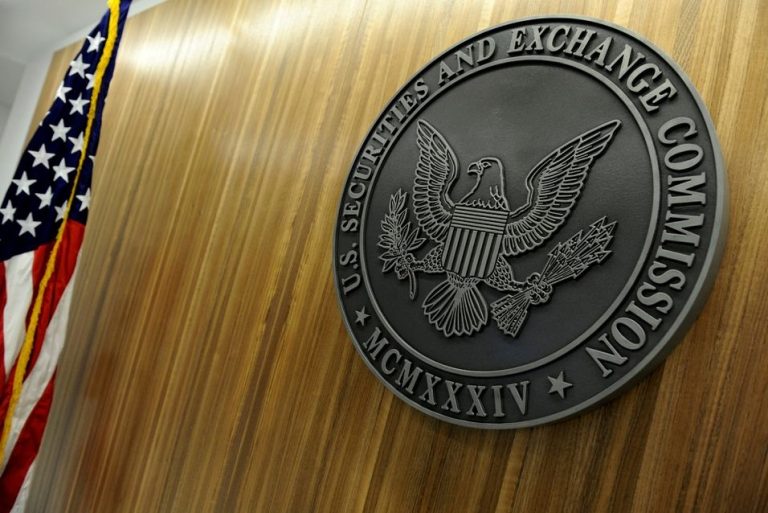
The U.S. Securities and Exchange Commission (SEC) must undertake a major regulatory overhaul, according to SEC Chair Paul Atkins, who used a major address at the New York Stock Exchange on Tuesday to call for a sweeping “reset” of disclosure requirements and a reduction of legal burdens faced by smaller companies.
Atkins’s vision, which seeks to “tilt the balance of power from investors back toward companies,” directly challenges the efficacy and necessity of numerous investor protection rules established after the 2008 financial crisis.
Atkins emphasized that the concept of financial materiality should be the “north star” of the SEC’s disclosure framework, arguing that too much mandated information is “unmoored from materiality” and only serves to confuse investors.
Register for Tekedia Mini-MBA edition 20 (June 8 – Sept 5, 2026).
Register for Tekedia AI in Business Masterclass.
Join Tekedia Capital Syndicate and co-invest in great global startups.
Register for Tekedia AI Lab.
“When the SEC’s disclosure regime has been hijacked to require information unmoored from materiality, investors do not benefit,” Atkins stated in his prepared remarks, signaling the agency’s shift toward a deregulatory policy agenda.
Targeting the “Frankenstein Patchwork” of Executive Pay Rules
At the heart of Atkins’s reform target are the rules surrounding executive compensation, which he and other Commissioners have characterized as a “Frankenstein patchwork”—an overly complex and expensive regime that obscures rather than illuminates pay decisions. Atkins and fellow Republicans are explicitly aiming at several key provisions mandated by the Dodd-Frank Act of 2010
The most highly publicized target is the requirement for companies to disclose the ratio of CEO compensation to the median pay of all other employees. Critics, including Atkins, argue this figure is arbitrary and misleading because it varies wildly based on factors unrelated to management performance, such as whether a company employs more part-time, seasonal, or international workers. For instance, the average CEO-to-worker pay ratio at S&P 500 companies stood at 285 to 1 last year, a number Atkins and corporate leaders argue has created “envy, not moderation,” citing Warren Buffett, who noted the rules helped drive up CEO pay by allowing them to benchmark themselves against disclosed figures.

This rule mandates that companies clearly describe the relationship between executive compensation “actually paid” and the company’s financial performance. Many believe that the complexity of the required formula often results in a metric that is disjointed from the total compensation reported in other tables, imposing high compliance costs without providing clear, decision-useful information to shareholders.
Atkins is also pushing to revise the detailed compensation tables, including potentially eliminating the complex Option Exercise and Stock Vested Table and increasing the disclosure thresholds for executive perquisites (perks). Some critics lament that the detailed disclosure of perks—like security expenses or corporate jet usage—is “salacious” and detracts from the material financial picture.
Easing the Regulatory Burden on Small Business
A second major pillar of the SEC Chair’s reform agenda is providing relief to smaller companies, arguing that the current compliance burdens act as a barrier to capital formation and growth.

“The last comprehensive reform to these thresholds took place in 2005,” Atkins said, denouncing this as a “dereliction of regulatory upkeep.”
Under the current system, a company with a public float as low as $250 million is subjected to the same exhaustive disclosure requirements as a company 100 times its size. Atkins indicated the SEC would look to “right-size” disclosure obligations, making them scale with a company’s size and maturity, and potentially expanding the grace periods available to newly public companies to incentivize more Initial Public Offerings (IPOs).
However, critics, particularly Democrats, warn that this deregulatory agenda risks dismantling essential investor protections put in place following the 2008 financial meltdown, when executive compensation practices encouraged excessive risk-taking. Concerns remain that Atkins’s approach—combined with a declining SEC workforce—will weaken the agency’s ability to police financial markets, potentially allowing risk and misconduct to build up in the system.
The stage is now set for a major political and legal confrontation as the SEC begins to formally revise rules rooted in one of the most significant pieces of financial legislation in modern history.