

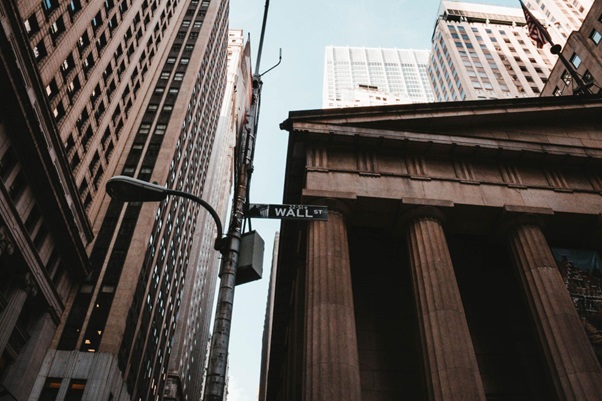
The U.S. Securities and Exchange Commission has subpoenaed several major Wall Street banks as it examines their dealings with Situational Awareness, the AI-focused hedge fund that suffered a dramatic collapse in assets last month after a technology-stock sell-off triggered a series of margin calls.
The subpoenas seek information about the fund’s trading activity, leverage and communications with its investment banks, including Goldman Sachs, JPMorgan, Citigroup and Bank of America, according to Reuters, citing a person familiar with the matter.
The regulatory inquiry follows one of the most severe recent episodes of forced deleveraging tied to the AI investment boom. Situational Awareness, led by former OpenAI researcher Leopold Aschenbrenner, saw its assets plunge from about $45 billion to roughly $10 billion in late July after losses on concentrated technology positions triggered margin calls from several prime brokers.
Register for the next Tekedia Mini-MBA.
Register for Tekedia AI in Business Masterclass.
Join Tekedia Capital Syndicate and co-invest in great global startups.
The fund was subsequently forced to unwind a large portion of its publicly traded portfolio, including positions in semiconductor maker SK Hynix and AI data-center company CoreWeave.
The episode has brought increased attention to the role leverage has played in the rapid expansion of AI-related investments, especially as hedge funds and other institutional investors have built large positions in companies benefiting from surging demand for AI infrastructure.
Situational Awareness reportedly used leverage of as much as 400%, meaning relatively small changes in the value of its underlying positions could produce disproportionately large gains or losses.

When technology shares declined sharply in July, that leverage became a major vulnerability.
The resulting margin calls forced the fund to sell assets into a falling market, accelerating the unwinding of its positions and contributing to the sharp contraction in its portfolio.
Citadel, the multistrategy hedge fund founded by Ken Griffin, stepped in to purchase the positions at a discount understood to be around 10%. Griffin said in a letter to investors Friday that Citadel had since reduced about 80% of the risk associated with the portfolio.

The shares that were at the center of the forced liquidation have subsequently recovered, with both SK Hynix and CoreWeave rallying.
The development exposes the difficulty of unwinding large leveraged positions when multiple financial institutions are simultaneously exposed to the same trades. Prime brokers provide hedge funds with financing, securities lending, trading infrastructure and other services that allow them to take positions substantially larger than the amount of capital they have invested. Those relationships can amplify returns during periods of rising markets but can also force rapid asset sales when collateral values fall.
The SEC’s subpoenas appear aimed at understanding how those relationships operated in Situational Awareness’ case, including how much leverage the fund used, the scale of its positions and how its prime brokers communicated with the firm as losses mounted.
The inquiry does not mean that the banks or Situational Awareness have been accused of wrongdoing.
Regulatory information requests can ultimately conclude without enforcement action, and the SEC’s investigation may simply be an effort to understand how the losses developed and whether risks were adequately managed.
“It is to be expected that regulators would closely examine any funds that are high profile, produce significant returns, or have particularly dramatic drawdowns,” Situational Awareness said in a statement.
“We are a highly-regulated business and will cooperate to the fullest extent with any regulatory request.”
The inquiry nevertheless puts a spotlight on a broader issue confronting financial markets: how much leverage has accumulated around the AI trade.
AI has become one of the dominant investment themes in global markets, attracting enormous amounts of capital into semiconductor manufacturers, cloud companies, data-center operators and other infrastructure providers. The scale of the opportunity has encouraged investors to take increasingly large positions in companies expected to benefit from AI spending.
That concentration can become dangerous when positions are financed with borrowed money.
A leveraged investor does not need the underlying investment thesis to be wrong for losses to become destabilizing. A sharp enough decline can trigger margin requirements, forcing the investor to sell assets regardless of its longer-term view.
That selling can then put additional pressure on the same securities held by other leveraged investors.
Situational Awareness provides a particularly visible example because of the size of its positions and the reported scale of its leverage. The fund’s rapid contraction also occurred during a period when investors were already questioning the enormous valuations attached to some AI-related companies and the ability of the industry to generate returns sufficient to justify its capital spending.
The SEC’s interest in the banks could therefore extend beyond the individual fund’s losses. Regulators may also be examining how prime brokers assess and manage counterparty exposure when multiple clients are pursuing similar AI-related strategies.
The issue is particularly relevant for stocks such as SK Hynix and CoreWeave, where strong institutional demand and concentrated positioning can contribute to rapid price movements in both directions.
A forced liquidation by one major investor can create losses for others even when the underlying companies’ business fundamentals have not materially changed. The recovery in SK Hynix and CoreWeave since the liquidation reveals that. The forced selling reflected the fund’s financing constraints rather than necessarily a fundamental reassessment of either company’s long-term prospects.
A fund generating strong gains can appear successful while taking on substantial hidden risks through borrowing, derivatives, and concentrated positions. Those risks become visible when markets move sharply against the strategy.
The SEC’s subpoenas could provide regulators with a clearer picture of how those risks accumulated around Situational Awareness and whether the fund’s prime brokers had sufficient visibility into its exposures.
The immediate investigation remains fact-finding rather than an enforcement proceeding. But the episode has already become a case study in the financial risks accompanying the AI boom, showing how a sharp reversal in a concentrated technology trade can rapidly turn into a liquidity and leverage problem when investors are heavily dependent on borrowed capital.