

Republican U.S. senator representing Wyoming Sen. Cynthia Lummis, has accused Democrats of putting politics ahead of progress, after the CLARITY Act failed to advance in the U.S. Senate, dealing a setback to efforts to establish a comprehensive regulatory framework for the cryptocurrency industry.
In a statement following the vote, Lummis said Democrats proved they were never truly serious about protecting consumers and preserving American leadership.
She argued that after more than a year of negotiations and substantial concessions, the opposition amounted to political gamesmanship rather than genuine policy disagreement.
Register for the next Tekedia Mini-MBA.
Register for Tekedia AI in Business Masterclass.
Join Tekedia Capital Syndicate and co-invest in great global startups.
She wrote on X,
“This afternoon, Senate Democrats proved they were never truly serious about protecting consumers and preserving American leadership. I sat at the table with Senate Democrats working in good faith to get this done while they played games. For over a year, they presented demands and the second we met them, they made new demands and moved the goalposts. Today they voted against real limitations on politicians’ personal crypto investments. They voted against protecting American consumers from the scammers and fraudsters this bill would have shut down.
“They voted against American leadership, and handed China and every one of our foreign competitors exactly what they wanted. Democrats chose politics over the American people—again. That’s not leadership on their part, that’s surrender to their radical, socialist base. The once-proud Democratic Party is anti-consumer and pro-illicit finance, anti-ethics, anti-free enterprise, anti-worker, anti-livable wage jobs, and pro-socialism. The Democrats are now anti-American. Sad!”

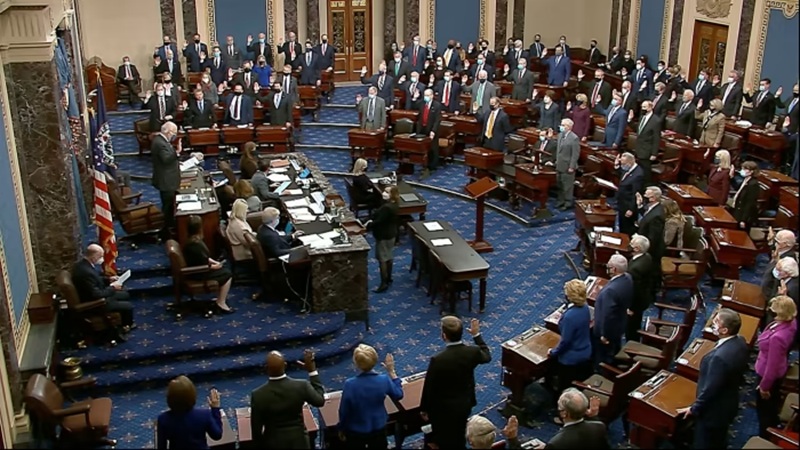
The Senate voted 49-50 against invoking cloture on the motion to proceed to H.R. 3633. The measure needed 60 votes to advance to full debate. All Democrats opposed the motion.
Lummis, the bill’s lead Senate architect, had framed Tuesday’s vote as “now or never.” Ahead of the tally she told reporters that if the cloture motion failed, “I think we’re done. It’s over,” noting that sponsors had already granted more than 120 Democratic requests. On the Senate floor, she urged colleagues to “vote yes” and lead the digital age rather than cede ground to foreign competitors.
The CLARITY Act aimed to establish the first comprehensive federal regulatory framework for digital assets. It would have clarified jurisdiction between the Securities and Exchange Commission and the Commodity Futures Trading Commission, set rules for trading, stablecoins, and decentralized finance, and included consumer protections and ethics restrictions on public officials’ involvement with crypto assets.

Republicans released what they described as the final text on September 14, incorporating 126 substantive changes Democrats requested over months of bipartisan talks.
The updated version featured strengthened ethics language, including a role for state attorneys general in enforcement and restrictions covering the president, vice president, members of Congress, federal judges, and their spouses—provisions Republicans said reflected all of a bipartisan ethics proposal substantially.
Democrats who had engaged in negotiations ultimately voted no. Concerns centered on whether the ethics provisions adequately addressed potential conflicts of interest, particularly those involving President Donald Trump’s crypto-related businesses, as well as remaining issues around enforcement, illicit finance, and other safeguards. Some argued the language still fell short of preventing personal profit from the industry while setting its rules.
The House had passed an earlier version of the bill by a wide bipartisan margin in 2025. The Senate Banking Committee advanced related text earlier in 2026. The failure leaves the legislation stalled with limited time remaining on the congressional calendar before midterm elections and the subsequent recess.
While the bill remains on the calendar and could theoretically return, Lummis expressed strong skepticism about further progress this year.
The outcome marks a significant setback for the cryptocurrency industry, which had invested heavily in lobbying for market-structure legislation to replace regulatory uncertainty with clear rules.
Markets reacted with declines in bitcoin and shares of major crypto firms following the vote. With comprehensive congressional action now unlikely in the near term, attention is expected to shift to ongoing rulemaking efforts by the SEC and CFTC.