

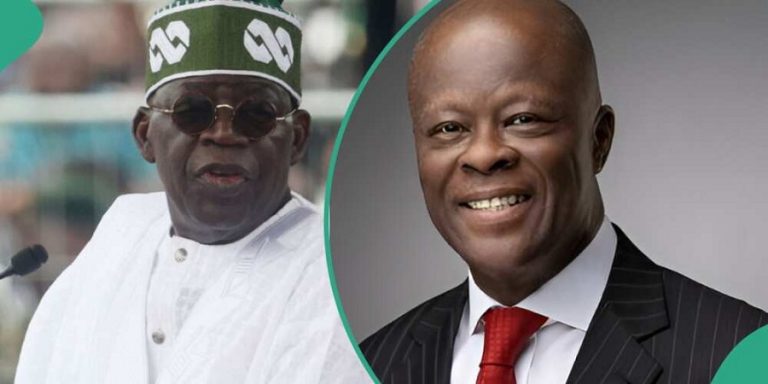
Nigeria’s Senate has called on Finance Minister and Coordinating Minister of the Economy, Wale Edun, to urgently revisit the controversial 30 percent Capital Gains Tax (CGT) on large share sales after what began as a sharp selloff last week deepened into a broader market slump.
The uproar follows a massive N2 trillion loss first recorded in a single week—an episode analysts now say spiraled into a deeper slide that has wiped out over N4.6 trillion in value on the Nigerian Exchange (NGX).
Analysts believe a significant part of the turmoil is tied to the newly passed Nigerian Tax Act 2025, which raises CGT on share disposals worth N150 million and above from 10 percent to 30 percent, with implementation slated for January 2026. The size of the tax jump and its timing are believed to have rattled both domestic and foreign investors, causing heavy selloffs across several blue-chip stocks.
Register for Tekedia Mini-MBA edition 20 (June 8 – Sept 5, 2026).
Register for Tekedia AI in Business Masterclass.
Join Tekedia Capital Syndicate and co-invest in great global startups.
Register for Tekedia AI Lab.
Senator Osita Izunaso, Chairman of the Senate Committee on Capital Market and Institutions, addressed the issue head-on on Wednesday while presenting a paper titled “Redefining the Rules: The Investment and Securities Act 2025 and the Future of Nigeria’s Capital Market” at the Moneyline with Nancy Investment Forum 2025 in Abuja.
Izunaso said the sudden change in the tax regime had “unsettled investors,” leading to panic disposals that wiped out over N2 trillion within days.
Although multiple factors influence market movements, analysts say the timing of the selloffs closely mirrors the release of details about the new CGT regime, especially the proposed 30 percent rate on transactions above N150 million. They argue that foreign portfolio investors—already wary due to currency pressure, inflation, and patchy liquidity in the FX market—were spooked by the tax hike and accelerated their exit.

Izunaso acknowledged that the reform has introduced friction into a market that had begun recovering under President Bola Ahmed Tinubu, whose administration he credited for stabilizing macroeconomic conditions and improving policy coherence.
But he cautioned that the CGT change risks reversing those gains. He remarked that the increase in Capital Gains Tax on share sales above N150 million is worrisome and has created understandable concern among investors.
He underlined that taxation is essential for revenue generation but warned that poorly timed fiscal changes can erode confidence.

“While taxation is essential for revenue generation, it is equally critical that fiscal measures do not inadvertently undermine investors’ confidence or discourage long-term capital formation,” he said.
Senate to open talks with Finance Ministry
Izunaso said the Senate Committee on Capital Market would engage Finance Minister Wale Edun with an appeal to explore “a mechanism to address this concern” and safeguard both domestic and foreign investor confidence. He emphasized that certain provisions in the new tax law allow for ministerial discretion regarding commencement dates.
“We are aware that the new law is supposed to commence by January 2026. But we are suggesting that there are some provisions of that Act that require the commencement to begin only when the Honorable Minister of Finance advises the Executive. I think this is one of those things that should not commence on January 1, because it is already affecting the market,” he said.
Lawmakers believe delaying implementation could help stabilize sentiment, allow more consultation with market stakeholders, and prevent further capital flight.
Beyond domestic concerns, analysts say foreign investors reacted sharply to the news for several reasons:
• Large investors often structure exits months in advance, and a sudden jump from 10 percent to 30 percent on significant share disposals alters portfolio strategies overnight.
• Foreign funds, which had slowly begun trickling back into Nigeria after FX reforms, viewed the CGT increase as evidence of fiscal unpredictability.
• Heavy positions in tier-one banks and industrial stocks were unwound as global funds moved to reprice Nigeria-related risk.
The result, according to several market operators, was a swift contraction that accelerated losses from around N2 trillion to over N4.6 trillion within days, pulling the NGX All-Share Index off recent highs and eroding 2025 gains across multiple sectors.
Government officials offer clarifications
Amid the backlash, the Chairman of the Presidential Fiscal Policy and Tax Reforms Committee, Taiwo Oyedele, clarified that the new CGT will not apply retroactively. He explained that the reform includes:
• a cost basis reset, and
• a grandfathering clause
…ensuring gains accumulated before 2026 are preserved, and the 30 percent tax will apply only to new gains realized after the effective date.
Finance Minister Wale Edun has also stressed that the Federal Government will adopt a cautious and consultative approach in rolling out the new laws, acknowledging concerns about the capital market component of the reform.
He signaled willingness to refine guidelines and transition rules to avoid unintended shocks.
The coming weeks may determine whether the government leans toward a delay, amendment, or full rollout of the 30 percent CGT. For now, the market remains volatile, with analysts warning that without quick intervention, investor sentiment could deteriorate further.
The NGX, which had shown renewed activity and higher listing appetite in 2023 and 2024, is now grappling with the risk that the tax reform could slow capital formation, deter long-term equity investments, and push foreign funds to competing African markets with lower transaction taxes.
Izunaso’s push signals that the Senate recognizes the risk and is preparing to press the Executive for adjustments before more value evaporates.
For investors, the pressing question is whether Abuja will act fast enough to stop the bleeding — or whether the market will need months to recover from a tax shock that hasn’t even taken effect yet.