

South Korea has moved decisively to insulate its economy from the worsening global oil shock, unveiling an emergency crude swap mechanism for refiners alongside a 26.2 trillion won ($17.1 billion) supplementary budget to cushion households and businesses from surging fuel costs triggered by the Middle East conflict.
The swift intervention throws into the picture the contrasting position of other import-dependent economies, notably Nigeria, where expectations of similar relief measures have so far been met with official reluctance, largely because Abuja’s room for maneuver is severely constrained by weak crude output and pre-committed forward oil obligations.
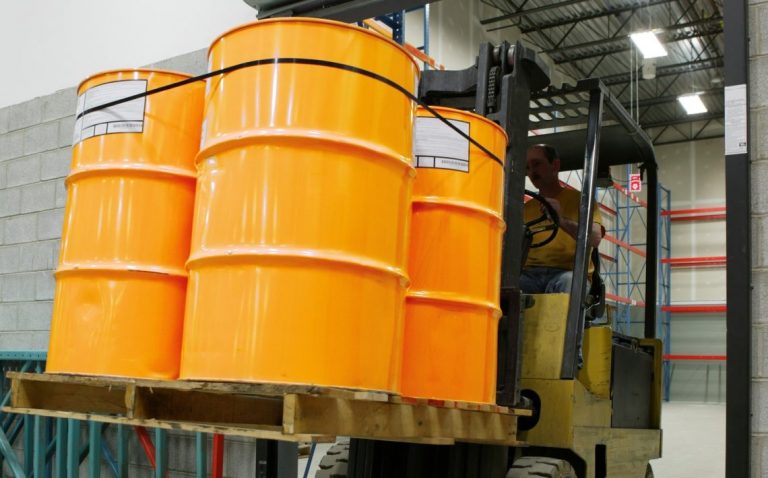
Under the new policy, South Korean refiners will be allowed to borrow crude oil from the country’s strategic petroleum reserves and return the same volume once cargoes secured overseas arrive. The measure is aimed at preventing any disruption in refinery operations as global shipping routes remain under pressure.
Register for Tekedia Mini-MBA edition 20 (June 8 – Sept 5, 2026).
Register for Tekedia AI in Business Masterclass.
Join Tekedia Capital Syndicate and co-invest in great global startups.
Register for Tekedia AI Lab.
Officials say more than 20 million barrels of crude have already been secured for delivery before the end of June, allowing authorities to assure markets that there should be no immediate supply gap. The government has also proposed a broad relief package, with 10.1 trillion won specifically targeted at easing the burden of high oil prices, including a fuel price cap, transport rebates, direct consumer vouchers, and targeted subsidies for farmers, fishermen, and logistics operators.
Minister of Planning and Budget Park Hong-geun said that “swift fiscal support is necessary to alleviate the hardships facing the people’s livelihoods as soon as possible and to ensure that the spark of economic recovery, which the current administration has painstakingly revived, does not die out.”
For South Korea, which imports about 94 per cent of its energy needs and sources most of its crude from the Middle East, the move is an acknowledgement that the Iran war has become an economic emergency rather than a distant geopolitical event.

However, the contrast with Nigeria beams with scorn. There had been growing expectations in policy and market circles that Abuja could adopt a similar intervention framework, either through temporary price support, direct crude allocation to domestic refiners, or emergency consumer relief, especially as petrol prices have surged sharply to N1500 per liter in recent weeks.
But government officials have indicated that there are no immediate plans for such a cushioning measure, a position that reflects both fiscal and supply constraints.
The fundamental challenge is that Nigeria, despite being Africa’s largest oil producer, is operating with limited effective crude availability. Nigeria’s oil production in 2026 averages about 1.31 to 1.46 million barrels per day (bpd), with a 2026 budget target of 1.8 million bpd. Production is significantly insufficient and volatile due to aging infrastructure, theft, and security challenges in the Niger Delta

A significant share of the country’s production is already tied to forward sales, crude-backed loans, and other pre-sold obligations, leaving less discretionary volume available for domestic intervention. This has had a direct bearing on the government’s ability to meet its domestic crude supply commitments, particularly to the Dangote Refinery.
The 650,000-barrel-per-day refinery, which was expected to serve as a stabilizing force for Nigeria’s fuel market, has repeatedly flagged insufficient local crude feedstock. Industry data shows the plant requires 13 to 15 cargoes per month to run optimally, but has in recent months received only about five to seven cargoes from the Nigerian National Petroleum Company, forcing it to rely heavily on more expensive imported crude.
That shortfall has become central to the domestic fuel pricing crisis. This is because the refinery must source a substantial portion of its crude from international traders at prevailing market prices plus freight and war-related premiums; the cost advantage Nigerians had hoped for has been eroded. This helps explain why pump prices have continued to climb even after the refinery reached full operational capacity.
In effect, Nigeria’s inability to deploy a South Korea-style buffer is not simply a policy choice. It is a function of structural limitations.
Unlike Seoul, which can draw from strategic reserves and use fiscal surpluses from semiconductors and equity markets to fund relief, Nigeria faces a narrower window. Higher crude prices would ordinarily imply a revenue windfall, but much of that upside is diluted because future production volumes have already been pledged under debt servicing arrangements and forward contracts.
This has stymied the government’s capacity to channel more crude to Dangote or introduce broad-based subsidies without worsening fiscal pressures.
The broader economic consequence is that Nigerian consumers remain more directly exposed to global oil volatility. Transport fares, food prices, and logistics costs have risen significantly in response to Iran’s war, and without a formal cushioning package, the inflationary pass-through is likely to intensify.
South Korea’s response shows what a state-backed buffer can look like.
That paradox is now playing out in real time: one of Africa’s biggest oil exporters finds itself with limited capacity to soften the blow of rising global oil prices for its own citizens.