

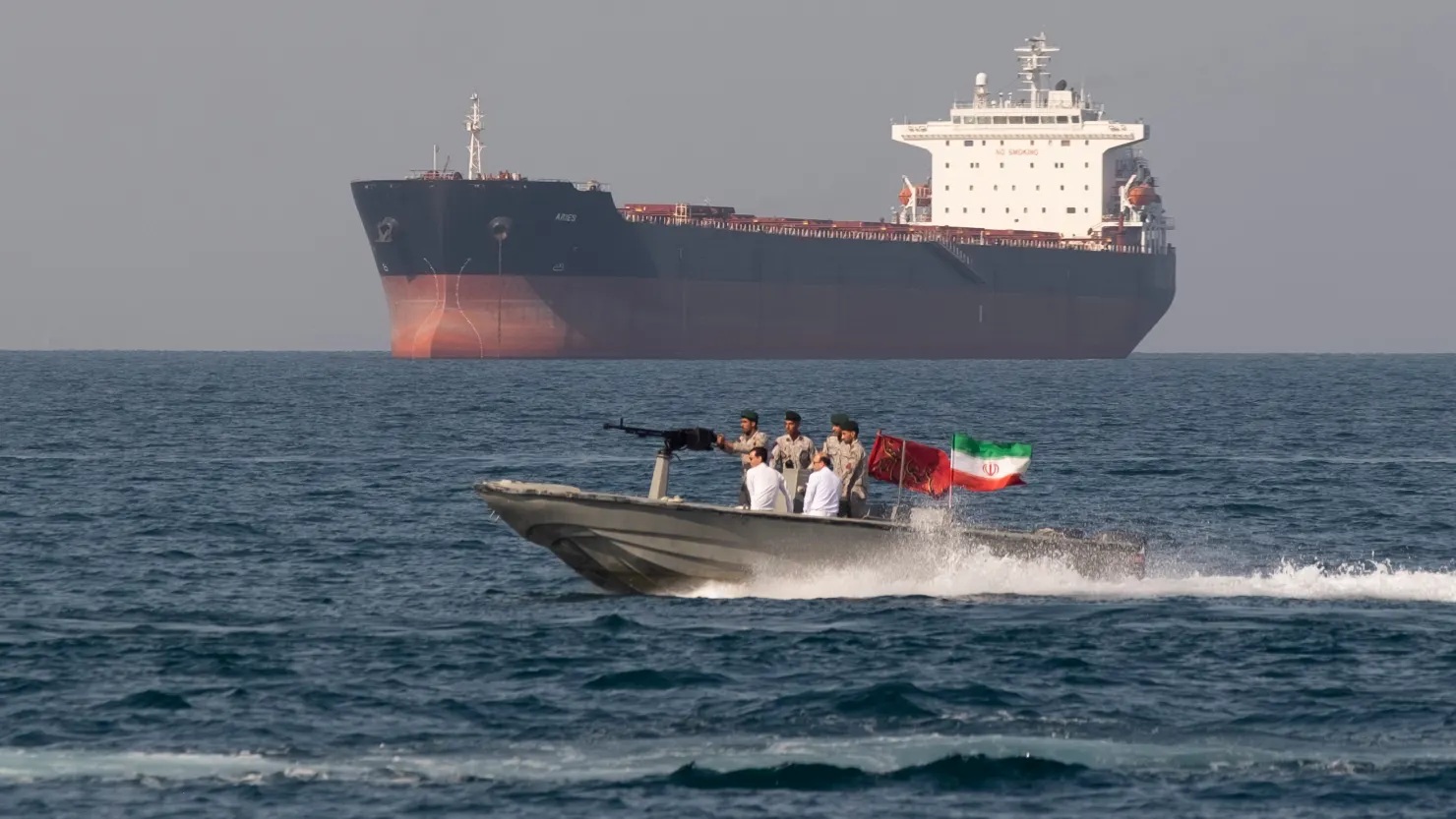
Iran partially closed sections of the Strait of Hormuz on Tuesday, citing “security precautions” as the country’s Revolutionary Guard carried out military exercises in the strategically critical waterway, according to state media.
The temporary restriction has once again drawn attention to the vulnerability of one of the world’s most critical energy arteries.
The development places military signaling and diplomacy on parallel tracks at a moment of heightened regional tension. The move coincided with diplomatic talks between Iran and the United States in Geneva, where both sides are attempting to resolve long-running tensions over Tehran’s nuclear program.
It marks the first time Iran has restricted parts of the strait since U.S. President Donald Trump warned Tehran in January of potential military action.
Register for Tekedia Mini-MBA edition 20 (June 8 – Sept 5, 2026).
Register for Tekedia AI in Business Masterclass.
Join Tekedia Capital Syndicate and co-invest in great global startups.
Register for Tekedia AI Lab.
The IRGC designated a live-fire exercise zone overlapping part of the inbound Traffic Separation Scheme — the internationally recognized maritime lane used by commercial vessels entering the Persian Gulf. The drill, titled “Smart Control of the Strait of Hormuz,” is aimed at enhancing operational readiness and reinforcing deterrence capabilities, Iranian officials said.
According to Jakob Larsen, chief safety and security officer at Bimco, the restriction is expected to cause limited disruption.
“The exercise establishes a live firing exercise area overlapping the inbound part of Strait of Hormuz’s Traffic Separation Scheme, and requests that shipping keeps clear of the area for the duration of a few hours,” Larsen said, adding that commercial vessels are likely to comply given current tensions.

While described as temporary, even short-lived constraints in Hormuz tend to amplify geopolitical risk perceptions because of the waterway’s systemic importance.
Why Hormuz Matters
The Strait of Hormuz links crude exporters in the Persian Gulf — including Saudi Arabia, Iraq, Kuwait, and the United Arab Emirates — with major consuming markets in Asia and Europe. At its narrowest point, the shipping channel is roughly 21 miles wide, with designated lanes only a few miles across in each direction.
Data from Kpler show that approximately 13 million barrels per day of crude transited the strait in 2025, representing about 31% of global seaborne crude flows. In addition to oil, significant volumes of liquefied natural gas (LNG), particularly from Qatar, also pass through the corridor.

Any sustained interruption would likely have immediate effects on global oil prices, freight rates, marine insurance premiums, and broader financial markets.
Diplomatic Overlay: Nuclear Talks Resume
The naval exercise unfolded as U.S. and Iranian officials met in Geneva to address long-running disputes over Tehran’s nuclear program. Iranian Foreign Minister Abbas Araghchi said the two sides had reached an understanding on “guiding principles” for future negotiations, though he cautioned that more work is required and no agreement is imminent.
The talks follow renewed warnings from U.S. President Donald Trump earlier this year, when he signaled that military options remained on the table if diplomacy failed.
The juxtaposition of drills and diplomacy reflects a familiar strategic pattern: Tehran signals capability and resolve in the Gulf while maintaining a channel for negotiation. Such calibrated moves are often designed to demonstrate leverage without crossing thresholds that would provoke direct confrontation.
Market Reaction: Initial Spike, Then Reversal
Oil prices initially climbed on reports of the partial closure but later pared gains as traders assessed the measure as limited in duration and scope.
Brent crude futures for April delivery fell 1.8% to $67.48 per barrel, while U.S. West Texas Intermediate (WTI) for March delivery slipped 0.4% to $62.65. The reversal suggests that markets are differentiating between temporary military exercises and a prolonged blockade scenario.
Energy traders closely monitor Hormuz developments because even small disruptions can introduce a geopolitical premium into pricing models. However, absent physical supply loss or tanker damage, that premium often dissipates quickly.
Iran has periodically threatened to close the Strait of Hormuz in response to sanctions or military pressure, but has historically stopped short of a full-scale shutdown, aware that such a move could invite international military response and severely affect its own oil exports.
The current exercise appears intended to:
- Demonstrate naval control capabilities.
- Reinforce deterrence messaging amid U.S. pressure.
- Signal strategic leverage during nuclear negotiations.
Maintaining freedom of navigation in Hormuz remains a core objective for Washington and its allies. The U.S. Navy’s Fifth Fleet, headquartered in Bahrain, routinely patrols the region to safeguard commercial shipping.
The episode underscores the structural fragility embedded in global energy supply chains. With nearly one-third of seaborne crude passing through a narrow maritime chokepoint, geopolitical tensions in the Gulf carry outsized influence on commodity markets.
While Tuesday’s action was limited and temporary, it highlights three enduring dynamics:
- The Strait of Hormuz remains a focal point of geopolitical leverage.
- Energy markets remain highly sensitive to even symbolic military activity in the region.
- Diplomatic progress and military posturing can proceed simultaneously without immediate contradiction.
For now, commercial shipping continues, and oil markets have stabilized. But the incident underpins how exposed the oil market is to geopolitical developments – especially the ones involving Iran.