

Tata Electronics and ASML Holding have signed an agreement to build India’s first front-end semiconductor fabrication plant, marking a major step in New Delhi’s effort to establish itself as a serious player in the global chip supply chain amid intensifying geopolitical competition over advanced technology.
The agreement, signed Saturday, will see the Dutch semiconductor equipment giant provide critical technology for Tata Electronics’ planned 300-millimetre wafer fabrication facility in Dholera, Gujarat, a project valued at roughly $11 billion.
The companies said the plant is designed to manufacture chips for sectors including automotive, mobile devices, industrial electronics, and artificial intelligence, positioning India to participate more directly in some of the fastest-growing segments of the global semiconductor market.
Register for the next Tekedia Mini-MBA.
Register for Tekedia AI in Business Masterclass.
Join Tekedia Capital Syndicate and co-invest in great global startups.
The deal was signed in the presence of Indian Prime Minister Narendra Modi and Dutch Prime Minister Rob Jetten, underscoring the geopolitical and economic significance attached to semiconductor manufacturing as countries race to secure strategic technology supply chains.
“India’s rapidly expanding semiconductor sector represents many compelling opportunities, and we are committed to establishing long-term partnerships in the region,” ASML Chief Executive Christophe Fouquet said.
The project represents one of India’s most ambitious industrial bets in decades and reflects New Delhi’s determination to reduce dependence on imported semiconductors while positioning the country as an alternative manufacturing hub to China and Taiwan.

India Pushes to Enter the Global Chip Race
Semiconductors have become central to economic and national-security strategy globally, especially after supply-chain disruptions during the pandemic exposed the risks of relying heavily on a small number of production hubs concentrated in East Asia.
India, long dominant in software services and chip design talent, has for years struggled to establish large-scale semiconductor manufacturing due to the enormous capital requirements, infrastructure challenges, and technological complexity involved in fabrication.
That is now changing.

The Modi government has committed billions of dollars in subsidies and incentives aimed at attracting chipmakers, packaging firms, and electronics manufacturers as part of a broader industrial policy push to transform India into a global manufacturing center.
Eight semiconductor-related projects are currently underway in the country, including another major Tata Electronics facility in Gujarat valued at approximately $14 billion.
The Dholera fab is particularly significant because front-end semiconductor fabrication represents the most technologically sophisticated and capital-intensive segment of chip manufacturing. It involves processing silicon wafers through advanced lithography and fabrication techniques to produce semiconductor chips.
ASML’s involvement, therefore, carries major weight.
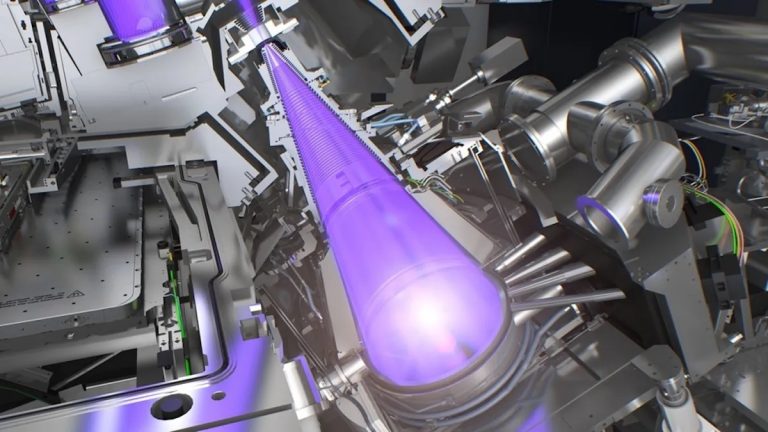
The Dutch company occupies a uniquely strategic position in the global semiconductor ecosystem because it is the world’s only producer of extreme ultraviolet lithography, or EUV, machines essential for manufacturing the most advanced chips. Its equipment has become one of the most geopolitically sensitive technologies in the world amid escalating U.S.-China tensions over semiconductor access.
Although the Gujarat facility is not expected initially to produce cutting-edge AI processors comparable to the most advanced chips made in Taiwan, the partnership gives India access to world-class manufacturing expertise and establishes a foundation for future technological advancement.
The Tata-ASML agreement also underpins a broader reconfiguration of global semiconductor supply chains driven by rising geopolitical fragmentation. Governments across the United States, Europe, India, Japan, and parts of Southeast Asia are aggressively trying to diversify semiconductor manufacturing away from excessive concentration in Taiwan and China.
That effort accelerated after Washington imposed sweeping export restrictions aimed at limiting China’s access to advanced chip technology and semiconductor equipment.
Dutch firms, including ASML, have been directly affected by those restrictions because the Netherlands aligned with U.S.-led controls limiting exports of advanced lithography systems to China. As a result, European semiconductor companies are increasingly seeking new growth markets and strategic partnerships outside China.
India’s rapid emergence as a manufacturing and technology destination, therefore, presents a major opportunity. The Tata partnership strengthens ASML’s foothold in one of the world’s fastest-growing electronics markets while aligning with global efforts to geographically diversify semiconductor production.
The semiconductor push also aligns with Modi’s broader “Make in India” agenda aimed at expanding domestic manufacturing, creating high-skilled jobs, and attracting foreign investment into advanced industries.
Gujarat Emerges as India’s Semiconductor Hub
Gujarat has increasingly positioned itself as a hub for manufacturing, logistics, and infrastructure investment, benefiting from strong political backing and aggressive industrial policies. The Dholera region, where the fab will be located, is being developed as a major smart industrial city with integrated infrastructure designed to attract high-technology industries.
Semiconductor fabrication plants require exceptionally stable electricity supply, large volumes of purified water, advanced logistics networks, and highly specialized engineering support, making infrastructure development critical to success.
India still faces significant challenges in building a competitive semiconductor ecosystem.
Chip manufacturing remains one of the most difficult industrial sectors globally due to high costs, rapid technological evolution, and fierce international competition.
Taiwan’s Taiwan Semiconductor Manufacturing Company, South Korea’s Samsung Electronics, and U.S. firms continue dominating the advanced semiconductor landscape after decades of investment and technical refinement.
Yet India’s large domestic market, expanding digital economy, and geopolitical alignment with Western countries increasingly make it attractive as an alternative manufacturing destination.