

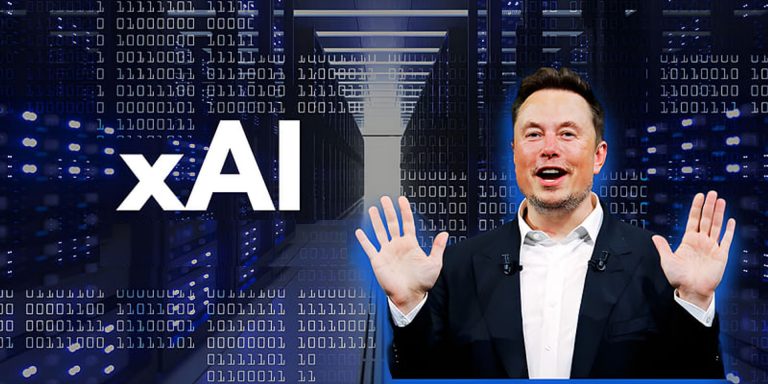
Tesla said on Wednesday it will invest $2 billion in xAI, the artificial intelligence startup founded by its chief executive, Elon Musk, reinforcing the company’s strategic pivot away from being viewed primarily as an electric vehicle maker and toward an AI and robotics-driven future.
The move underscores how much of Tesla’s $1.5 trillion valuation is now tied to expectations around autonomy, software, and AI-driven services rather than car sales alone.
The investment is expected to deepen the technical and financial link between Tesla and xAI, Musk’s artificial intelligence startup, which he has positioned as a counterweight to OpenAI and other large AI labs. The strategic logic is clear for Tesla as advances in large language models, computer vision, and decision-making systems are central to its ambitions in Full Self-Driving, robotaxis, and humanoid robotics.
Register for Tekedia Mini-MBA edition 20 (June 8 – Sept 5, 2026).
Register for Tekedia AI in Business Masterclass.
Join Tekedia Capital Syndicate and co-invest in great global startups.
Register for Tekedia AI Lab.
By backing xAI directly, Tesla is effectively internalizing part of the AI supply chain that underpins those long-promised products, reducing reliance on third-party models and potentially accelerating development tailored to its own hardware and data.
Investors initially welcomed the announcement, with Tesla shares rising about 3.4% in extended trading, but the reaction also reflects a deeper dynamic. Markets have become increasingly tolerant of Tesla’s weaker vehicle fundamentals as long as there is evidence, however incremental, that the autonomy story is moving closer to commercial reality.
Reiterating that production plans for the Cybercab robotaxi and Semi trucks remain on track this year was therefore as important as the xAI investment itself. Tesla has a long history of missed timelines, and each reaffirmation is aimed squarely at rebuilding credibility after repeated delays.

That credibility challenge looms large. Musk has spent nearly a decade promising that Tesla vehicles were on the cusp of full autonomy, at various points predicting nationwide robotaxi networks and rapid revenue transformation. Those predictions have yet to materialize at scale. The company’s current robotaxi operations still largely rely on Model Y vehicles running supervised versions of Full Self-Driving, with no firm regulatory approval for widespread unsupervised use.
The purpose-built Cybercab, designed without a steering wheel or pedals, remains a symbol of Tesla’s ambitions and its execution risk. Musk previously said production would begin in April 2026, but more recent comments describing early output as “agonizingly slow” have only reinforced investor caution around timelines and volumes.
Against this backdrop, Tesla’s core vehicle business is under visible pressure. Competition has intensified as both established automakers and newer entrants roll out fresher models, often at lower prices. The expiration of a key U.S. tax incentive for electric vehicles has further weighed on demand, while Musk’s far-right political rhetoric has alienated some customers, particularly in urban and coastal markets that historically drove EV adoption.

These factors have forced Tesla to lean more heavily on lower-priced “Standard” versions of the Model 3 and Model Y to sustain volumes.
Analysts widely see this pricing strategy as a calculated compromise. By expanding the installed base of Tesla vehicles, even at the cost of thinner margins, the company increases the pool of cars that could later generate high-margin software and services revenue, from Full Self-Driving subscriptions to future robotaxi participation.
Wall Street expectations reflect cautious optimism rather than exuberance. Visible Alpha data shows analysts forecasting deliveries of 1.77 million vehicles in 2026, an 8.2% increase, a far cry from the explosive growth rates Tesla once enjoyed but still respectable in a maturing EV market.
Financially, the latest quarterly results offered some reassurance. Revenue for the three months ended December 31 came in at $24.9 billion, slightly ahead of consensus estimates, while adjusted earnings per share of 50 cents exceeded expectations. Perhaps more notable was automotive gross margin excluding regulatory credits, which reached 17.9%, well above forecasts.
That performance suggests Tesla has retained some pricing power and cost discipline, even as it discounts vehicles to defend market share.
Beyond cars and autonomy, Tesla’s energy generation and storage business continues to emerge as a stabilizing force. Energy-storage deployments jumped about 29% to a record 14.2 gigawatt-hours in the fourth quarter, benefiting from strong demand for grid-scale batteries as utilities and governments invest in renewable energy and grid resilience.
While still smaller than the automotive segment, energy is increasingly viewed by investors as a durable growth engine with less exposure to the volatility of consumer sentiment and Musk’s public persona.
The investment in xAI also needs to be understood in the context of Musk’s broader ecosystem. By linking Tesla more closely with xAI, alongside ventures such as SpaceX and Neuralink, Musk is reinforcing a network of companies that share talent, data, and strategic direction. Supporters argue this ecosystem creates powerful synergies that no traditional automaker can match. Sceptics counter that it concentrates risk, blurring corporate boundaries and raising governance questions, particularly when Tesla shareholders are effectively funding another Musk-controlled entity.
Those concerns are amplified by the scale of Musk’s compensation. The $1 trillion pay package tied to ambitious operational and valuation milestones has reassured some investors of his long-term commitment to Tesla, even as he juggles multiple businesses and political interests. Others worry it entrenches a dependence on Musk’s vision and execution at a time when the company may need more conventional discipline to navigate intensifying competition.
Ultimately, Tesla’s latest announcements reinforce a familiar pattern. The company continues to deliver solid, if unspectacular, results in its legacy businesses while doubling down on a future defined by artificial intelligence, autonomy, and robotics. The $2 billion investment in xAI is a tangible signal that Tesla is willing to put significant capital behind that future.