

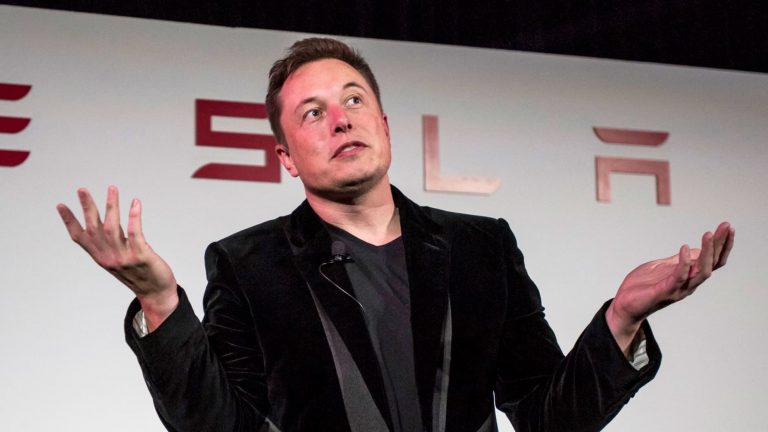
Tesla’s market valuation has fallen below $1 trillion for the first time since November, as the electric vehicle (EV) giant suffers a sharp decline in European sales, driven in part by backlash against CEO Elon Musk’s political affiliations.
On Tuesday, Tesla’s stock dropped by 9%, wiping out $93 billion from its market capitalization. This brings Tesla’s total share price decline to nearly 25% over the past month, signaling increasing investor concerns over its weakening global market position.
European Motorists Turn Away from Tesla
The latest blow to Tesla came from the European Automobile Manufacturers Association, which reported that Tesla’s European sales plummeted by 45% in January. This is particularly striking given that overall EV sales across Europe increased by 37% during the same period.
Register for Tekedia Mini-MBA edition 20 (June 8 – Sept 5, 2026).
Register for Tekedia AI in Business Masterclass.
Join Tekedia Capital Syndicate and co-invest in great global startups.
Register for Tekedia AI Lab.
Analysts suggest that the decline is partly fueled by Musk’s open support for far-right political figures. Once considered a champion of environmentalism and progressive ideals, Tesla has seen its brand suffer among liberal-leaning consumers who previously supported its vision of a carbon-neutral future.
Musk has publicly aligned himself with U.S. President Donald Trump and voiced support for Europe’s far-right political movements, including Germany’s controversial Alternative for Germany (AfD) party. His political activism has drawn strong criticism from European leaders and alienated Tesla’s traditional left-leaning customer base.
The shift in consumer sentiment is evident in social media trends and cultural responses. Some Tesla owners in Europe have begun displaying bumper stickers reading: “I bought this before Elon went crazy.”

A YouGov poll highlighted the political divide: 47% of Reform UK voters view Musk positively, while only 18% of the general public shares that sentiment.
Tesla’s political controversy has been compounded by Musk’s public attacks on UK Prime Minister Sir Keir Starmer and his endorsement of Nigel Farage’s Reform UK party, further polarizing potential buyers.
Beyond Europe, Tesla Faces Fierce Competition in China
Tesla’s European woes are not the only problem facing the company. In China—Tesla’s second-largest market—sales dropped by 11.5% last month, as local EV manufacturers, particularly BYD, continued to gain ground.

Chinese automaker BYD saw a 48% increase in sales, largely due to its ability to offer advanced AI-powered self-driving technology at a fraction of Tesla’s price. This price advantage, coupled with strong government backing, has made BYD a dominant force in the world’s most competitive EV market.
Jacob Falkencrone, head of investment strategy at Saxo, explained the shift: “BYD now offers advanced AI-powered self-driving features at a fraction of Tesla’s full self-driving price, making it an attractive alternative for Chinese consumers.”
He added that BYD has surged ahead, capitalizing on government support and strong local demand.
Tesla’s share price initially surged in November amid expectations that Musk’s close ties with Trump could benefit the company. However, the Republican Party’s aggressive efforts to dismantle EV-friendly policies have impacted the growth.
Trump and his allies remain closely aligned with the fossil fuel industry, which sees the rise of electric vehicles as a direct threat to its dominance. Recently, the Trump’s administration has rolled out policies expected to impact EV adoption in the U.S. While Musk may be a favored figure among conservatives for his opposition to the Democratic Party, that favoritism does not translate into Republican support for Tesla’s long-term business interests
Musk’s Right Wing-leaning, which spans across Europe has compounded Tesla’s woes. The latest sales figures from Europe and China have undermined any optimism of a rapid rebound, with analysts now warning of growing headwinds for Tesla’s global market position.
Dan Ives, an analyst at Wedbush Securities, summed up Tesla’s struggles, noting that “Tesla is clearly facing challenges in Europe, and the Musk brand issues are adding to the headwinds.”
Similarly, Stifel analysts noted that public perception of Musk is increasingly polarized along political lines, which could further impact Tesla’s consumer base.
With Europe’s consumers turning away and China’s market becoming increasingly competitive, Tesla’s shareholders are expected to step in to help the company strategize to regain lost ground. The company’s reliance on Musk’s personal brand has historically been an asset, but it now appears to be a liability in key markets.