

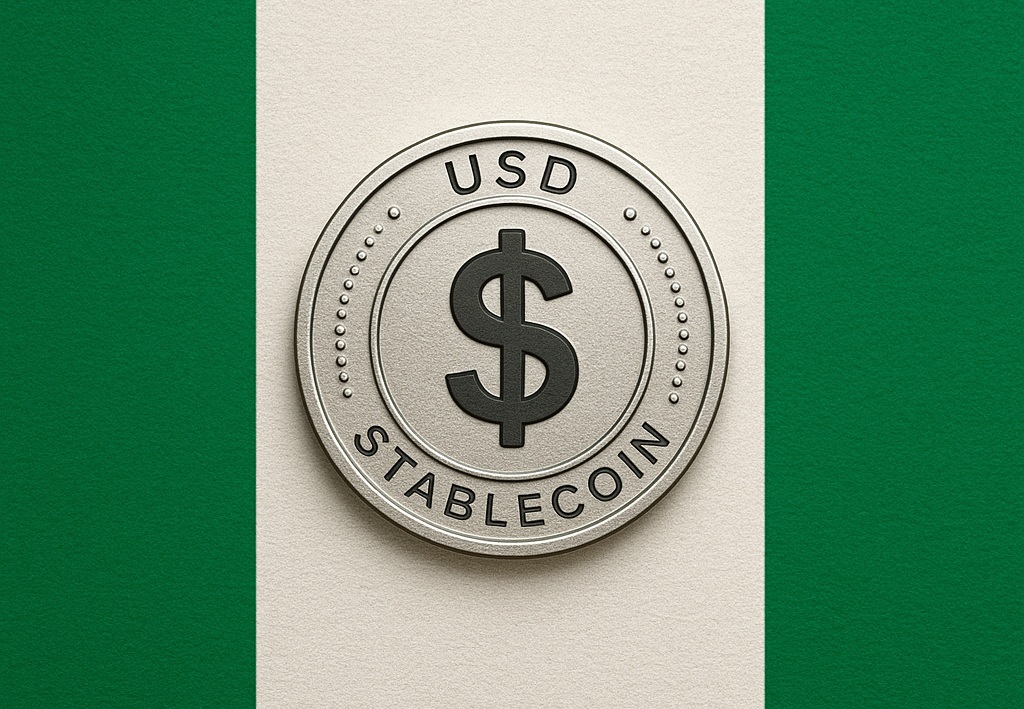
The global financial landscape is quietly reorganizing itself. In the last decade, we saw fintechs nibble at the edges of traditional banking. But today, a more seismic shift is underway—U.S. dollar-backed stablecoins. According to a new report by Standard Chartered, as much as $1 trillion could exit emerging market banks and move into stablecoins within the next three years.
The reason is simple: people no longer trust the promise of “return on capital” when “return of capital” has become the supreme pursuit. In countries like Nigeria where currency depreciation is a recurring virus, savers now seek stability, not yield. They prefer a dollar stablecoin wallet to a naira savings account—because what is the essence of a 10% interest rate when the currency itself has lost 40% of its value?
The global financial landscape is on the brink of a major transformation as U.S. dollar-backed stablecoins continue their meteoric rise, challenging the dominance of traditional banking systems.
According to a new report by Standard Chartered, it warns that the rapid adoption of stablecoins, bolstered by supportive U.S. crypto policies, could drain up to $1 trillion in deposits away from emerging market banks within the next three years.
“We see the potential for $1 trillion to leave emerging market banks and move into stablecoins in the next three years or so,” the bank stated in its analysis released on Monday.
This reality poses existential questions for African banking. Young Nigerians are not just saving in stablecoins—they are warehousing their future in them. The implication is profound: bank deposits will deteriorate, local loanable funds will shrink, and balance sheets will weaken. As deposits fall, the capacity of banks to lend to businesses declines, tightening liquidity across the economy.
Register for Tekedia Mini-MBA edition 20 (June 8 – Sept 5, 2026).
Register for Tekedia AI in Business Masterclass.
Join Tekedia Capital Syndicate and co-invest in great global startups.
Register for Tekedia AI Lab.
In simple terms, as stablecoins rise, naira-denominated financial intermediation falls. Yet, this is not driven by rebellion but by rationality; it is the invisible hand of self-preservation in a turbulent monetary ecosystem. And behind the curtain, the United States silently wins—because every dollar-backed stablecoin is another vote for its currency’s global supremacy.
In this transition, we are witnessing the most sophisticated form of dollarization in history. No longer does one need to physically hold greenbacks; all it takes is a blockchain wallet. While emerging economies fight inflation and instability, the U.S. dollar—through stablecoins—enters every smartphone, every crypto exchange, and every youth’s savings app. This is not just capital flight; it is trust migration.
The architecture of money is being redesigned, and the winners are those who issue the stablecoins. Every USDT or USDC held in Lagos, Nairobi, or Johannesburg strengthens the dollar’s gravitational pull while weakening local monetary sovereignty.

Africa must therefore act. The time for central banks to merely regulate is gone; now, they must innovate. Nigeria’s banks and regulators must not dismiss this wave as another crypto fad. They must create naira-backed digital assets, integrate programmable money into their systems, and redesign incentives that make banking competitive in the age of decentralization.
Because if this trend continues, Africa’s banking system may survive—but its economic soul will not. In this new world, where young people choose return of capital over return on capital, the nation that understands trust will become the nation that controls wealth. And today, that nation is the United States—powered by code, trust, and stablecoins.
---
Connect via my
LinkedIn |
Facebook |
X |
TikTok |
Instagram |
YouTube
