

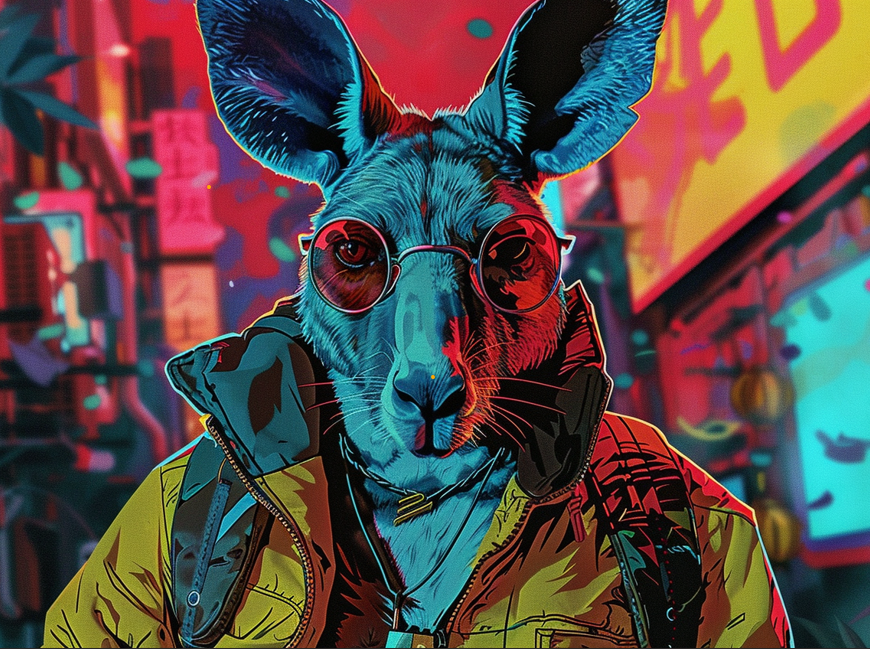
It’s 2 years since we started work on the ‘Sino Amazon and Sino Signia’ project. It’s ten months since we released the first ‘Det0xant’ tokenized artwork series as ‘merch’ to support the release of ‘.det0x’ Web 3 names.
We have learnt a lot about the whole spectrum from Cryptocurrency to Blockchain and Web 3, particularly when we read or listen to sector writers, platform commentators and journalists.
Some don’t hold crypto in any significant proportions. Neither do they own or build blockchains, they haven’t been a creator of web3 product, and they don’t generally accumulate or volume trade in digital collectibles.
Register for Tekedia Mini-MBA edition 20 (June 8 – Sept 5, 2026).
Register for Tekedia AI in Business Masterclass.
Join Tekedia Capital Syndicate and co-invest in great global startups.
Register for Tekedia AI Lab.
Because of this, they nurture a huge gap of perception, but they are unfortunately the go-to for the web3 and cryptocurious to be taking first steps.
The whole area of tokenized artwork has come a long way. We thought we’d wade into the area of Digital Collectibles. We imagine it is time to re-examine the market, the concept of value, and where people really see it.
We’ll also highlight some pitfalls to avoid.

The concept of OFP.
OFP stands for ‘Original Floor Price’. It’s the first price a Digital Collectible or Tokenized Product was available at.
The ‘Route To Market’ is often a determinant of what the OFP will be like. A creator can set it directly to a market like OpenSea. There are many other markets, popular ones being Magic Eden, Blur, Rarible, Nifty, Mintable, Element, OKX and Ronin.

Sometimes it can be as low as zero. This is often the case when a series is issued in special appreciation of a select network of contacts, a loyalty bonus, merch supporting the launch of another product, or a ‘pre-sale’ airdrop as a tactic to stimulate market interest.
‘Lazy Minting’ is sometimes used, particularly by outfits creating their own retail network. The collectible may be free, but the new owner will bear their own minting cost. It’s a way the series creator can limit risk while achieving adoption.
This can be important when issuing collections directly minted to Ethereum, or Ordinal collections on Bitcoin
PFPs vs Tokenized Artwork
A PFP series in Web3 refers to a collection of profile picture non-fungible tokens (NFTs) that are designed to be used as avatars on social media and other online platforms. These series often feature unique digital artworks, allowing users to express their identity and affiliation with specific communities within the NFT space.
PFP series are built on a modular framework where individual artwork options can be placed in different sections of the image. Each module (section) integrates seamlessly with each other. In some cases, they can be chosen manually by buyers on a dedicated platform, or they can be subscribed to, and are received as a random selection by an algorithm.
Tokenized Artwork are digital images in the form of jpegs, pngs or some other format. They can be a digital capture of a ‘Real World Artwork’, or it can be images manually created with the assistance of tools like Adobe Photoshop. AI generated images can be created with programs like Midjourney, Stable Diffusion, Dalle E, Nightcafe’s ‘Flex, Googles Image FX or Adobe’s Firefly. Some of the most complex results, like those of 9ja Cosmos come from different layers and iterations of both manual and AI tools. They are then tokenized.
The market has been gradually moving away from PFP type offerings to Tokenized Artwork, simply because ‘good’ PFP series can now be made quickly, effortlessly, and without any unique skillset. The ‘algo’ can generate thousands or even tens of thousands at the press of a button. Digital Collectible Market thrives on difficulty of production and rarity, and the age of Cryptopunks, Bored Apes and Mfers is over.

Have ‘NFT’s ever been dead?
When describing ‘NFTs’ Chainlink say: ‘ERC721 (also known as NFTs) define a framework for making tokens that are unique and different from each other (hence the term non-fungible), while the popular ERC20 standard defines tokens that are “fungible”, meaning the tokens are all interchangeable and guaranteed to have the same value.’
Protocols like ERC 721 and ERC 20 on Ethereum/EVM define techniques creating tokens that can act as an ownership deed to something. They are most easily used with digital property. ERC 721 has popularly been used with Digital Collectibles while ERC 20 has more commonly been used with memecoins and celebcoins. Different Protocols have been created on other Blockchain Ecosystems, such as Ordinals and Stamps on Bitcoin, while we have Token 22 and SPL with Solana. Use of ERC 721 (also known as NFTs) isn’t confined to Digital Collectibles, and ‘tokenizing’ or ‘minting’ Digital Collectibles isn’t limited to ERC 721.
Moreover, in the initial wave of different Tokenized Digital Collectibles large numbers of people with speculating tendencies, got caught up in very unrealistic valuations for some types of Digital Collectibles particularly PfP series like Cryptopunks, Bored Apes and Mfers.
Most remarks about ‘NFT’s being dead’ are based on these ‘very unrealistic valuations’ not being sustained. They are often flippant clickbait, which neither recognises the ‘NFT’ protocol has a huge application beyond PfP series, nor recognises that artwork can be tokenized without using ERC 721.
How important is the token type being an ‘NFT’ or not an ‘NFT’?
Different protocol types suit different tokenizing/minting solutions. ERC 721 is purpose built to represent NFA’s (Non Fungible Assets). Other protocols can be used, and they don’t have to be on Ethereum.
There are several solution on other blockchains that are far more secure, and decentralized, but wallets for them can be a bit obscure and the protocol may have a handicap when it comes to adoption.
Non-Fungible means one-of-a-kind, unique and not interchangeable with other similar objects. ERC 721 enforces this condition in the token. ERC 1155 is often used for different types of Digital Collectibles, but Web 3 ‘window shoppers’ need to check that the ‘supply’ of the item is only 1.
ERC 1155 and many other protocol types can be set to a supply of any chosen number, and if other than ‘1’, the one-of-a-kind, i.e. ‘NFT’ properties are absent.
Human involvement, tech capacity, and place in ‘time’.
Much of what determines quality of ‘Digital Collectibles’, are inherited from older times. Human beings capacity for ‘collecting’ is as old as time itself. They are wrapped in nostalgia, memories and emotion.
We have antique furniture and pottery. We have memorabilia of sports and music equipment of people held in high esteem by others. We have trading card collections that remind some financially independent people of a youth, which while it seemed less secure, it was also simpler.
As villages became towns, towns became cities, cities became metropolis, and workforces became more mobile, family relationships began to contract. From extended families to nuclear families, single parent families, childless couples, and ultimately, many insular humans.
Collectibles were at least as much a social focus, and an extension of ‘self’ as they were an investment. Visitors to friends and relatives’ homes were introduced to ‘collections’ or ‘exotic features’ as a social focal point.
The digital space improved the scope for leaning on our ‘collections’ as an aspect of ‘personal branding’ and social exchange.
Vinyl gave way to CD’s DvDs and then MP3s. Then came platforms like Spotify. Cameras and Canvas gave way to Photoshop and digital cameras. Modern smartphones achieve amazing resolution and replace dedicated devices for all but high-end niche professionals.
Then came Web 3, and we now have ‘Digital Collections’ tokenized to blockchains. This offers an unparalleled secure deed of ownership to digital property.
It allows people to carry their display of collectible ‘things’ with them everywhere, and with them, the extension to a sense of personal choice, taste, lifestyle values, sense of self. Everything that makes Personal Branding. To be shown anywhere. On a phone, laptop, or event VDU and sound system.
Technologies change; styles change. Things are authentic for their time. 17th century can be old by todays standards, and most agree antiquity carries value. But if a furniture piece initially thought to come from that era had work done to it in the 18th century, it is worth only a fraction of its value. 18th century is a long time ago. It takes special experts to be able to notice these things and adjust value fairly.
Web3 product is shrunk down, not into centuries but less than a decade. Much earlier work was done painstakingly by people who ‘spun up’ their own nodes, before the ‘Age of OpenSea’.
Cryptopunks, Bored Apes and Mfers each have their place in the Web 3 evolution spectrum. Similar things done later aren’t worth the same.
As Technologies improved, the difficulty with which to achieve things reduced. Complexity drives aesthetic value.
Early mints on Ethereum, before the advent of Layer 2 networks (L2s) were expensive, and efforts to tokenize frequently failed, losing minting fees.
Algorithmic activities and early AI (Large Data Model) brought unexpected results leading to high levels of manual work, both technical and artistic. Limitations in the scale of quality output, caused by failed minting losses, software tool challenges, and more intense labour compared to latest standards, underpin the value of successful pieces.
Is the golden age of creating new ‘valuable’ Digital Collectibles gone forever?
No, but special measures need to be taken to give Digital Collectibles their potential for ‘value’ in an age of more reliable, cheaper and faster tokenizing options, automated retail network options, plus quicker and simpler tools, particularly AI tools. It also helps if the market can see ‘investment of self’ in the product:
What’s the story, Morning Glory?
Digital Collectible series with a good backstory, links to individuals or notoriety, and/or an anchor in other products from the same stable bring something different to something that just says ‘Buy from my series’.

Diverse discovery routes
The more platforms, networks, communities, websites and other avenues through which a series can be discovered, the better.
Product Ecosystem and Loyalty Programs
‘Collecting’ from businesses, brands, or movements, who have a ‘build out’ into different segments of Web3 has far more promise than collecting single Digital Collectibles from random project creators.
They may be ‘into’ their own retail networks, web 3 names/domains, web3 gaming, tokenizing event passes/access, tokenizing online business ownership… (inexhaustible list).
The more ‘build out’ and tendency towards a diverse (Web3) Product Ecosystem, the stronger a ‘one stop shop’ phenomenon, acting as a magnet for disparate Web 3 communities, growing collateral interest in other parts of the Product Ecosystem. These also tend to be strong breeding grounds for Loyalty Programs.
Owning assets from one part of the ‘Ecosystem’ can lead to access to free airdrops, preferential positioning for new releases or VIP treatment as they extend into Web 3 partnering and collaboration.
Improvements keep pace with tech advancement.
The space has moved to collapse production cost and speed delivery in a very short time. It’s important Digital Collectible products in 2025 show marked departures from those evolving between 2021 and 2023.
NSFW and Universal Content Rating
Moral Compass swings widely across the globe and what’s ‘ok’ varies widely depending on who you ask and where they are. NSFW means ‘Not Suitable For Work’. Having a USR means having a product that is universally permissible and non objectionable. It’s not a moral, but a purely pragmatic decision to restrict collecting to NSFW and USR specimens. This guarantees the specimen the widest possible reach and the lowest possible chance it will fall foul of the restrictions placed by various market networks, or social media platforms. This doesn’t apply if the collector is purchasing for private retention.
Application Application Application
The Web 3 environment brings a new dimension to Collectibles, and that’s the ability to introduce new applications to tokenized assets by giving them programmable properties. That property is highest at the root level (Blockchain) a bit lower at subsequent layers, lower still at the retail network layer, and lowest at the token itself. However, a lot depends on the token design, for example, tokens that represent ‘Handshake Names’ have huge programmability. Tokenizing Web 3 Digital Collectibles in a way that offers programmability options is a huge plus.
Collectors Instinct vs Profit Greed
An investors path in Digital Collectibles is an inheritance from older activities which are a hobby and a passion. It takes a special kind of person to become successful as a collector regardless of the collections’ focus.
Notorious collection specialists over time became very successful and have made ground breaking sales at renowned auction houses such as Christie’s and Sotheby’s
(Web3) Digital Collecting is taking this millennia old practice into the Web 3 age. To be successful, it is important a collector has long range vision, and sees value in the art of collecting as a journey, which supersedes the desire to make money. Web 3 Degens will not last and will probably fall at the first hurdle.
This profound mis-read of Digital Collectibles was probably what was responsible for the initial unrealistic highs, particularly in PfPs. Greedy people that don’t understand collecting conceptually, over extended themselves, resulting what became called a ‘crash’ and leading to uninformed statements like ‘NFTs are dead’. The reality is they fell to levels that were still an order above what they were really worth.
Summary:
- You must have a keen interest in Digital Collectibles, take pride in your own collection, and develop your own story about pieces
-
PfP is out. Tokenized Artwork is in
-
Purchase from a series, not single offerings
-
If the protocol is not ERC 741, check that the supply is 1 (unique)
-
Buy close to, or on the ‘OFP’, $USD 0 – 50 for ERC 741, to $30 for others.
-
Look for dynamic or extended features, programmability, futureproofing, etc
-
Product Ecosystem is better than single project
-
Check that the product or ecosystem can be found in online searches where it’s mentioned, besides just the network where it is sold
*Check that it has a backstory and/or linked to other Web 3 products.
- Unless purchasing something to keep, pick specimens that are universally permissible, and meet what’s requred to feature them on generic markets and write about them on typical online platforms.
9ja Cosmos is here…
Detoxants – FiendYard Fruit & Veg
Opaque Emotion Pathways Tokenized Artworks
Preview our Sino Amazon/Sinosignia releases (Ente)
Visit 9ja Cosmos LinkedIn Page